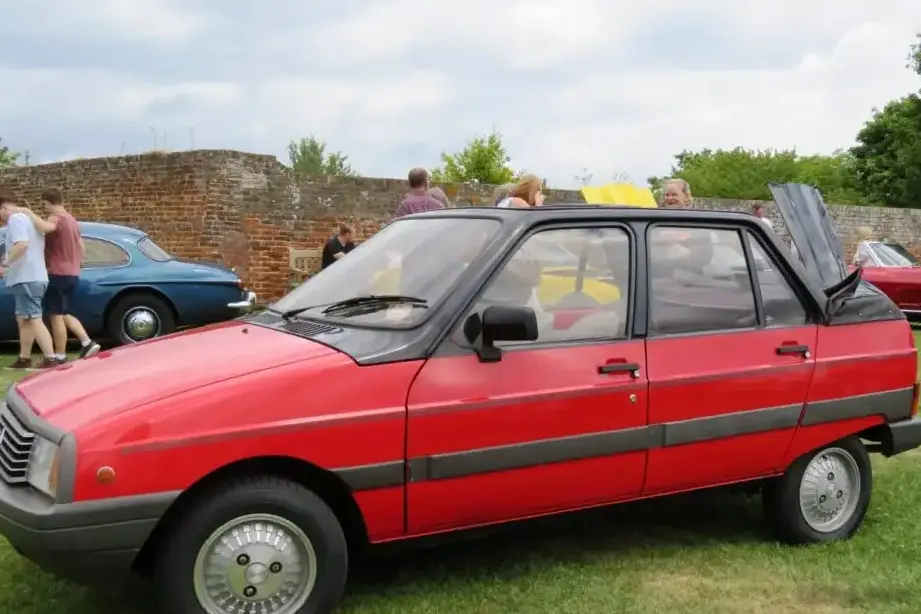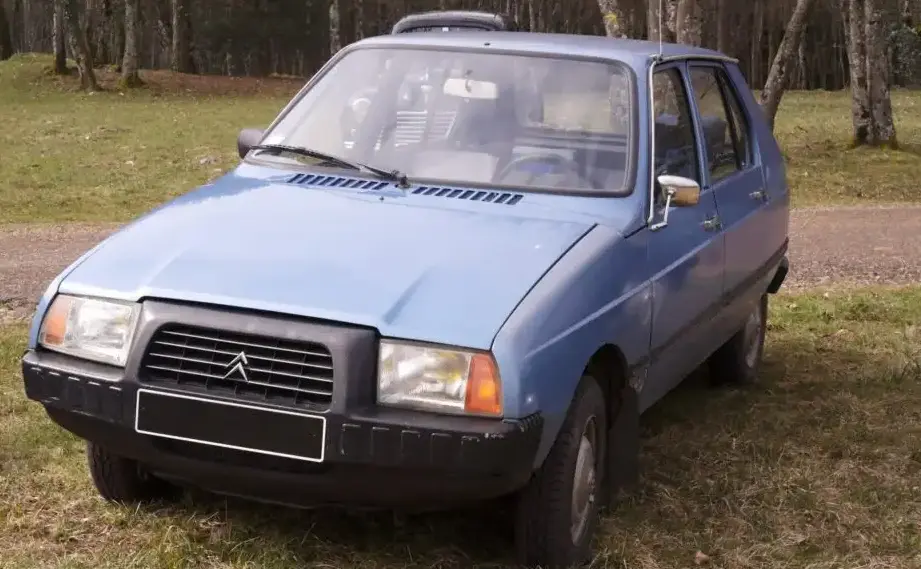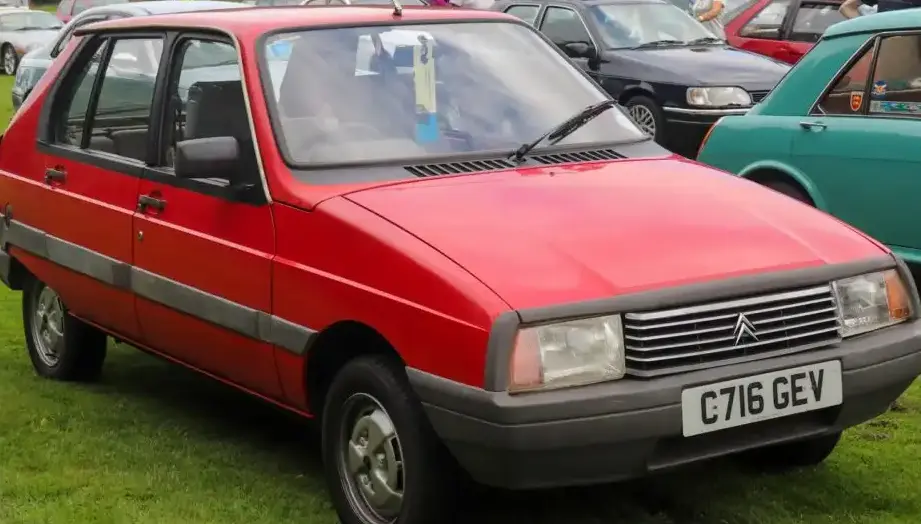
The Citroen Visa (Phase II) 0.6, produced between 1982 and 1986, represented the entry point into the Visa range, a small family hatchback designed as a more modern and practical alternative to the aging Citroen 2CV. Positioned as an affordable and economical option, the 0.6-liter model was primarily aimed at buyers seeking basic transportation with the renowned Citroen comfort. It was part of the Phase II update of the Visa, which included minor cosmetic and mechanical refinements over the original launch models. The Visa itself was intended to bridge the gap between the 2CV and the larger GS/GSA models, offering a more conventional, though still uniquely Citroen, driving experience.
Technical Specifications
| Brand | Citroen |
| Model | Visa |
| Generation | Visa (Phase II) |
| Type (Engine) | 0.6 (33 Hp) |
| Start of production | 1982 |
| End of production | 1986 |
| Powertrain Architecture | Internal Combustion engine |
| Body type | Hatchback |
| Seats | 4 |
| Doors | 5 |
| Fuel consumption (urban) | 6.9 l/100 km (34.1 US mpg) |
| Fuel consumption (extra urban) | 5.6 l/100 km (42 US mpg) |
| Fuel Type | Petrol (Gasoline) |
| Acceleration 0 – 100 km/h | 24.6 sec |
| Acceleration 0 – 62 mph | 24.6 sec |
| Acceleration 0 – 60 mph | 23.4 sec |
| Maximum speed | 124 km/h (77.05 mph) |
| Weight-to-power ratio | 22.9 kg/Hp |
| Weight-to-torque ratio | 15.7 kg/Nm |
| Power | 33 Hp @ 5250 rpm |
| Torque | 48 Nm @ 3750 rpm (35.4 lb.-ft. @ 3750 rpm) |
| Engine layout | Front, Longitudinal |
| Engine Model/Code | V06/630 |
| Engine displacement | 652 cm3 (39.79 cu. in.) |
| Number of cylinders | 2 |
| Engine configuration | Boxer |
| Cylinder Bore | 77 mm (3.03 in.) |
| Piston Stroke | 70 mm (2.76 in.) |
| Compression ratio | 8.4:1 |
| Fuel injection system | Carburettor |
| Engine aspiration | Naturally aspirated |
| Engine oil capacity | 3 l (3.17 US qt | 2.64 UK qt) |
| Kerb Weight | 755 kg (1664.49 lbs.) |
| Max. weight | 1090 kg (2403.04 lbs.) |
| Max load | 335 kg (738.55 lbs.) |
| Trunk (boot) space – minimum | 300 l (10.59 cu. ft.) |
| Trunk (boot) space – maximum | 674 l (23.8 cu. ft.) |
| Fuel tank capacity | 40 l (10.57 US gal | 8.8 UK gal) |
| Max. roof load | 50 kg (110.23 lbs.) |
| Permitted trailer load with brakes (12%) | 500 kg (1102.31 lbs.) |
| Permitted trailer load without brakes | 380 kg (837.76 lbs.) |
| Length | 3725 mm (146.65 in.) |
| Width | 1526 mm (60.08 in.) |
| Height | 1408 mm (55.43 in.) |
| Wheelbase | 2430 mm (95.67 in.) |
| Minimum turning circle | 10 m (32.81 ft.) |
| Drivetrain Architecture | Front wheel drive |
| Number of gears | 4 |
| Gearbox type | Manual transmission |
| Front suspension | Independent coil spring, Transverse stabilizer |
| Rear suspension | Independent coil spring |
| Front brakes | Disc |
| Rear brakes | Drum |
| Steering type | Steering rack and pinion |
Powertrain & Engine Architecture
The heart of the Visa 0.6 was the Citroen V06/630 engine, a 652cc two-cylinder, boxer engine. This engine was a descendant of the powerplant used in the 2CV, known for its simplicity and durability. The boxer configuration, with horizontally opposed cylinders, contributed to a low center of gravity, aiding in handling. Fuel delivery was managed by a single Solex carburetor, a common setup for the time, prioritizing simplicity over performance. The engine featured a relatively low compression ratio of 8.4:1, further emphasizing reliability and the ability to run on lower-octane fuel. The four-speed manual transmission was a standard feature, chosen for its cost-effectiveness and suitability for the engine’s power characteristics. The engine was mounted longitudinally in the front of the vehicle, driving the front wheels.
Driving Characteristics
The 0.6-liter Visa was not designed for speed. With only 33 horsepower, acceleration was leisurely, taking approximately 24.6 seconds to reach 62 mph. However, the engine proved surprisingly tractable, offering adequate power for urban driving and slower country roads. The four-speed gearbox was well-matched to the engine’s torque curve, allowing for reasonable progress, although frequent gear changes were necessary. The Visa’s lightweight construction (755 kg) helped to mitigate the lack of power. The steering, while not particularly direct, was light and easy to use, making it a comfortable car for everyday driving. Compared to the more powerful Visa models (like those with 1.1 or 1.6-liter engines), the 0.6 offered a significantly more relaxed driving experience, prioritizing fuel economy and ease of use over outright performance.
Equipment & Trim Levels
The Visa 0.6 was typically the most basic trim level available. Standard equipment included cloth upholstery, basic instrumentation (speedometer, fuel gauge), and manually operated windows and door locks. The interior was functional and utilitarian, reflecting the car’s affordable price point. Optional extras were limited but could include a radio, upgraded upholstery, and occasionally, a sunroof. The dashboard layout was simple and straightforward, with all controls within easy reach of the driver. The focus was on providing a comfortable and practical interior without unnecessary frills.
Chassis & Braking
The Visa featured an independent suspension system on all four wheels, utilizing coil springs and, at the front, a transverse stabilizer bar. This setup provided a relatively comfortable ride, absorbing bumps and imperfections in the road surface effectively. The front brakes were disc brakes, offering adequate stopping power, while the rear brakes were drums. The steering was a rack and pinion system, providing reasonable precision and feedback. The relatively light weight of the vehicle contributed to its nimble handling characteristics. The suspension was tuned for comfort rather than sporty handling, prioritizing a smooth and forgiving ride.
Market Reception & Comparison
The Citroen Visa 0.6 was generally well-received as an affordable and economical small car. Critics praised its comfortable ride, fuel efficiency (around 34-42 mpg), and the inherent reliability of the 2CV-derived engine. However, its lack of power was a common criticism, particularly when compared to competitors like the Renault 5 or Peugeot 205. The 0.6 was significantly slower and less refined than the higher-spec Visa models, such as the 1.1 or 1.6-liter versions. However, it offered a lower purchase price and lower running costs, making it an attractive option for budget-conscious buyers. Its fuel economy was a key selling point, especially during the early 1980s when fuel prices were rising.
Legacy
The Citroen Visa 0.6, while not a performance icon, holds a place in automotive history as a practical and affordable small car. The V06/630 engine proved to be remarkably durable, and many examples are still on the road today. In the used car market, the 0.6-liter Visa is often sought after by enthusiasts looking for a simple, reliable, and inexpensive classic car. Maintenance is relatively straightforward due to the engine’s simple design. While parts availability can be a challenge, many components are still available or can be sourced from specialist suppliers. The Visa 0.6 represents a unique chapter in Citroen’s history, embodying the company’s commitment to providing innovative and affordable transportation.