Technical Specifications
| Brand | Chevrolet |
| Model | Spark |
| Generation | Spark III (facelift 2013) |
| Type (Engine) | 1.0 (68 Hp) |
| Start of production | 2013 |
| End of production | 2015 |
| Powertrain Architecture | Internal Combustion engine |
| Body type | Hatchback |
| Seats | 5 |
| Doors | 5 |
| Fuel consumption (urban) | 6.6 l/100 km (35.6 US mpg, 42.8 UK mpg, 15.2 km/l) |
| Fuel consumption (extra urban) | 4.1 l/100 km (57.4 US mpg, 68.9 UK mpg, 24.4 km/l) |
| Fuel consumption (combined) | 5 l/100 km (47 US mpg, 56.5 UK mpg, 20 km/l) |
| CO2 emissions | 118 g/km |
| Fuel Type | Petrol (Gasoline) |
| Acceleration 0 – 100 km/h | 15.3 sec |
| Acceleration 0 – 62 mph | 15.3 sec |
| Acceleration 0 – 60 mph | 14.5 sec |
| Maximum speed | 152 km/h (94.45 mph) |
| Emission standard | Euro 5 |
| Weight-to-power ratio | 15.4 kg/Hp, 65.1 Hp/tonne |
| Weight-to-torque ratio | 11.2 kg/Nm, 89.1 Nm/tonne |
| Power | 68 Hp @ 6400 rpm |
| Power per litre | 68.3 Hp/l |
| Torque | 93 Nm @ 4800 rpm (68.59 lb.-ft. @ 4800 rpm) |
| Engine layout | Front, Transverse |
| Engine Model/Code | B10D1 |
| Engine displacement | 995 cm3 (60.72 cu. in.) |
| Number of cylinders | 4 |
| Engine configuration | Inline |
| Cylinder Bore | 68.5 mm (2.7 in.) |
| Piston Stroke | 67.5 mm (2.66 in.) |
| Compression ratio | 9.8:1 |
| Number of valves per cylinder | 4 |
| Fuel injection system | Multi-port manifold injection |
| Engine aspiration | Naturally aspirated engine |
| Engine oil capacity | 3.75 l (3.96 US qt | 3.3 UK qt) |
| Kerb Weight | 1044 kg (2301.63 lbs.) |
| Max. weight | 1367 kg (3013.72 lbs.) |
| Max load | 323 kg (712.09 lbs.) |
| Trunk (boot) space – minimum | 170 l (6 cu. ft.) |
| Trunk (boot) space – maximum | 873 l (30.83 cu. ft.) |
| Fuel tank capacity | 35 l (9.25 US gal | 7.7 UK gal) |
| Length | 3595 mm (141.54 in.) |
| Width | 1597 mm (62.87 in.) |
| Height | 1522 mm (59.92 in.) |
| Wheelbase | 2375 mm (93.5 in.) |
| Front track | 1410 mm (55.51 in.) |
| Rear (Back) track | 1417 mm (55.79 in.) |
| Drivetrain Architecture | The Internal combustion engine (ICE) drives the front wheels of the vehicle. |
| Drive wheel | Front wheel drive |
| Number of gears and type of gearbox | 5 gears, manual transmission |
| Front suspension | Independent, type McPherson with coil spring and anti-roll bar |
| Rear suspension | Torsion |
| Front brakes | Ventilated discs |
| Rear brakes | Drum |
| Assisting systems | ABS (Anti-lock braking system) |
| Steering type | Steering rack and pinion |
| Power steering | Hydraulic Steering |
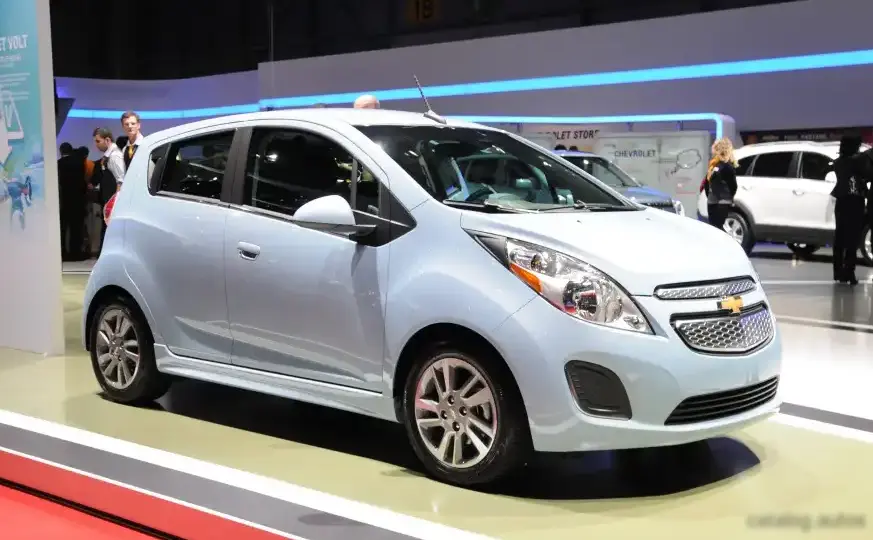
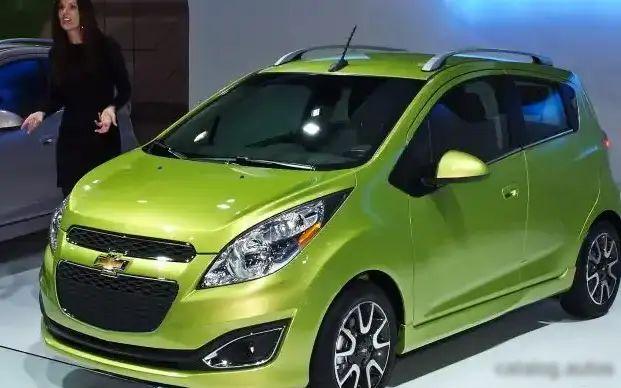
The Chevrolet Spark III (facelift, 2013) 1.0, producing 68 horsepower, served as the entry point into the Spark range during its 2013-2015 production run. Positioned as a budget-friendly urban commuter, this variant was primarily sold in markets where small, fuel-efficient vehicles were in high demand, including Europe, South America, and parts of Asia. The facelift brought minor cosmetic updates to the third generation Spark (M300), which itself was based on the GM Gamma platform, also underpinning vehicles like the Opel/Vauxhall Agila and the Fiat Punto. This particular engine and transmission combination aimed to provide basic transportation with an emphasis on affordability and economy.
Powertrain & Engine Architecture
The heart of this Spark variant was the B10D1 engine, a 995cc inline-four cylinder petrol engine. This engine was a member of General Motors’ Family 0 small engine family, known for its simplicity and cost-effectiveness. It utilized a multi-port fuel injection system, delivering fuel directly into the intake ports rather than directly into the combustion chamber. The engine featured a single overhead camshaft (SOHC) operating four valves per cylinder. The 5-speed manual transmission was a standard offering, chosen for its affordability and efficiency. The transmission’s gear ratios were tuned for maximizing fuel economy rather than outright performance, with a relatively tall final drive. This configuration prioritized fuel efficiency over acceleration, a common characteristic of entry-level vehicles.
Driving Characteristics
The 1.0-liter Spark was not designed for spirited driving. With only 68 horsepower and 93 Nm (68.59 lb-ft) of torque, acceleration was leisurely. 0-60 mph took around 14.5 seconds, and top speed was limited to 94.45 mph. The focus was on providing adequate power for urban driving conditions, with sufficient torque for navigating city streets and merging into traffic. The manual transmission allowed for some driver control, but the engine’s limited power band meant frequent gear changes were necessary to maintain momentum, especially when climbing hills or carrying a full load. Compared to other Spark trims, like those equipped with the 1.2L engine, this variant felt noticeably slower and less refined. The taller gear ratios, while aiding fuel economy, contributed to the sluggishness, requiring the driver to downshift frequently to access what little power was available.
Equipment & Trim Levels
The 1.0-liter Spark typically came with a basic level of equipment. Standard features generally included power steering, air conditioning, and a basic audio system. Safety features such as ABS and front airbags were also standard. Interior upholstery was typically cloth, and the dashboard featured a simple, functional design. Optional extras, depending on the market, could include power windows, central locking, and a more advanced audio system. This trim level was often marketed towards first-time car buyers or those seeking the most affordable transportation option. The interior materials were chosen for durability and cost-effectiveness, rather than luxury or refinement.
Chassis & Braking
The Spark III utilized a McPherson strut front suspension and a torsion beam rear suspension. This setup was chosen for its cost-effectiveness and compact design. The front brakes were ventilated discs, providing adequate stopping power for the vehicle’s weight and performance. However, the rear brakes were drums, a cost-saving measure that reflected the vehicle’s entry-level positioning. The steering was a hydraulic rack and pinion system, offering reasonable precision and feel. Stabilizer bars were present, helping to reduce body roll during cornering, but the overall handling was geared towards comfort rather than sporty dynamics. The suspension tuning prioritized ride comfort over handling precision, making it suitable for navigating rough city streets.
Market Reception & Comparison
The Chevrolet Spark 1.0 was generally well-received as an affordable and fuel-efficient city car. Critics praised its low running costs and compact size, making it easy to maneuver and park in urban environments. However, the engine’s lack of power was a common criticism. Compared to the 1.2-liter Spark, the 1.0-liter version offered significantly less performance, but at a lower price point. Fuel economy was a strong point, with combined figures around 5 liters per 100 kilometers (47 US mpg), making it competitive with other small cars in its class. Reliability was generally good, with the B10D1 engine proving to be a durable and dependable unit. The Spark 1.0 often competed with vehicles like the Fiat Panda and the Hyundai i10, offering a similar value proposition.
Legacy
The Chevrolet Spark III 1.0, while not a performance icon, served as a practical and economical transportation solution for many drivers. The B10D1 engine, despite its modest output, proved to be relatively reliable, and parts availability remains reasonable in many markets. On the used car market, these Sparks are typically found at very affordable prices, making them attractive to budget-conscious buyers. While not highly sought after by enthusiasts, the 1.0-liter Spark represents a significant part of Chevrolet’s history in the small car segment, offering a no-frills, fuel-efficient option for everyday commuting. Its simplicity and durability have ensured that many examples remain on the road today, providing reliable transportation for their owners.