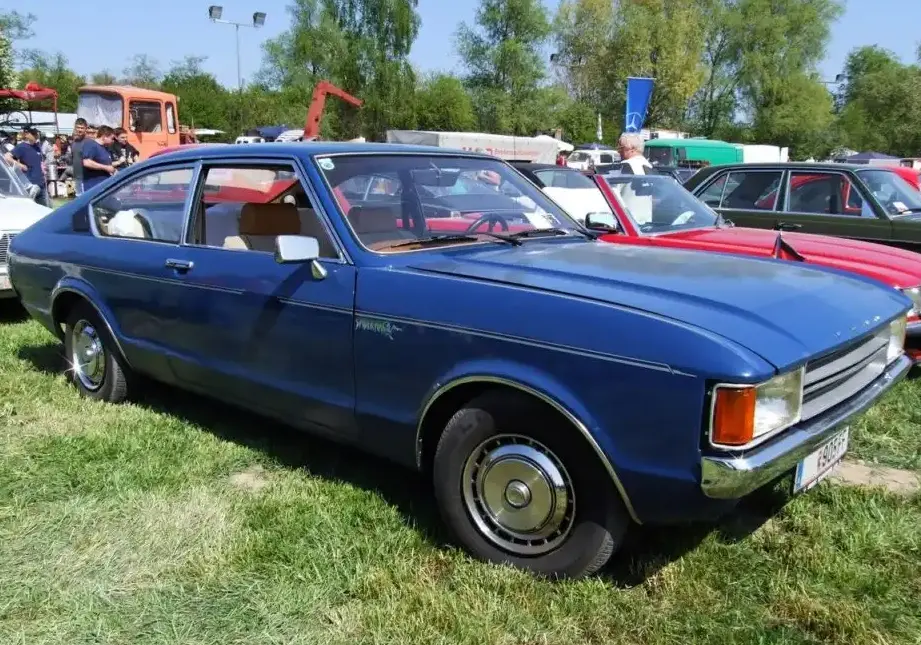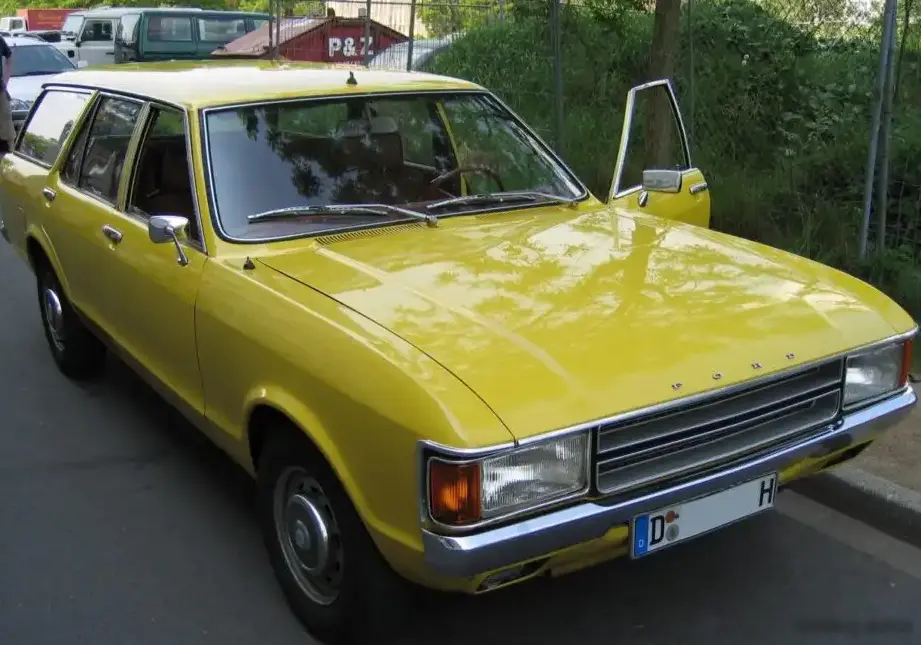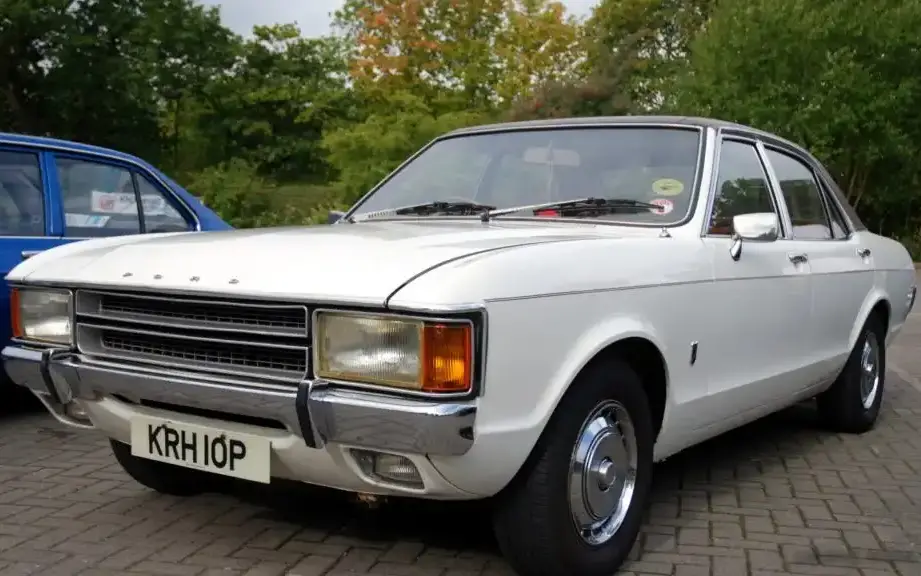
The Ford Consul 2000, produced between 1972 and 1976, represented a significant step in Ford of Britain’s mid-size offerings. Designated the GGFL, this variant of the fourth-generation Consul was positioned as a comfortable and practical family saloon, aimed at the increasingly affluent British market. It occupied a space between the smaller Cortina and the larger Zephyr/Zodiac models, offering a blend of space, affordability, and relatively modern features. The 2000 designation refers to its 2.0-liter engine, producing 99 horsepower, and it was primarily available with a four-speed manual transmission, though a three-speed automatic was also offered, making it a popular choice for drivers prioritizing ease of use over outright performance. This model played a crucial role in Ford’s dominance of the British car market during the 1970s.
Technical Specifications
| Brand | Ford |
| Model | Consul |
| Generation | Consul (GGFL) |
| Type (Engine) | 2000 (99 Hp) |
| Start of Production | 1972 |
| End of Production | 1976 |
| Powertrain Architecture | Internal Combustion Engine |
| Body Type | Sedan |
| Fuel Type | Petrol (Gasoline) |
| Power | 99 Hp |
| Engine Aspiration | Naturally Aspirated |
Powertrain & Engine Architecture
The heart of the Consul 2000 was the Essex V4 engine, a 1,993 cc (121.5 cubic inch) naturally aspirated unit. This engine, while visually resembling a V8, was in fact a 90-degree V4, designed to offer a smoother running experience than traditional inline-four engines. It featured a single overhead camshaft (SOHC) operating two valves per cylinder. Fuel delivery was managed by a Zenith 36mm downdraft carburetor. The engine produced 99 horsepower at 5,000 rpm and 127 lb-ft of torque at 3,000 rpm. The automatic transmission option was a Ford-built three-speed unit, known for its durability but not its responsiveness. This transmission, while providing comfortable cruising, did detract from the engine’s available power, resulting in slower acceleration compared to the manual transmission versions. The engine block was constructed from cast iron, contributing to its robustness, while the cylinder head was made of aluminum alloy. The V4 configuration, while innovative for its time, was prone to vibration, which Ford attempted to mitigate through careful engine balancing and the use of hydraulic engine mounts.
Driving Characteristics
The Consul 2000 with the automatic transmission offered a relaxed driving experience. Acceleration was adequate for everyday driving, but it wasn’t particularly brisk. The three-speed automatic transmission had relatively widely spaced gear ratios, meaning the engine often felt strained during overtaking maneuvers. The automatic transmission’s shift points were calibrated for fuel economy and smoothness rather than performance. Compared to the four-speed manual version, the automatic Consul 2000 was noticeably slower, particularly in the mid-range. The suspension, consisting of independent front suspension with MacPherson struts and a live axle with trailing arms at the rear, provided a comfortable ride, absorbing bumps and imperfections in the road surface effectively. However, the car’s relatively soft suspension setup also resulted in noticeable body roll during cornering. Steering was by a recirculating ball system, which was accurate but lacked the feel of more modern steering technologies.
Equipment & Trim Levels
The Consul 2000, even in its base form, was reasonably well-equipped for its time. Standard features included reclining front seats, a heater, and a basic instrument panel. The interior trim was typically cloth upholstery, available in a range of colors. Higher trim levels, such as the ‘Super’ and ‘De Luxe’ models, added features like a vinyl roof, upgraded interior trim, a radio, and optional power steering. The dashboard layout was functional and straightforward, with clearly labeled gauges for speed, fuel level, coolant temperature, and battery voltage. Optional extras included a sunroof, a rear window demister, and a more sophisticated radio with additional speakers. The ‘De Luxe’ trim also featured woodgrain interior trim and chrome exterior accents, enhancing its visual appeal.
Chassis & Braking
The Consul 2000 utilized a body-on-frame construction, which was common for cars of this era. The chassis was robust and provided a solid foundation for the car’s mechanical components. The front suspension featured MacPherson struts, coil springs, and an anti-roll bar, while the rear suspension employed a live axle with trailing arms and leaf springs. Braking was initially provided by Dunlop disc brakes at the front and drum brakes at the rear. Later models saw the introduction of disc brakes all around, improving stopping performance. The braking system was hydraulic, with a dual-circuit master cylinder for added safety. The steering was a recirculating ball system, offering reasonable accuracy but lacking the direct feel of rack-and-pinion steering. The car’s tires were typically 175-80R14 radial tires, providing a good balance of grip and ride comfort.
Market Reception & Comparison
The Ford Consul 2000, particularly the automatic version, was generally well-received by the British motoring press. Critics praised its comfortable ride, spacious interior, and relatively affordable price. However, the automatic transmission was often criticized for its lack of responsiveness and its impact on fuel economy. Compared to the manual transmission version, the automatic Consul 2000 offered less engaging driving experience. It also faced competition from other mid-size saloons, such as the Vauxhall Victor and the Morris Oxford. The Consul 2000 offered a more modern and refined driving experience than the Morris Oxford, but it was generally considered less sporty than the Vauxhall Victor. Fuel economy for the automatic version was around 20-25 mpg, which was typical for a car of this size and engine capacity in the 1970s. Reliability was generally good, although the Essex V4 engine was known to be prone to oil leaks if not properly maintained.
Legacy
The Ford Consul 2000, while not a particularly iconic or collectible car, holds a significant place in British automotive history. It represented a solid and dependable family saloon that was popular with a wide range of drivers. The Essex V4 engine, despite its quirks, proved to be a durable and long-lasting unit. Today, surviving examples of the Consul 2000 are relatively rare, and well-maintained cars are sought after by classic car enthusiasts. The automatic transmission version, while not the most desirable from a performance perspective, remains a popular choice for those seeking a comfortable and easy-to-drive classic car. Parts availability can be a challenge, but a dedicated network of classic Ford parts suppliers exists to support owners. The Consul 2000 serves as a reminder of a bygone era of British motoring, when cars were built to last and offered a practical and comfortable driving experience.