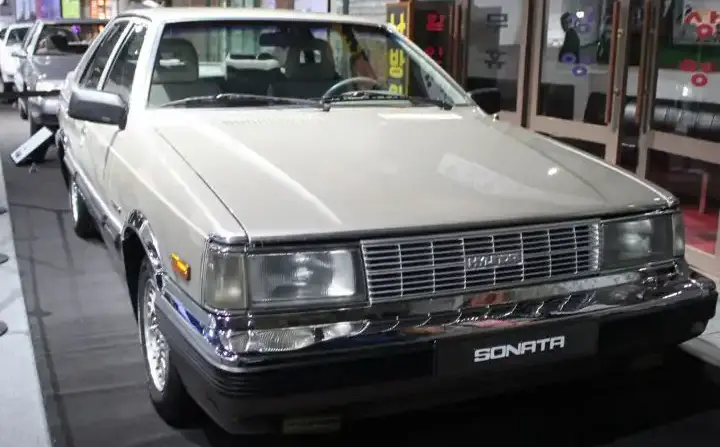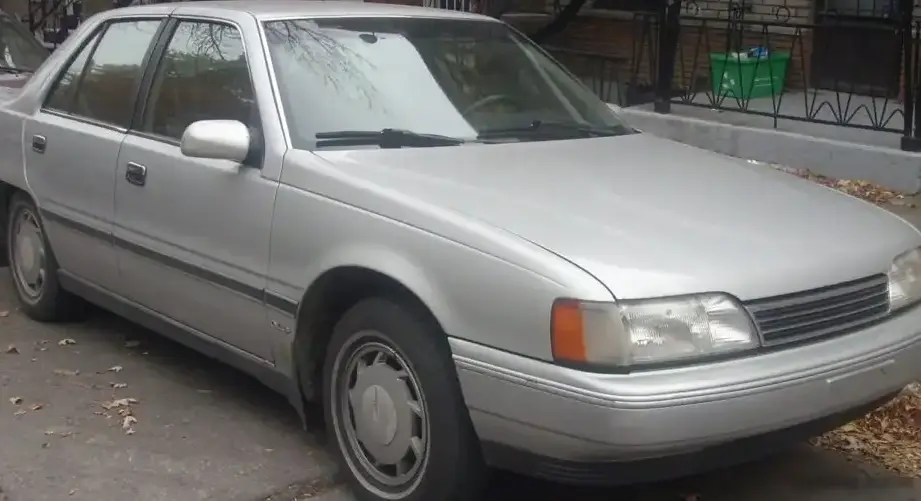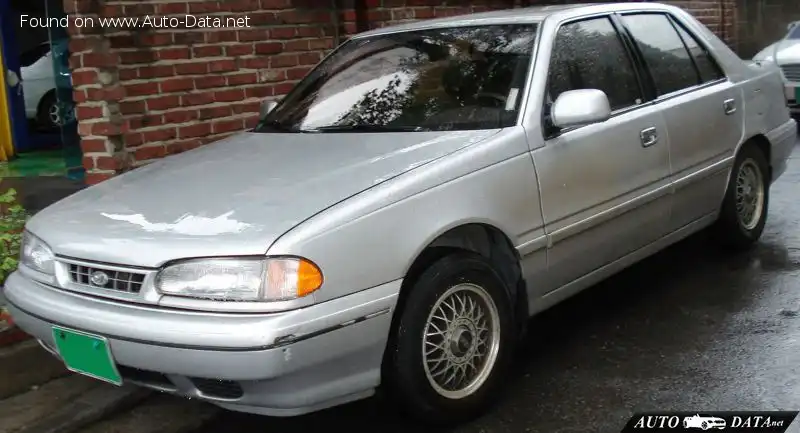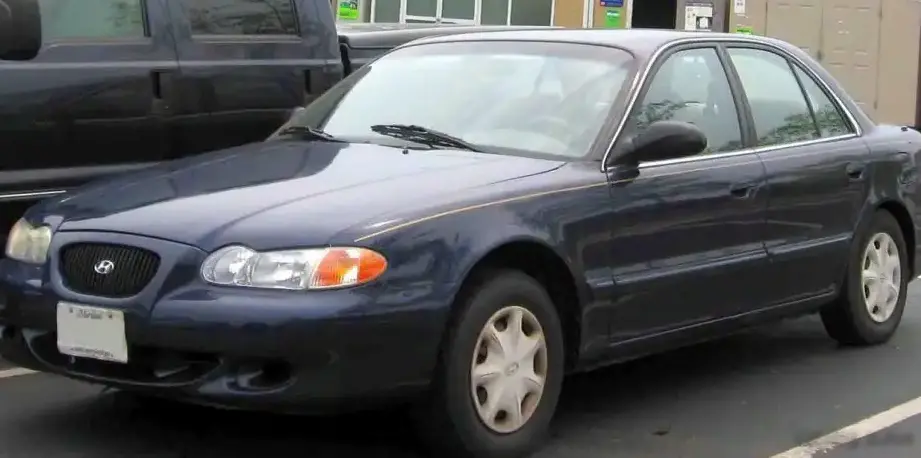
The Hyundai Sonata III (Y3), particularly the facelifted version introduced in 1996, represented a significant step forward for the South Korean automaker in the mid-size sedan segment. Produced from 1996 to 1998, the 2.0 GSi 16V Automatic variant aimed to offer a blend of comfort, practicality, and reasonable performance for the North American and European markets where Hyundai was actively expanding its presence. This model sat in the mid-range of the Sonata III lineup, positioned above the base models and below the more expensive trims with larger engines or additional features. It was designed to appeal to buyers seeking a well-equipped, reliable, and affordable family sedan.
Technical Specifications
| Brand | Hyundai |
| Model | Sonata |
| Generation | Sonata III (Y3, facelift 1996) |
| Type (Engine) | 2.0 GSi 16V (125 Hp) Automatic |
| Start of production | 1996 |
| End of production | 1998 |
| Powertrain Architecture | Internal Combustion engine |
| Body type | Sedan |
| Seats | 5 |
| Doors | 4 |
| Fuel consumption (urban) | 15.6 l/100 km (15.1 US mpg, 18.1 UK mpg, 6.4 km/l) |
| Fuel consumption (extra urban) | 8 l/100 km (29.4 US mpg, 35.3 UK mpg, 12.5 km/l) |
| Fuel consumption (combined) | 10.8 l/100 km (21.8 US mpg, 26.2 UK mpg, 9.3 km/l) |
| Fuel Type | Petrol (Gasoline) |
| Acceleration 0 – 100 km/h | 12.8 sec |
| Acceleration 0 – 62 mph | 12.8 sec |
| Acceleration 0 – 60 mph | 12.2 sec |
| Maximum speed | 190 km/h (118.06 mph) |
| Emission standard | Euro 2 |
| Weight-to-power ratio | 10.8 kg/Hp, 92.6 Hp/tonne |
| Weight-to-torque ratio | 8 kg/Nm, 124.4 Nm/tonne |
| Power | 125 Hp @ 5800 rpm |
| Power per litre | 62.6 Hp/l |
| Torque | 168 Nm @ 4600 rpm (123.91 lb.-ft. @ 4600 rpm) |
| Engine layout | Front, Transverse |
| Engine Model/Code | Sirius / G4CP |
| Engine displacement | 1997 cm3 (121.86 cu. in.) |
| Number of cylinders | 4 |
| Engine configuration | Inline |
| Cylinder Bore | 85 mm (3.35 in.) |
| Piston Stroke | 88 mm (3.46 in.) |
| Compression ratio | 9:1 |
| Number of valves per cylinder | 4 |
| Fuel injection system | Multi-port manifold injection |
| Engine aspiration | Naturally aspirated engine |
| Valvetrain | DOHC |
| Engine oil capacity | 4.4 l (4.65 US qt | 3.87 UK qt) |
| Kerb Weight | 1350 kg (2976.24 lbs.) |
| Max. weight | 1860 kg (4100.6 lbs.) |
| Max load | 510 kg (1124.36 lbs.) |
| Trunk (boot) space – minimum | 373 l (13.17 cu. ft.) |
| Fuel tank capacity | 65 l (17.17 US gal | 14.3 UK gal) |
| Length | 4700 mm (185.04 in.) |
| Width | 1770 mm (69.69 in.) |
| Height | 1405 mm (55.31 in.) |
| Wheelbase | 2700 mm (106.3 in.) |
| Front track | 1520 mm (59.84 in.) |
| Rear (Back) track | 1510 mm (59.45 in.) |
| Ride height (ground clearance) | 170 mm (6.69 in.) |
| Drag coefficient (Cd) | 0.35 |
| Minimum turning circle (turning diameter) | 10.5 m (34.45 ft.) |
| Drivetrain Architecture | The Internal combustion engine (ICE) drives the front wheels of the vehicle. |
| Drive wheel | Front wheel drive |
| Number of gears and type of gearbox | 4 gears, automatic transmission |
| Front suspension | Independent, type McPherson with coil spring and anti-roll bar |
| Rear suspension | Independent multi-link suspension |
| Front brakes | Ventilated discs |
| Rear brakes | Disc |
| Assisting systems | ABS (Anti-lock braking system) |
| Steering type | Steering rack and pinion |
| Power steering | Hydraulic Steering |
| Tires size | 195/70 R14 |
| Wheel rims size | 14 |
Powertrain & Engine Architecture
The heart of the 2.0 GSi Automatic Sonata was the Hyundai Sirius engine, internally designated as the G4CP. This 1.997-liter inline-four cylinder engine featured a double overhead camshaft (DOHC) valvetrain with four valves per cylinder, contributing to its 16V designation. The engine utilized a multi-port fuel injection system, delivering fuel directly to each intake port for improved combustion efficiency. The 9:1 compression ratio was a compromise between performance and the fuel quality available in various markets. Paired with this engine was a four-speed automatic transmission, designed for smooth and convenient operation. This transmission, while not offering the sportiness of a manual, was geared towards providing comfortable cruising and ease of use for everyday driving. The automatic transmission was a key selling point for buyers prioritizing convenience over outright performance.
Driving Characteristics
The 125 horsepower and 168 Nm (124 lb-ft) of torque produced by the 2.0 GSi Automatic Sonata translated to adequate, but not exhilarating, performance. Acceleration from 0 to 60 mph took around 12.2 seconds, and the top speed was approximately 118 mph. The four-speed automatic transmission, while smooth, had relatively wide gear ratios, which could sometimes result in the engine feeling strained during hard acceleration. Compared to the manual transmission versions of the same engine, the automatic offered slightly slower acceleration due to power losses within the torque converter and the transmission itself. However, the automatic provided a more relaxed driving experience, particularly in city traffic. The suspension was tuned for comfort, providing a reasonably smooth ride, but it wasn’t particularly sporty or engaging.
Equipment & Trim Levels
The 2.0 GSi Automatic trim level typically included features such as power windows, power door locks, air conditioning, and an AM/FM radio with a cassette player. Upholstery was usually cloth, with options for upgraded materials available. Depending on the market, features like alloy wheels, a sunroof, and cruise control could be added as optional extras. The interior design was functional and straightforward, prioritizing practicality over luxury. The dashboard layout was clean and easy to use, with clearly labeled controls.
Chassis & Braking
The Sonata III utilized an independent McPherson strut suspension in the front and an independent multi-link suspension in the rear, providing a good balance of ride comfort and handling. The front brakes were ventilated discs, offering good stopping power, while the rear brakes were solid discs. An anti-lock braking system (ABS) was standard, enhancing safety by preventing wheel lockup during hard braking. The steering was rack and pinion with hydraulic power assistance, providing light and easy steering feel.
Market Reception & Comparison
The 2.0 GSi Automatic Sonata was generally well-received as a practical and affordable family sedan. Critics praised its spacious interior, comfortable ride, and reasonable fuel economy (around 21.8 US mpg combined). However, some reviewers noted that the engine lacked outright power and that the automatic transmission could feel sluggish at times. Compared to other mid-size sedans of the era, such as the Honda Accord and Toyota Camry, the Sonata offered a lower price point but didn’t quite match their refinement or performance. The 1.8L versions of the Sonata were even more fuel-efficient but offered significantly less power, making the 2.0 GSi a more appealing option for drivers who needed a bit more performance.
Legacy
The Hyundai Sonata III, and specifically the 2.0 GSi Automatic variant, played a crucial role in establishing Hyundai as a credible competitor in the global automotive market. While not known for exceptional performance or groundbreaking technology, the G4CP engine and associated automatic transmission proved to be relatively reliable. Today, these Sonatas are increasingly rare, and well-maintained examples are sought after by enthusiasts and collectors. The powertrain, while aging, is generally considered durable, but maintenance is key to ensuring its longevity. Parts availability can be a challenge, but many components are still obtainable through aftermarket suppliers or salvage yards.