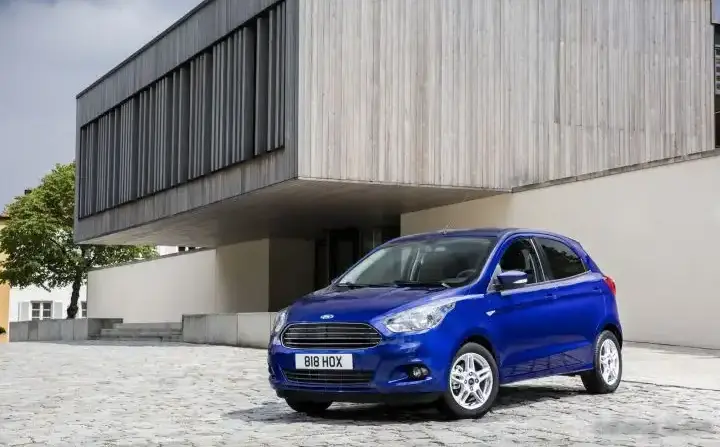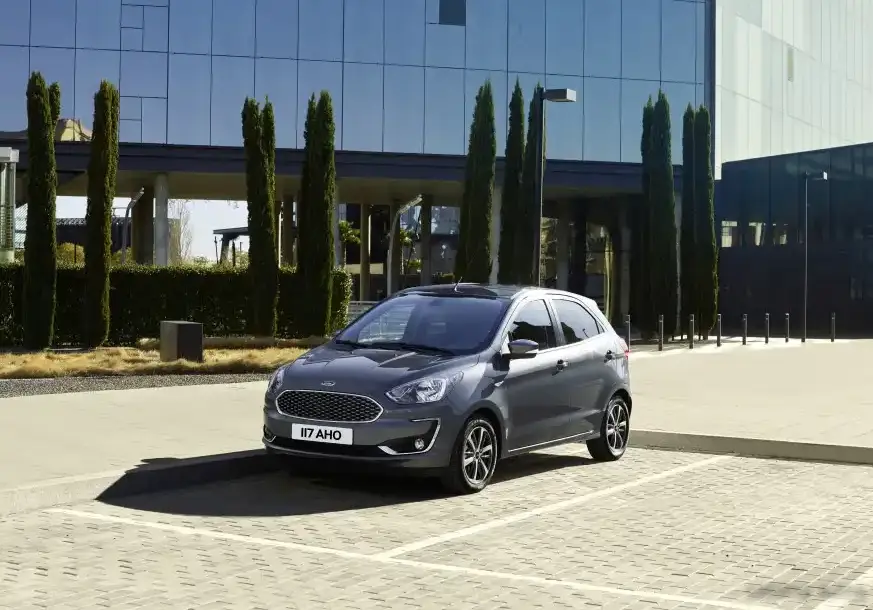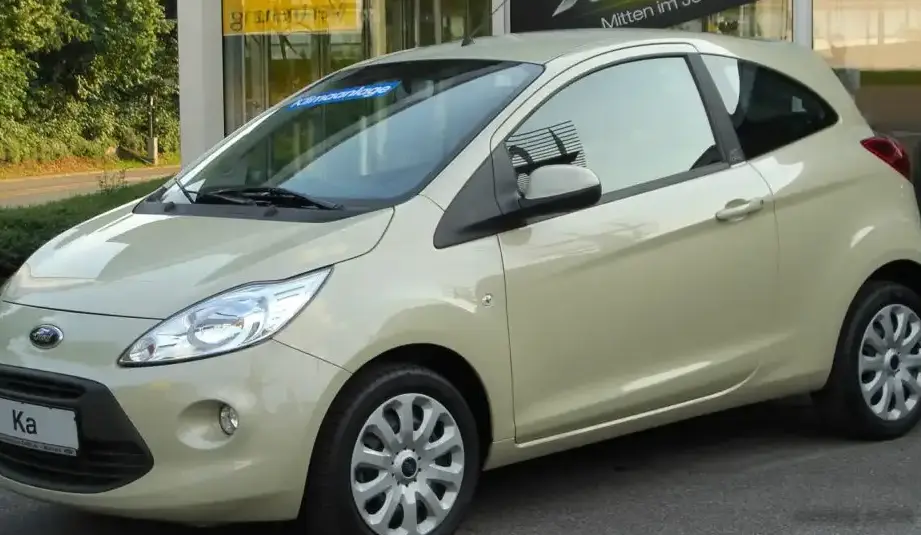
The Ford KA III, specifically the 1.5i variant produced from 2019 to 2021, represents a significant evolution in Ford’s small car offerings for the South American market. While the original Ford KA and its second generation were popular in Europe, the KA III was primarily designed and manufactured for Brazil and other Latin American countries. The 2019 facelift brought updated styling and, crucially, a new engine option – the 1.5-liter Dragon series engine producing 128 horsepower. This variant occupied a mid-range position within the KA III lineup, offering a balance between affordability and performance, slotting above the base 1.0-liter models and below any potential higher-performance trims. It was a key model in Ford’s strategy to maintain a competitive presence in the region’s compact car segment.
Technical Specifications
| Brand | Ford |
| Model | KA |
| Generation | KA III (facelift 2019) |
| Type (Engine) | 1.5i (128 Hp) |
| Start of production | 2019 year |
| End of production | 2021 year |
| Powertrain Architecture | Internal Combustion engine |
| Body type | Sedan |
| Seats | 5 |
| Doors | 4 |
| Fuel Type | Petrol (Gasoline) |
| Weight-to-power ratio | 8.4 kg/Hp, 119.4 Hp/tonne |
| Weight-to-torque ratio | 7 kg/Nm, 142.7 Nm/tonne |
| Power | 128 Hp |
| Power per litre | 85.4 Hp/l |
| Torque | 153 Nm / 112.85 lb.-ft. |
| Engine layout | Front, Transverse |
| Engine Model/Code | Dragon |
| Engine displacement | 1498 cm3 / 91.41 cu. in. |
| Number of cylinders | 3 |
| Engine configuration | Inline |
| Number of valves per cylinder | 4 |
| Fuel injection system | Multi-port manifold injection |
| Engine aspiration | Naturally aspirated engine |
| Engine oil capacity | 3.7 l / 3.91 US qt | 3.26 UK qt |
| Coolant | 6.3 l / 6.66 US qt | 5.54 UK qt |
| Kerb Weight | 1072 kg / 2363.36 lbs. |
| Max. weight | 1470 kg / 3240.8 lbs. |
| Max load | 398 kg / 877.44 lbs. |
| Trunk (boot) space – minimum | 445 l / 15.72 cu. ft. |
| Fuel tank capacity | 51 l / 13.47 US gal | 11.22 UK gal |
| Length | 4275 mm / 168.31 in. |
| Width | 1695 mm / 66.73 in. |
| Width including mirrors | 1911 mm / 75.24 in. |
| Height | 1525 mm / 60.04 in. |
| Wheelbase | 2490 mm / 98.03 in. |
| Drivetrain Architecture | The Internal combustion engine (ICE) drives the front wheels of the vehicle. |
| Drive wheel | Front wheel drive |
| Number of gears and type of gearbox | 5 gears, manual transmission |
| Front suspension | Independent type McPherson |
| Rear suspension | Wishbone |
| Front brakes | Disc |
| Rear brakes | Drum |
| Assisting systems | ABS (Anti-lock braking system) |
| Tires size | 175/65 R14 |
| Wheel rims size | 14 |
Powertrain & Engine Architecture
The heart of the KA III 1.5i is Ford’s Dragon series 1.5-liter inline-three cylinder engine. This engine represented a move towards more modern, efficient powertrains for the South American market. The Dragon engine family is characterized by its all-aluminum construction, which contributes to weight savings, and its dual-variable valve timing (DVVT) system. The DVVT optimizes valve timing for both intake and exhaust, improving both power and fuel efficiency across the engine’s operating range. Fuel delivery is managed by a multi-port fuel injection system. The engine produces 128 horsepower and 153 Nm (112.85 lb-ft) of torque. The engine code specific to this configuration varies by market, but it’s generally identified within the Dragon series. The engine is paired with a five-speed manual transmission, which was the standard offering for this trim level. While an automatic transmission was available on other KA III variants, it wasn’t offered with the 1.5i engine.
Driving Characteristics
The 1.5i engine provided a noticeable step up in performance compared to the base 1.0-liter engine. While not a sports car, the 128 hp output gave the KA III a respectable level of acceleration for everyday driving. The five-speed manual transmission allowed drivers to keep the engine in its optimal power band, providing responsive performance. The gear ratios were tuned for a balance between fuel economy and acceleration. Compared to a hypothetical higher-output version, the 1.5i prioritized fuel efficiency and affordability over outright speed. The relatively light weight of the KA III (1072 kg / 2363.36 lbs) helped to offset the modest horsepower figure, resulting in a car that felt nimble and easy to drive in urban environments. The engine’s torque curve was relatively flat, providing decent pulling power at lower speeds, which was beneficial for navigating city traffic.
Equipment & Trim Levels
The KA III 1.5i typically came equipped with a reasonable level of standard features. These included air conditioning, power steering, electric front windows, and a basic audio system with USB connectivity. Safety features included dual front airbags and ABS (Anti-lock Braking System). The interior upholstery was typically cloth, with a relatively simple dashboard layout. Optional extras included alloy wheels, a more advanced audio system with Bluetooth connectivity, and rear parking sensors. The trim level of the 1.5i often sat in the middle of the KA III range, offering more features than the base models but lacking some of the premium touches found in higher-spec versions.
Chassis & Braking
The KA III utilized a McPherson strut independent suspension at the front and a twist-beam rear suspension. This setup provided a comfortable ride quality, suitable for the often-rough road conditions found in South America. The front brakes were disc brakes, providing adequate stopping power, while the rear brakes were drum brakes, a cost-saving measure common in this segment. The steering was hydraulically assisted, offering a reasonable level of feedback. The chassis was designed to be lightweight and rigid, contributing to the car’s handling characteristics. Stabilizer bars were included to reduce body roll during cornering.
Market Reception & Comparison
The Ford KA III 1.5i was generally well-received by critics and consumers in South America. It was praised for its fuel efficiency, comfortable ride, and relatively spacious interior for a car of its size. Compared to its rivals, such as the Fiat Palio and Volkswagen Gol, the KA III offered a competitive package in terms of price, features, and performance. The 1.5i engine provided a good balance between power and economy, making it a popular choice for buyers who wanted a car that was both practical and enjoyable to drive. Reliability was generally considered to be good, although some owners reported minor issues with the electrical system. Fuel economy was a strong point, with the KA III 1.5i achieving around 13-15 km/l (30-35 mpg) in mixed driving conditions.
Legacy
The Ford KA III, including the 1.5i variant, played a significant role in Ford’s presence in the South American market. While production ended in 2021, the KA III remains a popular choice on the used car market. The Dragon engine has proven to be relatively reliable, and parts availability is generally good. The KA III 1.5i is often seen as a good value proposition, offering a practical and affordable mode of transportation. Its simple design and robust construction contribute to its longevity, making it a car that can provide years of reliable service. The KA III’s legacy is one of affordability, practicality, and a commitment to providing a decent driving experience in a competitive segment.