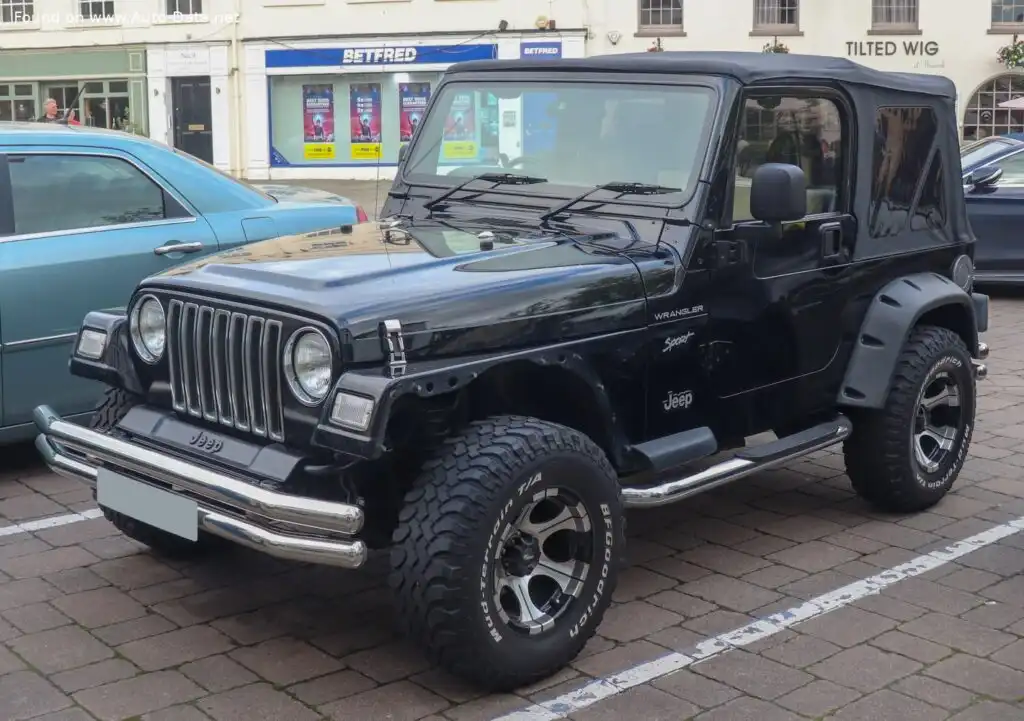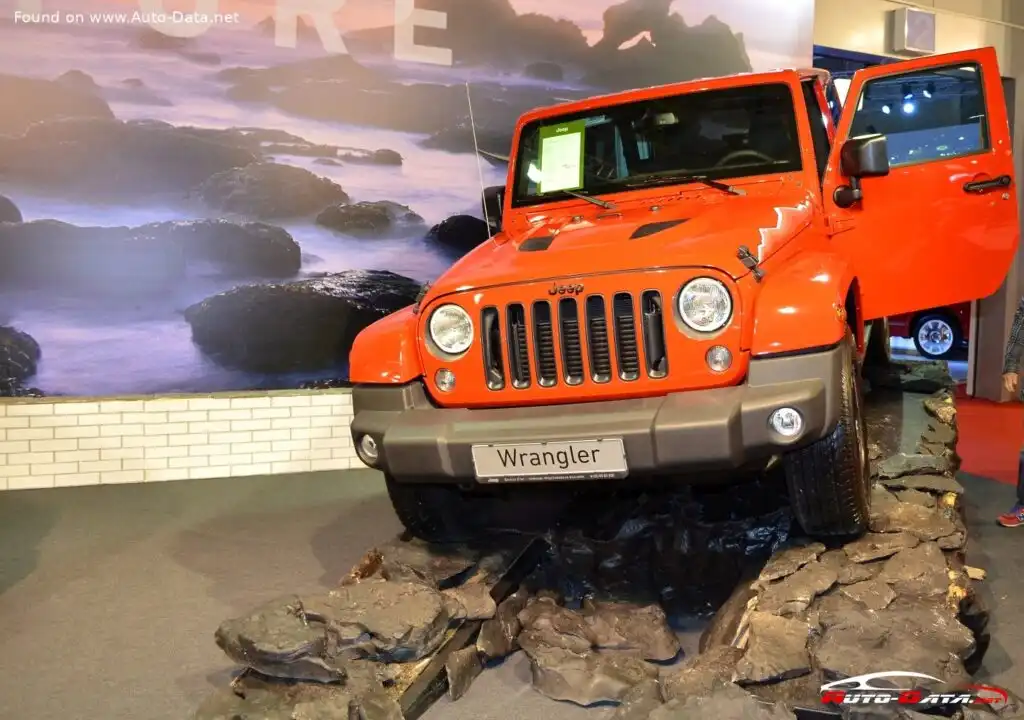
The Jeep Wrangler JK Sport 2.8 CRDi 4×4, produced from 2007 to 2009, represented a significant step forward for the iconic Wrangler lineage. Falling within the third generation (JK) of the Wrangler, this variant was primarily aimed at the European market, offering a diesel engine option that prioritized fuel efficiency and torque for off-road capability. It occupied a mid-range position in the JK lineup, serving as a more economical alternative to the gasoline-powered models while still providing the core Wrangler experience. This model was a key part of Jeep’s strategy to broaden the Wrangler’s appeal beyond the traditional North American focus.
Technical Specifications
| Brand | Jeep |
| Model | Wrangler |
| Generation | Wrangler III (JK) |
| Type (Engine) | Sport 2.8 CRDi (174 Hp) 4×4 |
| Start of production | 2007 |
| End of production | 2009 |
| Powertrain Architecture | Internal Combustion engine |
| Body type | Off-road vehicle |
| Seats | 4 |
| Doors | 2 |
| Fuel consumption (urban) | 12.7 l/100 km (18.5 US mpg, 22.2 UK mpg, 7.9 km/l) |
| Fuel consumption (extra urban) | 8.3 l/100 km (28.3 US mpg, 34 UK mpg, 12 km/l) |
| Fuel consumption (combined) | 9.9 l/100 km (23.8 US mpg, 28.5 UK mpg, 10.1 km/l) |
| CO2 emissions | 263 g/km |
| Fuel Type | Diesel |
| Acceleration 0 – 100 km/h | 11.2 sec |
| Acceleration 0 – 62 mph | 11.2 sec |
| Acceleration 0 – 60 mph | 10.6 sec |
| Maximum speed | 180 km/h (111.85 mph) |
| Emission standard | Euro 4 |
| Weight-to-power ratio | 10.4 kg/Hp, 96.4 Hp/tonne |
| Weight-to-torque ratio | 4.4 kg/Nm, 227.1 Nm/tonne |
| Power | 174 Hp @ 3800 rpm |
| Power per litre | 62.7 Hp/l |
| Torque | 410 Nm @ 2000-3200 rpm (302.4 lb.-ft. @ 2000-3200 rpm) |
| Maximum engine speed | 4500 rpm |
| Engine layout | Front, Longitudinal |
| Engine Model/Code | ENS |
| Engine displacement | 2776 cm3 (169.4 cu. in.) |
| Number of cylinders | 4 |
| Engine configuration | Inline |
| Cylinder Bore | 94 mm (3.7 in.) |
| Piston Stroke | 100 mm (3.94 in.) |
| Compression ratio | 17.5:1 |
| Number of valves per cylinder | 4 |
| Fuel injection system | Diesel Commonrail |
| Engine aspiration | Turbocharger, Intercooler |
| Valvetrain | DOHC |
| Engine oil capacity | 6.6 l (6.97 US qt | 5.81 UK qt) |
| Coolant | 12 l (12.68 US qt | 10.56 UK qt) |
| Kerb Weight | 1805 kg (3979.34 lbs.) |
| Max. weight | 2501 kg (5513.76 lbs.) |
| Max load | 696 kg (1534.42 lbs.) |
| Trunk (boot) space – minimum | 142 l (5.01 cu. ft.) |
| Trunk (boot) space – maximum | 430 l (15.19 cu. ft.) |
| Fuel tank capacity | 66 l (17.44 US gal | 14.52 UK gal) |
| Length | 4223 mm (166.26 in.) |
| Width | 1873 mm (73.74 in.) |
| Height | 1816 mm (71.5 in.) |
| Wheelbase | 2424 mm (95.43 in.) |
| Front track | 1572 mm (61.89 in.) |
| Rear (Back) track | 1572 mm (61.89 in.) |
| Ride height (ground clearance) | 238 mm (9.37 in.) |
| Drag coefficient (Cd) | 0.495 |
| Minimum turning circle | 10.36 m (33.99 ft.) |
| Approach angle | 36.4° |
| Departure angle | 29.8° |
| Ramp-over angle | 23.1° |
| Drive wheel | All wheel drive (4×4) |
| Number of gears | 6 |
| Gearbox type | Manual transmission |
| Front suspension | Rigid axle suspension |
| Rear suspension | Rigid axle suspension |
| Front brakes | Ventilated discs |
| Rear brakes | Disc |
| Assisting systems | ABS (Anti-lock braking system) |
| Tires size | 225/75 R16 |
| Wheel rims size | 16 |
Powertrain & Engine Architecture
The heart of the JK Sport 2.8 CRDi is the 2.8-liter inline-four cylinder diesel engine, designated the ENS code. This engine was sourced from VM Motori, an Italian manufacturer specializing in diesel engines. It featured a common rail direct injection system, delivering fuel directly into the cylinders at extremely high pressure for improved combustion efficiency and reduced emissions. The engine employed a single overhead camshaft (SOHC) design, operating four valves per cylinder (DOHC). A turbocharger with an intercooler was standard, boosting power output and providing increased torque at lower engine speeds. The 6-speed manual transmission was the only transmission option available with this engine, chosen for its durability and efficiency. The engine’s longitudinal mounting within the chassis contributed to a balanced weight distribution, enhancing handling characteristics.
Driving Characteristics
The 174 horsepower and 410 Nm (302 lb-ft) of torque produced by the 2.8 CRDi engine provided a usable, if not exhilarating, driving experience. While not as quick as the gasoline-powered Wranglers, the diesel engine’s strong low-end torque made it well-suited for off-road driving and towing. The 6-speed manual transmission offered precise gear changes, allowing drivers to maintain optimal engine speed for various terrains. The gear ratios were tuned for practicality rather than performance, prioritizing fuel economy and off-road crawling ability. Compared to the 3.8L V6 gasoline engine, the CRDi offered significantly better fuel economy, but lacked the V6’s immediate throttle response and higher top-end power.
Equipment & Trim Levels
The JK Sport 2.8 CRDi typically came equipped with standard features such as air conditioning, power windows and locks, and a basic audio system. The interior featured durable, washable materials designed to withstand the rigors of off-road use. Upholstery was typically cloth, with optional upgrades to leather available. Optional extras included a premium sound system, upgraded wheels and tires, and various off-road accessories like a winch and rock rails. The dashboard layout was functional and straightforward, prioritizing ease of use over luxury.
Chassis & Braking
The JK Wrangler utilized a robust body-on-frame construction, providing excellent durability and off-road capability. The suspension consisted of a solid front and rear axle setup, with multi-link coil spring suspension. This configuration allowed for significant wheel articulation, essential for navigating challenging terrain. The braking system featured ventilated discs on the front wheels and solid discs on the rear, equipped with an Anti-lock Braking System (ABS) for enhanced safety. The relatively heavy weight of the diesel engine necessitated a robust chassis and braking system to ensure adequate stopping power.
Market Reception & Comparison
The 2.8 CRDi variant was well-received in European markets where diesel engines were highly popular due to their fuel efficiency and lower running costs. Critics praised the engine’s torque and fuel economy, but some noted its lack of refinement compared to gasoline engines. Compared to the 3.8L V6 gasoline model, the CRDi offered superior fuel economy (around 24 mpg combined versus 18 mpg) but slightly slower acceleration. The diesel engine also tended to be more expensive to maintain due to the complexity of the fuel injection system and the potential for diesel particulate filter (DPF) issues.
Legacy
The 2.8 CRDi engine proved to be a relatively reliable powertrain when properly maintained. However, like all diesel engines, it was susceptible to issues related to the fuel injection system and the DPF. In the used car market, the JK Wrangler 2.8 CRDi remains a popular choice for those seeking a capable and fuel-efficient off-road vehicle. Its robust construction and readily available parts contribute to its longevity. While not as sought after as some of the higher-performance gasoline models, the 2.8 CRDi offers a compelling combination of capability, economy, and durability, making it a valuable addition to the Wrangler lineage.