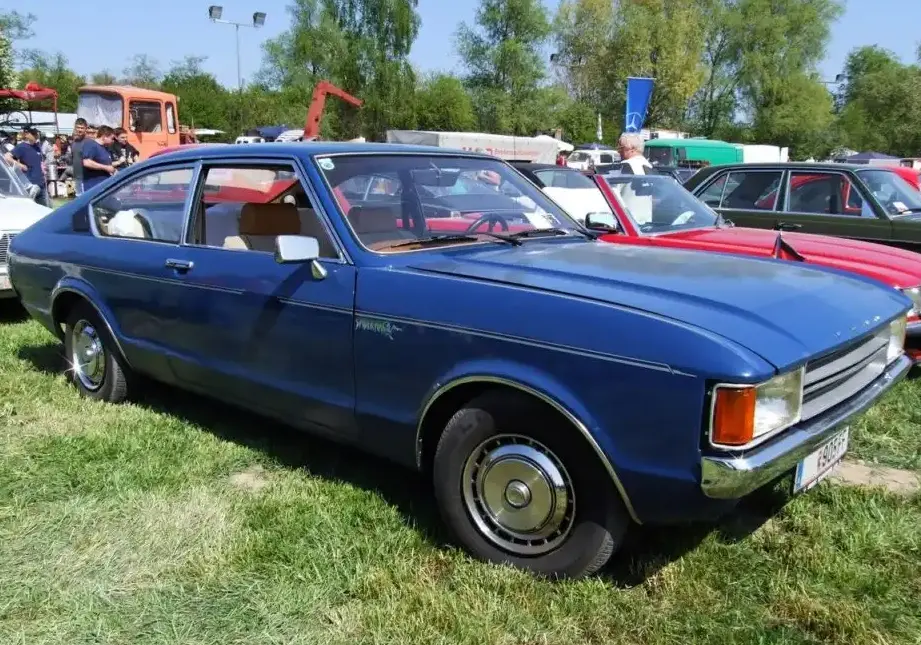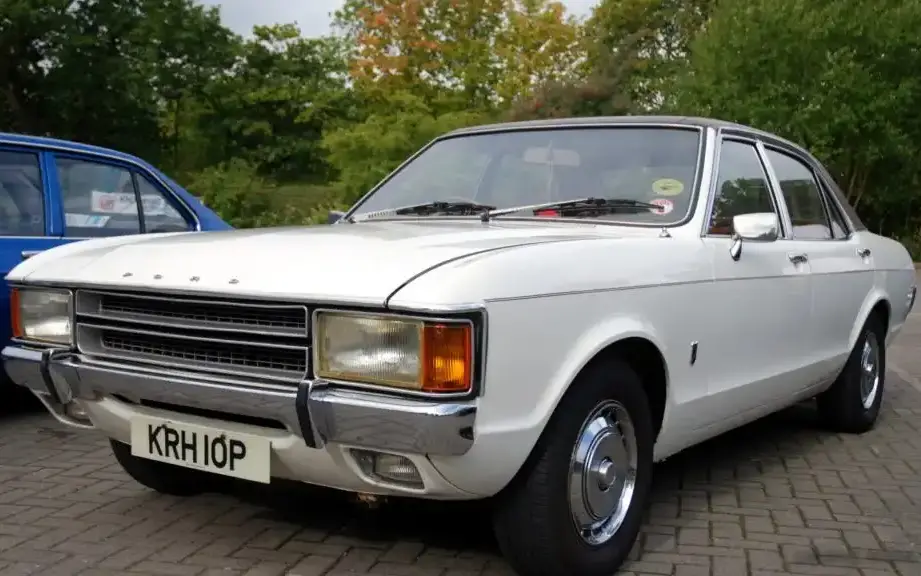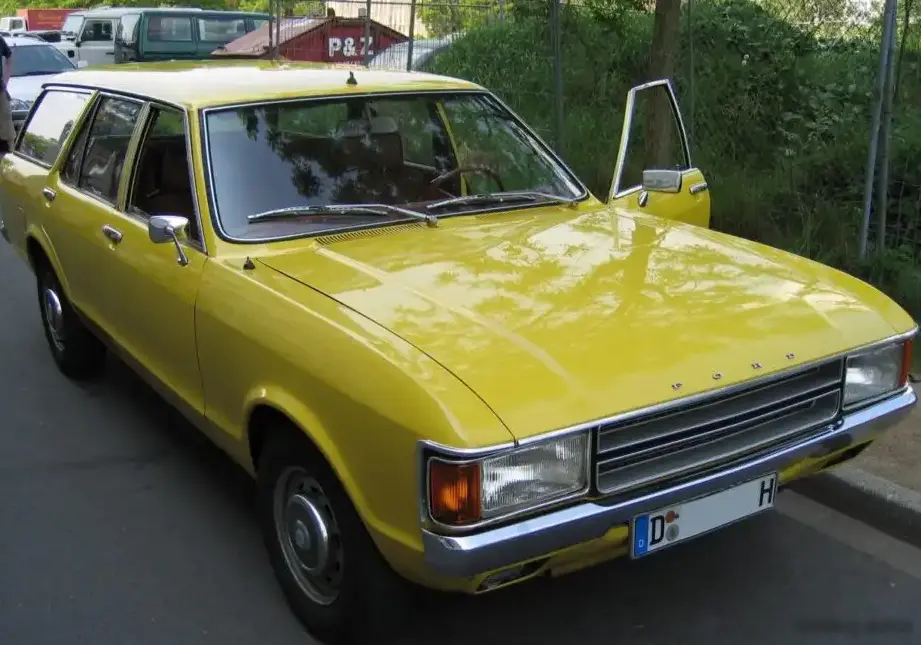
The Ford Consul Turnier GGNL 1700, produced between 1972 and 1976, was a key offering in Ford of Britain’s lineup during that era. Positioned as a practical and affordable family estate car, the Turnier filled a crucial gap in the market, providing a spacious and versatile vehicle for the growing suburban population. It was based on the Ford Consul platform, offering a more utilitarian body style compared to the saloon (sedan) versions. The 1700 variant, equipped with a 75 horsepower engine and a three-speed automatic transmission, served as a mid-range option within the Turnier family, offering a balance between performance and economy. This model aimed to appeal to buyers needing a reliable workhorse for family duties and leisure activities.
Technical Specifications
| Brand | Ford |
| Model | Consul |
| Generation | Consul Turnier (GGNL) |
| Type (Engine) | 1700 (75 Hp) |
| Start of production | 1972 |
| End of production | 1976 |
| Powertrain Architecture | Internal Combustion Engine |
| Body type | Station Wagon (Estate) |
| Fuel Type | Petrol (Gasoline) |
| Power | 75 Hp |
| Engine Aspiration | Naturally Aspirated |
Powertrain & Engine Architecture
The heart of the Consul Turnier 1700 was the Ford Essex V4 engine, specifically the 1699cc variant. This engine, designated as the 2000E, was a 60-degree V4, notable for its relatively smooth operation compared to inline-four engines, despite the inherent balancing challenges associated with the V4 configuration. The engine utilized a single overhead camshaft (SOHC) design, operating two valves per cylinder. Fuel delivery was managed by a Zenith 36mm downdraft carburetor, a common setup for Ford vehicles of the era. The carburetor provided adequate fuel atomization for the engine’s modest power output. The engine block was cast iron, providing durability, while the cylinder head was aluminum alloy, contributing to weight reduction.
The 75 horsepower was achieved at 4,750 rpm, with peak torque of 109 lb-ft (148 Nm) arriving at 3,000 rpm. This torque curve provided reasonable pulling power for everyday driving, even when fully loaded. The engine was mated to a three-speed automatic transmission, a Borg-Warner unit, which was a popular choice for Ford at the time. This transmission offered convenience, particularly in urban environments, but at the expense of some performance and fuel efficiency compared to the available four-speed manual gearbox. The automatic transmission featured a torque converter, providing smooth engagement and multiplication of engine torque.
Driving Characteristics
The Consul Turnier 1700 Automatic offered a comfortable, if not particularly exhilarating, driving experience. The automatic transmission, while convenient, resulted in a noticeable delay in response compared to the manual versions. Acceleration was adequate for merging onto highways and overtaking slower traffic, but it wasn’t a particularly quick vehicle. The gear ratios were optimized for fuel economy and cruising comfort rather than outright performance. The 0-60 mph time was estimated to be around 16-18 seconds, placing it firmly in the realm of practical transportation rather than sporty driving. The suspension, consisting of independent front suspension with MacPherson struts and a live axle with leaf springs at the rear, provided a reasonably comfortable ride, absorbing bumps and imperfections in the road surface effectively. However, the rear leaf springs could sometimes result in a somewhat bouncy ride when unladen.
Compared to the manual transmission versions of the 1700, the automatic suffered a slight performance penalty. The manual gearbox allowed for more precise control over engine speed and gear selection, resulting in quicker acceleration and improved fuel economy. The higher-specification 2.0-liter Consul Turnier models, with their increased power output, offered a more dynamic driving experience, but at a higher price point.
Equipment & Trim Levels
The Consul Turnier 1700, in its automatic guise, typically came equipped with a reasonable level of standard features for the early 1970s. These included cloth upholstery, a heater, and a basic instrument panel with speedometer, fuel gauge, and temperature gauge. The steering wheel was a large-diameter, two-spoke design. The interior trim was generally functional and durable, prioritizing practicality over luxury. Optional extras included a radio, a vinyl roof, and upgraded upholstery. The Turnier’s spacious interior was a key selling point, offering ample room for passengers and luggage. The rear seats could be folded down to create a larger cargo area, further enhancing its versatility.
The trim level of the 1700 Automatic generally sat in the middle of the Turnier range. It offered more features than the base models but lacked the more luxurious appointments found in the 2.0-liter versions. The exterior trim was relatively understated, with chrome bumpers and brightwork providing a touch of visual appeal.
Chassis & Braking
The Consul Turnier 1700 utilized a body-on-frame construction, a common practice for Ford at the time. This construction method provided a robust and durable chassis, but also contributed to the vehicle’s relatively heavy weight. The front suspension featured MacPherson struts, coil springs, and an anti-roll bar, providing good handling characteristics. The rear suspension employed a live axle with leaf springs and shock absorbers.
The braking system consisted of disc brakes at the front and drum brakes at the rear. The hydraulic braking system provided adequate stopping power for the vehicle’s weight and performance. However, the drum brakes at the rear were less effective than disc brakes, particularly in wet conditions. The steering was a recirculating ball system, providing a relatively heavy but precise steering feel.
Market Reception & Comparison
The Ford Consul Turnier 1700 Automatic was generally well-received by the British motoring press. Critics praised its practicality, spaciousness, and comfortable ride. However, the automatic transmission was often criticized for its sluggish performance and impact on fuel economy. Compared to rivals such as the Vauxhall Victor Estate and the Morris Marina Estate, the Consul Turnier offered a good balance of features, performance, and price. The Vauxhall Victor Estate was often considered to be more stylish, while the Morris Marina Estate was generally cheaper but less refined.
Fuel economy for the 1700 Automatic was typically in the range of 20-25 mpg, which was considered reasonable for the time. Reliability was generally good, although the V4 engine was known to be prone to oil leaks if not properly maintained.
Legacy
The Ford Consul Turnier 1700 Automatic, while not a particularly iconic or collectible vehicle, holds a significant place in British automotive history. It represents a practical and affordable family estate car that served the needs of many families during the 1970s. Today, surviving examples are relatively rare and are sought after by classic car enthusiasts. The V4 engine, while not known for its performance, is relatively simple to maintain and repair. The automatic transmission, while not the most efficient, is generally reliable if properly serviced. The Consul Turnier 1700 Automatic remains a testament to Ford’s commitment to providing practical and affordable transportation for the masses.