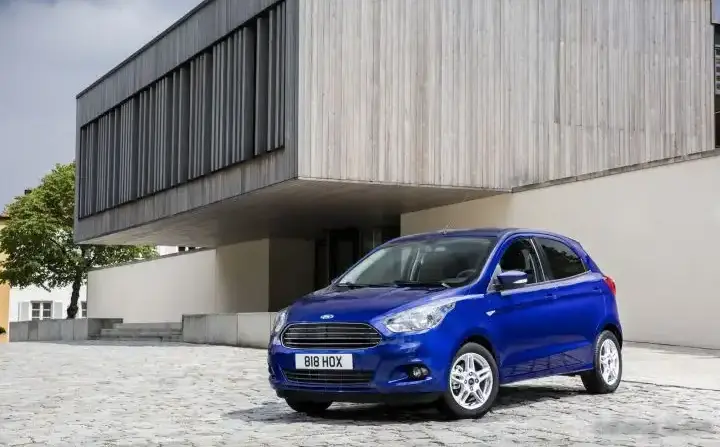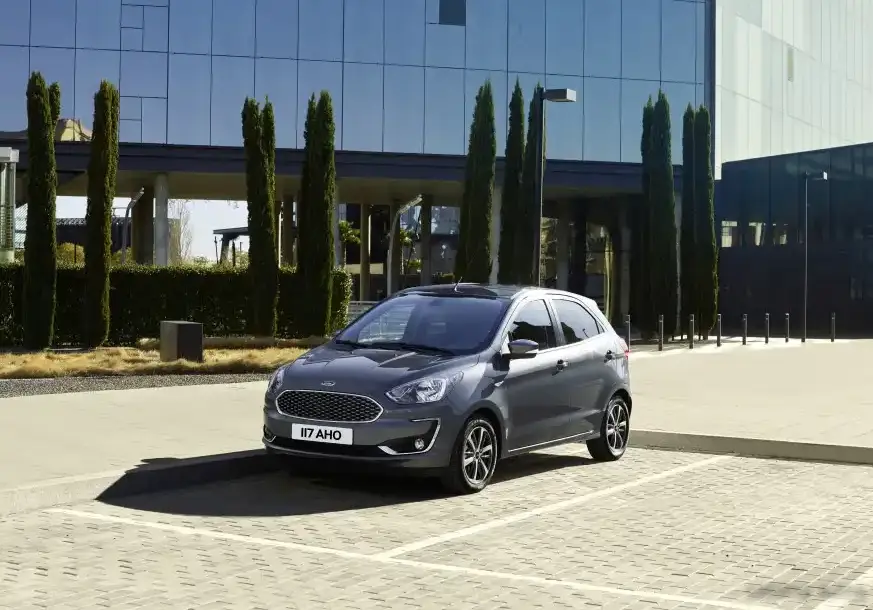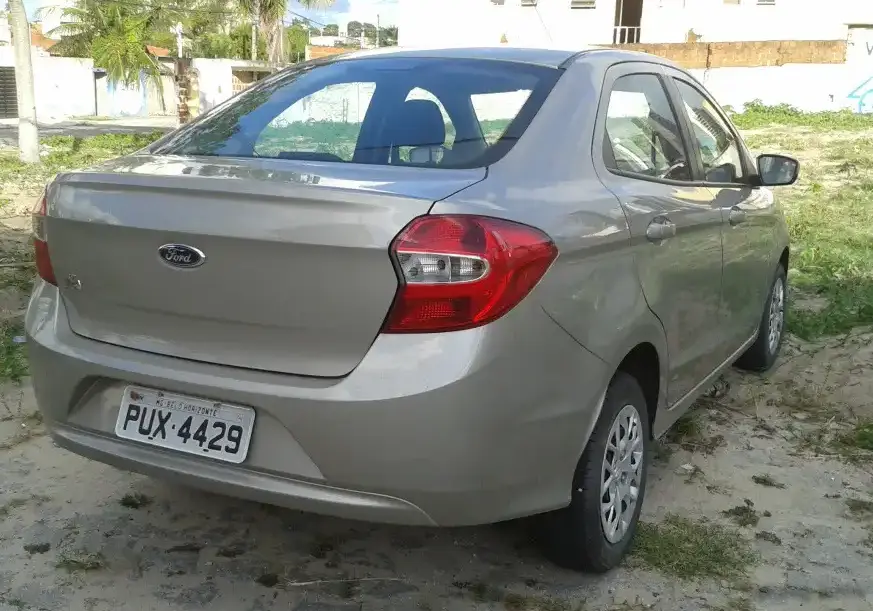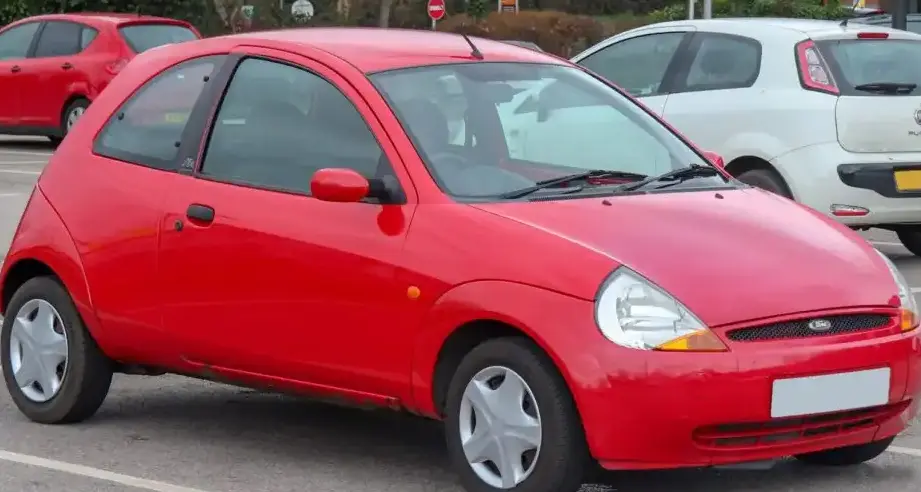
The Ford KA (RBT) 1.3 i, producing 50 horsepower, was an entry-level hatchback introduced by Ford in 1996 and remained in production through 1998. It represented Ford’s attempt to create a small, affordable, and stylish city car primarily aimed at the European market. The KA, built on a completely new platform for Ford, was a significant departure from previous small Ford offerings and quickly gained popularity for its nimble handling and compact dimensions. This particular 1.3L variant served as the base model, offering a cost-effective entry point into the KA range.
Technical Specifications
| Brand | Ford |
| Model | KA |
| Generation | KA (RBT) |
| Type (Engine) | 1.3 i (50 Hp) |
| Start of production | 1996 |
| End of production | 1998 |
| Powertrain Architecture | Internal Combustion engine |
| Body type | Hatchback |
| Seats | 4 |
| Doors | 3 |
| Fuel consumption (urban) | 7.9 l/100 km (29.8 US mpg) |
| Fuel consumption (extra urban) | 4.8 l/100 km (49 US mpg) |
| Fuel Type | Petrol (Gasoline) |
| Acceleration 0 – 100 km/h | 17.7 sec |
| Acceleration 0 – 62 mph | 17.7 sec |
| Acceleration 0 – 60 mph | 16.8 sec |
| Maximum speed | 147 km/h (91.34 mph) |
| Weight-to-power ratio | 17.4 kg/Hp |
| Weight-to-torque ratio | 9 kg/Nm |
| Power | 50 Hp @ 4500 rpm |
| Power per litre | 38.5 Hp/l |
| Torque | 97 Nm @ 2000 rpm (71.54 lb.-ft. @ 2000 rpm) |
| Engine layout | Front, Transverse |
| Engine Model/Code | JJB |
| Engine displacement | 1299 cm3 (79.27 cu. in.) |
| Number of cylinders | 4 |
| Engine configuration | Inline |
| Cylinder Bore | 74 mm (2.91 in.) |
| Piston Stroke | 75.5 mm (2.97 in.) |
| Compression ratio | 9.5:1 |
| Number of valves per cylinder | 2 |
| Fuel injection system | Multi-port manifold injection |
| Engine aspiration | Naturally aspirated engine |
| Valvetrain | OHC |
| Engine oil capacity | 3.25 l (3.43 US qt | 2.86 UK qt) |
| Kerb Weight | 870 kg (1918.02 lbs.) |
| Max. weight | 1265 kg (2788.85 lbs.) |
| Max load | 395 kg (870.83 lbs.) |
| Trunk (boot) space – minimum | 186 l (6.57 cu. ft.) |
| Trunk (boot) space – maximum | 724 l (25.57 cu. ft.) |
| Fuel tank capacity | 42 l (11.1 US gal | 9.24 UK gal) |
| Length | 3620 mm (142.52 in.) |
| Width | 1639 mm (64.53 in.) |
| Height | 1383 mm (54.45 in.) |
| Wheelbase | 2448 mm (96.38 in.) |
| Front track | 1392 mm (54.8 in.) |
| Rear (Back) track | 1408 mm (55.43 in.) |
| Drivetrain Architecture | Front wheel drive |
| Number of gears and type of gearbox | 5 gears, manual transmission |
| Front suspension | Spring Strut |
| Rear suspension | Coil spring |
| Front brakes | Disc |
| Rear brakes | Drum |
| Assisting systems | ABS (Anti-lock braking system) |
| Steering type | Steering rack and pinion |
| Tires size | 155/70 R13 |
| Wheel rims size | 5J x 13 |
Powertrain & Engine Architecture
The heart of the KA 1.3 i was the Ford JJB engine, a 1.3-liter inline-four cylinder petrol engine. This engine, while relatively simple in design, was known for its durability and ease of maintenance. It featured a single overhead camshaft (OHC) operating two valves per cylinder. Fuel delivery was handled by a multi-port fuel injection system, providing adequate, though not exceptional, performance. The engine produced 50 horsepower at 4500 rpm and 97 Nm (71.54 lb-ft) of torque at 2000 rpm. The engine’s relatively low output was a deliberate choice to keep the vehicle affordable and fuel-efficient. The engine was transversely mounted, driving the front wheels. The standard transmission was a five-speed manual gearbox, optimized for city driving and fuel economy.
Driving Characteristics
The 1.3L KA with a manual transmission was not a performance car. Acceleration was leisurely, taking approximately 17.7 seconds to reach 62 mph (100 km/h). However, the KA’s light weight (around 870 kg or 1918 lbs) and well-tuned suspension made it surprisingly nimble and enjoyable to drive in urban environments. The gear ratios were chosen to prioritize fuel economy and drivability at lower speeds. Compared to potential higher-output versions (which weren’t offered in the initial KA range), the 1.3 i lacked the punch for highway overtaking or spirited driving. The steering was direct and responsive, contributing to the car’s engaging handling. The relatively soft suspension provided a comfortable ride, absorbing bumps and imperfections in the road.
Equipment & Trim Levels
The base-level KA 1.3 i was fairly spartan in terms of equipment. Standard features typically included basic cloth upholstery, a simple dashboard layout, and manual windows and door locks. Safety features were limited, with ABS being a notable inclusion, but airbags were not standard equipment. Optional extras included power steering, central locking, and a basic audio system. The interior was designed with practicality in mind, offering sufficient space for four adults, although rear passenger space was limited. The interior plastics were durable but not particularly luxurious.
Chassis & Braking
The KA’s chassis was a key element of its success. It featured a MacPherson strut front suspension and a coil spring rear suspension. This setup provided a good balance between ride comfort and handling. The front brakes were discs, while the rear brakes were drums, a cost-saving measure typical for vehicles in this segment. The steering was a rack and pinion system, providing precise and responsive control. The relatively narrow tires (155/70 R13) contributed to the car’s fuel efficiency and affordability.
Market Reception & Comparison
The Ford KA 1.3 i was generally well-received by automotive critics, particularly for its affordability, nimble handling, and stylish design. It was praised as a practical and enjoyable city car. However, its lack of power and limited equipment were also noted. Compared to other small hatchbacks of the time, such as the Fiat Punto or the Renault Clio, the KA offered a more engaging driving experience but lacked some of the refinement and features of its competitors. Fuel economy was a strong point, making it an attractive option for budget-conscious buyers. Reliability was generally good, although the simple engine and mechanical components contributed to its ease of repair.
Legacy
The Ford KA (RBT) 1.3 i laid the foundation for a successful line of small Ford hatchbacks. The original KA remained in production for several years and established a reputation for reliability and affordability. Today, the KA 1.3 i is a relatively rare sight on the roads, but it remains a popular choice among classic car enthusiasts and those seeking a simple, affordable, and enjoyable city car. The JJB engine is known for its durability, and well-maintained examples can still provide reliable transportation. The KA’s impact on the small car segment was significant, demonstrating that a small car could be both affordable and fun to drive.