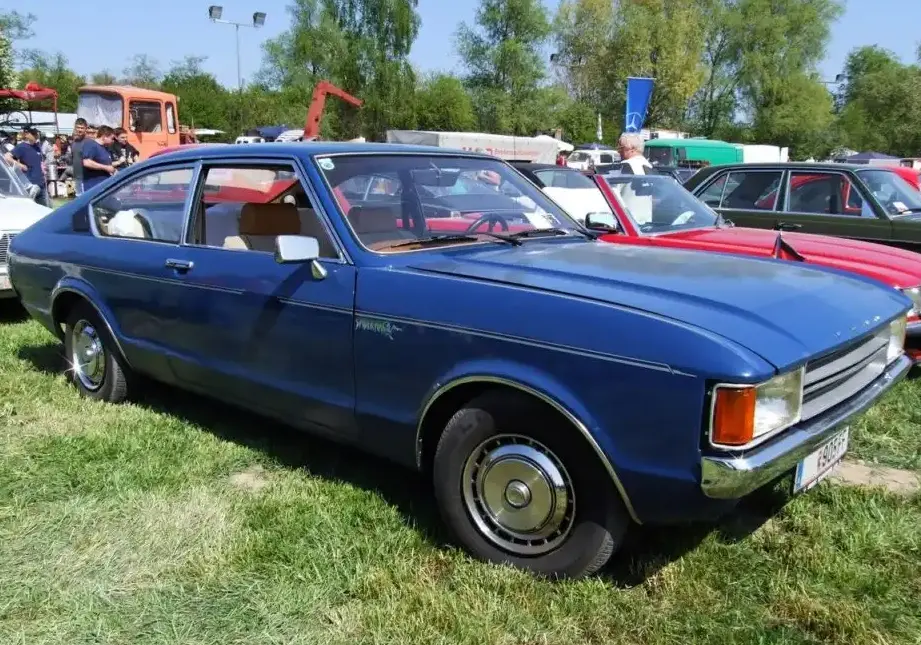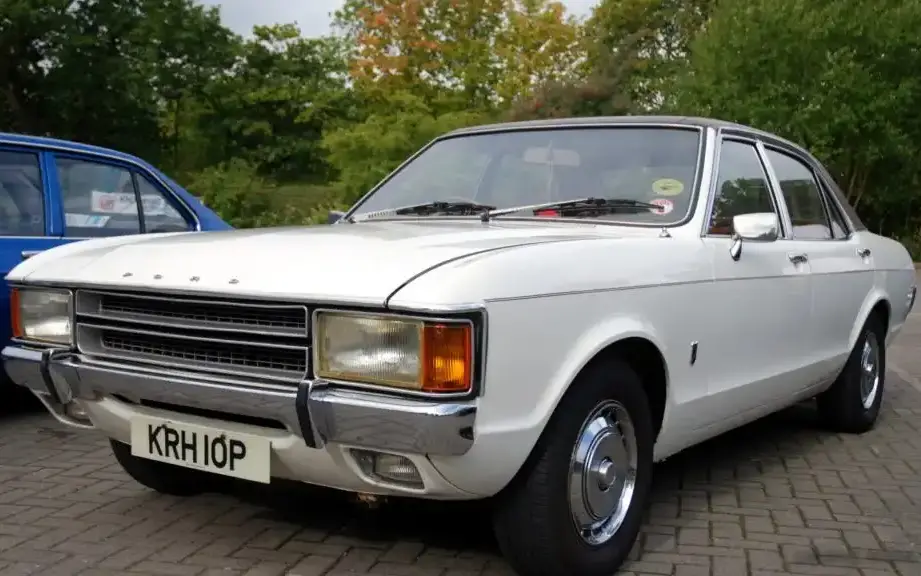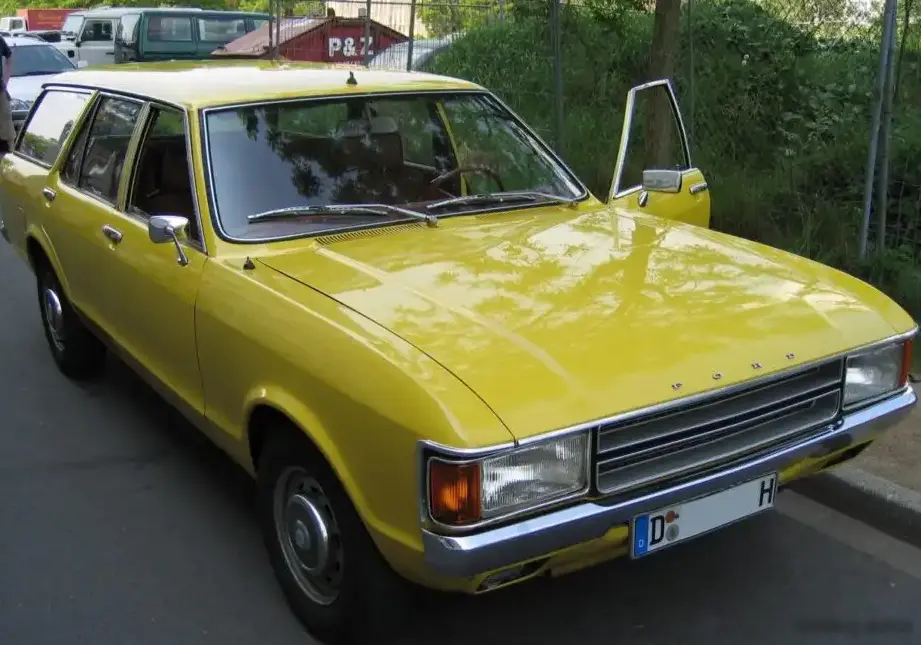
The Ford Consul Turnier, specifically the GGNL variant powered by the 2.0-liter engine producing 99 horsepower, represents a significant offering in Ford of Britain’s lineup during the early to mid-1970s. Produced from 1972 to 1976, the Turnier was Ford’s answer to the growing demand for practical, family-oriented station wagons. It built upon the foundation of the Consul saloon, offering increased cargo capacity and versatility. This particular 2.0-liter, 99 hp version occupied a middle ground within the Turnier range, providing a balance between affordability and performance, appealing to buyers who needed a spacious vehicle without the expense of the top-tier models.
Technical Specifications
| Brand | Ford |
| Model | Consul |
| Generation | Consul Turnier (GGNL) |
| Type (Engine) | 2000 (99 Hp) |
| Start of production | 1972 |
| End of production | 1976 |
| Powertrain Architecture | Internal Combustion Engine |
| Body type | Station Wagon (Estate) |
| Fuel Type | Petrol (Gasoline) |
| Power | 99 Hp |
| Engine Aspiration | Naturally Aspirated |
Introduction
The Ford Consul Turnier (GGNL) emerged as a crucial model for Ford in the UK market during a period of evolving consumer preferences. The early 1970s saw a rise in demand for practical vehicles capable of handling family life and leisure activities. The Turnier, based on the existing Consul platform, directly addressed this need. The “GGNL” designation specifically identifies the 2.0-liter engine variant with approximately 99 horsepower. This model sat between the lower-powered 1.7-liter versions and the more expensive 2.0-liter GT models, offering a compelling combination of space, usability, and reasonable running costs. It was a direct competitor to vehicles like the Vauxhall Victor Estate and the Morris Marina Estate.
Powertrain & Engine Architecture
The heart of the Consul Turnier GGNL is the Ford Essex V4 engine, a 1993cc, naturally aspirated unit. This engine, while not known for its outright performance, was lauded for its durability and relatively smooth operation. The 99 horsepower output was achieved through a single overhead camshaft (SOHC) valvetrain, two valves per cylinder, and a compression ratio of around 8.9:1. Fuel delivery was managed by a Ford-designed carburetor, typically a Zenith 34V or similar, providing adequate fuel atomization for the time. The engine’s block was cast iron, contributing to its robustness, while the cylinder head was aluminum.
The GGNL was typically paired with a Ford-built, three-speed automatic transmission. This transmission, while not particularly sophisticated by modern standards, was reliable and provided comfortable, if not sporty, driving experience. The automatic gearbox featured a torque converter, offering smooth take-offs and eliminating the need for a clutch pedal. Gear ratios were geared towards fuel economy and relaxed cruising, rather than rapid acceleration. The transmission was a key factor in the Turnier’s appeal to family buyers who prioritized ease of use over performance.
Driving Characteristics
The 2.0-liter, 99 hp automatic Consul Turnier offered a comfortable and predictable driving experience. Acceleration was adequate for everyday driving, but it wasn’t a particularly quick vehicle. The automatic transmission, while convenient, did sap some power from the engine, resulting in a 0-60 mph time of around 14-16 seconds. The gear ratios were spaced to prioritize fuel efficiency and smooth cruising on motorways. The Turnier’s suspension, consisting of independent front suspension with MacPherson struts and a live axle with leaf springs at the rear, provided a reasonably comfortable ride, although it could feel somewhat bouncy when fully loaded. Handling was safe and predictable, but not particularly engaging. Compared to the manual transmission versions, the automatic felt noticeably slower, especially during overtaking maneuvers. The higher-output GT models, with their twin carburetors and higher compression ratios, offered a significantly more spirited driving experience.
Equipment & Trim Levels
The Consul Turnier GGNL was generally well-equipped for its time, although it wasn’t a luxury vehicle. Standard features typically included cloth upholstery, a heater, and a basic instrument panel with speedometer, fuel gauge, and temperature gauge. The steering wheel was a large, two-spoke design. The interior trim was functional and durable, designed to withstand the rigors of family use. Optional extras included a radio, a vinyl roof, and upgraded upholstery. The Turnier’s interior space was a major selling point, offering ample room for passengers and luggage. The rear seats could be folded down to create a larger cargo area, further enhancing its practicality.
Chassis & Braking
The Consul Turnier GGNL utilized a body-on-frame construction, which was common for the period. This provided a robust and durable chassis, but also contributed to the vehicle’s weight. The front suspension featured independent MacPherson struts, while the rear suspension employed a live axle with leaf springs. This setup provided a reasonable balance between ride comfort and handling. Braking was initially accomplished with drum brakes on all four wheels, although later models often featured front disc brakes. The braking system was adequate for normal driving conditions, but lacked the stopping power of more modern vehicles. A steering stabilizer bar was included to improve handling stability.
Market Reception & Comparison
The Ford Consul Turnier GGNL was generally well-received by the British motoring press. Critics praised its practicality, spaciousness, and durability. However, the 99 hp engine and automatic transmission were often criticized for their lack of performance. Fuel economy was considered reasonable for the time, but not exceptional. Compared to the manual transmission versions, the automatic was seen as a compromise, sacrificing performance for convenience. The Turnier’s main competitors, such as the Vauxhall Victor Estate and the Morris Marina Estate, offered similar levels of practicality and affordability. The Ford’s reputation for reliability and its extensive dealer network gave it an edge in the market.
Legacy
The Ford Consul Turnier GGNL, while not a particularly iconic vehicle, holds a significant place in British automotive history. It represents a practical and durable family car from a bygone era. The Essex V4 engine, while not known for its performance, proved to be remarkably reliable, and many examples are still on the road today. The automatic transmission, while somewhat dated, provided a comfortable and convenient driving experience. In the used car market, the GGNL variant is often sought after by enthusiasts who appreciate its simplicity and durability. Parts availability is generally good, making it a relatively easy vehicle to maintain. The Consul Turnier remains a testament to Ford’s ability to produce practical and affordable vehicles that met the needs of British families in the 1970s.