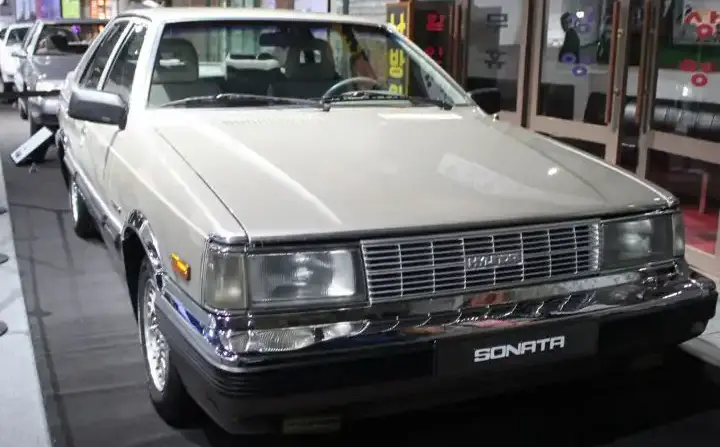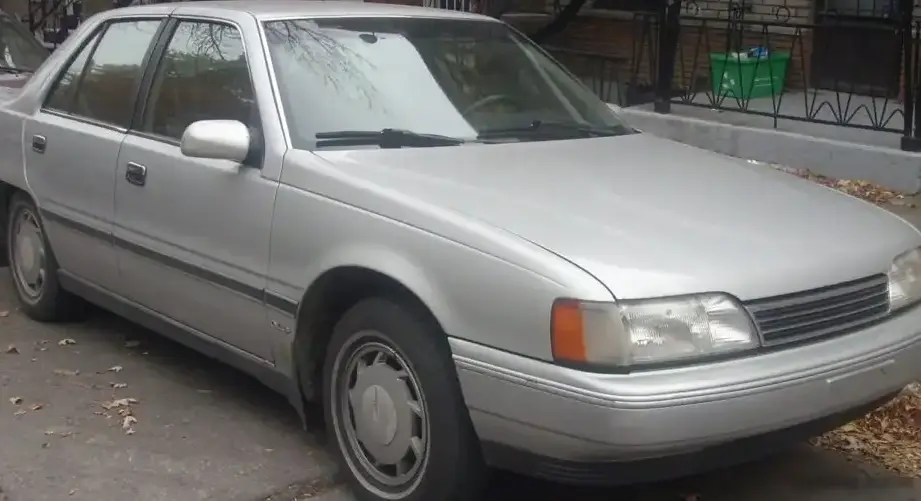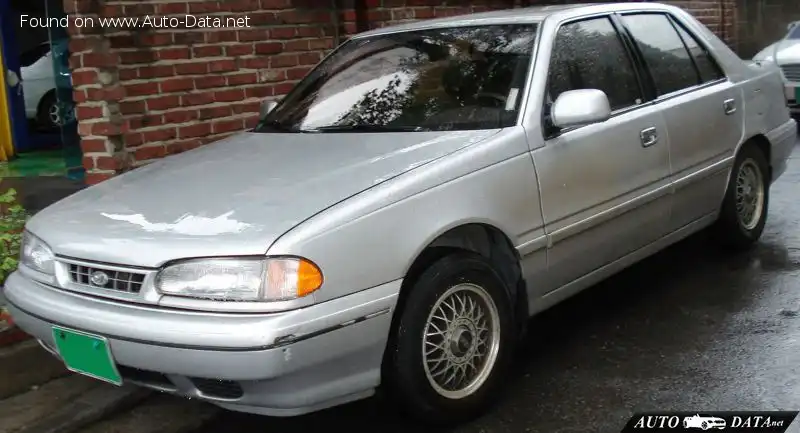
The Hyundai Sonata III (Y3), particularly the facelifted version introduced in 1996, represented a significant step forward for the South Korean automaker in establishing a presence in global markets. The 2.0i GLS variant, producing 95 horsepower, was a mainstay of the lineup from 1996 to 1998. Positioned as a mid-range offering, it aimed to balance affordability with a reasonable level of comfort and features. This generation Sonata, built on the Y3 platform, was crucial in shifting Hyundai’s image from a producer of budget cars to a contender offering value and increasingly sophisticated engineering. The facelift brought revised styling, improved interior materials, and refinements to the powertrain, enhancing the car’s appeal to a wider audience.
Technical Specifications
| Brand | Hyundai |
| Model | Sonata |
| Generation | Sonata III (Y3, facelift 1996) |
| Type (Engine) | 2.0i GLS (95 Hp) |
| Start of production | 1996 |
| End of production | 1998 |
| Powertrain Architecture | Internal Combustion engine |
| Body type | Sedan |
| Seats | 5 |
| Doors | 4 |
| Fuel consumption (urban) | 11.9 l/100 km (19.8 US mpg, 23.7 UK mpg, 8.4 km/l) |
| Fuel consumption (extra urban) | 7 l/100 km (33.6 US mpg, 40.4 UK mpg, 14.3 km/l) |
| Fuel consumption (combined) | 8.8 l/100 km (26.7 US mpg, 32.1 UK mpg, 11.4 km/l) |
| Fuel Type | Petrol (Gasoline) |
| Acceleration 0 – 100 km/h | 13.6 sec |
| Acceleration 0 – 62 mph | 13.6 sec |
| Acceleration 0 – 60 mph | 12.9 sec |
| Maximum speed | 170 km/h (105.63 mph) |
| Emission standard | Euro 2 |
| Weight-to-power ratio | 13.4 kg/Hp, 74.5 Hp/tonne |
| Weight-to-torque ratio | 8.1 kg/Nm, 123.1 Nm/tonne |
| Power | 95 Hp @ 4900 rpm |
| Power per litre | 47.6 Hp/l |
| Torque | 157 Nm @ 2400 rpm (115.8 lb.-ft. @ 2400 rpm) |
| Engine layout | Front, Transverse |
| Engine Model/Code | G4EP |
| Engine displacement | 1997 cm3 (121.86 cu. in.) |
| Number of cylinders | 4 |
| Engine configuration | Inline |
| Cylinder Bore | 85 mm (3.35 in.) |
| Piston Stroke | 88 mm (3.46 in.) |
| Compression ratio | 8.6:1 |
| Number of valves per cylinder | 2 |
| Fuel injection system | Multi-port manifold injection |
| Engine aspiration | Naturally aspirated engine |
| Valvetrain | SOHC |
| Kerb Weight | 1275 kg (2810.89 lbs.) |
| Max. weight | 1740 kg (3836.04 lbs.) |
| Max load | 465 kg (1025.15 lbs.) |
| Trunk (boot) space – minimum | 375 l (13.24 cu. ft.) |
| Fuel tank capacity | 65 l (17.17 US gal | 14.3 UK gal) |
| Max. roof load | 70 kg (154.32 lbs.) |
| Length | 4700 mm (185.04 in.) |
| Width | 1770 mm (69.69 in.) |
| Height | 1405 mm (55.31 in.) |
| Wheelbase | 2700 mm (106.3 in.) |
| Front track | 1520 mm (59.84 in.) |
| Rear (Back) track | 1510 mm (59.45 in.) |
| Ride height (ground clearance) | 170 mm (6.69 in.) |
| Drag coefficient (Cd) | 0.35 |
| Minimum turning circle (turning diameter) | 10.5 m (34.45 ft.) |
| Drivetrain Architecture | The Internal combustion engine (ICE) drives the front wheels of the vehicle. |
| Drive wheel | Front wheel drive |
| Number of gears and type of gearbox | 5 gears, manual transmission |
| Front suspension | Independent, type McPherson with coil spring and anti-roll bar |
| Rear suspension | Independent multi-link suspension |
| Front brakes | Ventilated discs |
| Rear brakes | Drum |
| Assisting systems | ABS (Anti-lock braking system) |
| Steering type | Steering rack and pinion |
| Power steering | Hydraulic Steering |
| Tires size | 195/70 R14 |
| Wheel rims size | 14 |
Powertrain & Engine Architecture
The heart of the 2.0i GLS Sonata was the Hyundai G4EP engine, a 1.997-liter inline-four cylinder gasoline engine. This engine utilized a single overhead camshaft (SOHC) valvetrain with two valves per cylinder. Fuel delivery was managed by a multi-port fuel injection system, a common setup for the time, providing adequate fuel atomization for efficient combustion. The G4EP produced 95 horsepower at 4900 rpm and 157 Nm (115.8 lb-ft) of torque at 2400 rpm. The engine’s relatively low compression ratio of 8.6:1 was a compromise aimed at allowing the engine to run reliably on the varying fuel qualities available in different markets. The engine was transversely mounted in the front of the vehicle, driving the front wheels. The standard transmission for this variant was a 5-speed manual gearbox, although a 4-speed automatic transmission was also offered as an option, impacting performance and fuel economy.
Driving Characteristics
The 2.0i GLS Sonata with the 5-speed manual transmission offered adequate, though not exhilarating, performance. Acceleration from 0 to 60 mph took around 12.9 seconds, and the top speed was approximately 170 km/h (105.63 mph). The engine felt somewhat strained at higher RPMs, and the power delivery was relatively linear. The automatic transmission version, while offering convenience, noticeably reduced acceleration times and increased fuel consumption. The gear ratios were tuned for fuel efficiency rather than outright performance. Compared to the more powerful engines available in the Sonata III range, such as the 2.0L DOHC engine, the 95 hp version felt noticeably less responsive, particularly when fully loaded or tackling inclines. However, it provided a smoother and more economical driving experience for everyday commuting.
Equipment & Trim Levels
The 2.0i GLS trim level offered a reasonable level of standard equipment for its price point. Interior features typically included cloth upholstery, a basic audio system, power steering, and manual air conditioning. Power windows and door locks were often included, but could vary depending on regional specifications. Optional extras included a sunroof, upgraded audio systems, and alloy wheels. The GLS trim aimed to provide a comfortable and practical interior without the luxury features found in higher-end Sonata models. The dashboard layout was functional and straightforward, prioritizing ease of use over aesthetic flair.
Chassis & Braking
The Sonata III utilized an independent McPherson strut suspension in the front and an independent multi-link suspension in the rear, providing a reasonably comfortable ride. Front brakes were ventilated discs, offering adequate stopping power, while the rear brakes were drums, a cost-saving measure common in this class of vehicle. Anti-lock Braking System (ABS) was included as standard, enhancing safety. The chassis was designed to provide a balance between ride comfort and handling stability. Stabilizer bars were fitted to both the front and rear axles to reduce body roll during cornering.
Market Reception & Comparison
The 2.0i GLS Sonata was generally well-received as a practical and affordable family sedan. Critics praised its spacious interior, comfortable ride, and competitive price. However, the engine’s performance was often cited as a weakness, particularly when compared to rivals from Japan and Europe. Fuel economy was considered average for its class. Compared to other trims within the Sonata lineup, the 2.0i GLS offered the most accessible entry point, appealing to budget-conscious buyers. The higher-spec models, with more powerful engines and additional features, catered to those willing to spend more for enhanced performance and luxury.
Legacy
The Hyundai Sonata III, and specifically the 2.0i GLS variant, played a vital role in establishing Hyundai as a credible automotive manufacturer. While not known for exceptional performance or groundbreaking technology, the G4EP engine proved to be relatively reliable, and many examples remain on the road today. In the used car market, these Sonatas are often sought after as affordable and dependable transportation. Maintenance costs are generally low, and parts availability is reasonable. However, potential buyers should be aware of potential issues with age-related wear and tear, such as corrosion and deterioration of rubber components. The 2.0i GLS represents a pivotal moment in Hyundai’s history, demonstrating the company’s commitment to building increasingly competitive and reliable vehicles.