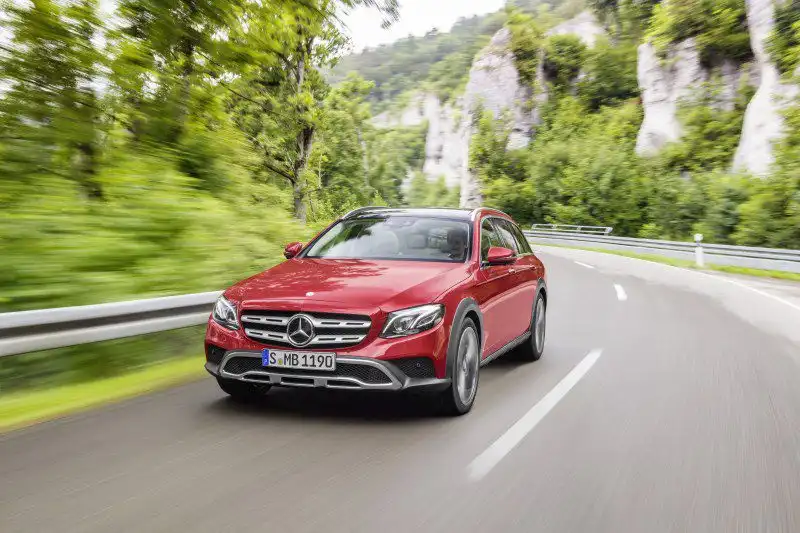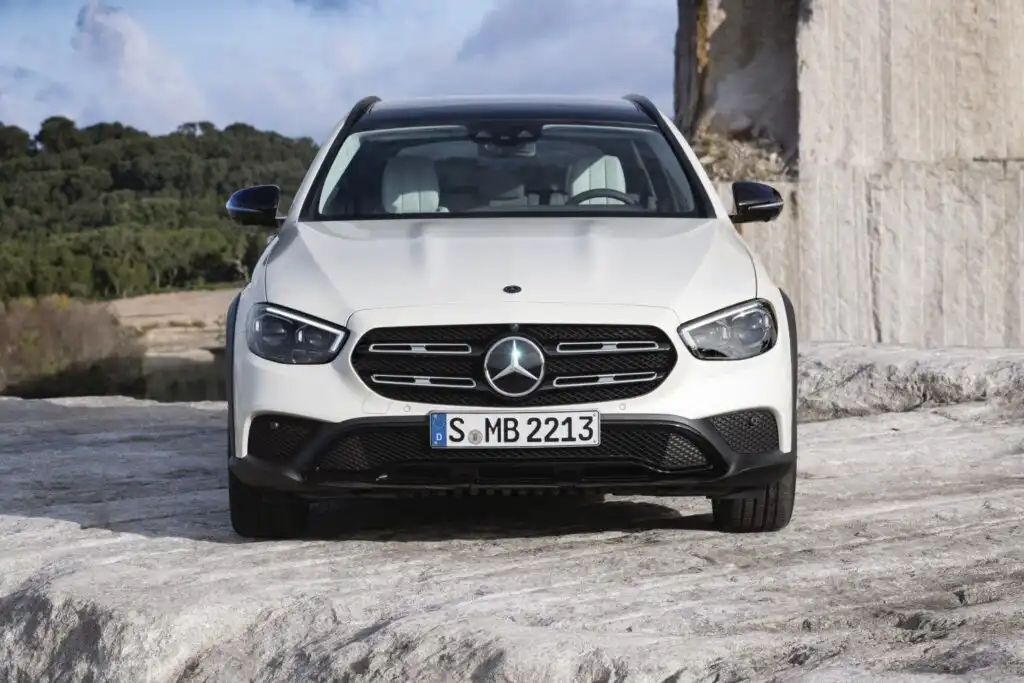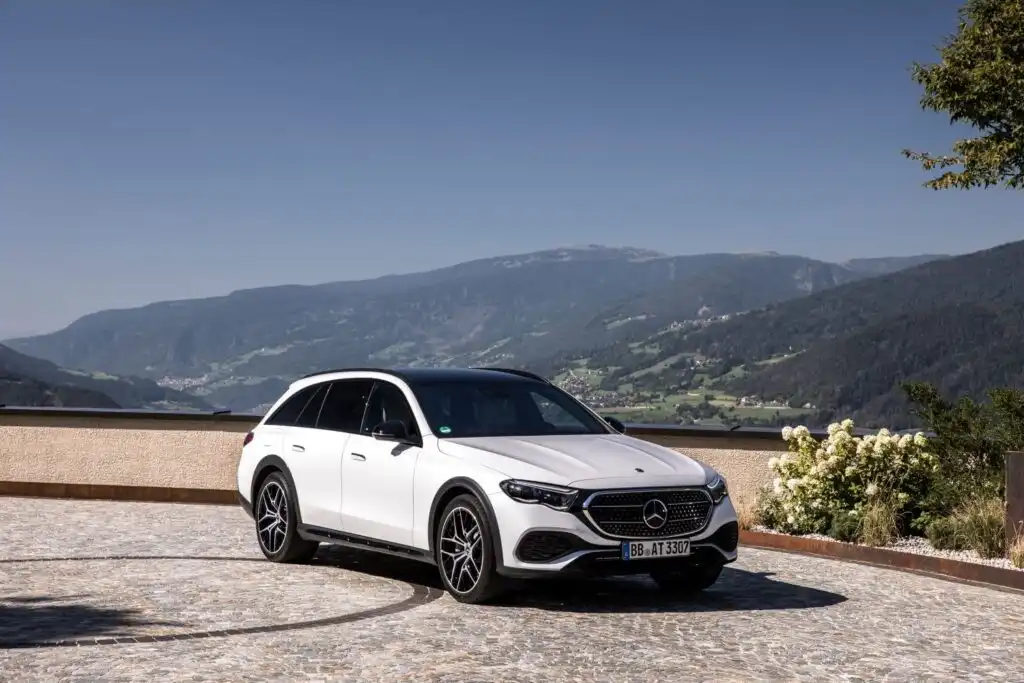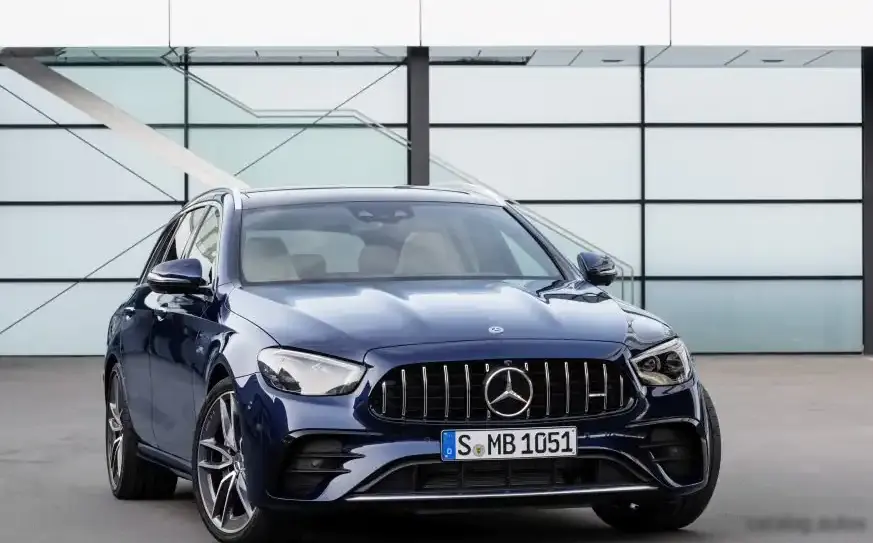
The Mercedes-Benz E 300 de T-modell (S213, facelift 2020) represents a compelling blend of practicality, luxury, and efficiency within the E-Class range. Introduced in July 2020 and remaining in production through 2023, this variant is a plug-in hybrid (PHEV) station wagon designed to appeal to buyers seeking reduced emissions and the versatility of an estate car. It sits within the S213 facelift generation of the E-Class, benefiting from updates to styling, technology, and powertrain options. The “de” designation signifies its diesel-electric hybrid configuration, a powertrain strategy primarily aimed at the European market where diesel fuel remains prevalent and offers favorable tax incentives for efficient vehicles.
Technical Specifications
| Brand | Mercedes-Benz |
| Model | E-class |
| Generation | E-class T-modell (S213, facelift 2020) |
| Type (Engine) | E 300de (306 Hp) Plug-in Hybrid 4MATIC 9G-TRONIC |
| Start of production | July, 2020 |
| End of production | 2023 |
| Powertrain Architecture | PHEV (Plug-in Hybrid Electric Vehicle) |
| Body type | Station wagon (estate) |
| Seats | 5 |
| Doors | 5 |
| Combined fuel consumption (WLTP) | 1.4-1.6 l/100 km (168 – 147 US mpg, 201.8 – 176.6 UK mpg, 71.4 – 62.5 km/l) |
| CO2 emissions (WLTP) | 36-42 g/km |
| Fuel consumption (economy) – combined (NEDC) | 1.7 l/100 km (138.4 US mpg, 166.2 UK mpg, 58.8 km/l) |
| CO2 emissions (NEDC) | 44 g/km |
| Fuel Type | Diesel / electricity |
| Acceleration 0 – 100 km/h | 6 sec |
| Acceleration 0 – 62 mph | 6 sec |
| Acceleration 0 – 60 mph | 5.7 sec |
| Maximum speed | 230 km/h (142.92 mph) |
| Emission standard | EURO 6d-ISC-FCM |
| Weight-to-power ratio | 7 kg/Hp, 143 Hp/tonne |
| Weight-to-torque ratio | 3.1 kg/Nm, 327.1 Nm/tonne |
| Gross battery capacity | 13.5 kWh |
| Net (usable) battery capacity | 9.3 kWh |
| Battery technology | Lithium-ion (Li-Ion) |
| Battery location | Inside the trunk |
| All-electric range (WLTP) | 46-50 km (28.58 – 31.07 mi) |
| All-electric range (NEDC) | 52 km (32.31 mi) |
| Average Energy consumption (WLTP) | 16.4-17.1 kWh/100 km (26.39 – 27.52 kWh/100 mi, 128 – 122 MPGe, 6.1 – 5.8 km/kWh, 3.8 – 3.6 mi/kWh) |
| Average Energy consumption (NEDC) | 16.6 kWh/100 km (26.72 kWh/100 mi, 126 MPGe, 6 km/kWh, 3.7 mi/kWh) |
| Max speed (electric) | 130 km/h (80.78 mph) |
| Electric motor power | 122 Hp @ 2000 rpm |
| Electric motor Torque | 440 Nm (324.53 lb.-ft.) |
| Electric motor location | Between the combustion engine and the transmission |
| System power | 306 Hp |
| System torque | 700 Nm (516.29 lb.-ft.) |
| Power | 194 Hp @ 3800 rpm |
| Power per litre | 99.5 Hp/l |
| Torque | 400 Nm @ 1600-2800 rpm (295.02 lb.-ft. @ 1600-2800 rpm) |
| Engine layout | Front, Longitudinal |
| Engine Model/Code | OM 654.920 |
| Engine displacement | 1950 cm3 (119 cu. in.) |
| Number of cylinders | 4 |
| Engine configuration | Inline |
| Cylinder Bore | 82 mm (3.23 in.) |
| Piston Stroke | 92.3 mm (3.63 in.) |
| Compression ratio | 15.5:1 |
| Number of valves per cylinder | 4 |
| Fuel injection system | Diesel Commonrail |
| Engine aspiration | Turbocharger, Intercooler |
| Valvetrain | DOHC |
| Engine oil capacity | 6.3 l (6.66 US qt | 5.54 UK qt) |
| Coolant | 11 l (11.62 US qt | 9.68 UK qt) |
| Kerb Weight | 2140 kg (4717.89 lbs.) |
| Max. weight | 2850 kg (6283.17 lbs.) |
| Max load | 710 kg (1565.28 lbs.) |
| Trunk (boot) space – minimum | 480 l (16.95 cu. ft.) |
| Trunk (boot) space – maximum | 1660 l (58.62 cu. ft.) |
| Fuel tank capacity | 50 l (13.21 US gal | 11 UK gal) |
| AdBlue tank | 23.5 l (6.21 US gal | 5.17 UK gal) |
| Max. roof load | 100 kg (220.46 lbs.) |
| Permitted trailer load with brakes (12%) | 2100 kg (4629.71 lbs.) |
| Permitted trailer load without brakes | 750 kg (1653.47 lbs.) |
| Permitted towbar download | 84 kg (185.19 lbs.) |
| Length | 4945 mm (194.69 in.) |
| Width | 1852 mm (72.91 in.) |
| Width including mirrors | 2065 mm (81.3 in.) |
| Height | 1476 mm (58.11 in.) |
| Wheelbase | 2939 mm (115.71 in.) |
| Front track | 1596 mm (62.83 in.) |
| Rear (Back) track | 1581 mm (62.24 in.) |
| Front overhang | 853 mm (33.58 in.) |
| Rear overhang | 1153 mm (45.39 in.) |
| Drag coefficient (Cd) | 0.28 |
| Minimum turning circle (turning diameter) | 11.9 m (39.04 ft.) |
| Front suspension | Double wishbone, Transverse stabilizer, Air suspension |
| Rear suspension | Independent multi-link suspension, Air suspension, Transverse stabilizer |
| Front brakes | Ventilated discs |
| Rear brakes | Ventilated discs |
| Number of gears and type of gearbox | 9 gears, automatic transmission G-TRONIC |
Powertrain & Engine Architecture
The E 300 de utilizes a sophisticated powertrain combining a 2.0-liter inline-four diesel engine (OM 654.920) with an electric motor integrated into the 9G-TRONIC nine-speed automatic transmission. The diesel engine produces 194 horsepower and 400 Nm of torque, while the electric motor contributes 122 horsepower and 440 Nm of torque. Combined, the system delivers a total output of 306 horsepower and 700 Nm of torque. The engine employs a turbocharger with intercooling and a diesel commonrail direct injection system for efficient combustion. The electric motor is positioned between the engine and transmission, allowing for both electric drive and cooperative operation with the diesel engine. The 13.5 kWh lithium-ion battery pack is located under the trunk floor, slightly reducing cargo capacity compared to non-hybrid E-Class wagons.
Driving Characteristics
The E 300 de offers a refined and versatile driving experience. In electric mode, it provides silent and smooth acceleration, suitable for urban commutes and short journeys. The all-electric range of 46-50 km (WLTP) is sufficient for many daily trips. When the battery is depleted or additional power is needed, the diesel engine seamlessly kicks in, providing strong acceleration and effortless cruising. The 9G-TRONIC transmission offers smooth and quick gear changes, contributing to a comfortable ride. While not as overtly sporty as some E-Class variants, the E 300 de delivers ample performance, achieving a 0-60 mph time of around 5.7 seconds. The weighting of the steering is light, prioritizing ease of use over ultimate feedback.
Equipment & Trim Levels
The E 300 de T-modell typically came well-equipped as standard, reflecting its position as a premium offering. Standard features often included Mercedes-Benz’s MBUX infotainment system with a large touchscreen display, leather upholstery, automatic climate control, and a comprehensive suite of safety features such as adaptive cruise control, lane keeping assist, and automatic emergency braking. Optional extras included features like a panoramic sunroof, premium sound system, and advanced driver assistance systems. Interior trim options varied, allowing buyers to personalize the cabin to their preferences.
Chassis & Braking
The E 300 de features a sophisticated chassis designed for comfort and stability. It utilizes a double-wishbone front suspension and an independent multi-link rear suspension, both incorporating air suspension for a smooth ride. Ventilated disc brakes are fitted on all four wheels, providing ample stopping power. The 4MATIC all-wheel-drive system ensures excellent traction in all weather conditions. The suspension is tuned to prioritize ride comfort, but still offers good body control during cornering.
Market Reception & Comparison
The E 300 de was generally well-received by automotive critics, who praised its fuel efficiency, refined driving experience, and spacious interior. Compared to the petrol-powered E 300 wagon, the E 300 de offered significantly lower fuel consumption and emissions, particularly for drivers who frequently utilize the electric driving mode. Compared to other E-Class variants like the E 450, it offered a different character, prioritizing efficiency and practicality over outright performance. The diesel-electric hybrid powertrain was particularly appealing in European markets where diesel fuel is common and tax incentives favor low-emission vehicles.
Legacy
The Mercedes-Benz E 300 de T-modell represents an important step in Mercedes-Benz’s electrification strategy. The OM 654 diesel engine, coupled with the electric motor and 9G-TRONIC transmission, proved to be a reliable and efficient powertrain. On the used car market, these models are sought after for their fuel economy and practicality. While battery degradation is a consideration with any plug-in hybrid, the E 300 de’s battery pack has generally proven durable. The E 300 de remains a compelling option for buyers seeking a luxurious, spacious, and efficient station wagon.