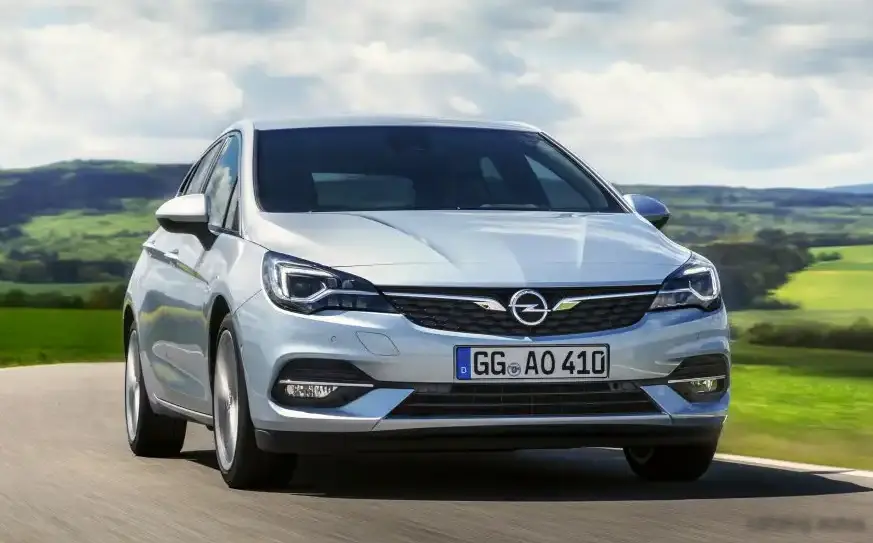
The Opel Astra K (facelift, introduced in August 2019 and produced through October 2021) represented a mid-cycle refresh of the highly successful Astra K generation, built on the GM’s 1HX0/A3 platform. Within the Astra K range, the 1.4 Turbo (145 hp) variant paired with a Continuously Variable Transmission (CVT) occupied a middle ground, aiming to balance fuel efficiency with acceptable performance for everyday driving. This configuration was positioned as a step up from the base 1.0-liter three-cylinder engine, while offering a more accessible price point than the more powerful 1.6-liter diesel or the performance-oriented versions.
Technical Specifications
| Brand | Opel |
| Model | Astra |
| Generation | Astra K (facelift 2019) |
| Type (Engine) | 1.4 Turbo (145 Hp) CVT |
| Start of production | August, 2019 |
| End of production | October, 2021 |
| Powertrain Architecture | Internal Combustion engine |
| Body type | Hatchback |
| Seats | 5 |
| Doors | 5 |
| Fuel consumption (urban) | 6.3-6.4 l/100 km (37.3 – 36.8 US mpg, 44.8 – 44.1 UK mpg, 15.9 – 15.6 km/l) |
| Fuel consumption (extra urban) | 4.0-4.2 l/100 km (58.8 – 56 US mpg, 70.6 – 67.3 UK mpg, 25 – 23.8 km/l) |
| Fuel consumption (combined) | 4.8-5.0 l/100 km (49 – 47 US mpg, 58.9 – 56.5 UK mpg, 20.8 – 20 km/l) |
| CO2 emissions | 112-115 g/km |
| Fuel Type | Petrol (Gasoline) |
| Acceleration 0 – 100 km/h | 9.8 sec |
| Acceleration 0 – 62 mph | 9.8 sec |
| Acceleration 0 – 60 mph | 9.3 sec |
| Maximum speed | 210 km/h (130.49 mph) |
| Emission standard | Euro 6d |
| Weight-to-power ratio | 8.8 kg/Hp, 114.2 Hp/tonne |
| Weight-to-torque ratio | 5.4 kg/Nm, 185.8 Nm/tonne |
| Power | 145 Hp @ 5000-6000 rpm |
| Power per litre | 108 Hp/l |
| Torque | 236 Nm @ 1500-3500 rpm (174.06 lb.-ft. @ 1500-3500 rpm) |
| Engine layout | Front, Transverse |
| Engine Model/Code | F14SHT |
| Engine displacement | 1342 cm3 (81.89 cu. in.) |
| Number of cylinders | 3 |
| Engine configuration | Inline |
| Cylinder Bore | 79 mm (3.11 in.) |
| Piston Stroke | 91.2 mm (3.59 in.) |
| Compression ratio | 10:1 |
| Number of valves per cylinder | 4 |
| Fuel injection system | Direct injection |
| Engine aspiration | Turbocharger, Intercooler |
| Engine oil capacity | 4.5 l (4.76 US qt | 3.96 UK qt) |
| Coolant | 6.25 l (6.6 US qt | 5.5 UK qt) |
| Kerb Weight | 1270 kg (2799.87 lbs.) |
| Max. weight | 1845 kg (4067.53 lbs.) |
| Max load | 575 kg (1267.66 lbs.) |
| Trunk (boot) space – minimum | 370 l (13.07 cu. ft.) |
| Trunk (boot) space – maximum | 1210 l (42.73 cu. ft.) |
| Fuel tank capacity | 48 l (12.68 US gal | 10.56 UK gal) |
| Max. roof load | 75 kg (165.35 lbs.) |
| Length | 4370 mm (172.05 in.) |
| Width | 1809 mm (71.22 in.) |
| Width with mirrors folded | 1871 mm (73.66 in.) |
| Width including mirrors | 2042 mm (80.39 in.) |
| Height | 1485 mm (58.46 in.) |
| Wheelbase | 2662 mm (104.8 in.) |
| Front track | 1548 mm (60.94 in.) |
| Rear (Back) track | 1565 mm (61.61 in.) |
| Front overhang | 960 mm (37.8 in.) |
| Rear overhang | 748 mm (29.45 in.) |
| Drag coefficient (Cd) | 0.26 |
| Minimum turning circle | 11.05 m (36.25 ft.) |
| Drivetrain Architecture | The Internal combustion engine (ICE) drives the front wheels of the vehicle. |
| Drive wheel | Front wheel drive |
| Number of gears and type of gearbox | automatic transmission CVT |
| Front brakes | Disc |
| Rear brakes | Disc |
| Assisting systems | ABS (Anti-lock braking system) |
| Steering type | Steering rack and pinion |
| Power steering | Electric Steering |
| Tires size | 205/65 R16; 225/45 R17 |
| Wheel rims size | 6.5J x 16; 7J x 16; 7.5J x 17 |
Powertrain & Engine Architecture
The heart of this Astra K variant is the F14SHT, a 1.4-liter turbocharged inline-three cylinder gasoline engine. This engine is part of Opel/Vauxhall’s Small Engine Family (SEF), known for its compact design and efficiency. The F14SHT utilizes direct fuel injection, delivering fuel directly into the combustion chamber for improved combustion efficiency and reduced emissions. A single turbocharger with an intercooler provides forced induction, boosting power output. The engine produces 145 horsepower at 5000-6000 rpm and 236 Nm (174 lb-ft) of torque between 1500-3500 rpm. The engine features a timing chain, reducing maintenance compared to timing belts. Paired with the engine is a Continuously Variable Transmission (CVT), offering seamless gear changes and prioritizing fuel economy over outright performance. This CVT is a belt-driven system, designed to keep the engine operating within its optimal power band.
Driving Characteristics
The 1.4 Turbo CVT Astra K delivers a comfortable and refined driving experience, prioritizing smoothness and fuel efficiency. Acceleration from 0-60 mph takes approximately 9.3 seconds, which is adequate for everyday driving but doesn’t offer particularly sporty performance. The CVT, while smooth, can sometimes feel less responsive than a traditional automatic transmission, particularly during quick acceleration maneuvers. The engine’s torque is readily available from low RPMs, making it easy to navigate city traffic. The CVT’s programming is tuned to minimize engine noise and maximize fuel economy, resulting in a quieter cabin experience. Compared to the manual transmission versions of the 1.4 Turbo, the CVT sacrifices some responsiveness for ease of use. The higher-output diesel variants offer significantly more torque and quicker acceleration, but at the expense of fuel economy and increased complexity.
Equipment & Trim Levels
The 1.4 Turbo CVT trim typically included a good level of standard equipment. Features commonly included air conditioning, a touchscreen infotainment system with Apple CarPlay and Android Auto compatibility, Bluetooth connectivity, cruise control, and power windows. Interior upholstery was typically cloth, with options for upgraded materials available. Higher trim levels added features such as heated seats, a larger touchscreen display, automatic climate control, and advanced safety systems like lane departure warning and automatic emergency braking. Optional extras included a panoramic sunroof, upgraded audio systems, and various styling packages.
Chassis & Braking
The Astra K utilizes a MacPherson strut front suspension and a torsion beam rear suspension. This setup provides a good balance between ride comfort and handling. The torsion beam rear suspension is a cost-effective solution that minimizes weight and complexity. Braking duties are handled by disc brakes on all four wheels, providing adequate stopping power. Anti-lock Braking System (ABS) is standard, enhancing safety during emergency braking situations. The steering is electrically assisted, providing light and precise steering feel. The weight distribution is relatively balanced, contributing to stable handling characteristics.
Market Reception & Comparison
The Astra K 1.4 Turbo CVT was generally well-received by automotive critics as a practical and efficient option. Reviewers praised its comfortable ride, refined interior, and good fuel economy. However, some criticized the CVT for its lack of responsiveness and the engine for not being particularly exciting. Compared to the 1.0-liter turbo, the 1.4 Turbo offered a noticeable performance improvement. Compared to the diesel variants, it provided a quieter and smoother driving experience, but with lower fuel economy and less torque. The Astra K competed with other popular hatchbacks in the European market, such as the Volkswagen Golf, Ford Focus, and Peugeot 308.
Legacy
The F14SHT engine and the CVT transmission have proven to be relatively reliable in the Astra K. Common issues are generally minor and related to routine maintenance items. The Astra K 1.4 Turbo CVT remains a popular choice in the used car market, offering a good balance of affordability, fuel efficiency, and practicality. Its relatively simple engine design and readily available parts contribute to its long-term reliability and ease of maintenance. The Astra K, in general, established Opel as a strong contender in the compact hatchback segment, and the 1.4 Turbo CVT variant continues to be a viable option for buyers seeking a comfortable and efficient daily driver.