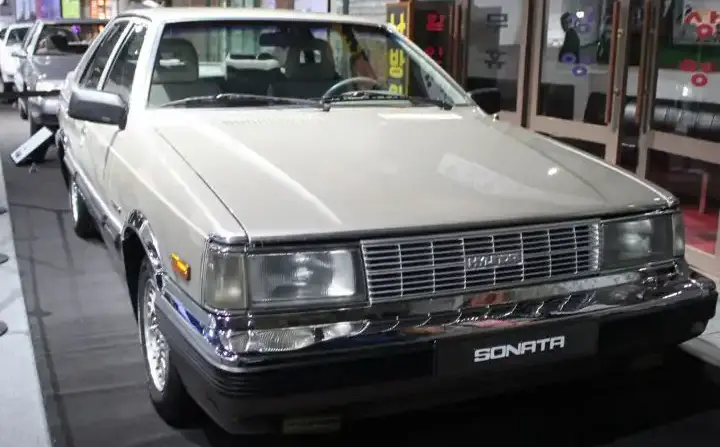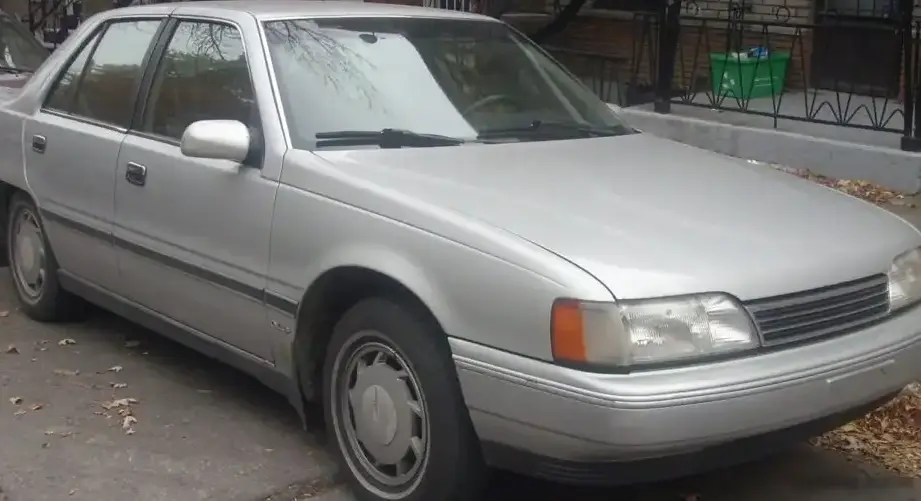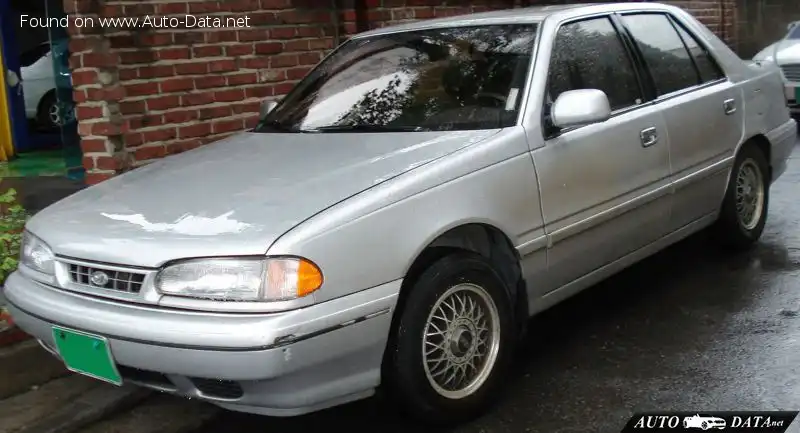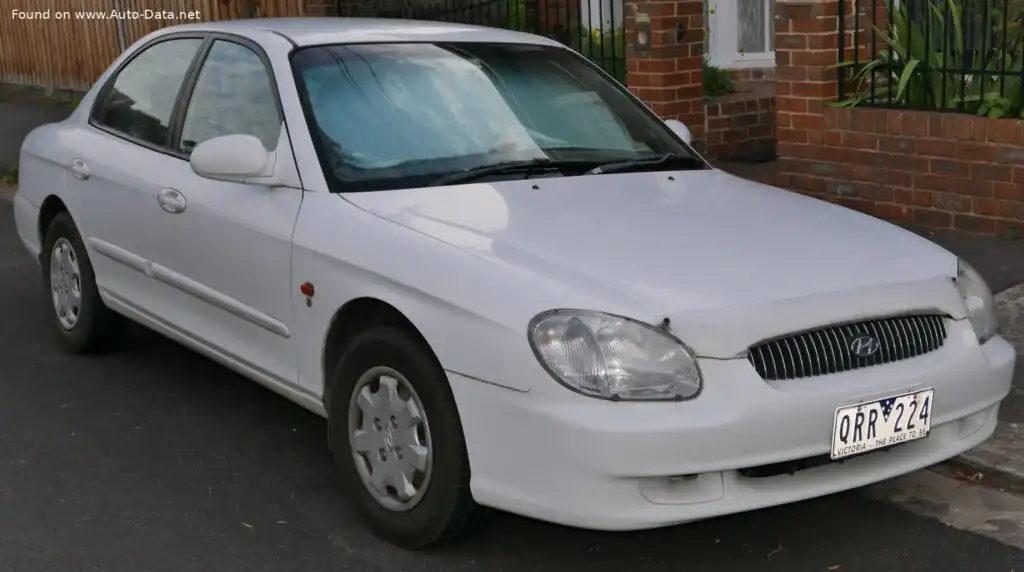
The Hyundai Sonata IV (EF) 2.0, produced between 1998 and 2001, represented a significant step forward for the South Korean automaker in the mid-size sedan segment. Positioned as a mainstream offering within the EF generation (1998-2001), the 2.0-liter variant with 136 horsepower aimed to provide a balance of affordability, practicality, and modern features for the North American and global markets. It was a key model in Hyundai’s efforts to establish itself as a credible competitor to established Japanese and American brands. The EF Sonata was a departure from previous Hyundai designs, adopting a more contemporary and aerodynamic aesthetic, largely influenced by Italian design firm Pininfarina.
Technical Specifications
| Brand | Hyundai |
| Model | Sonata |
| Generation | Sonata IV (EF) |
| Type (Engine) | 2.0 (136 Hp) |
| Start of production | 1998 |
| End of production | 2001 |
| Powertrain Architecture | Internal Combustion engine |
| Body type | Sedan |
| Seats | 5 |
| Doors | 4 |
| Fuel consumption (urban) | 12.4 l/100 km (19 US mpg, 22.8 UK mpg) |
| Fuel consumption (extra urban) | 6.9 l/100 km (34.1 US mpg, 40.9 UK mpg) |
| Fuel consumption (combined) | 8.9 l/100 km (26.4 US mpg, 31.7 UK mpg) |
| Fuel Type | Petrol (Gasoline) |
| Acceleration 0 – 100 km/h | 9.6 sec |
| Acceleration 0 – 62 mph | 9.6 sec |
| Acceleration 0 – 60 mph | 9.1 sec |
| Maximum speed | 205 km/h (127.38 mph) |
| Emission standard | Euro 2 |
| Weight-to-power ratio | 9.7 kg/Hp |
| Weight-to-torque ratio | 7.3 kg/Nm |
| Power | 136 Hp @ 5800 rpm |
| Torque | 180 Nm @ 4600 rpm (132.76 lb.-ft. @ 4600 rpm) |
| Engine layout | Front, Transverse |
| Engine Model/Code | Sirius II / G4JP |
| Engine displacement | 1997 cm3 (121.86 cu. in.) |
| Number of cylinders | 4 |
| Engine configuration | Inline |
| Cylinder Bore | 85 mm (3.35 in.) |
| Piston Stroke | 88 mm (3.46 in.) |
| Compression ratio | 10:1 |
| Number of valves per cylinder | 4 |
| Fuel injection system | Multi-port manifold injection |
| Engine aspiration | Naturally aspirated |
| Engine oil capacity | 4 l (4.23 US qt | 3.52 UK qt) |
| Kerb Weight | 1321 kg (2912.31 lbs.) |
| Max. weight | 1910 kg (4210.83 lbs.) |
| Max load | 589 kg (1298.52 lbs.) |
| Trunk (boot) space – minimum | 396 l (13.98 cu. ft.) |
| Fuel tank capacity | 65 l (17.17 US gal | 14.3 UK gal) |
| Length | 4710 mm (185.43 in.) |
| Width | 1818 mm (71.57 in.) |
| Height | 1410 mm (55.51 in.) |
| Wheelbase | 2700 mm (106.3 in.) |
| Front track | 1540 mm (60.63 in.) |
| Rear (Back) track | 1520 mm (59.84 in.) |
| Drag coefficient (Cd) | 0.32 |
| Minimum turning circle | 10.5 m (34.45 ft.) |
| Drivetrain Architecture | Front wheel drive |
| Number of gears | 5 gears, manual transmission |
| Front suspension | Independent, type McPherson with coil spring and anti-roll bar |
| Rear suspension | Independent multi-link suspension |
| Front brakes | Ventilated discs |
| Rear brakes | Disc |
| Assisting systems | ABS (Anti-lock braking system) |
| Steering type | Steering rack and pinion |
| Power steering | Hydraulic |
| Tires size | 205/60 R15 |
| Wheel rims size | 15 |
Powertrain & Engine Architecture
The heart of the Sonata 2.0 was the Hyundai Sirius II engine, designated G4JP. This 1.997-liter inline-four cylinder engine utilized a multi-port fuel injection system and a double overhead camshaft (DOHC) valvetrain with four valves per cylinder. The Sirius II was a significant improvement over previous Hyundai engines, offering increased refinement and efficiency. The engine produced 136 horsepower at 5800 rpm and 180 Nm (132.76 lb-ft) of torque at 4600 rpm. The engine’s design focused on providing adequate power for everyday driving situations, rather than outright performance. The five-speed manual transmission was the standard offering, providing a relatively direct connection between the engine and the front wheels.
Driving Characteristics
The 2.0-liter Sonata offered a comfortable, if not particularly exciting, driving experience. Acceleration from 0 to 60 mph took approximately 9.1 seconds, making it competitive with other mid-size sedans of the era. The five-speed manual transmission allowed drivers to make the most of the engine’s powerband, although the engine felt somewhat strained at higher RPMs. Compared to the later 2.4L and V6 options available in the EF Sonata, the 2.0L model prioritized fuel economy over outright performance. The gear ratios were tuned for everyday usability, providing adequate acceleration for merging onto highways and navigating city streets. The steering was light and easy to use, making it well-suited for urban driving.
Equipment & Trim Levels
The 2.0-liter Sonata typically came with a reasonable level of standard equipment. Base models included features such as air conditioning, power windows and locks, and an AM/FM radio with cassette player. Higher trim levels added features like alloy wheels, a sunroof, and upgraded interior upholstery. Interior materials were generally durable, though not particularly luxurious. The dashboard layout was functional and straightforward, with easy-to-read gauges. Optional extras included a CD player, cruise control, and a power driver’s seat.
Chassis & Braking
The EF Sonata utilized an independent McPherson strut suspension in the front and an independent multi-link suspension in the rear. This suspension setup provided a comfortable ride quality, absorbing bumps and imperfections in the road effectively. The front brakes were ventilated discs, while the rear brakes were solid discs. Anti-lock braking system (ABS) was standard, enhancing safety and control during emergency braking situations. The chassis was designed to provide a balance of rigidity and weight savings, contributing to the car’s overall handling characteristics. The standard tire size was 205/60 R15, providing adequate grip in most driving conditions.
Market Reception & Comparison
The Hyundai Sonata IV (EF) 2.0 was generally well-received by critics as a solid and affordable mid-size sedan. It was praised for its spacious interior, comfortable ride, and competitive price. However, some reviewers noted that the engine lacked the refinement and power of its Japanese competitors. Fuel economy was a strong point, with the 2.0-liter engine achieving around 26.4 US mpg in combined driving. Compared to the higher-trim Sonata models, the 2.0L offered a more budget-friendly option, appealing to buyers who prioritized value over performance. Reliability was generally good, although some owners reported minor issues with the fuel injection system and electrical components.
Legacy
The EF Sonata played a crucial role in establishing Hyundai as a major player in the global automotive market. The 2.0-liter variant, while not the most powerful or refined model in the lineup, offered a compelling combination of affordability, practicality, and reliability. Today, EF Sonatas are relatively common in the used car market, and well-maintained examples can still provide reliable transportation. The Sirius II engine, while not known for its longevity in extreme conditions, generally proved to be durable with regular maintenance. The EF Sonata remains a testament to Hyundai’s progress in the late 1990s and early 2000s, marking a turning point in the company’s history.