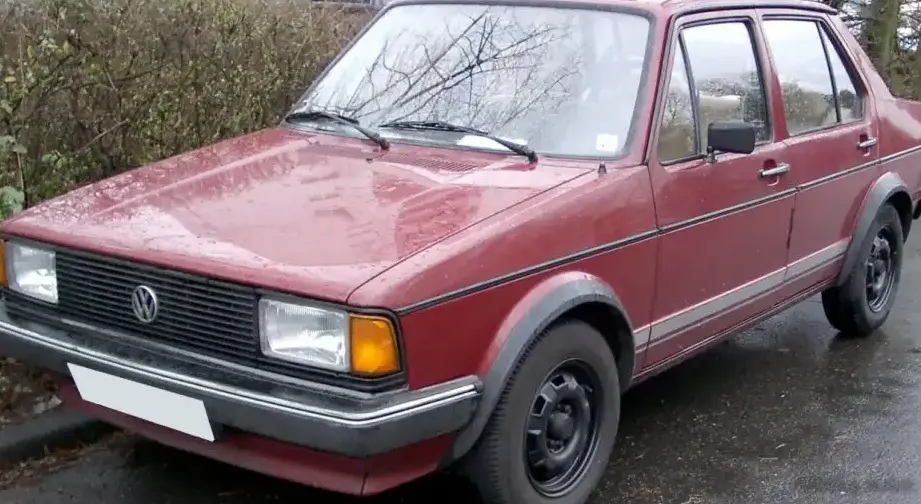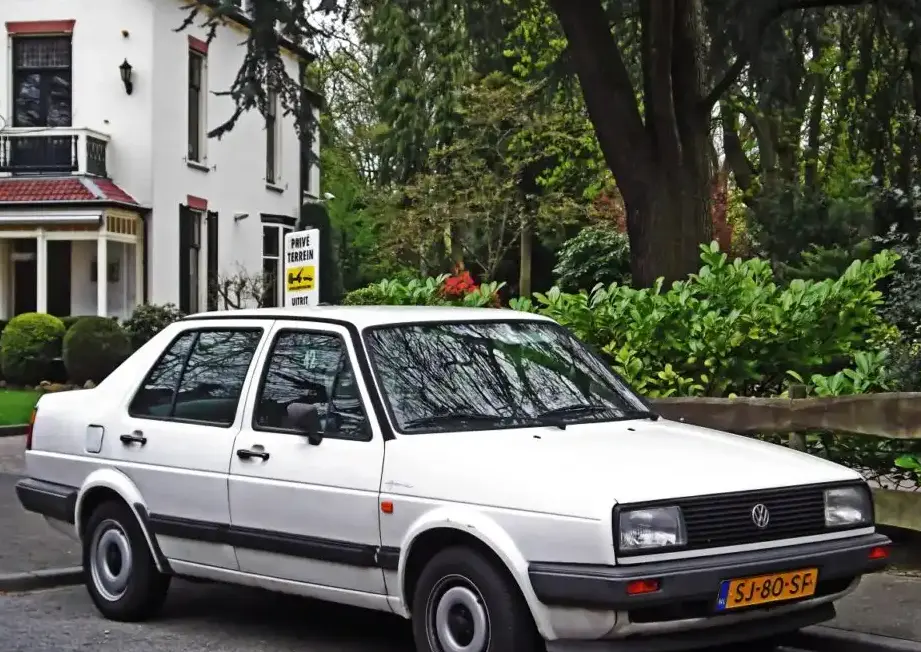
The Volkswagen Jetta II 1.6 (70 hp) Automatic, produced between 1983 and 1987, represented an entry-level offering within the second generation of Volkswagen’s popular Jetta sedan. Positioned as a more affordable and fuel-efficient option, it catered to buyers prioritizing practicality and economy over outright performance. This variant was built on the A2 platform, also known internally as the 1HX0, and played a significant role in establishing the Jetta as a mainstay in the compact car segment, particularly in European and North American markets. It offered a comfortable and relatively spacious interior for its class, appealing to families and commuters alike.
Technical Specifications
| Brand | Volkswagen |
| Model | Jetta |
| Generation | Jetta II |
| Type (Engine) | 1.6 (70 Hp) Automatic |
| Start of production | 1983 |
| End of production | 1987 |
| Powertrain Architecture | Internal Combustion engine |
| Body type | Sedan |
| Seats | 5 |
| Doors | 4 |
| Fuel consumption (urban) | 9.8 l/100 km (24 US mpg, 28.8 UK mpg, 10.2 km/l) |
| Fuel consumption (extra urban) | 7.4 l/100 km (31.8 US mpg, 38.2 UK mpg, 13.5 km/l) |
| Fuel consumption (combined) | 9.8 l/100 km (24 US mpg, 28.8 UK mpg, 10.2 km/l) |
| Fuel Type | Petrol (Gasoline) |
| Acceleration 0 – 100 km/h | 16.7 sec |
| Acceleration 0 – 62 mph | 16.7 sec |
| Acceleration 0 – 60 mph | 15.9 sec |
| Maximum speed | 155 km/h (96.31 mph) |
| Weight-to-power ratio | 13.3 kg/Hp, 75.3 Hp/tonne |
| Weight-to-torque ratio | 7.9 kg/Nm, 126.9 Nm/tonne |
| Power | 70 Hp @ 5200 rpm |
| Power per litre | 43.9 Hp/l |
| Torque | 118 Nm @ 2700 rpm (87.03 lb.-ft. @ 2700 rpm) |
| Engine layout | Front, Transverse |
| Engine Model/Code | PN |
| Engine displacement | 1595 cm3 (97.33 cu. in.) |
| Number of cylinders | 4 |
| Engine configuration | Inline |
| Cylinder Bore | 81 mm (3.19 in.) |
| Piston Stroke | 77.4 mm (3.05 in.) |
| Compression ratio | 9:1 |
| Number of valves per cylinder | 2 |
| Fuel injection system | Carburettor |
| Engine aspiration | Naturally aspirated |
| Engine oil capacity | 4 l (4.23 US qt | 3.52 UK qt) |
| Coolant capacity | 6.3 l (6.66 US qt | 5.54 UK qt) |
| Kerb Weight | 930 kg (2050.3 lbs.) |
| Max. weight | 1450 kg (3196.7 lbs.) |
| Max load | 520 kg (1146.4 lbs.) |
| Trunk (boot) space – minimum | 575 l (20.31 cu. ft.) |
| Fuel tank capacity | 55 l (14.53 US gal | 12.1 UK gal) |
| Length | 4385 mm (172.64 in.) |
| Width | 1675 mm (65.94 in.) |
| Height | 1415 mm (55.71 in.) |
| Wheelbase | 2475 mm (97.44 in.) |
| Front track | 1425 mm (56.1 in.) |
| Rear track | 1420 mm (55.91 in.) |
| Drag coefficient (Cd) | 0.36 |
| Drivetrain Architecture | The Internal combustion engine (ICE) drives the front wheels of the vehicle. |
| Drive wheel | Front wheel drive |
| Number of gears and type of gearbox | 3 gears, automatic transmission |
| Front suspension | Spring-loaded rack |
| Rear suspension | Spring-loaded rack |
| Front brakes | Disc |
| Rear brakes | Drum |
| Assisting systems | ABS (Anti-lock braking system) |
| Steering type | Steering rack and pinion |
| Power steering | Hydraulic |
| Tires size | 185/70 R14 |
| Wheel rims size | 14 |
Powertrain & Engine Architecture
The Jetta II 1.6 Automatic was powered by the Volkswagen PN engine, a 1.6-liter inline-four cylinder gasoline engine. This engine, part of the EA827 family, featured a single overhead camshaft (SOHC) valvetrain with two valves per cylinder. Fuel delivery was managed by a Solex carburetor, a common setup for the time, though less efficient and precise than fuel injection systems. The PN engine produced 70 horsepower at 5200 rpm and 118 Nm (87 lb-ft) of torque at 2700 rpm. The engine’s relatively low compression ratio of 9:1 was typical for engines designed to run on lower octane fuel. Paired with the engine was a three-speed automatic transmission, offering a more convenient driving experience compared to the available five-speed manual. This automatic transmission was not known for its speed or efficiency, but it provided smooth shifts for everyday driving.
Driving Characteristics
The 1.6-liter engine and three-speed automatic combination resulted in leisurely acceleration. Zero to 60 mph took approximately 15.9 seconds, and top speed was limited to around 96 mph. The automatic transmission’s gear ratios were optimized for fuel economy rather than performance. Compared to the more powerful 1.8-liter and diesel variants, the 1.6 Automatic felt noticeably slower, particularly when accelerating for overtaking or climbing hills. However, the automatic transmission made it a more comfortable choice for city driving and commuting, eliminating the need for constant gear changes. The steering was light and responsive, making it easy to maneuver in urban environments.
Equipment & Trim Levels
The 1.6 Automatic Jetta II typically came with a fairly basic level of equipment. Standard features included cloth upholstery, a basic AM/FM radio, and manual windows and door locks. Optional extras included a sunroof, upgraded stereo systems, and power windows. The interior was functional and durable, prioritizing practicality over luxury. Trim levels were relatively limited, with the 1.6 Automatic often serving as the base model. The dashboard layout was straightforward, with clearly labeled controls and a simple instrument cluster.
Chassis & Braking
The Jetta II featured a MacPherson strut front suspension and a torsion beam rear suspension. This setup provided a comfortable ride, although it wasn’t particularly sporty. The front brakes were ventilated discs, while the rear brakes were drums. Power-assisted steering was standard, making the car easy to handle. ABS (Anti-lock Braking System) was available as an option, enhancing safety. The suspension was tuned for comfort, absorbing bumps and irregularities in the road surface effectively. The relatively lightweight nature of the car helped to compensate for the modest engine power.
Market Reception & Comparison
The Jetta II 1.6 Automatic was generally well-received as an affordable and reliable family car. Critics praised its fuel efficiency and comfortable ride, but noted its lack of performance. Compared to the more powerful 1.8-liter and diesel versions, the 1.6 Automatic offered less excitement but a lower price point. The 1.8-liter models provided a significant performance boost, while the diesel versions offered superior fuel economy. The 1.6 Automatic appealed to buyers who prioritized practicality and economy over sporty driving dynamics. Fuel economy figures were respectable for the time, averaging around 24 mpg in combined driving.
Legacy
The Volkswagen Jetta II 1.6 Automatic, while not the most powerful or technologically advanced version of the Jetta, remains a popular choice among classic car enthusiasts and collectors. The PN engine is known for its durability and relative simplicity, making it relatively easy to maintain. However, carburetor maintenance can be a concern for some owners. Parts availability is generally good, although some components may be becoming increasingly difficult to find. Today, these cars are often sought after for their affordability, reliability, and classic styling. A well-maintained example can provide years of enjoyable and economical transportation.