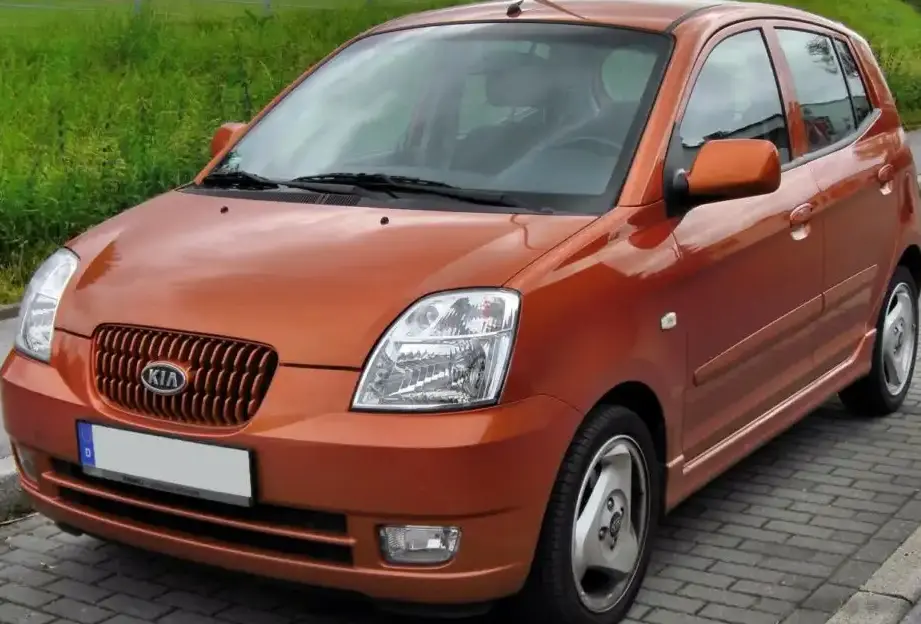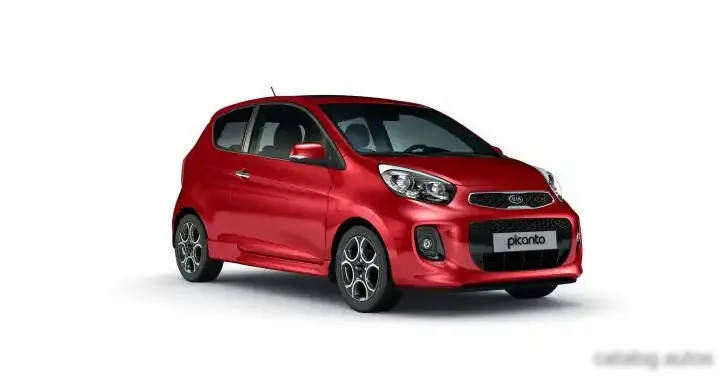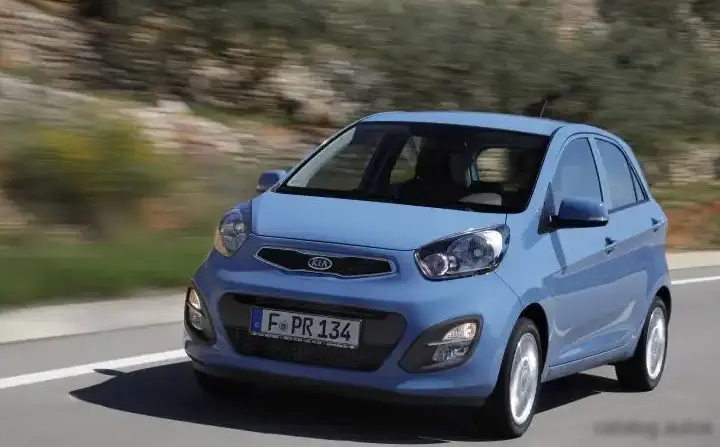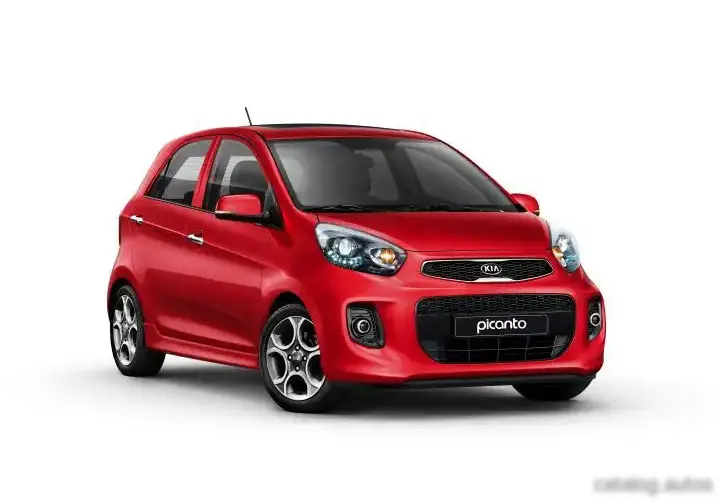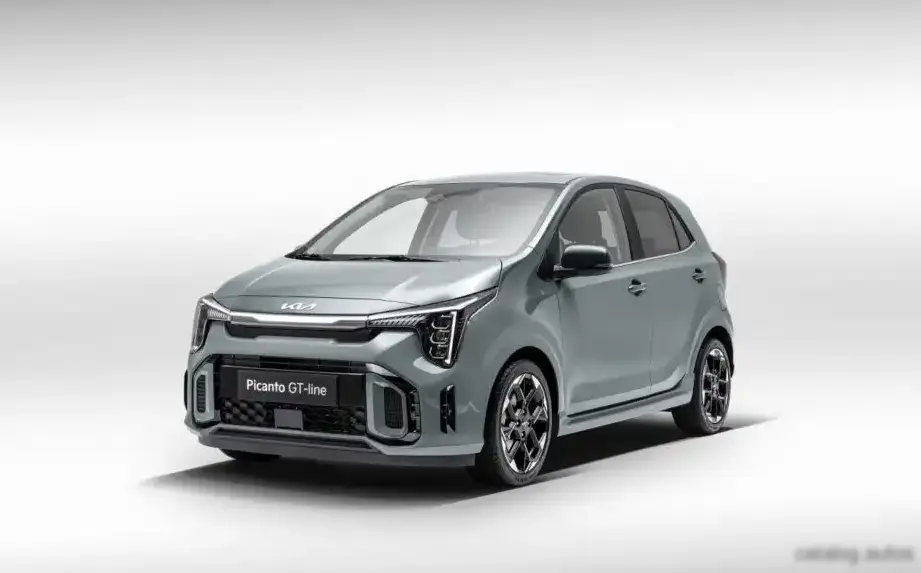
The Kia Picanto III, specifically the facelifted version introduced in 2023, represents Kia’s continued effort to offer an affordable and practical city car. The 1.0-liter (68 horsepower) variant, launched in July 2025, serves as the entry point to the Picanto range. Positioned as the most economical option, it targets budget-conscious buyers and those prioritizing fuel efficiency over outright performance. This model falls within the broader Picanto III generation (TA), which utilizes the Kia-Hyundai K1 platform, shared with the Hyundai i10. The facelift brought subtle styling updates and enhanced standard equipment, further solidifying the Picanto’s appeal in the competitive microcar segment.
Technical Specifications
| Brand | Kia |
| Model | Picanto |
| Generation | Picanto III (facelift 2023) |
| Type (Engine) | 1.0 (68 Hp) |
| Start of production | July, 2025 |
| Powertrain Architecture | Internal Combustion engine |
| Body type | Hatchback |
| Seats | 5 |
| Doors | 5 |
| Fuel consumption at Low speed (WLTP) | 6.9 l/100 km (34.1 US mpg, 40.9 UK mpg, 14.5 km/l) |
| Fuel consumption at Medium speed (WLTP) | 5.4 l/100 km (43.6 US mpg, 52.3 UK mpg, 18.5 km/l) |
| Fuel consumption at high speed (WLTP) | 5.2 l/100 km (45.2 US mpg, 54.3 UK mpg, 19.2 km/l) |
| Fuel consumption at very high speed (WLTP) | 6.3 l/100 km (37.3 US mpg, 44.8 UK mpg, 15.9 km/l) |
| Combined fuel consumption (WLTP) | 5.9 l/100 km (39.9 US mpg, 47.9 UK mpg, 16.9 km/l) |
| CO2 emissions (WLTP) | 132 g/km |
| Fuel Type | Petrol (Gasoline) |
| Acceleration 0 – 100 km/h | 14.6 sec |
| Acceleration 0 – 62 mph | 14.6 sec |
| Acceleration 0 – 60 mph | 13.9 sec |
| Maximum speed | 162 km/h (100.66 mph) |
| Emission standard | Euro 6e bis |
| Weight-to-power ratio | 13.9 kg/Hp, 71.8 Hp/tonne |
| Weight-to-torque ratio | 9.9 kg/Nm, 101.4 Nm/tonne |
| Power | 68 Hp @ 6000 rpm |
| Power per litre | 68.1 Hp/l |
| Torque | 96 Nm @ 4000 rpm (70.81 lb.-ft. @ 4000 rpm) |
| Engine layout | Front, Transverse |
| Engine Model/Code | G3LD |
| Engine displacement | 998 cm3 (60.9 cu. in.) |
| Number of cylinders | 3 |
| Engine configuration | Inline |
| Cylinder Bore | 71 mm (2.8 in.) |
| Piston Stroke | 84 mm (3.31 in.) |
| Compression ratio | 11:1 |
| Number of valves per cylinder | 4 |
| Fuel injection system | Direct injection |
| Engine aspiration | Naturally aspirated engine |
| Engine oil capacity | 3.1 l (3.28 US qt, 2.73 UK qt) |
| Coolant | 5.2 l (5.49 US qt, 4.58 UK qt) |
| Kerb Weight | 947-1053 kg (2087.78 – 2321.47 lbs.) |
| Max. weight | 1460 kg (3218.75 lbs.) |
| Max load | 407-513 kg (897.28 – 1130.97 lbs.) |
| Trunk (boot) space – minimum | 255 l (9.01 cu. ft.) |
| Trunk (boot) space – maximum | 1010 l (35.67 cu. ft.) |
| Fuel tank capacity | 35 l (9.25 US gal, 7.7 UK gal) |
| Max. roof load | 60 kg (132.28 lbs.) |
| Length | 3605 mm (141.93 in.) |
| Width | 1595 mm (62.8 in.) |
| Height | 1485 mm (58.46 in.) |
| Wheelbase | 2400 mm (94.49 in.) |
| Front track | 1394-1406 mm (54.88 – 55.35 in.) |
| Rear (Back) track | 1402-1414 mm (55.2 – 55.67 in.) |
| Front overhang | 685 mm (26.97 in.) |
| Rear overhang | 520 mm (20.47 in.) |
| Ride height (ground clearance) | 141 mm (5.55 in.) |
| Minimum turning circle | 9.4 m (30.84 ft.) |
| Drivetrain Architecture | ICE, Front wheel drive |
| Drive wheel | Front wheel drive |
| Number of gears and type of gearbox | 5 gears, manual transmission |
| Front suspension | Independent type McPherson, Transverse stabilizer |
| Rear suspension | Coil spring, Elastic beam |
| Front brakes | Disc, 256 mm |
| Rear brakes | Drum, 203 mm |
| Assisting systems | ABS (Anti-lock braking system) |
| Steering type | Steering rack and pinion |
| Power steering | Electric Steering |
| Tires size | 175/65 R14 86T; 185/55 R15 86H; 195/45 R16 84V |
| Wheel rims size | 5.5J x 14 ET45; 6.0J x 15 ET51; 6.5J x 16 ET51 |
Powertrain & Engine Architecture
The heart of this Picanto variant is the Kia G3LD, a 998cc inline-three cylinder gasoline engine. This engine utilizes a direct injection system, contributing to improved fuel efficiency and reduced emissions. The G3LD engine features a single overhead camshaft (SOHC) with four valves per cylinder. The engine produces 68 horsepower at 6000 rpm and 96 Nm (70.81 lb-ft) of torque at 4000 rpm. The engine is paired with a five-speed manual transmission, delivering power to the front wheels. This transmission is chosen for its simplicity and cost-effectiveness, aligning with the Picanto’s budget-friendly positioning. The engine incorporates a Start & Stop System to further enhance fuel economy in urban driving conditions.
Driving Characteristics
The 1.0-liter Picanto offers a driving experience geared towards practicality and ease of use. Acceleration is modest, taking approximately 14.6 seconds to reach 62 mph (100 km/h). The engine feels best suited to city driving, where its nimble handling and light steering make maneuvering in tight spaces effortless. The five-speed manual transmission provides adequate control, but the limited power output means frequent downshifts are necessary when overtaking or climbing hills. Compared to higher-spec Picanto models with larger engines, this variant feels noticeably slower, but it compensates with superior fuel economy. The gear ratios are tuned for maximizing fuel efficiency rather than outright performance.
Equipment & Trim Levels
The base-level 1.0-liter Picanto typically comes equipped with essential features such as air conditioning, power steering, central locking, and an integrated audio system. Safety features include ABS (Anti-lock Braking System) and airbags. Higher trim levels add features like alloy wheels, a touchscreen infotainment system with smartphone integration, and parking sensors. Interior upholstery is typically cloth, with a functional and durable design. Optional extras often include metallic paint finishes and upgraded audio systems.
Chassis & Braking
The Picanto utilizes a McPherson strut front suspension and a torsion beam rear suspension. This setup provides a comfortable ride quality, particularly on smooth roads. The front brakes are ventilated discs, while the rear brakes are drums. This configuration is typical for vehicles in this weight class, balancing cost and performance. The electric power steering offers light and precise control, making it easy to maneuver in urban environments. The relatively lightweight construction of the Picanto contributes to its agile handling.
Market Reception & Comparison
The 1.0-liter Picanto has been well-received as an affordable and economical city car. Critics have praised its fuel efficiency, nimble handling, and practical interior. However, the limited power output has been a common criticism, particularly for drivers who frequently travel on highways or carry passengers. Compared to other trims in the Picanto lineup, the 1.0-liter model offers the best fuel economy but sacrifices performance. It competes directly with other microcars like the Hyundai i10, Mitsubishi Mirage, and Fiat 500, often undercutting them in price.
Legacy
The G3LD engine, while not known for groundbreaking performance, has proven to be a reliable and durable powertrain. The Picanto III, including the 1.0-liter variant, has established a reputation for low running costs and dependability. In the used car market, these models are often sought after by first-time buyers and those seeking an economical and practical vehicle. Long-term reliability appears to be good, with few widespread mechanical issues reported. The Picanto’s continued popularity demonstrates its enduring appeal as a value-for-money city car.