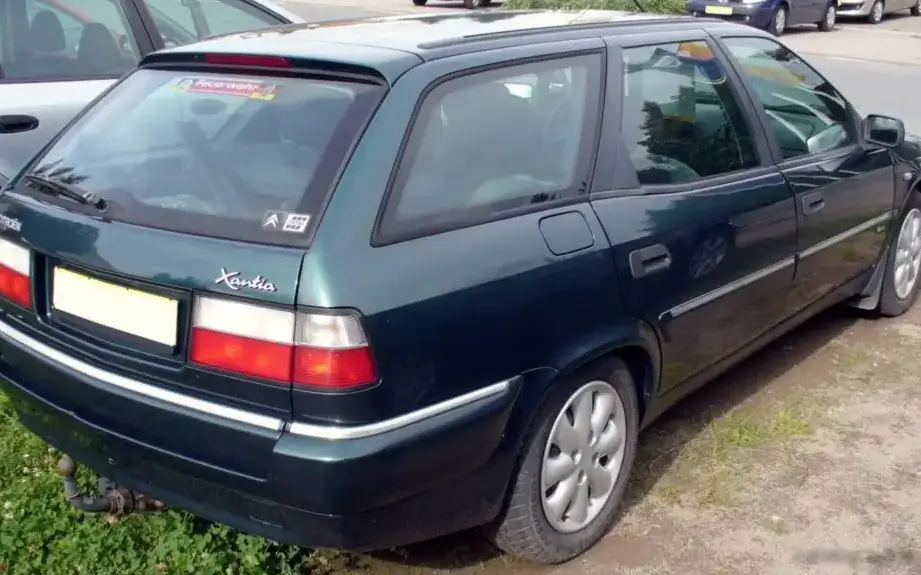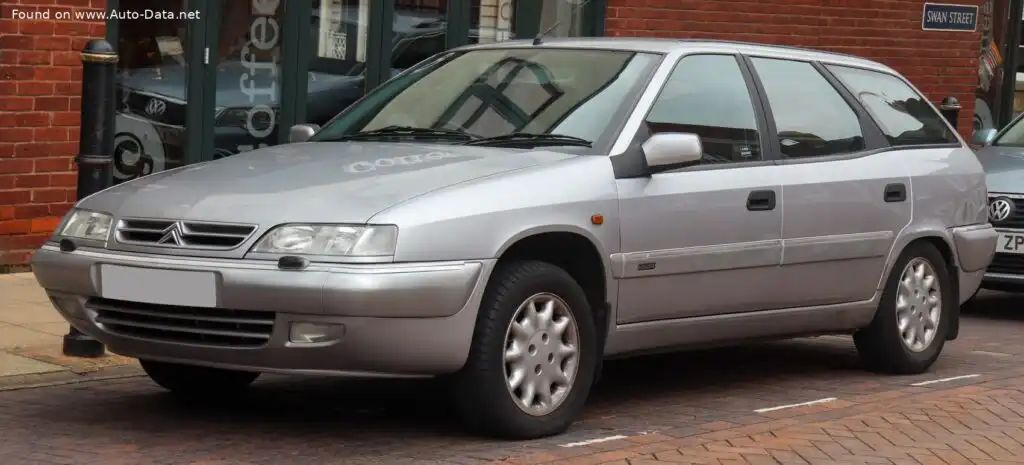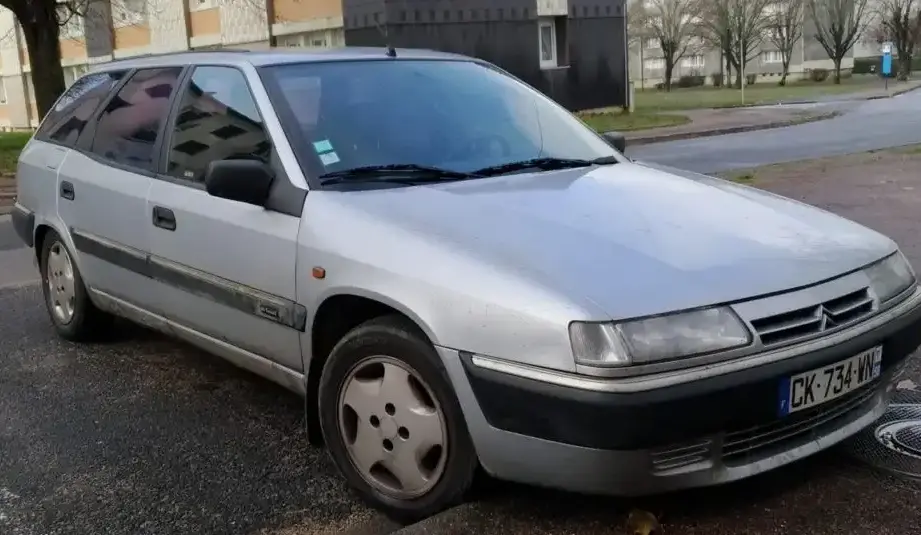
The Citroen Xantia Break 1.9 Turbo D, produced between 1995 and 1998, represents a practical and efficient variant within the first generation (X1) Xantia lineup. Positioned as a mid-range offering, this model combined the spaciousness of the Break (estate) body style with a fuel-efficient turbocharged diesel engine. The Xantia, launched in 1993, was intended as a replacement for both the BX and the XM, aiming to offer a more affordable and accessible alternative to Citroen’s flagship executive car. The Break version, in particular, was popular in Europe as a family vehicle, offering a compelling blend of comfort, practicality, and relatively low running costs. This specific 90 horsepower diesel variant catered to buyers prioritizing economy and usability over outright performance.
Technical Specifications
| Brand | Citroen |
| Model | Xantia |
| Generation | Xantia Break (X1) |
| Type (Engine) | 1.9 Turbo D (90 Hp) |
| Start of production | 1995 year |
| End of production | 1998 year |
| Powertrain Architecture | Internal Combustion engine |
| Body type | Station wagon (estate) |
| Seats | 5 |
| Doors | 5 |
| Fuel consumption (economy) – urban | 7.7 l/100 km (30.5 US mpg, 36.7 UK mpg, 13 km/l) |
| Fuel consumption (economy) – extra urban | 6.6 l/100 km (35.6 US mpg, 42.8 UK mpg, 15.2 km/l) |
| Fuel Type | Diesel |
| Acceleration 0 – 100 km/h | 15.1 sec |
| Acceleration 0 – 62 mph | 15.1 sec |
| Acceleration 0 – 60 mph | 14.3 sec |
| Maximum speed | 174 km/h (108.12 mph) |
| Weight-to-power ratio | 15 kg/Hp, 66.5 Hp/tonne |
| Weight-to-torque ratio | 6.9 kg/Nm, 144.9 Nm/tonne |
| Power | 90 Hp @ 4000 rpm |
| Power per litre | 47.2 Hp/l |
| Torque | 196 Nm @ 2250 rpm (144.56 lb.-ft. @ 2250 rpm) |
| Engine layout | Front, Transverse |
| Engine Model/Code | DHX XUD9 BTF |
| Engine displacement | 1905 cm3 (116.25 cu. in.) |
| Number of cylinders | 4 |
| Engine configuration | Inline |
| Cylinder Bore | 83 mm (3.27 in.) |
| Piston Stroke | 88 mm (3.46 in.) |
| Compression ratio | 21.8:1 |
| Number of valves per cylinder | 2 |
| Fuel injection system | Precombustion chamber injection |
| Engine aspiration | Turbocharger |
| Valvetrain | OHC |
| Engine oil capacity | 4.25 l (4.49 US qt | 3.74 UK qt) |
| Coolant | 9 l (9.51 US qt | 7.92 UK qt) |
| Kerb Weight | 1353 kg (2982.85 lbs.) |
| Max. weight | 1965 kg (4332.08 lbs.) |
| Max load | 612 kg (1349.23 lbs.) |
| Trunk (boot) space – minimum | 512 l (18.08 cu. ft.) |
| Trunk (boot) space – maximum | 1144 l (40.4 cu. ft.) |
| Fuel tank capacity | 65 l (17.17 US gal | 14.3 UK gal) |
| Max. roof load | 75 kg (165.35 lbs.) |
| Permitted trailer load with brakes (12%) | 1200 kg (2645.55 lbs.) |
| Permitted trailer load without brakes | 675 kg (1488.12 lbs.) |
| Permitted towbar download | 85 kg (187.39 lbs.) |
| Length | 4660 mm (183.46 in.) |
| Width | 1755 mm (69.09 in.) |
| Height | 1416 mm (55.75 in.) |
| Wheelbase | 2740 mm (107.87 in.) |
| Front track | 1488-1502 mm (58.58 – 59.13 in.) |
| Rear (Back) track | 1464 mm (57.64 in.) |
| Front overhang | 931 mm (36.65 in.) |
| Rear overhang | 989 mm (38.94 in.) |
| Drivetrain Architecture | The Internal combustion engine (ICE) drives the front wheels of the vehicle. |
| Drive wheel | Front wheel drive |
| Number of gears and type of gearbox | 5 gears, manual transmission |
| Front suspension | Independent type McPherson, Wishbone |
| Rear suspension | Hydro-pneumatic element, Trailing arm |
| Front brakes | Ventilated discs |
| Rear brakes | Disc |
| Assisting systems | ABS (Anti-lock braking system) |
| Steering type | Steering rack and pinion |
| Power steering | Hydraulic Steering |
| Tires size | 185/65 R14 |
Powertrain & Engine Architecture
The heart of the Xantia Break 1.9 Turbo D is the DHX XUD9 BTF engine, a 1.9-liter inline-four cylinder diesel. This engine is a descendant of the long-running XUD series of diesel engines developed by Peugeot-Citroen, known for their durability and fuel efficiency. The “BTF” designation indicates a specific iteration of the engine with a turbocharger and intercooler. The engine utilizes a precombustion chamber injection system, a common feature of diesels of this era, which improves combustion efficiency and reduces noise. The turbocharger significantly boosts power output compared to naturally aspirated versions of the XUD9 engine. The engine produces 90 horsepower at 4000 rpm and 196 Nm (144.56 lb-ft) of torque at 2250 rpm. The engine’s overhead camshaft (OHC) configuration simplifies the valvetrain. The Xantia 1.9 Turbo D was typically paired with a five-speed manual transmission, although a four-speed automatic transmission was also available, albeit less common. The automatic gearbox, while offering convenience, did impact fuel economy and acceleration.
Driving Characteristics
The Xantia Break 1.9 Turbo D offered a comfortable and relaxed driving experience. The 90 horsepower output, while not sporty, was adequate for everyday driving and long-distance cruising, especially considering the vehicle’s weight of around 1353 kg (2982.85 lbs). Acceleration from 0 to 100 km/h (0-62 mph) took approximately 15.1 seconds, and top speed was around 174 km/h (108.12 mph). Compared to the more powerful petrol versions of the Xantia, the diesel felt noticeably slower, particularly during overtaking maneuvers. However, the diesel’s superior torque delivery at lower engine speeds provided good responsiveness in everyday traffic. The automatic transmission, when equipped, offered smooth gear changes but contributed to a slight reduction in performance and fuel economy compared to the manual version. The Xantia’s renowned hydropneumatic suspension provided a remarkably smooth and comfortable ride, absorbing bumps and imperfections in the road surface effectively.
Equipment & Trim Levels
The 1.9 Turbo D Break typically came with a reasonable level of standard equipment. This included central locking, power steering, and an adjustable steering column. Interior upholstery was typically cloth, with a functional and durable design. Optional extras included air conditioning, electric windows, and a sunroof. The dashboard layout was typical of Citroens of the period, featuring a combination of analog gauges and a digital display. Higher trim levels offered additional features such as upgraded upholstery, alloy wheels, and a more comprehensive audio system. The Break body style itself was a key feature, offering a large and practical cargo area with a minimum capacity of 512 liters (18.08 cu. ft.) expanding to 1144 liters (40.4 cu. ft.) with the rear seats folded down.
Chassis & Braking
The Xantia Break featured an independent front suspension with McPherson struts and wishbones, providing good handling and stability. The rear suspension utilized Citroen’s innovative hydropneumatic system, which offered self-leveling and adjustable ride height. This system contributed significantly to the Xantia’s exceptional ride comfort. Braking was handled by ventilated discs at the front and discs at the rear, with ABS (Anti-lock Braking System) as standard equipment. The braking system provided adequate stopping power for the vehicle’s weight and performance.
Market Reception & Comparison
The Citroen Xantia Break 1.9 Turbo D was generally well-received by critics and buyers alike. It was praised for its fuel efficiency, comfortable ride, and spacious interior. However, some reviewers noted the engine’s lack of outright power compared to petrol alternatives. Compared to other diesel estate cars of the time, such as the Ford Mondeo Estate TD, the Xantia offered a more sophisticated and comfortable driving experience, thanks to its hydropneumatic suspension. The Xantia’s unique styling also set it apart from its competitors. Fuel economy was a strong point, with combined cycle figures around 7.7 l/100 km (30.5 US mpg), making it an attractive option for high-mileage drivers.
Legacy
The Xantia Break 1.9 Turbo D has proven to be a relatively reliable vehicle, with the XUD9 engine being known for its longevity. However, the hydropneumatic suspension system can require maintenance and repairs as the vehicle ages. Today, the Xantia Break 1.9 Turbo D is a relatively affordable used car, appealing to buyers looking for a practical and comfortable estate car with good fuel economy. While not a performance car, it remains a capable and distinctive vehicle, representing a unique chapter in Citroen’s history. Parts availability can be a challenge in some regions, but a dedicated enthusiast community exists to support owners.