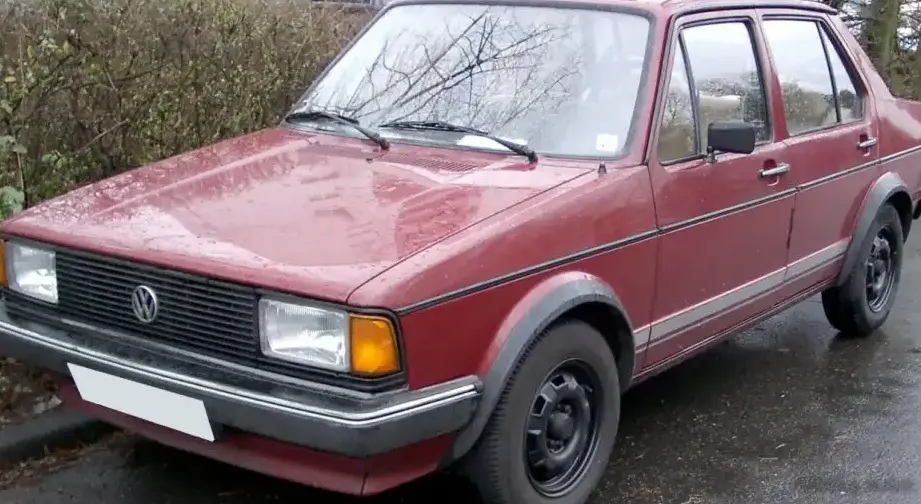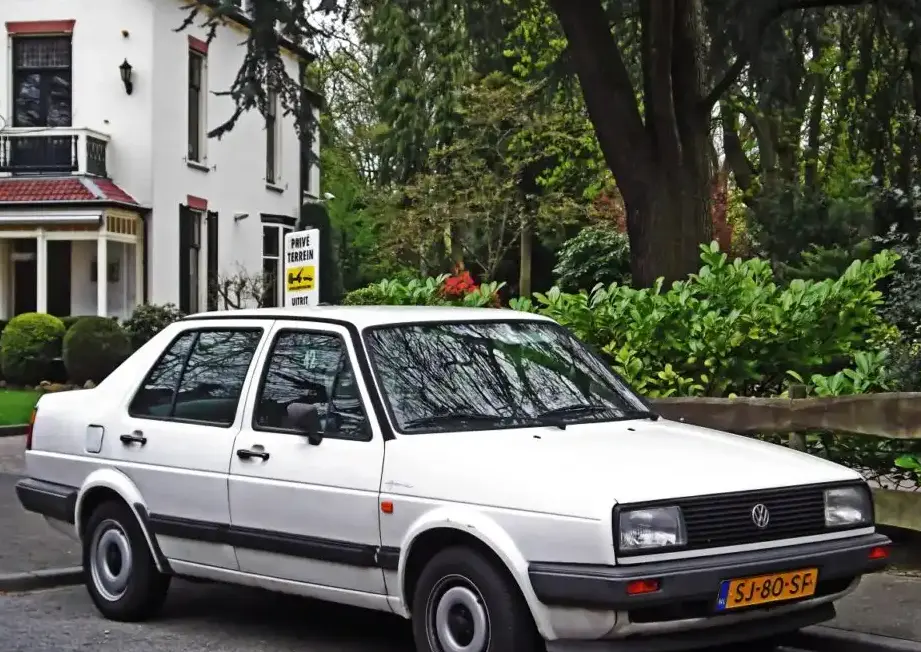
The Volkswagen Jetta II 1.6, producing 75 horsepower, was a mainstay of the model’s second generation, manufactured between 1983 and 1987. Positioned as the entry-level offering in the Jetta II lineup, it provided affordable transportation within the compact sedan segment. This variant played a significant role in establishing the Jetta as a popular choice for buyers seeking a practical and economical vehicle, particularly in Europe and North America. It was built on the A2 platform, shared with the Golf Mk2, Scirocco Mk2, and Passat B2.
Technical Specifications
| Brand | Volkswagen |
| Model | Jetta |
| Generation | Jetta II |
| Type (Engine) | 1.6 (75 Hp) |
| Start of production | 1983 |
| End of production | 1987 |
| Powertrain Architecture | Internal Combustion engine |
| Body type | Sedan |
| Seats | 5 |
| Doors | 4 |
| Fuel Type | Petrol (Gasoline) |
| Acceleration 0 – 100 km/h | 13.4 sec |
| Acceleration 0 – 62 mph | 13.4 sec |
| Acceleration 0 – 60 mph | 12.7 sec |
| Maximum speed | 165 km/h (102.53 mph) |
| Weight-to-power ratio | 12.3 kg/Hp, 81.5 Hp/tonne |
| Weight-to-torque ratio | 7.4 kg/Nm, 135.9 Nm/tonne |
| Power | 75 Hp @ 5000 rpm |
| Power per litre | 46.9 Hp/l |
| Torque | 125 Nm @ 1595 rpm (92.2 lb.-ft. @ 1595 rpm) |
| Engine layout | Front, Transverse |
| Engine Model/Code | EZ, ABN |
| Engine displacement | 1600 cm3 (97.64 cu. in.) |
| Number of cylinders | 4 |
| Engine configuration | Inline |
| Cylinder Bore | 81 mm (3.19 in.) |
| Piston Stroke | 77.4 mm (3.05 in.) |
| Compression ratio | 9:1 |
| Number of valves per cylinder | 2 |
| Fuel injection system | Carburettor |
| Engine aspiration | Naturally aspirated engine |
| Valvetrain | OHC |
| Engine oil capacity | 4 l (4.23 US qt | 3.52 UK qt) |
| Coolant | 6.5 l (6.87 US qt | 5.72 UK qt) |
| Kerb Weight | 920 kg (2028.25 lbs) |
| Max. weight | 1440 kg (3174.66 lbs) |
| Max load | 520 kg (1146.4 lbs) |
| Trunk (boot) space – minimum | 575 l (20.31 cu. ft.) |
| Fuel tank capacity | 55 l (14.53 US gal | 12.1 UK gal) |
| Length | 4385 mm (172.64 in.) |
| Width | 1675 mm (65.94 in.) |
| Height | 1415 mm (55.71 in.) |
| Wheelbase | 2475 mm (97.44 in.) |
| Front track | 1427 mm (56.18 in.) |
| Rear (Back) track | 1422 mm (55.98 in.) |
| Drag coefficient (Cd) | 0.36 |
| Drivetrain Architecture | The Internal combustion engine (ICE) drives the front wheels of the vehicle. |
| Drive wheel | Front wheel drive |
| Number of gears and type of gearbox | 5 gears, manual transmission |
| Front suspension | Independent type McPherson |
| Rear suspension | Coil spring |
| Front brakes | Disc |
| Rear brakes | Drum |
| Steering type | Steering rack and pinion |
| Tires size | 175/70 R13 |
| Wheel rims size | 13 |
Powertrain & Engine Architecture
The Jetta II 1.6 utilized the Volkswagen EA827 engine family, specifically the EZ and ABN engine codes. This 1.6-liter inline-four engine featured a single overhead camshaft (OHC) design and two valves per cylinder. Crucially, this variant employed a carburetor for fuel delivery, a cost-saving measure compared to the fuel injection systems found in higher-spec Jettas. The carburetor, typically a Pierburg 2E2 or Solex 32 PDSI, provided adequate but less precise fuel metering. The engine’s relatively low compression ratio of 9:1 contributed to its ability to run on lower octane fuels, common in many markets. The five-speed manual transmission was the standard offering, providing a reasonable spread of gears for everyday driving.
Driving Characteristics
The 75 horsepower and 92.2 lb-ft of torque produced by the 1.6-liter engine resulted in modest performance. Acceleration from 0-60 mph took around 12.7 seconds, and top speed was approximately 102.53 mph. Compared to the more powerful Jetta GLI models with their 1.8-liter engines or the diesel variants, the 1.6 felt noticeably slower, particularly when fully loaded or climbing hills. The carburetor’s response wasn’t as immediate as fuel injection, requiring a bit more throttle input. However, the engine was relatively smooth and quiet for its time, and the manual transmission offered a satisfyingly direct feel. The gear ratios were tuned for economy rather than outright performance, prioritizing fuel efficiency over rapid acceleration.
Equipment & Trim Levels
The Jetta II 1.6 was typically offered with a basic level of equipment. Standard features generally included cloth upholstery, a simple dashboard layout with analog gauges, and manual windows and door locks. Air conditioning, power windows, and upgraded audio systems were usually optional extras. The interior trim was functional and durable, reflecting the car’s focus on affordability. Exterior features were similarly basic, with steel wheels, black plastic trim, and relatively small tires. The Jetta 1.6 often served as a base for buyers who then added options to suit their needs.
Chassis & Braking
The Jetta II utilized a McPherson strut front suspension and a coil spring rear suspension. This setup provided a comfortable ride, although handling was not particularly sporty. The front brakes were discs, offering adequate stopping power, while the rear brakes were drums, a cost-saving measure. The steering was a rack-and-pinion system, providing reasonable precision. The relatively light weight of the Jetta 1.6 (around 2028 lbs) helped to offset the engine’s modest power output, contributing to acceptable handling characteristics for everyday driving. Stabilizer bars were often omitted on the base models to further reduce cost.
Market Reception & Comparison
The Jetta II 1.6 was generally well-received as an affordable and practical compact sedan. Critics praised its fuel economy and reliability, but noted its lack of performance compared to higher-spec models. Compared to the Jetta GLI with its 1.8-liter engine, the 1.6 offered significantly less power and acceleration. The diesel versions, while slower, provided superior fuel economy. However, the 1.6’s simplicity and lower maintenance costs made it an attractive option for budget-conscious buyers. It competed with other compact sedans like the Ford Escort, Chevrolet Cavalier, and Toyota Corolla.
Legacy
The Volkswagen Jetta II 1.6, while not the most powerful or technologically advanced version of the Jetta, remains a popular choice among classic car enthusiasts and those seeking a simple, reliable, and affordable vehicle. The EA827 engine, while carburetor-equipped in this variant, proved to be durable and relatively easy to maintain. Today, well-maintained examples are increasingly sought after, particularly by those looking to experience a piece of 1980s automotive history. Parts availability is generally good, and the car’s straightforward design makes it relatively easy to work on for DIY mechanics. The Jetta II 1.6 represents a significant chapter in Volkswagen’s history, solidifying the Jetta’s position as a popular and practical compact sedan.