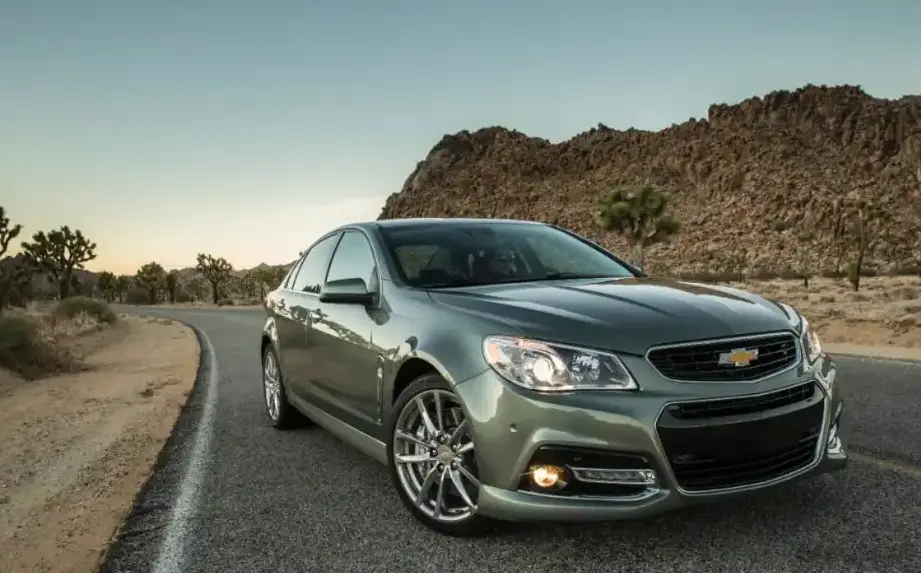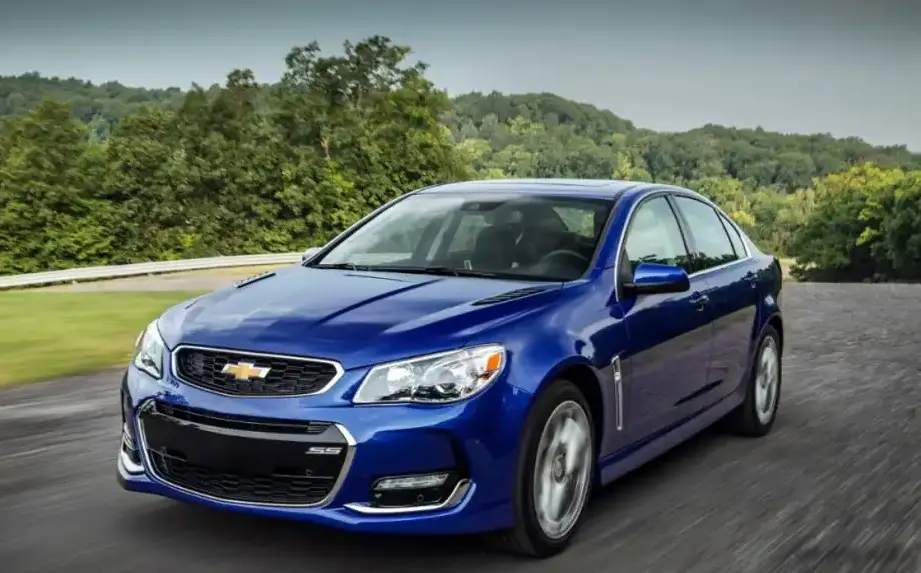
The Chevrolet SS (specifically the facelifted 2016-2017 model year) represented a final, potent offering in the rear-wheel-drive, full-size sedan segment from Chevrolet. Built on the Zeta platform – originally developed by Holden in Australia – the SS was positioned as a performance-oriented alternative to more common front-wheel-drive sedans. This variant, equipped with the 6.2-liter LS3 V8 engine and a six-speed automatic transmission, was the sole powertrain configuration offered for the American market during its brief production run. It served as a spiritual successor to previous Chevrolet Impala SS models, aiming to deliver a blend of American muscle car power and everyday practicality.
Technical Specifications
| Brand | Chevrolet |
| Model | SS |
| Generation | SS (facelift 2016) |
| Type (Engine) | 6.2 V8 (415 Hp) Automatic |
| Start of production | 2016 |
| End of production | 2017 |
| Powertrain Architecture | Internal Combustion engine |
| Body type | Sedan |
| Seats | 5 |
| Doors | 4 |
| Fuel consumption (economy) – urban | 16.8 l/100 km (14 US mpg, 16.8 UK mpg, 6 km/l) |
| Fuel consumption (economy) – extra urban | 10.7 l/100 km (22 US mpg, 26.4 UK mpg, 9.3 km/l) |
| Fuel consumption (economy) – combined | 14.7 l/100 km (16 US mpg, 19.2 UK mpg, 6.8 km/l) |
| Fuel Type | Petrol (Gasoline) |
| Weight-to-power ratio | 4.3 kg/Hp, 230.2 Hp/tonne |
| Weight-to-torque ratio | 3.2 kg/Nm, 312.3 Nm/tonne |
| Power | 415 Hp @ 5900 rpm |
| Power per litre | 67.3 Hp/l |
| Torque | 563 Nm @ 4600 rpm (415.25 lb.-ft. @ 4600 rpm) |
| Engine layout | Front, Longitudinal |
| Engine Model/Code | LS3 |
| Engine displacement | 6162 cm3 (376.03 cu. in.) |
| Number of cylinders | 8 |
| Engine configuration | V-engine |
| Cylinder Bore | 103.25 mm (4.06 in.) |
| Piston Stroke | 92 mm (3.62 in.) |
| Compression ratio | 10.7:1 |
| Number of valves per cylinder | 2 |
| Fuel injection system | Direct injection |
| Engine oil capacity | 7.6 l (8.03 US qt | 6.69 UK qt) |
| Coolant | 10.5 l (11.1 US qt | 9.24 UK qt) |
| Kerb Weight | 1803 kg (3974.93 lbs.) |
| Trunk (boot) space – minimum | 464 l (16.39 cu. ft.) |
| Fuel tank capacity | 71 l (18.76 US gal | 15.62 UK gal) |
| Length | 4966 mm (195.51 in.) |
| Width | 1897 mm (74.69 in.) |
| Height | 1470 mm (57.87 in.) |
| Wheelbase | 2916 mm (114.8 in.) |
| Front track | 1590 mm (62.6 in.) |
| Rear (Back) track | 1585 mm (62.4 in.) |
| Minimum turning circle (turning diameter) | 11.4 m (37.4 ft.) |
| Drivetrain Architecture | The Internal combustion engine (ICE) drives the rear wheels of the vehicle. |
| Drive wheel | Rear wheel drive |
| Number of gears and type of gearbox | 6 gears, automatic transmission |
| Front suspension | McPherson, Independent multi-link suspension |
| Rear suspension | Independent multi-link suspension |
| Front brakes | Disc, 355×32 mm |
| Rear brakes | Disc, 360×28 mm |
| Assisting systems | ABS (Anti-lock braking system) |
| Steering type | Steering rack and pinion |
| Power steering | Electric Steering |
| Tires size | Front wheel tires: 245/40 R19 Rear wheel tires: 275/35 R19 |
| Wheel rims size | Front wheel rims: 8.5J x 19 Rear wheel rims: 9J x 19 |
Powertrain & Engine Architecture
At the heart of the 2016-2017 Chevrolet SS was the 6.2-liter LS3 V8 engine. This naturally aspirated powerplant, a member of General Motors’ Small Block family, featured aluminum cylinder heads, a cast iron block, and direct fuel injection. The LS3 produced 415 horsepower at 5900 rpm and 450 lb-ft of torque at 4600 rpm. The engine’s architecture was a traditional 90-degree V8, known for its robust construction and relatively simple maintenance requirements. The six-speed automatic transmission (6L80E) was the only transmission option. This transmission was chosen for its durability and ability to handle the engine’s substantial power output. It featured a torque converter lock-up clutch for improved fuel efficiency at cruising speeds. The transmission offered a manual shift mode, but it wasn’t particularly responsive compared to modern transmissions.
Driving Characteristics
The combination of the 415 hp LS3 and the six-speed automatic resulted in brisk acceleration. Zero to sixty mph times were consistently in the low-to-mid 5-second range. While the automatic transmission provided smooth shifts, it didn’t offer the same level of engagement as a manual transmission. The automatic’s programming prioritized comfort and drivability over outright performance. Compared to a hypothetical SS equipped with a manual transmission, the automatic version felt slightly less responsive, particularly during aggressive driving. The rear-wheel-drive layout provided a balanced feel, and the SS handled corners with confidence, aided by its well-tuned suspension. However, the car’s considerable weight (approximately 3,975 lbs) was noticeable during hard braking and cornering.
Equipment & Trim Levels
The Chevrolet SS came relatively well-equipped as standard. Key features included leather upholstery, heated and ventilated front seats, a Bose premium sound system, a touchscreen infotainment system with navigation, and a rearview camera. Optional extras included a sunroof, and various cosmetic enhancements. The SS didn’t offer a wide range of trim levels; it was largely a single, fully-featured package. The focus was on providing a comprehensive performance sedan experience without extensive customization options.
Chassis & Braking
The SS utilized an independent multi-link suspension at all four corners, providing a comfortable ride and good handling characteristics. The front suspension featured McPherson struts, while the rear employed a more sophisticated multi-link design. Braking duties were handled by four-wheel disc brakes with ABS. Front rotors measured 355mm in diameter, while rear rotors were 360mm. The braking system provided ample stopping power, but the car’s weight meant that brake fade could occur during extended periods of hard use. The SS featured electric power steering, which offered a reasonable level of feedback and assistance.
Market Reception & Comparison
The Chevrolet SS was generally well-received by automotive critics. Praise was directed towards its powerful engine, comfortable ride, and spacious interior. However, some reviewers criticized its fuel economy (averaging around 16 mpg combined) and its relatively high price compared to other full-size sedans. Compared to other performance sedans of the time, such as the Dodge Charger SRT and the Ford Taurus SHO, the SS offered a more refined driving experience and a more understated appearance. The SS’s fuel economy was comparable to its competitors, but its maintenance costs could be higher due to the LS3 engine’s potential for oil consumption and the cost of premium fuel.
Legacy
The Chevrolet SS marked the end of an era for rear-wheel-drive sedans from Chevrolet. Production ceased in 2017 due to the closure of Holden’s Australian manufacturing facilities. Today, the 2016-2017 SS is gaining popularity among collectors and enthusiasts. The LS3 engine is known for its reliability and tunability, making the SS a desirable platform for modifications. While maintenance costs can be higher than for more common vehicles, the SS’s robust construction and readily available parts supply ensure that it will remain a viable performance sedan for years to come. The SS represents a unique chapter in Chevrolet’s history, offering a blend of American muscle and Australian engineering.