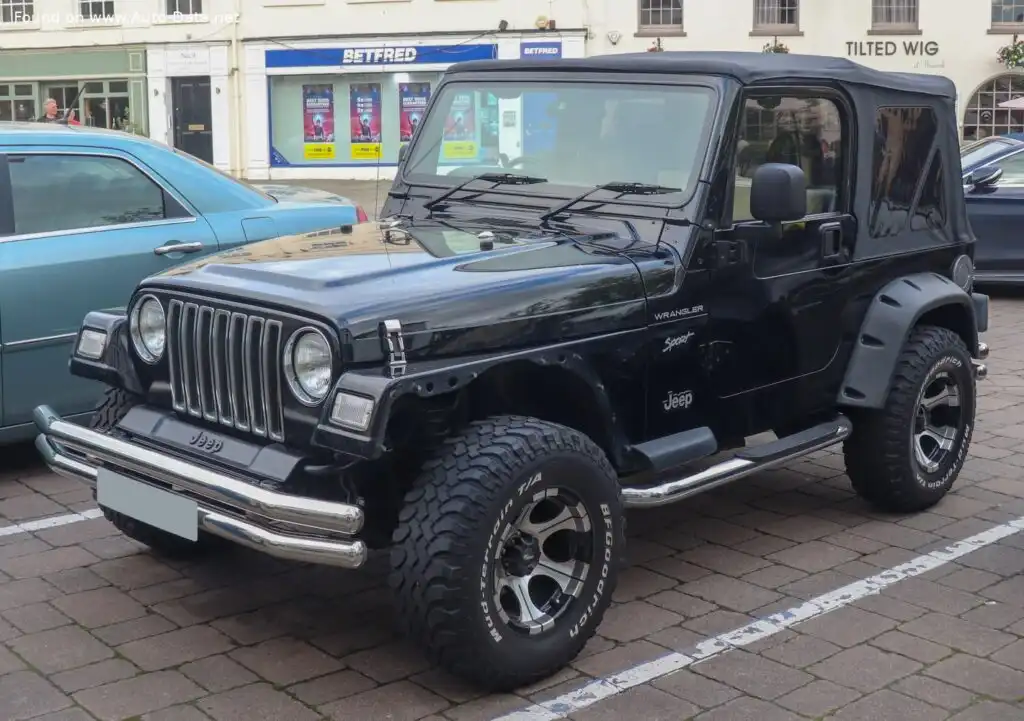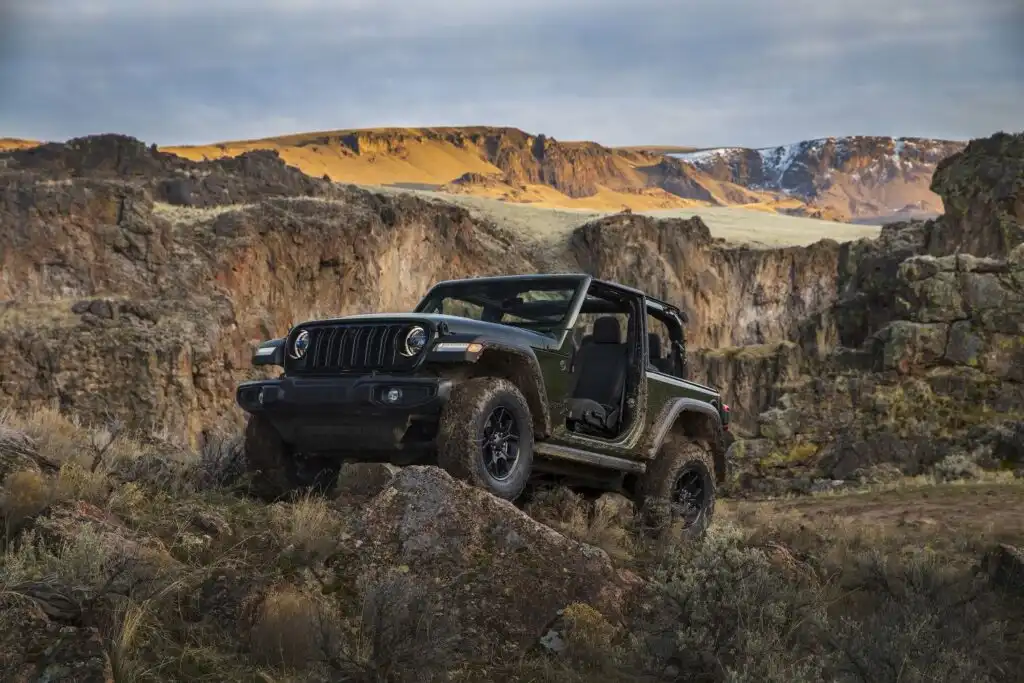
The Jeep Wrangler JL Sahara 2.0 Turbo, introduced in April 2023 as part of the JL facelift, represents a significant evolution of the iconic Wrangler formula. Positioned as a mid-range offering within the fourth-generation (JL) Wrangler lineup, this variant combines a turbocharged four-cylinder engine with an eight-speed automatic transmission and Jeep’s renowned four-wheel-drive system. It aims to deliver a balance of on-road refinement and off-road capability, appealing to a broader audience than previous, more utilitarian Wrangler trims. The 2023 refresh brought subtle styling updates and enhanced technology, further solidifying the Wrangler’s position as a dominant force in the off-road SUV segment.
Technical Specifications
| Brand | Jeep |
| Model | Wrangler |
| Generation | Wrangler IV (JL, facelift 2023) |
| Type | Sahara 2.0 Turbo (272 Hp) 4×4 Automatic |
| Start of production | April, 2023 |
| Powertrain Architecture | Internal Combustion engine |
| Body type | Off-road vehicle |
| Seats | 4 |
| Doors | 2 |
| Fuel Type | Petrol (Gasoline) |
| Weight-to-power ratio | 7.3 kg/Hp, 137.2 Hp/tonne |
| Weight-to-torque ratio | 5 kg/Nm, 201.8 Nm/tonne |
| Power | 272 Hp @ 5250 rpm |
| Power per litre | 136.3 Hp/l |
| Torque | 400 Nm @ 3000 rpm, 295.02 lb.-ft. @ 3000 rpm |
| Maximum engine speed | 5800 rpm |
| Engine layout | Front, Longitudinal |
| Engine Model/Code | Hurricane |
| Engine displacement | 1995 cm3, 121.74 cu. in. |
| Number of cylinders | 4 |
| Engine configuration | Inline |
| Cylinder Bore | 84 mm, 3.31 in. |
| Piston Stroke | 90 mm, 3.54 in. |
| Compression ratio | 10:1 |
| Number of valves per cylinder | 4 |
| Fuel injection system | Direct injection |
| Engine aspiration | Turbocharger, Intercooler |
| Valvetrain | DOHC |
| Engine oil capacity | 4.7 l, 4.97 US qt | 4.14 UK qt |
| Coolant | 9.4 l, 9.93 US qt | 8.27 UK qt |
| Kerb Weight | 1982 kg, 4369.56 lbs |
| Fuel tank capacity | 66 l, 17.44 US gal | 14.52 UK gal |
| Permitted trailer load with brakes (12%) | 907 kg, 1999.59 lbs |
| Length | 4237 mm, 166.81 in |
| Width | 1877 mm, 73.9 in |
| Height | 1868 mm, 73.54 in |
| Wheelbase | 2460 mm, 96.85 in |
| Front track | 1598 mm, 62.91 in |
| Rear (Back) track | 1598 mm, 62.91 in |
| Front overhang | 742 mm, 29.21 in |
| Rear overhang | 1036 mm, 40.79 in |
| Ride height (ground clearance) | 254 mm, 10 in |
| Minimum turning circle (turning diameter) | 10 m, 32.81 ft |
| Approach angle | 41.8° |
| Departure angle | 36.1° |
| Ramp-over (brakeover) angle | 21° |
| Wading depth | 762 mm, 30 in |
| Drivetrain Architecture | The Internal combustion engine (ICE) drives the rear wheels permanently, and the front wheels are driven through an electrically or mechanically operated clutch if necessary. |
| Drive wheel | All wheel drive (4×4) |
| Number of gears and type of gearbox | 8 gears, automatic transmission |
| Front suspension | Spring Strut, Coil spring, Rigid axle suspension, Transverse stabilizer |
| Rear suspension | Spring Strut, Rigid axle suspension, Transverse stabilizer, Coil spring |
| Front brakes | Ventilated discs, 330×28 mm |
| Rear brakes | Disc, 342×14 mm |
| Assisting systems | ABS (Anti-lock braking system) |
| Steering type | Steering rack and pinion |
| Power steering | Electric Steering |
| Tires size | 255/70 R18 |
| Wheel rims size | 7.5J x 18 |
Powertrain & Engine Architecture
The heart of the Wrangler Sahara 2.0 Turbo is the Hurricane four-cylinder engine, a member of the Global Medium Engine (GME) family developed by Stellantis. This 1.995-liter (121.74 cubic inches) inline-four boasts direct fuel injection and a single twin-scroll turbocharger with an integrated intercooler. The engine utilizes a double overhead camshaft (DOHC) valvetrain with four valves per cylinder, contributing to its efficient combustion process. The engine produces 272 horsepower at 5250 rpm and 400 Nm (295 lb-ft) of torque at 3000 rpm. Paired with this engine is an eight-speed automatic transmission (850RE) designed to optimize fuel efficiency and provide smooth shifting. This transmission features a wide gear ratio spread, enhancing both acceleration and highway cruising. The powertrain is configured with a longitudinal engine layout, directing power to all four wheels via Jeep’s Command-Trac part-time four-wheel-drive system.
Driving Characteristics
The 2.0-liter Turbo automatic Wrangler offers a noticeably different driving experience compared to the naturally aspirated 3.6-liter V6 or the diesel-powered variants. The turbocharger provides a strong low-end torque, making it capable in off-road situations requiring crawling and maneuvering. While not as immediately responsive as a manual transmission, the eight-speed automatic provides quick and precise shifts. The gear ratios are tuned for both on-road comfort and off-road capability. Compared to the V6, the 2.0T feels more energetic in everyday driving, though the V6 offers a more traditional engine sound. The automatic transmission helps to maximize fuel efficiency, a key advantage over the more powerful but less efficient V6. However, some drivers may find the automatic transmission less engaging than the available six-speed manual.
Equipment & Trim Levels
The Sahara trim level, even in its 2023 facelifted form, represents a step up in terms of comfort and convenience. Standard features include air conditioning, power windows and locks, a Uconnect infotainment system with a 8.4-inch touchscreen display, Apple CarPlay and Android Auto compatibility, and a rearview camera. The Sahara also includes premium cloth upholstery, a leather-wrapped steering wheel, and automatic headlights. Optional extras for the 2.0 Turbo Sahara include a premium audio system, navigation, heated front seats and steering wheel, and various off-road packages that add features like rock rails and a limited-slip differential.
Chassis & Braking
The Wrangler JL Sahara 2.0 Turbo utilizes a robust body-on-frame construction, providing excellent durability and off-road capability. The front suspension consists of a multi-link setup with coil springs and a stabilizer bar, while the rear features a solid axle with coil springs and a stabilizer bar. This configuration provides a good balance of on-road comfort and off-road articulation. The braking system consists of ventilated discs at the front (330x28mm) and solid discs at the rear (342x14mm). An Anti-lock Braking System (ABS) is standard. The steering is a rack-and-pinion system with electric power assist, providing precise and responsive handling.
Market Reception & Comparison
The 2.0-liter Turbo Wrangler received generally positive reviews, with critics praising its fuel efficiency and surprisingly strong performance. It was often seen as a more practical and refined option compared to the V6, particularly for daily driving. Fuel economy figures are notably better than the V6, making it a more attractive option for those who prioritize efficiency. However, some reviewers noted that the engine lacked the character and sound of the traditional V6. Compared to the diesel variants, the 2.0T offers a lower initial cost but doesn’t match the diesel’s torque output for heavy-duty towing or extreme off-roading.
Legacy
The Hurricane 2.0-liter engine and eight-speed automatic transmission combination has proven to be a reliable powertrain in the Wrangler JL. While long-term reliability data is still accumulating, early reports suggest that the engine is durable and capable of handling the demands of off-road driving. On the used car market, the 2023 Sahara 2.0 Turbo holds its value well, thanks to the Wrangler’s strong reputation and the appeal of its balanced performance and fuel efficiency. The introduction of this turbocharged engine marked a significant step towards modernizing the Wrangler while retaining its core off-road DNA, making it a popular choice for a wide range of buyers.