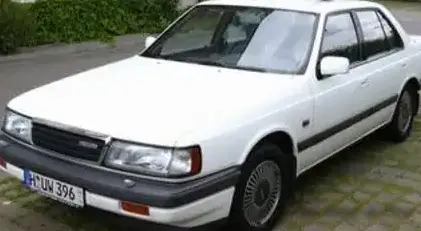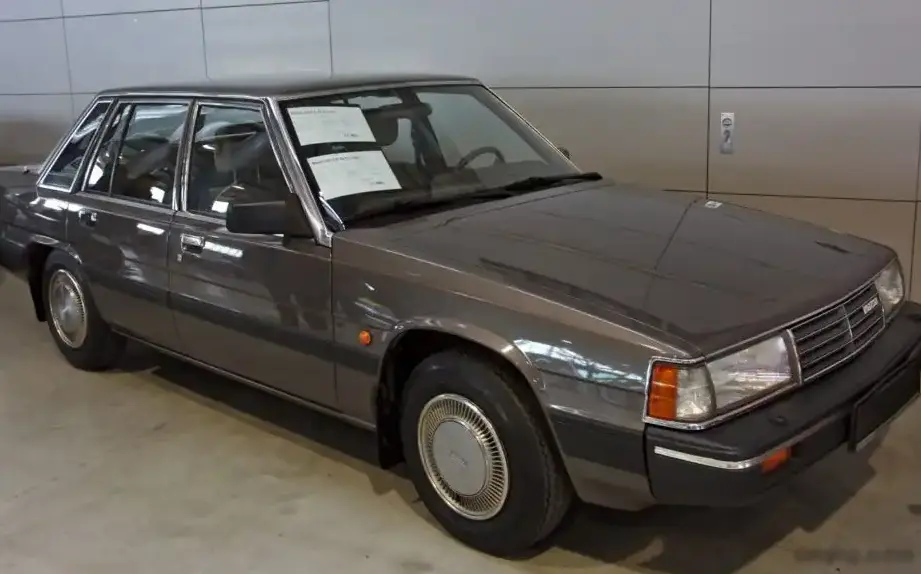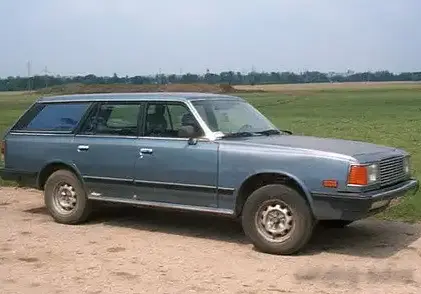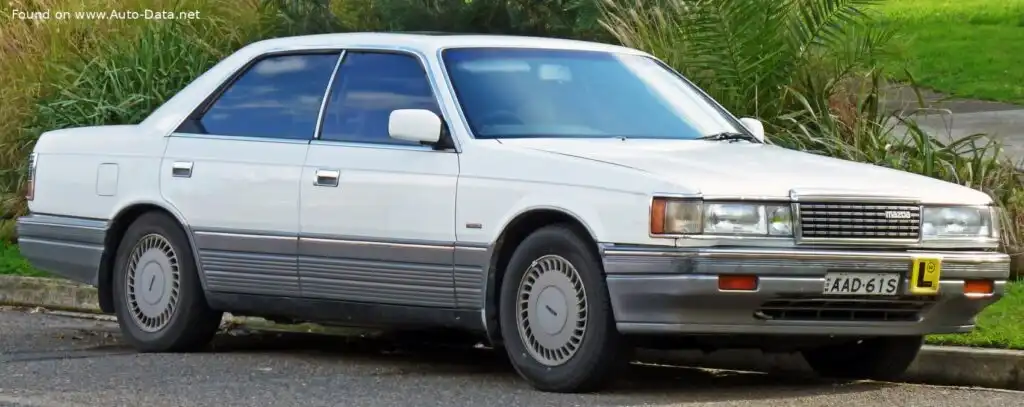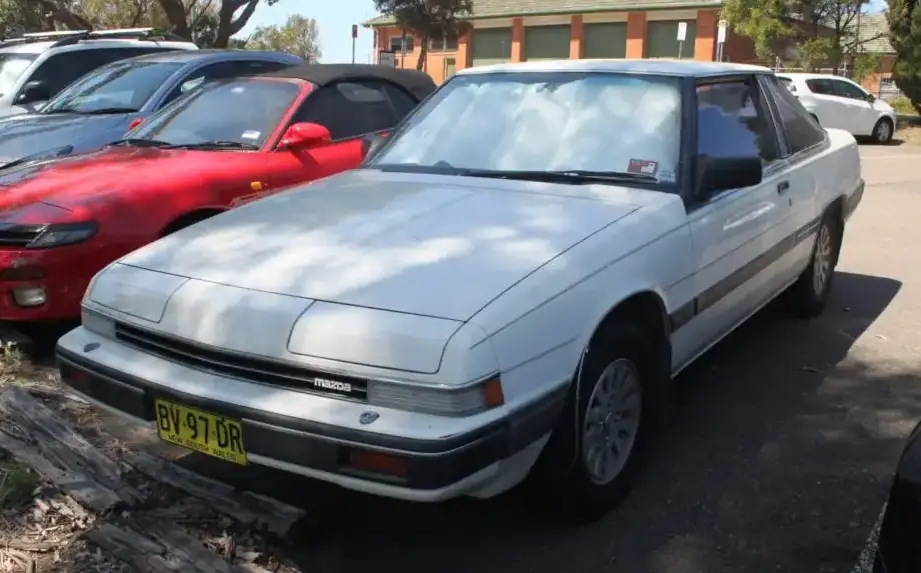
The Mazda 929 II Coupe (HB) 2.0, produced between April 1982 and March 1984, marked a significant advancement in Mazda’s pursuit of luxury and grand touring vehicles. As the coupe derivative of the 929 line, the HB chassis presented a more sporting aesthetic than its sedan counterpart. Built on Mazda’s HC platform, this generation – internally designated HB – aimed to rival established European grand tourers in terms of comfort and refinement, while maintaining the brand’s reputation for Japanese reliability. The 2.0-liter, 90 horsepower version paired with a five-speed manual transmission was a key offering in many markets, striking a balance between performance and affordability within the 929 range.
Technical Specifications
| Brand | Mazda |
| Model | 929 |
| Generation | 929 II Coupe (HB) |
| Type (Engine) | 2.0 (90 Hp) |
| Start of production | April, 1982 |
| End of production | March, 1984 |
| Powertrain Architecture | Internal Combustion engine |
| Body type | Coupe |
| Seats | 5 |
| Doors | 2 |
| Fuel Type | Petrol (Gasoline) |
| Acceleration 0 – 100 km/h | 13.8 sec |
| Acceleration 0 – 62 mph | 13.8 sec |
| Acceleration 0 – 60 mph | 13.1 sec |
| Maximum speed | 175 km/h (108.74 mph) |
| Weight-to-power ratio | 12.7 kg/Hp, 78.9 Hp/tonne |
| Weight-to-torque ratio | 7.3 kg/Nm, 137.7 Nm/tonne |
| Power | 90 Hp @ 5000 rpm |
| Power per litre | 45.7 Hp/l |
| Torque | 157 Nm @ 5500 rpm (115.8 lb.-ft. @ 5500 rpm) |
| Engine layout | Front, Longitudinal |
| Engine Model/Code | MA |
| Engine displacement | 1970 cm3 (120.22 cu. in.) |
| Number of cylinders | 4 |
| Engine configuration | Inline |
| Cylinder Bore | 80 mm (3.15 in.) |
| Piston Stroke | 98 mm (3.86 in.) |
| Compression ratio | 8.6:1 |
| Number of valves per cylinder | 2 |
| Fuel injection system | Carburettor |
| Engine aspiration | Naturally aspirated engine |
| Valvetrain | SOHC |
| Engine oil capacity | 3.9 l (4.12 US qt | 3.43 UK qt) |
| Coolant | 7.5 l (7.93 US qt | 6.6 UK qt) |
| Kerb Weight | 1140 kg (2513.27 lbs.) |
| Max. weight | 1740 kg (3836.04 lbs.) |
| Max load | 600 kg (1322.77 lbs.) |
| Trunk (boot) space – minimum | 420 l (14.83 cu. ft.) |
| Fuel tank capacity | 60 l (15.85 US gal | 13.2 UK gal) |
| Length | 4640 mm (182.68 in.) |
| Width | 1690 mm (66.54 in.) |
| Height | 1355 mm (53.35 in.) |
| Wheelbase | 2615 mm (102.95 in.) |
| Front track | 1430 mm (56.3 in.) |
| Rear (Back) track | 1415 mm (55.71 in.) |
| Minimum turning circle | 10.4 m (34.12 ft.) |
| Drivetrain Architecture | Rear wheel drive |
| Number of gears and type of gearbox | 5 gears, manual transmission |
| Front suspension | Independent, type McPherson with coil spring and anti-roll bar |
| Rear suspension | Rigid axle suspension, Transverse stabilizer |
| Front brakes | Disc |
| Rear brakes | Disc |
| Steering type | Steering rack and pinion |
| Tires size | 175/70 R14; 195/70 R16 |
| Wheel rims size | 5.5J x 14 |
Powertrain & Engine Architecture
The Mazda 929 II Coupe 2.0’s engine was the MA, a 1970cc inline-four cylinder unit. This engine featured a single overhead camshaft (SOHC) valvetrain with two valves per cylinder. Fuel delivery was handled by a carburetor, a common technology for the period, though increasingly being replaced by fuel injection in other markets. The MA engine, while not exceptionally powerful, was known for its smooth operation and relative dependability. It produced 90 horsepower at 5000 rpm and 115.8 lb-ft of torque at 5500 rpm – respectable figures for its displacement and intended use. The engine was mounted longitudinally in the front of the vehicle, powering the rear wheels. The five-speed manual transmission provided precise shifting and allowed drivers to maximize the available power.
Driving Characteristics
The 929 II Coupe 2.0 with the manual transmission delivered a reasonably engaging driving experience. Acceleration to 60 mph took approximately 13.1 seconds, and the top speed reached around 108.74 mph. While not particularly fast by today’s standards, the car felt nimble and well-balanced due to its rear-wheel-drive layout and relatively light weight. The five-speed gearbox enabled effective engine braking and offered a good range of ratios for both city and highway driving. Compared to the more powerful, six-cylinder 929 models, the 2.0-liter prioritized fuel efficiency and ease of driving over outright performance. The manual transmission also provided a more direct and connected feel compared to the optional automatic.
Equipment & Trim Levels
The 929 II Coupe 2.0 typically included a good level of standard features for its time. Interior appointments included cloth upholstery, a basic sound system, and power steering. Air conditioning was frequently an optional extra, as were features like electric windows and a sunroof. The dashboard layout was functional and straightforward, with clearly visible gauges. Trim levels varied by market, but generally, the 2.0-liter model represented a mid-range offering, positioned above the base models but below the more luxurious six-cylinder variants.
Chassis & Braking
The 929 II Coupe utilized an independent McPherson strut suspension in the front, providing a comfortable ride and good handling. The rear suspension employed a rigid axle with a transverse stabilizer bar, which helped minimize body roll during cornering. Braking was accomplished with disc brakes on all four wheels, offering adequate stopping power for the car’s weight and performance. Steering was via a rack and pinion system, providing precise and responsive control. Tire sizes ranged from 175/70 R14 to 195/70 R16, depending on the trim level and market.
Market Reception & Comparison
The Mazda 929 II Coupe was generally well-received by automotive critics. It was praised for its stylish design, comfortable interior, and smooth ride quality. The 2.0-liter engine was considered sufficient for most drivers, although some reviewers noted its lack of the punch offered by the larger engines. Fuel economy was a strong point, and the car was seen as a good value. Compared to competitors like the BMW 3 Series and the Mercedes-Benz C-Class (later models), the 929 offered a different set of strengths – prioritizing comfort and reliability over outright performance and prestige. The 2.0-liter manual version was often regarded as a sweet spot in the lineup, offering a good balance of performance, economy, and driving enjoyment.
Legacy
The Mazda 929 II Coupe, particularly the 2.0-liter variant, has cultivated a dedicated following among classic car enthusiasts. The MA engine, while not known for high performance, is generally considered reliable and relatively easy to maintain. Parts availability can be challenging, but a committed community of owners and enthusiasts helps keep these cars on the road. Today, the 929 II Coupe represents a stylish and affordable entry point into classic Japanese motoring, offering a unique combination of comfort, refinement, and rear-wheel-drive dynamics.