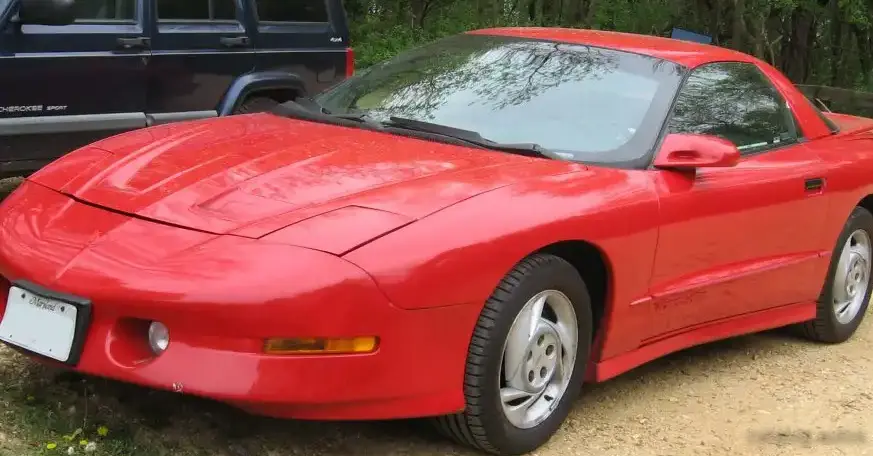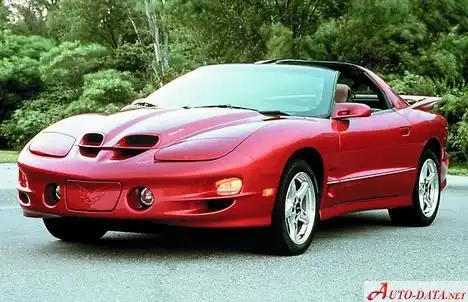
The Pontiac Firebird IV Cabrio 5.7i V8, produced between 1995 and 1998, represented the final iteration of the fourth-generation Firebird convertible. Positioned as the performance flagship of the Firebird Cabriolet range, it offered a substantial power upgrade over the base V6 models. This variant was part of the broader Firebird IV (1993-2002) series, which itself was based on the F-body platform shared with the Chevrolet Camaro. The 5.7i V8 model aimed to deliver a classic American muscle car experience with a degree of open-air enjoyment.
Technical Specifications
| Brand | Pontiac |
| Model | Firebird |
| Generation | Firebird IV Cabrio |
| Type (Engine) | 5.7i V8 (285 Hp) Automatic |
| Start of production | 1995 |
| End of production | 1998 |
| Powertrain Architecture | Internal Combustion engine |
| Body type | Cabriolet |
| Seats | 4 |
| Doors | 2 |
| Fuel consumption (combined) | 11.8 l/100 km (19.9 US mpg, 23.9 UK mpg, 8.5 km/l) |
| Fuel Type | Petrol (Gasoline) |
| Weight-to-power ratio | 5.6 kg/Hp, 179.7 Hp/tonne |
| Weight-to-torque ratio | 3.6 kg/Nm, 277.4 Nm/tonne |
| Power | 285 Hp @ 5200 rpm |
| Power per litre | 49.7 Hp/l |
| Torque | 440 Nm @ 2400 rpm (324.53 lb.-ft. @ 2400 rpm) |
| Engine layout | Front, Longitudinal |
| Engine Model/Code | LT1 |
| Engine displacement | 5737 cm3 (350.09 cu. in.) |
| Number of cylinders | 8 |
| Engine configuration | V-engine |
| Cylinder Bore | 101.6 mm (4 in.) |
| Piston Stroke | 88.4 mm (3.48 in.) |
| Compression ratio | 10.4:1 |
| Number of valves per cylinder | 2 |
| Fuel injection system | Multi-port manifold injection |
| Engine aspiration | Naturally aspirated engine |
| Engine oil capacity | 4.7 l (4.97 US qt | 4.14 UK qt) |
| Coolant | 14.3 l (15.11 US qt | 12.58 UK qt) |
| Kerb Weight | 1586 kg (3496.53 lbs.) |
| Fuel tank capacity | 59 l (15.59 US gal | 12.98 UK gal) |
| Length | 4968 mm (195.59 in.) |
| Width | 1893 mm (74.53 in.) |
| Height | 1321 mm (52.01 in.) |
| Wheelbase | 2566 mm (101.02 in.) |
| Front track | 1542 mm (60.71 in.) |
| Rear track | 1540 mm (60.63 in.) |
| Drivetrain Architecture | Rear wheel drive |
| Drive wheel | Rear wheel drive |
| Number of gears and type of gearbox | 4 gears, automatic transmission |
| Front suspension | Spring Strut |
| Rear suspension | Coil spring |
| Front brakes | Ventilated discs |
| Rear brakes | Ventilated discs |
| Assisting systems | ABS (Anti-lock braking system) |
| Steering type | Steering rack and pinion |
| Power steering | Hydraulic Steering |
| Tires size | 235/55 R16 |
| Wheel rims size | 16 |
Powertrain & Engine Architecture
The heart of the Firebird 5.7i Cabrio was the General Motors LT1 small-block V8 engine. This 5.7-liter (350 cubic inch) engine featured a cast iron block with aluminum cylinder heads. The LT1 was a significant departure from previous GM V8s, incorporating reverse-flow cooling (where coolant flowed through the heads before the block) and a high-flow intake manifold. Fuel delivery was handled by a multi-port fuel injection system, providing precise fuel metering for improved efficiency and performance. The engine produced 285 horsepower at 5200 rpm and 440 Nm (324.53 lb-ft) of torque at 2400 rpm. The engine was mated to a 4-speed automatic transmission (4L60E), chosen for its ease of use and suitability for cruising. While a 6-speed manual transmission was available on other Firebird models, it was not offered with the 5.7i Cabriolet.
Driving Characteristics
The 5.7i V8 automatic combination delivered a distinctly different driving experience compared to the V6 or manual transmission Firebirds. The automatic transmission, while smooth, did result in some power loss compared to the manual. Acceleration was brisk, with the Firebird capable of reaching 60 mph in around 6.5 seconds. The 4L60E transmission featured relatively conservative gear ratios, prioritizing comfortable cruising over outright acceleration. The torque output of the LT1 engine provided ample power for passing maneuvers and merging onto highways. However, the automatic transmission sometimes felt hesitant during quick downshifts. The overall driving experience was more grand touring than outright sporty, making it well-suited for long road trips.
Equipment & Trim Levels
The Firebird 5.7i Cabriolet was generally well-equipped, though options allowed for further customization. Standard features typically included leather upholstery, air conditioning, power windows and locks, a premium sound system, and cruise control. The interior featured a driver-focused cockpit with analog gauges. Optional extras included a sunroof, upgraded sound systems, and various cosmetic enhancements. The exterior styling was characterized by the sleek lines of the fourth-generation Firebird, with a power-operated convertible top. The 5.7i models often featured unique badging and trim details to distinguish them from the lower-trim levels.
Chassis & Braking
The Firebird IV Cabriolet utilized a unibody construction for rigidity. The front suspension consisted of a strut-type setup, while the rear employed a coil-spring arrangement. The 5.7i model benefited from a slightly stiffer suspension tuning compared to the V6 versions, aimed at improving handling. Braking duties were handled by ventilated disc brakes on all four wheels, providing adequate stopping power. An anti-lock braking system (ABS) was standard equipment. The steering system was a rack-and-pinion setup with hydraulic power assist, offering responsive steering feel.
Market Reception & Comparison
The Firebird 5.7i Cabriolet was generally well-received by automotive critics, who praised its powerful engine and comfortable ride. However, some reviewers noted that the automatic transmission detracted from the overall driving experience. Compared to the V6 models, the 5.7i offered a significant performance upgrade, but at a higher price point. Fuel economy was understandably lower than the V6 versions, averaging around 19.9 US mpg in combined driving. Reliability was generally good, although the LT1 engine was known to be sensitive to oil quality and maintenance. Compared to the Chevrolet Camaro Z28, which shared the same powertrain, the Firebird offered a more refined and luxurious interior.
Legacy
The Pontiac Firebird IV Cabrio 5.7i V8 represents a final chapter in the Firebird’s storied history. While the fourth-generation Firebird and Camaro were discontinued in 2002, the LT1 engine has gained a following among enthusiasts for its performance potential and relative affordability. Today, well-maintained examples of the 5.7i Cabriolet are sought after by collectors and enthusiasts. The powertrain, while not the most technologically advanced by modern standards, remains relatively reliable and offers a classic American V8 experience. The Firebird 5.7i Cabriolet stands as a testament to Pontiac’s commitment to performance and style.