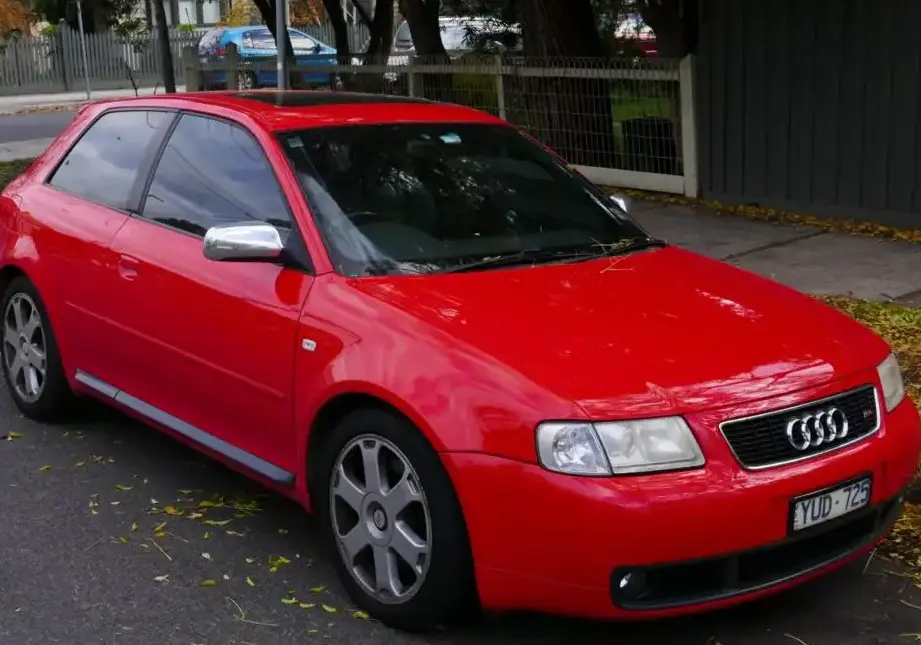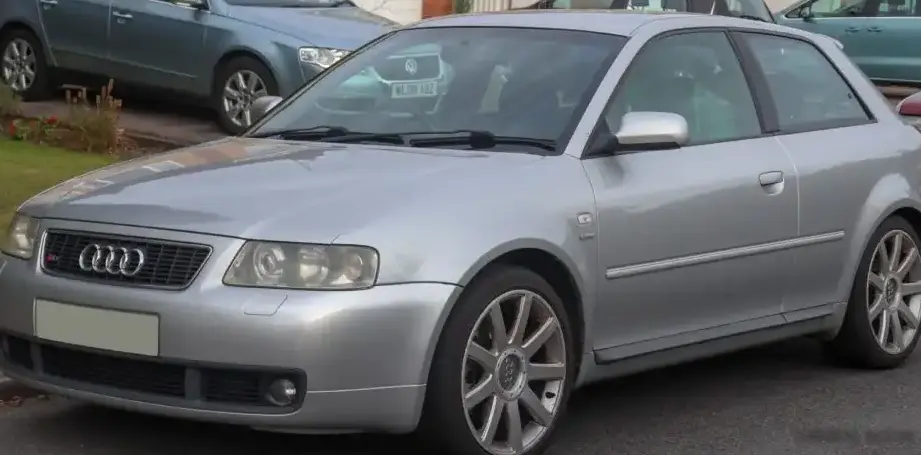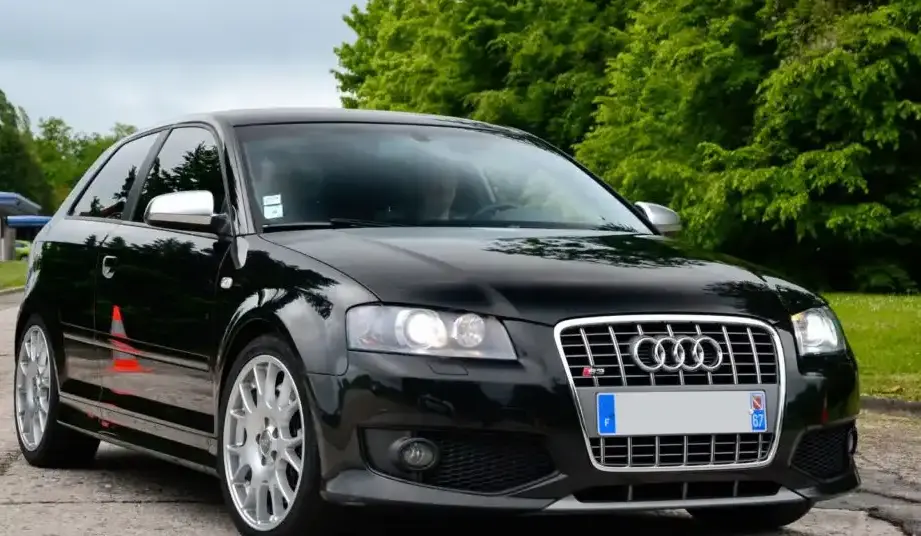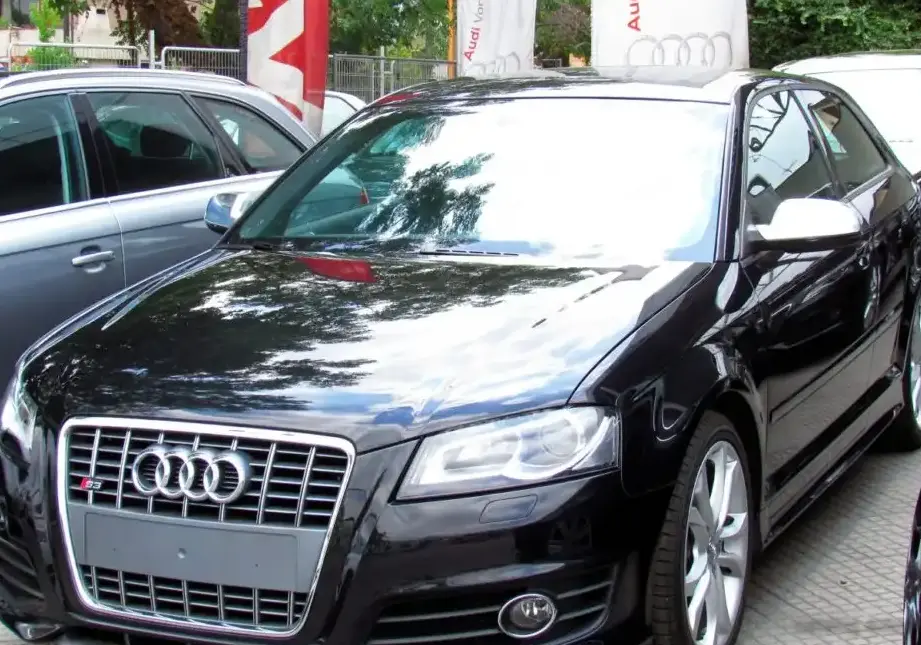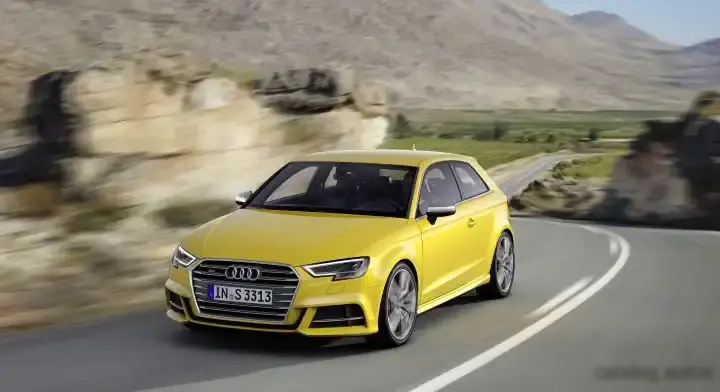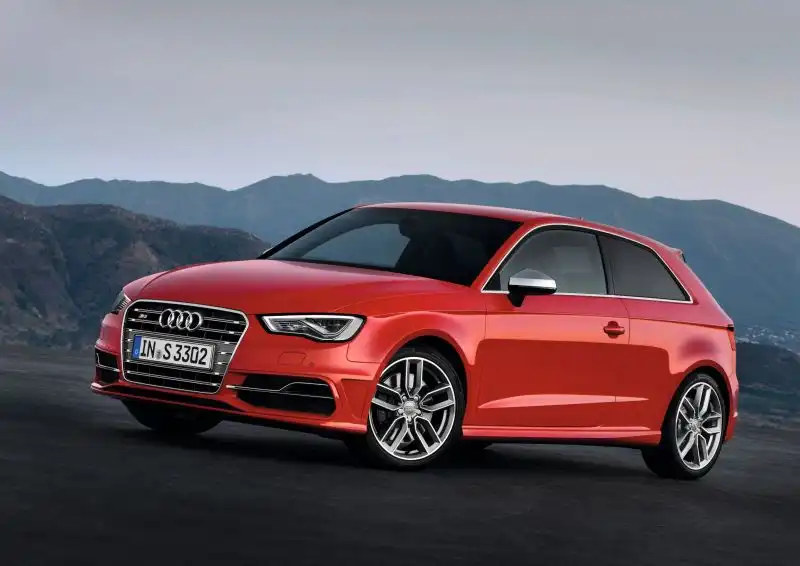
The Audi S3 (8V) 2.0 TFSI quattro, produced from 2013 to 2016, represents a compelling blend of performance and practicality within the premium compact hatchback segment. Positioned as the high-performance variant of the Audi A3 (8V) series, the S3 aimed to deliver a more engaging driving experience while retaining the everyday usability expected of a hatchback. This particular iteration, equipped with the 2.0-liter turbocharged four-cylinder engine producing 300 horsepower and paired with a six-speed manual transmission, was a key offering in Audi’s lineup, particularly in European markets where manual transmissions remained popular. It served as a direct competitor to models like the BMW M235i and the Mercedes-Benz A 35 AMG.
Technical Specifications
| Brand | Audi |
| Model | S3 |
| Generation | S3 (8V) |
| Type (Engine) | 2.0 TFSI (300 Hp) quattro |
| Start of production | 2013 |
| End of production | 2016 |
| Powertrain Architecture | Internal Combustion engine |
| Body type | Hatchback |
| Seats | 5 |
| Doors | 3 |
| Fuel consumption (urban) | 9.1-9.2 l/100 km (25.8 – 25.6 US mpg) |
| Fuel consumption (extra urban) | 5.8-5.9 l/100 km (40.6 – 39.9 US mpg) |
| Fuel consumption (combined) | 7-7.1 l/100 km (33.6 – 33.1 US mpg) |
| CO2 emissions | 162-164 g/km |
| Fuel Type | Petrol (Gasoline) |
| Acceleration 0 – 100 km/h | 5.2 sec |
| Acceleration 0 – 62 mph | 5.2 sec |
| Acceleration 0 – 60 mph | 4.9 sec |
| Maximum speed | 250 km/h (155.34 mph) – Electronically limited |
| Emission standard | Euro 6 |
| Weight-to-power ratio | 4.7 kg/Hp |
| Weight-to-torque ratio | 3.7 kg/Nm |
| Power | 300 Hp @ 5500-6200 rpm |
| Torque | 380 Nm @ 1800-5500 rpm (280.27 lb.-ft. @ 1800-5500 rpm) |
| Engine layout | Front, Transverse |
| Engine Model/Code | EA888 / CJXC |
| Engine displacement | 1984 cm3 (121.07 cu. in.) |
| Number of cylinders | 4 |
| Engine configuration | Inline |
| Cylinder Bore | 82.5 mm (3.25 in.) |
| Piston Stroke | 92.8 mm (3.65 in.) |
| Compression ratio | 9.3:1 |
| Number of valves per cylinder | 4 |
| Fuel injection system | Direct injection and Multi-port manifold injection |
| Engine aspiration | Turbocharger, Intercooler |
| Valvetrain | DOHC |
| Engine oil capacity | 5.7 l (6.02 US qt | 5.02 UK qt) |
| Coolant | 10 l (10.57 US qt | 8.8 UK qt) |
| Kerb Weight | 1405 kg (3097.49 lbs.) |
| Max. weight | 1965 kg (4332.08 lbs.) |
| Max load | 560 kg (1234.59 lbs.) |
| Trunk (boot) space – minimum | 325 l (11.48 cu. ft.) |
| Trunk (boot) space – maximum | 1060 l (37.43 cu. ft.) |
| Fuel tank capacity | 55 l (14.53 US gal | 12.1 UK gal) |
| Max. roof load | 75 kg (165.35 lbs.) |
| Length | 4254 mm (167.48 in.) |
| Width | 1777 mm (69.96 in.) |
| Width including mirrors | 1966 mm (77.4 in.) |
| Height | 1401 mm (55.16 in.) |
| Wheelbase | 2596 mm (102.2 in.) |
| Front track | 1535 mm (60.43 in.) |
| Rear (Back) track | 1511 mm (59.49 in.) |
| Front overhang | 872 mm (34.33 in.) |
| Rear overhang | 786 mm (30.94 in.) |
| Drag coefficient (Cd) | 0.34 |
| Minimum turning circle | 10.7 m (35.1 ft.) |
| Drivetrain Architecture | All wheel drive (4×4) |
| Number of gears | 6 |
| Type of gearbox | Manual transmission |
| Front suspension | Independent, type McPherson with coil spring and anti-roll bar |
| Rear suspension | Independent multi-link spring suspension with stabilizer |
| Front brakes | Ventilated discs |
| Rear brakes | Ventilated discs |
| Assisting systems | ABS (Anti-lock braking system) |
| Steering type | Steering rack and pinion |
| Power steering | Electric Steering |
| Tires size | 225/40 R18; 235/35 R19 |
| Wheel rims size | 7.5J x 18; 8J x 19 |
Powertrain & Engine Architecture
At the heart of the S3 (8V) 2.0 TFSI quattro lies the EA888 engine, specifically the CJXC variant. This 2.0-liter inline-four cylinder engine is a direct-injection, turbocharged powerplant. The CJXC utilizes a single-scroll turbocharger and an intercooler to deliver increased airflow and cooling, contributing to its impressive power output. The engine features direct fuel injection, allowing for precise fuel delivery and improved combustion efficiency. The valvetrain employs a dual overhead camshaft (DOHC) configuration with four valves per cylinder, optimizing gas exchange. The six-speed manual transmission provides a direct and engaging driving experience, allowing the driver to fully exploit the engine’s powerband. The quattro all-wheel-drive system, a hallmark of Audi performance models, utilizes a multi-plate clutch to distribute torque between the front and rear axles, enhancing traction and stability, particularly in adverse weather conditions.
Driving Characteristics
The 300 horsepower and 280 lb-ft of torque delivered by the 2.0 TFSI engine, combined with the quick-shifting six-speed manual transmission and quattro all-wheel drive, resulted in a genuinely sporty driving experience. Acceleration from 0 to 60 mph was achieved in around 4.9 seconds, making it a very quick hatchback for its time. The quattro system provided excellent grip, allowing for confident cornering and acceleration even on less-than-ideal surfaces. Compared to the base A3 models, the S3 offered significantly more responsive throttle response and a more aggressive power delivery. While not as raw or visceral as some rear-wheel-drive performance cars, the S3 provided a balanced and accessible performance experience. The manual transmission, while engaging, had relatively short gear ratios, keeping the engine within its optimal powerband.
Equipment & Trim Levels
The S3 (8V) 2.0 TFSI quattro typically came well-equipped as standard. Interior features included sport seats upholstered in a combination of cloth and leather, a flat-bottomed steering wheel, and aluminum trim accents. The infotainment system featured a color display screen and connectivity options such as Bluetooth audio streaming and USB ports. Standard safety features included ABS, electronic stability control, and multiple airbags. Optional extras included a panoramic sunroof, navigation system, upgraded sound system (Bang & Olufsen), and adaptive dampers. Exterior styling cues included a unique front grille, aggressive front and rear bumpers, and quad exhaust outlets.
Chassis & Braking
The S3 (8V) featured a sport-tuned suspension with McPherson struts at the front and a multi-link setup at the rear. The suspension was lowered compared to the standard A3, providing a more planted and responsive feel. Ventilated disc brakes were fitted to all four wheels, providing ample stopping power. The steering was precise and well-weighted, offering good feedback to the driver. The chassis was reinforced to handle the increased power and stresses associated with performance driving.
Market Reception & Comparison
The Audi S3 (8V) 2.0 TFSI quattro was generally well-received by automotive critics. It was praised for its potent performance, engaging driving dynamics, and refined interior. Some critics noted that the engine, while powerful, lacked the character of some of its rivals. Fuel economy was respectable for a performance car, averaging around 33 mpg in combined driving. Compared to the A3 1.8 TFSI, the S3 offered a significant performance upgrade, but at a higher price point. The S3 also competed with other premium compact performance cars, such as the BMW M235i and the Mercedes-Benz A 35 AMG, offering a compelling alternative with its unique blend of performance, practicality, and all-wheel-drive grip.
Legacy
The EA888 engine, in its various iterations, has proven to be a robust and reliable powerplant. The CJXC variant, found in the S3 (8V), is generally considered to be a durable engine, although regular maintenance is crucial. Common issues include carbon buildup on the intake valves, which can affect performance over time. The S3 (8V) 2.0 TFSI quattro remains a popular choice in the used car market, offering a compelling combination of performance, practicality, and Audi build quality. Its all-wheel-drive system and relatively affordable price point make it an attractive option for buyers seeking a sporty and capable hatchback.