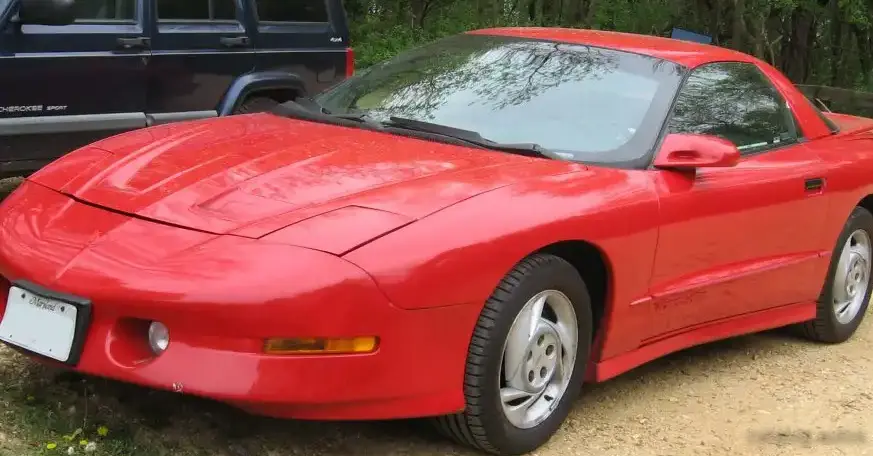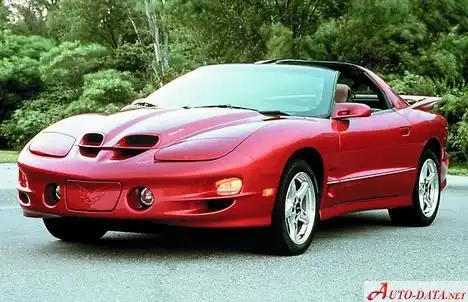
The Pontiac Firebird IV Cabrio 5.7i V8, produced between 2000 and 2002, represented the final iteration of the fourth-generation Firebird. This particular variant, equipped with the potent 5.7-liter LS1 V8 engine and a four-speed automatic transmission, occupied a premium position within the Firebird lineup, offering a blend of performance and open-air driving enjoyment. It was part of the broader Firebird IV generation (1993-2002), which aimed to modernize the Firebird image while retaining its core muscle car appeal. The Cabriolet body style added a layer of sophistication and broadened the car’s appeal beyond the traditional performance enthusiast.
Technical Specifications
| Brand | Pontiac |
| Model | Firebird |
| Generation | Firebird IV Cabrio |
| Type (Engine) | 5.7i V8 (314 Hp) Automatic |
| Start of production | 2000 year |
| End of production | 2002 year |
| Powertrain Architecture | Internal Combustion engine |
| Body type | Cabriolet |
| Seats | 4 |
| Doors | 2 |
| Fuel consumption (economy) – urban | 13.1 l/100 km (18 US mpg, 21.6 UK mpg, 7.6 km/l) |
| Fuel consumption (economy) – extra urban | 9.1 l/100 km (25.8 US mpg, 31 UK mpg, 11 km/l) |
| Fuel consumption (economy) – combined | 11.2 l/100 km (21 US mpg, 25.2 UK mpg, 8.9 km/l) |
| Fuel Type | Petrol (Gasoline) |
| Acceleration 0 – 100 km/h | 6 sec |
| Acceleration 0 – 62 mph | 6 sec |
| Acceleration 0 – 60 mph | 5.7 sec |
| Maximum speed | 250 km/h (155.34 mph) |
| Weight-to-power ratio | 5.2 kg/Hp, 192 Hp/tonne |
| Weight-to-torque ratio | 3.5 kg/Nm, 282 Nm/tonne |
| Power | 314 Hp @ 5200 rpm |
| Power per litre | 55.4 Hp/l |
| Torque | 461 Nm @ 4000 rpm (340.02 lb.-ft. @ 4000 rpm) |
| Engine layout | Front, Longitudinal |
| Engine Model/Code | LS1 |
| Engine displacement | 5665 cm3 (345.7 cu. in.) |
| Number of cylinders | 8 |
| Engine configuration | V-engine |
| Cylinder Bore | 99 mm (3.9 in.) |
| Piston Stroke | 92 mm (3.62 in.) |
| Compression ratio | 10.1:1 |
| Number of valves per cylinder | 2 |
| Fuel injection system | Multi-port manifold injection |
| Engine aspiration | Naturally aspirated engine |
| Engine oil capacity | 5.2 l (5.49 US qt | 4.58 UK qt) |
| Coolant capacity | 11.2 l (11.83 US qt | 9.85 UK qt) |
| Kerb Weight | 1635 kg (3604.56 lbs.) |
| Trunk (boot) space – minimum | 215 l (7.59 cu. ft.) |
| Fuel tank capacity | 63 l (16.64 US gal | 13.86 UK gal) |
| Length | 4923 mm (193.82 in.) |
| Width | 1892 mm (74.49 in.) |
| Height | 1331 mm (52.4 in.) |
| Wheelbase | 2568 mm (101.1 in.) |
| Front track | 1542 mm (60.71 in.) |
| Rear (Back) track | 1539 mm (60.59 in.) |
| Drivetrain Architecture | Rear wheel drive |
| Number of gears and type of gearbox | 4 gears, automatic transmission |
| Front suspension | Spring Strut |
| Rear suspension | Coil spring |
| Front brakes | Ventilated discs |
| Rear brakes | Ventilated discs |
| Assisting systems | ABS (Anti-lock braking system) |
| Steering type | Steering rack and pinion |
| Power steering | Hydraulic Steering |
| Tires size | 235/55 R16 |
Powertrain & Engine Architecture
The heart of the Firebird IV Cabrio 5.7i was the LS1 V8 engine, a member of General Motors’ renowned Small-Block V8 family. This 5.7-liter (346 cubic inch) engine featured an aluminum block and cylinder heads, contributing to a relatively lightweight design. It utilized a multi-port fuel injection system and a two-valve-per-cylinder configuration. The LS1 produced 314 horsepower at 5200 rpm and 340 lb-ft of torque at 4000 rpm. The engine’s design prioritized low-end torque and broad powerband, making it well-suited for both street driving and occasional spirited performance. The four-speed automatic transmission (4L60E) was chosen for its smoothness and ease of use, catering to drivers who preferred a more relaxed driving experience. While not as performance-oriented as the available six-speed manual, the automatic offered acceptable acceleration and responsiveness.
Driving Characteristics
The combination of the 314 hp LS1 and the four-speed automatic resulted in a driving experience that was both comfortable and capable. Acceleration from 0 to 60 mph was achieved in approximately 5.7 seconds, a respectable figure for the era. The automatic transmission, while smooth, did result in some power loss compared to the manual transmission equipped models. Gear ratios were tuned for a balance between acceleration and fuel efficiency. The Firebird Cabrio felt planted and stable during cornering, thanks to its well-tuned suspension. However, the convertible body structure did exhibit some degree of chassis flex compared to the coupe version.
Equipment & Trim Levels
The Firebird IV Cabrio 5.7i typically came standard with features such as air conditioning, power windows and locks, cruise control, and an AM/FM stereo with a CD player. Leather upholstery was standard, along with sport seats. Optional extras included a premium sound system, automatic climate control, and a power-operated convertible top. The interior design was driver-focused, with a clear and functional dashboard layout. The 5.7i trim represented the highest level of equipment available for the Firebird Cabriolet.
Chassis & Braking
The Firebird IV Cabrio utilized a front strut and rear coil spring suspension system. The suspension was tuned to provide a comfortable ride while maintaining reasonable handling characteristics. Front and rear ventilated disc brakes provided ample stopping power. Anti-lock braking system (ABS) was standard, enhancing safety. The Cabriolet model featured a reinforced chassis to compensate for the lack of a fixed roof, but it still wasn’t as rigid as the coupe. Stabilizer bars were used at both the front and rear to reduce body roll during cornering.
Market Reception & Comparison
The Firebird IV Cabrio 5.7i was generally well-received by automotive critics, who praised its powerful engine, comfortable ride, and attractive styling. However, some reviewers noted that the automatic transmission detracted slightly from the car’s overall performance potential. Compared to the base model Firebird with the 3.8-liter V6 engine, the 5.7i offered a significant performance upgrade. It also provided a more luxurious and refined driving experience. Fuel economy was a concern for some, with combined fuel consumption averaging around 21 mpg. Reliability was generally good, although some owners reported minor issues with the automatic transmission and electrical components.
Legacy
The Pontiac Firebird IV Cabrio 5.7i V8 represents the culmination of the Firebird’s long and storied history. While the Firebird nameplate was discontinued in 2002, the LS1 engine has proven to be remarkably durable and reliable. Today, the Firebird IV Cabrio 5.7i is a sought-after classic car, particularly among enthusiasts who appreciate its combination of performance, style, and open-air driving enjoyment. Well-maintained examples command a premium in the used car market. The LS1 engine remains a popular choice for engine swaps and performance modifications, ensuring its legacy will continue for years to come.