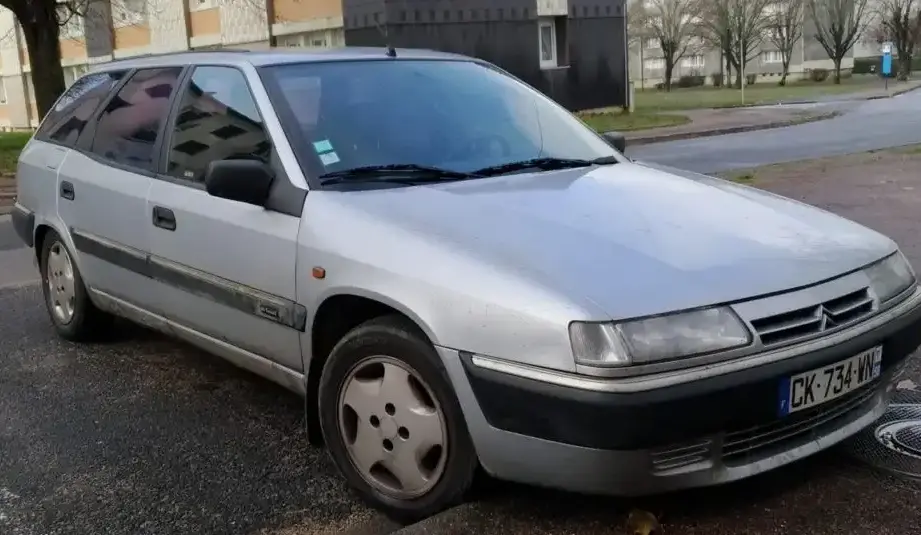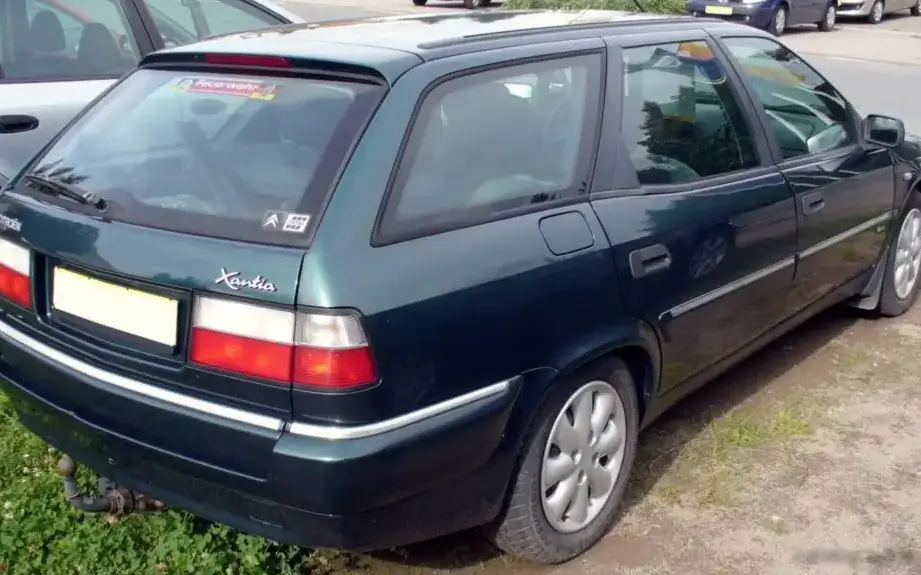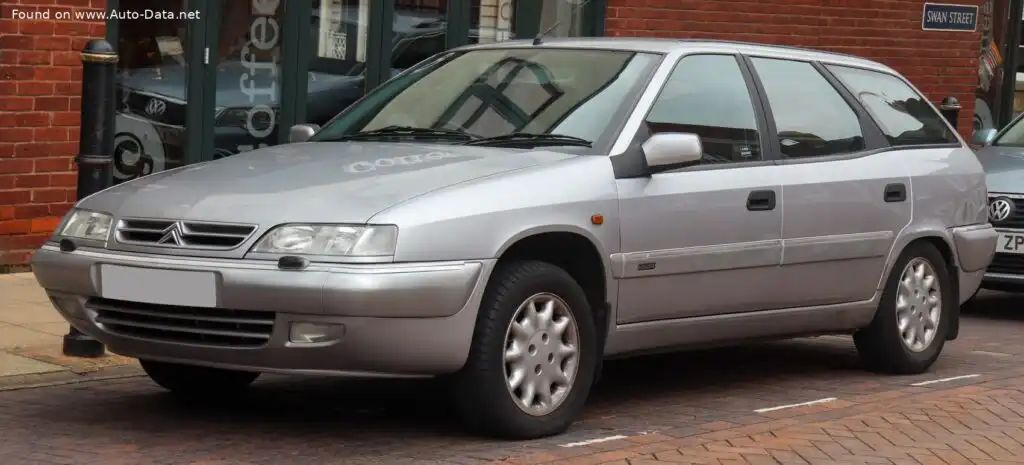
The Citroen Xantia Break (X2) 1.9 Turbo D Automatic, produced between 1998 and 2001, represented a practical and comfortable offering within Citroen’s mid-size lineup. Positioned as a family-oriented station wagon, the Xantia Break aimed to combine the renowned Citroen hydropneumatic suspension with a fuel-efficient diesel powertrain. This particular variant, equipped with the 90 horsepower 1.9-liter turbocharged diesel engine and a four-speed automatic transmission, served as a more accessible entry point into the Xantia Break range, prioritizing ease of use and economy over outright performance. It was part of the X2 series, a facelift of the original Xantia (X1) introduced in 1993, bringing updated styling and refinements.
Technical Specifications
| Brand | Citroen |
| Model | Xantia |
| Generation | Xantia Break (X2) |
| Type (Engine) | 1.9 Turbo D (90 Hp) Automatic |
| Start of production | 1998 |
| End of production | 2001 |
| Powertrain Architecture | Internal Combustion engine |
| Body type | Station wagon (estate) |
| Seats | 5 |
| Doors | 5 |
| Fuel consumption (urban) | 11.6 l/100 km (20.3 US mpg, 24.4 UK mpg, 8.6 km/l) |
| Fuel consumption (extra urban) | 6.1 l/100 km (38.6 US mpg, 46.3 UK mpg, 16.4 km/l) |
| Fuel consumption (combined) | 8.1 l/100 km (29 US mpg, 34.9 UK mpg, 12.3 km/l) |
| CO2 emissions | 225 g/km |
| Fuel Type | Diesel |
| Maximum speed | 170 km/h (105.63 mph) |
| Emission standard | Euro 2 |
| Weight-to-power ratio | 15.4 kg/Hp, 64.8 Hp/tonne |
| Weight-to-torque ratio | 7.1 kg/Nm, 141.1 Nm/tonne |
| Power | 90 Hp @ 4000 rpm |
| Power per litre | 47.2 Hp/l |
| Torque | 196 Nm @ 2250 rpm (144.56 lb.-ft. @ 2250 rpm) |
| Engine layout | Front, Transverse |
| Engine Model/Code | DHX XUD9TF |
| Engine displacement | 1905 cm3 (116.25 cu. in.) |
| Number of cylinders | 4 |
| Engine configuration | Inline |
| Cylinder Bore | 83 mm (3.27 in.) |
| Piston Stroke | 88 mm (3.46 in.) |
| Compression ratio | 21.8:1 |
| Number of valves per cylinder | 2 |
| Fuel injection system | Precombustion chamber injection |
| Engine aspiration | Turbocharger, Intercooler |
| Valvetrain | OHC |
| Engine oil capacity | 4.25 l (4.49 US qt | 3.74 UK qt) |
| Coolant | 9 l (9.51 US qt | 7.92 UK qt) |
| Kerb Weight | 1389 kg (3062.22 lbs.) |
| Max. weight | 1980 kg (4365.15 lbs.) |
| Max load | 591 kg (1302.93 lbs.) |
| Trunk (boot) space – minimum | 512 l (18.08 cu. ft.) |
| Trunk (boot) space – maximum | 1690 l (59.68 cu. ft.) |
| Fuel tank capacity | 65 l (17.17 US gal | 14.3 UK gal) |
| Max. roof load | 75 kg (165.35 lbs.) |
| Permitted trailer load with brakes (12%) | 900 kg (1984.16 lbs.) |
| Permitted trailer load without brakes | 730 kg (1609.37 lbs.) |
| Permitted towbar download | 85 kg (187.39 lbs.) |
| Length | 4712 mm (185.51 in.) |
| Width | 1760 mm (69.29 in.) |
| Width including mirrors | 1980 mm (77.95 in.) |
| Height | 1420 mm (55.91 in.) |
| Wheelbase | 2740 mm (107.87 in.) |
| Front track | 1502 mm (59.13 in.) |
| Rear (Back) track | 1478 mm (58.19 in.) |
| Front overhang | 983 mm (38.7 in.) |
| Rear overhang | 989 mm (38.94 in.) |
| Drivetrain Architecture | Front wheel drive |
| Number of gears and type of gearbox | 4 gears, automatic transmission |
| Front suspension | Independent type McPherson, Wishbone |
| Rear suspension | Hydro-pneumatic element, Trailing arm |
| Front brakes | Ventilated discs |
| Rear brakes | Disc |
| Assisting systems | ABS (Anti-lock braking system) |
| Steering type | Steering rack and pinion |
| Power steering | Hydraulic Steering |
| Tires size | 185/65 R15 |
Powertrain & Engine Architecture
The heart of this Xantia Break variant is the DHX XUD9TF engine, a 1.9-liter inline-four cylinder diesel. This engine is a descendant of the long-running XUD series of diesel engines, known for their durability and relatively simple design. The ‘TF’ designation indicates a turbocharged version with an intercooler, boosting power output to 90 horsepower. The engine utilizes a precombustion chamber injection system, a common feature on older diesel engines, where fuel is partially combusted in a small chamber before entering the main cylinder. This aids in cold starting and reduces engine noise. The four-speed automatic transmission, while providing convenience, was not known for its particularly quick shifts or fuel efficiency compared to the available manual gearbox. It was a conventional hydraulic automatic, lacking the more advanced electronic controls found in later transmissions.
Driving Characteristics
The 1.9 Turbo D Automatic Xantia Break offered a comfortable, if not particularly exhilarating, driving experience. With 90 horsepower and 196 Nm (144.56 lb-ft) of torque, acceleration was adequate for everyday driving, but overtaking required careful planning. The automatic transmission, while smooth, contributed to a noticeable delay in response. The gear ratios were geared towards fuel economy rather than performance. Compared to the more powerful 2.0L 16V petrol or the 2.0L HDi diesel variants, this model felt significantly slower. However, it excelled in providing relaxed cruising and acceptable fuel economy, particularly on longer journeys.
Equipment & Trim Levels
The 1.9 Turbo D Automatic typically came with a reasonable level of standard equipment. This included central locking, electric front windows, power steering, and an ABS anti-lock braking system. Interior upholstery was generally cloth, with a functional, if somewhat dated, dashboard layout. Optional extras included air conditioning, a sunroof, and upgraded audio systems. The trim level was generally considered to be mid-range, offering a good balance of features and affordability. Higher trim levels added features like leather upholstery, alloy wheels, and more sophisticated audio systems.
Chassis & Braking
The Xantia Break featured Citroen’s signature hydropneumatic suspension system, providing a remarkably smooth and comfortable ride, even on uneven surfaces. This system allowed the car to self-level, maintaining a consistent ride height regardless of load. The front suspension utilized independent McPherson struts, while the rear employed a trailing arm setup with the hydropneumatic spheres. Braking was handled by ventilated discs at the front and solid discs at the rear. The ABS system provided added safety by preventing wheel lockup during hard braking.
Market Reception & Comparison
The 1.9 Turbo D Automatic Xantia Break was generally well-received as a practical and economical family car. Critics praised the comfortable ride quality and spacious interior. However, the automatic transmission was often criticized for its sluggishness and impact on fuel economy. Compared to the manual versions of the same engine, the automatic offered lower fuel consumption in city driving but worse figures on the highway. Against competitors like the Ford Mondeo Estate or the Volkswagen Passat Variant, the Xantia Break stood out for its unique suspension and comfortable ride, but lagged behind in terms of performance and modern features.
Legacy
The DHX XUD9TF engine, while robust, is now showing its age. Common issues include wear in the turbocharger, potential for oil leaks, and the need for regular maintenance of the precombustion chamber injection system. The automatic transmission, if not serviced regularly, can experience issues with slipping or harsh shifting. Despite these potential issues, the Xantia Break 1.9 Turbo D Automatic remains a relatively affordable and practical classic car. Its unique hydropneumatic suspension continues to be a major selling point for enthusiasts, offering a driving experience unlike anything else in its class. Parts availability can be a challenge, but a dedicated community of Citroen owners helps to keep these cars on the road.