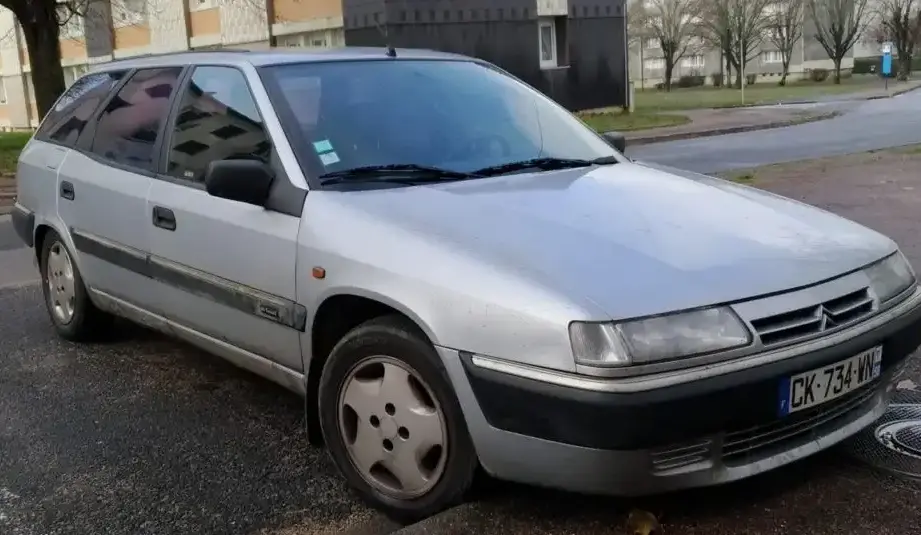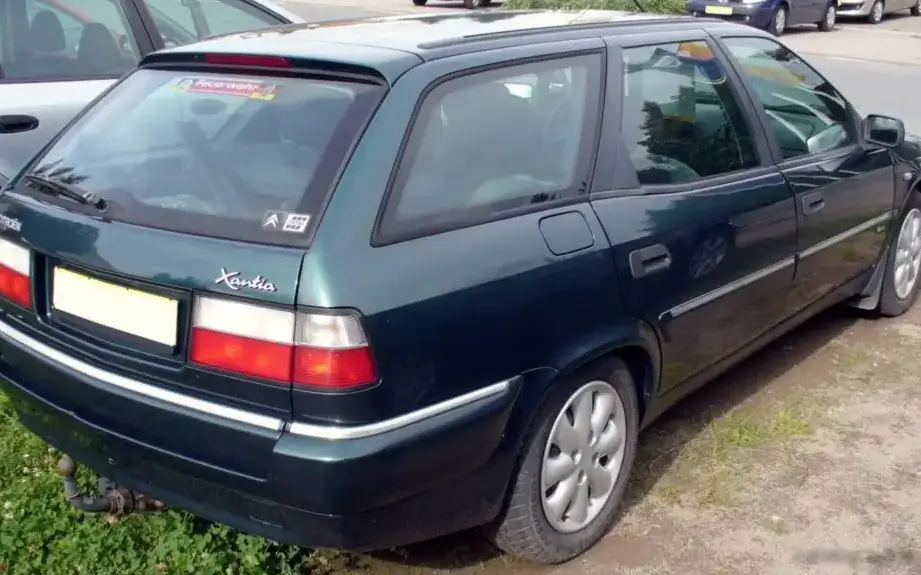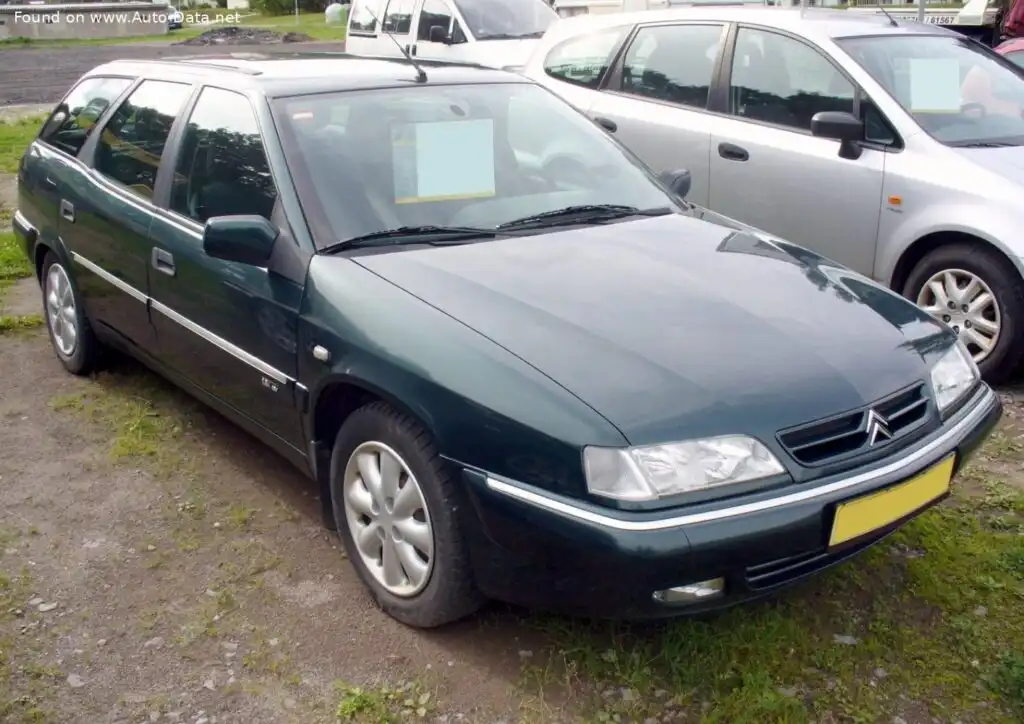
The Citroen Xantia Break (X2) 2.0i 16V, produced between 1998 and 2001, represented a refined iteration of Citroen’s large family car, building upon the success of the original Xantia launched in 1993. Positioned as a mid-to-upper trim level within the Xantia Break (estate) range, this variant offered a balance of performance, comfort, and practicality. It was primarily marketed in Europe, where large, comfortable estates were highly sought after. The Xantia, as a whole, aimed to blend Citroen’s famed hydropneumatic suspension technology with more conventional styling, appealing to a broader audience than previous Citroen models. This 2.0i 16V version specifically targeted buyers who desired a more spirited driving experience than the base engine options provided, without the higher cost and complexity of the V6 models.
Technical Specifications
| Brand | Citroen |
| Model | Xantia |
| Generation | Xantia Break (X2) |
| Type (Engine) | 2.0 i 16V (132 Hp) |
| Start of production | 1998 year |
| End of production | 2001 year |
| Powertrain Architecture | Internal Combustion engine |
| Body type | Station wagon (estate) |
| Seats | 5 |
| Doors | 5 |
| Fuel consumption (economy) – urban | 13.2 l/100 km (17.8 US mpg, 21.4 UK mpg, 7.6 km/l) |
| Fuel consumption (economy) – extra urban | 7.2 l/100 km (32.7 US mpg, 39.2 UK mpg, 13.9 km/l) |
| Fuel consumption (economy) – combined | 9.4 l/100 km (25 US mpg, 30.1 UK mpg, 10.6 km/l) |
| CO2 emissions | 223 g/km |
| Fuel Type | Petrol (Gasoline) |
| Acceleration 0 – 100 km/h | 11.4 sec |
| Acceleration 0 – 62 mph | 11.4 sec |
| Acceleration 0 – 60 mph | 10.8 sec |
| Maximum speed | 198 km/h (123.03 mph) |
| Weight-to-power ratio | 10.4 kg/Hp, 96.5 Hp/tonne |
| Weight-to-torque ratio | 7.6 kg/Nm, 131.6 Nm/tonne |
| Power | 132 Hp @ 5500 rpm |
| Power per litre | 66.1 Hp/l |
| Torque | 180 Nm @ 4200 rpm (132.76 lb.-ft. @ 4200 rpm) |
| Engine layout | Front, Transverse |
| Engine Model/Code | RFV XU10J4R |
| Engine displacement | 1998 cm3 (121.93 cu. in.) |
| Number of cylinders | 4 |
| Engine configuration | Inline |
| Cylinder Bore | 86 mm (3.39 in.) |
| Piston Stroke | 86 mm (3.39 in.) |
| Compression ratio | 10.4:1 |
| Number of valves per cylinder | 4 |
| Fuel injection system | Multi-port manifold injection |
| Engine aspiration | Naturally aspirated engine |
| Valvetrain | DOHC |
| Engine oil capacity | 4.25 l (4.49 US qt | 3.74 UK qt) |
| Coolant | 7.5 l (7.93 US qt | 6.6 UK qt) |
| Kerb Weight | 1368 kg (3015.92 lbs.) |
| Max. weight | 1940 kg (4276.97 lbs.) |
| Max load | 572 kg (1261.04 lbs.) |
| Trunk (boot) space – minimum | 512 l (18.08 cu. ft.) |
| Trunk (boot) space – maximum | 1690 l (59.68 cu. ft.) |
| Fuel tank capacity | 65 l (17.17 US gal | 14.3 UK gal) |
| Max. roof load | 75 kg (165.35 lbs.) |
| Permitted trailer load with brakes (12%) | 1300 kg (2866.01 lbs.) |
| Permitted trailer load without brakes | 720 kg (1587.33 lbs.) |
| Permitted towbar download | 85 kg (187.39 lbs.) |
| Length | 4712 mm (185.51 in.) |
| Width | 1760 mm (69.29 in.) |
| Width including mirrors | 1980 mm (77.95 in.) |
| Height | 1420 mm (55.91 in.) |
| Wheelbase | 2740 mm (107.87 in.) |
| Front track | 1502 mm (59.13 in.) |
| Rear (Back) track | 1478 mm (58.19 in.) |
| Front overhang | 983 mm (38.7 in.) |
| Rear overhang | 989 mm (38.94 in.) |
| Drivetrain Architecture | The Internal combustion engine (ICE) drives the front wheels of the vehicle. |
| Drive wheel | Front wheel drive |
| Number of gears and type of gearbox | 5 gears, manual transmission |
| Front suspension | Independent type McPherson, Wishbone |
| Rear suspension | Hydro-pneumatic element, Trailing arm |
| Front brakes | Ventilated discs |
| Rear brakes | Disc |
| Assisting systems | ABS (Anti-lock braking system) |
| Steering type | Steering rack and pinion |
| Power steering | Hydraulic Steering |
| Tires size | 185/65 R15 |
Powertrain & Engine Architecture
The heart of the Xantia Break 2.0i 16V is the RFV (or sometimes XU10J4R) engine, a 1.998-liter inline-four cylinder petrol engine. This engine is part of the PSA Group’s XU series, known for its robustness and relatively simple design. The ‘16V’ designation indicates a dual overhead camshaft (DOHC) valvetrain, featuring four valves per cylinder, enhancing breathing and contributing to the engine’s power output. Fuel delivery is managed by a multi-port fuel injection system, providing precise fuel metering for improved efficiency and performance. The engine’s 10.4:1 compression ratio strikes a balance between power and fuel economy. The engine typically produced 132 horsepower at 5,500 rpm and 180 Nm (133 lb-ft) of torque at 4,200 rpm. The engine is transversely mounted, driving the front wheels. The transmission is a five-speed manual gearbox, offering a good spread of ratios for both cruising and acceleration.
Driving Characteristics
The 2.0i 16V Xantia Break offered a noticeable step up in performance compared to the lower-displacement engine options. While not a sports car, it provided sufficient power for comfortable highway cruising and overtaking. The five-speed manual transmission allowed drivers to keep the engine in its optimal power band. Acceleration from 0 to 60 mph took around 10.8 seconds, and the top speed was approximately 123 mph. Compared to the V6 models, the 2.0i 16V felt lighter and more agile, though it lacked the V6’s outright power. The hydropneumatic suspension, a Citroen hallmark, provided a remarkably smooth and comfortable ride, even on uneven surfaces. This suspension system also allowed for self-leveling, maintaining a consistent ride height regardless of load.
Equipment & Trim Levels
The Xantia Break 2.0i 16V typically came equipped with a reasonable level of standard features. These included central locking, electric front windows, power steering, and an ABS anti-lock braking system. Interior upholstery was usually cloth, with options for upgraded materials. Air conditioning was a common option, as were features like a sunroof and upgraded audio systems. Trim levels varied slightly depending on the market, but generally, this variant sat in the mid-range of the Xantia Break lineup, offering a good balance of features and price. The dashboard layout was functional and ergonomically designed, with easy-to-read gauges and intuitive controls.
Chassis & Braking
The Xantia Break featured independent front suspension with McPherson struts and wishbones, providing good handling and stability. The rear suspension utilized Citroen’s innovative hydropneumatic system, offering exceptional ride comfort and self-leveling capabilities. Braking duties were handled by ventilated discs at the front and solid discs at the rear. The ABS system helped to prevent wheel lockup during hard braking, enhancing safety. The steering was a rack-and-pinion system with hydraulic power assistance, providing precise and responsive steering feel.
Market Reception & Comparison
The Xantia Break 2.0i 16V was generally well-received by automotive critics. It was praised for its comfortable ride, spacious interior, and practical estate car body style. The engine was considered adequate for most drivers, offering a good balance of performance and fuel economy. Compared to rivals like the Ford Mondeo Estate and Vauxhall/Opel Vectra Estate, the Xantia Break stood out for its unique hydropneumatic suspension, which provided a superior ride quality. However, some critics noted that the interior styling was somewhat dated compared to more modern competitors. Fuel economy was respectable for its class, averaging around 25 mpg in combined driving.
Legacy
The Xantia Break 2.0i 16V has proven to be a relatively reliable vehicle, particularly the engine itself. The XU series engines are known for their durability. However, the hydropneumatic suspension system requires periodic maintenance and can be expensive to repair if neglected. Today, the Xantia Break 2.0i 16V is a relatively affordable used car, appealing to buyers looking for a comfortable, spacious, and distinctive estate car. Parts availability can be a challenge in some regions, but a dedicated following of Citroen enthusiasts helps to keep these cars on the road. The Xantia, and this variant in particular, represents a unique chapter in Citroen’s history, blending innovative technology with practical design.