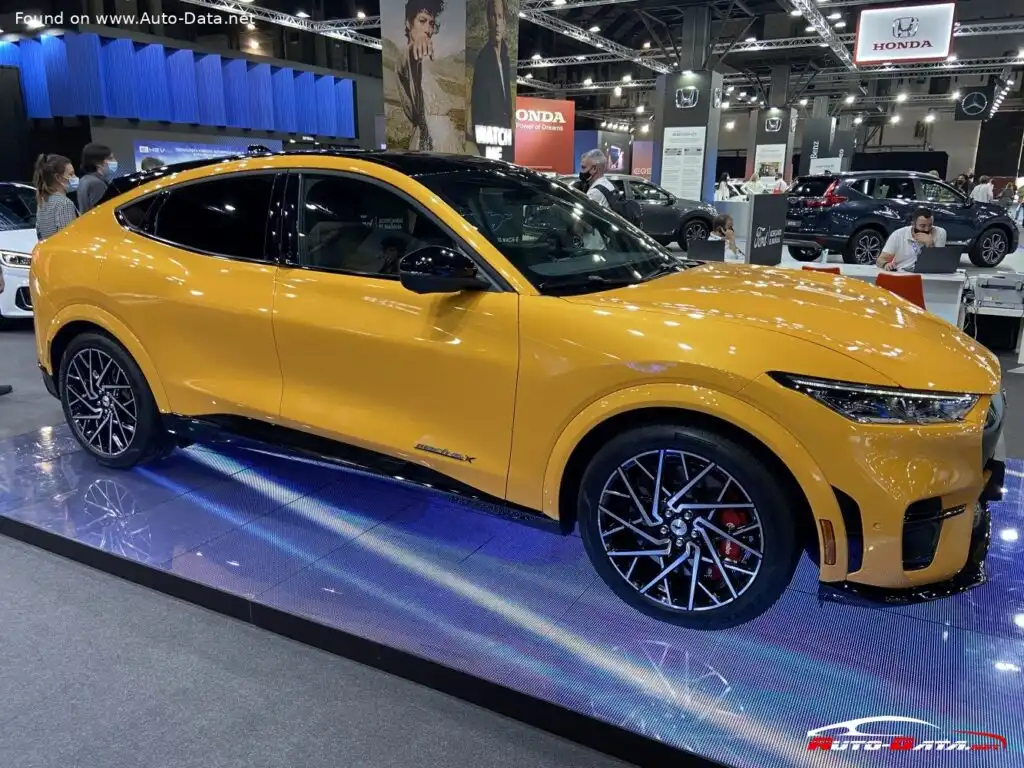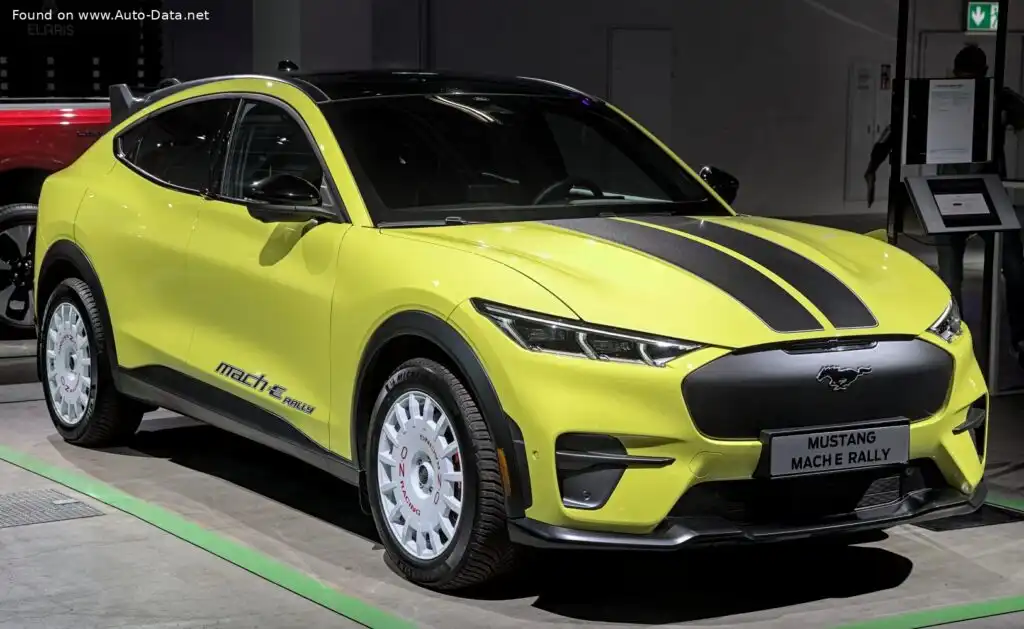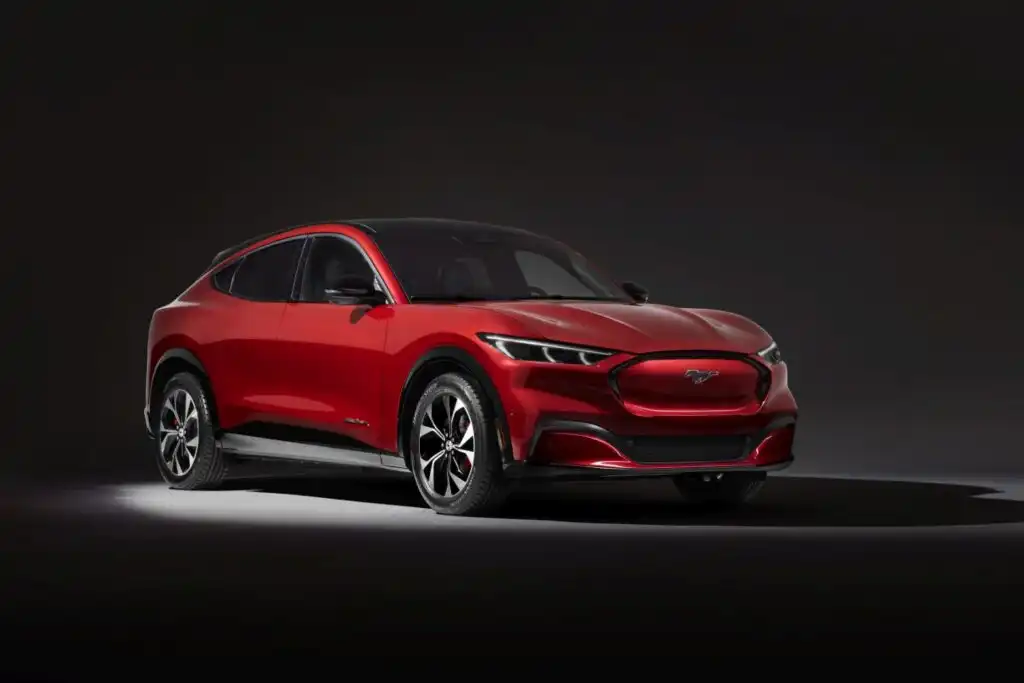
The Ford Mustang Mach-E Standard Range, equipped with a 76 kWh battery and producing 269 horsepower, represents the entry point into the all-electric Mustang Mach-E lineup. Introduced in November 2023 and produced through April 2025, this variant aimed to deliver the Mustang experience – performance and style – in a more accessible and efficient package. Positioned as the base model, it served as a crucial volume seller, attracting buyers new to the electric vehicle market. The Mach-E, as a whole, marked Ford’s significant foray into the burgeoning EV segment, leveraging the iconic Mustang name to build brand recognition and appeal.
Technical Specifications
| Brand | Ford |
| Model | Mustang Mach-E |
| Generation | Mustang Mach-E |
| Type (Engine) | Standard Range 76 kWh (269 Hp) |
| Start of production | November, 2023 |
| End of production | April, 2025 |
| Powertrain Architecture | BEV (Electric Vehicle) |
| Body type | Coupe, SUV |
| Seats | 5 |
| Doors | 5 |
| Fuel Type | Electricity |
| Acceleration 0 – 100 km/h | 7.3 sec |
| Acceleration 0 – 62 mph | 7.3 sec |
| Acceleration 0 – 60 mph | 6.9 sec |
| Maximum speed | 180 km/h (111.85 mph) |
| Weight-to-power ratio | 7.8 kg/Hp, 128.6 Hp/tonne |
| Weight-to-torque ratio | 4.9 kg/Nm, 205.6 Nm/tonne |
| Gross battery capacity | 76 kWh |
| Net (usable) battery capacity | 72.6 kWh |
| Battery technology | Lithium iron phosphate (LiFePO4) |
| Battery location | Below the floor |
| All-electric range (WLTP) | 470 km (292.04 mi) |
| All-electric range (EPA) | 402 km (249.79 mi) |
| Average Energy consumption (WLTP) | 17.8 kWh/100 km (28.65 kWh/100 mi) |
| Average Energy consumption (EPA) | 118 MPGe, 5.6 km/kWh (3.5 mi/kWh) |
| Electric motor power | 269 Hp |
| Electric motor Torque | 430 Nm (317.15 lb.-ft.) |
| Electric motor location | Rear axle, Transverse |
| Electric motor type | Synchronous |
| System power | 269 Hp |
| System torque | 430 Nm (317.15 lb.-ft.) |
| Kerb Weight | 2091-2104 kg (4609.87 – 4638.53 lbs.) |
| Max. weight | 2605 kg (5743.04 lbs.) |
| Max load | 501-514 kg (1104.52 – 1133.18 lbs.) |
| Trunk (boot) space – minimum | 402 l (14.2 cu. ft.) |
| Trunk (boot) space – maximum | 1420 l (50.15 cu. ft.) |
| Max. roof load | 75 kg (165.35 lbs.) |
| Permitted trailer load with brakes (12%) | 750 kg (1653.47 lbs.) |
| Permitted trailer load without brakes | 750 kg (1653.47 lbs.) |
| Permitted towbar download | 30 kg (66.14 lbs.) |
| Length | 4713 mm (185.55 in.) |
| Width | 1881 mm (74.06 in.) |
| Width including mirrors | 2097 mm (82.56 in.) |
| Height | 1624 mm (63.94 in.) |
| Wheelbase | 2984 mm (117.48 in.) |
| Front track | 1613 mm (63.5 in.) |
| Rear (Back) track | 1610 mm (63.39 in.) |
| Ride height (ground clearance) | 147 mm (5.79 in.) |
| Minimum turning circle (turning diameter) | 11.6 m (38.06 ft.) |
| Front suspension | Independent, type McPherson with coil spring and anti-roll bar |
| Rear suspension | Independent multi-link spring suspension with stabilizer |
| Front brakes | Ventilated discs, 362 mm |
| Rear brakes | Disc, 316 mm |
| Drive wheel | Rear wheel drive |
| Number of gears and type of gearbox | 1 gears, automatic transmission |
| Tires size | 225/55 R19 |
| Wheel rims size | 7J x 19 |
Powertrain & Engine Architecture
The Mustang Mach-E Standard Range utilizes a single, rear-mounted synchronous electric motor. This motor delivers 269 horsepower and 430 Nm (317 lb-ft) of torque. The powertrain is powered by a 76 kWh lithium iron phosphate (LiFePO4) battery pack located beneath the vehicle floor, contributing to a low center of gravity and improved handling. Unlike some other Mach-E variants, the Standard Range model employs a single-speed automatic transmission, simplifying the drivetrain and focusing on efficiency. The LiFePO4 chemistry, while offering advantages in terms of cost and thermal stability, generally results in slightly lower energy density compared to nickel-manganese-cobalt (NMC) batteries used in higher-trim Mach-Es. This impacts the overall range, though the difference isn’t substantial for typical daily driving.
Driving Characteristics
The 269 hp, rear-wheel-drive configuration of the Standard Range Mach-E provides a responsive and engaging driving experience. Acceleration from 0-60 mph takes approximately 6.9 seconds. While not as blistering as the dual-motor or GT Performance models, it offers ample power for merging onto highways and navigating city streets. The single-speed transmission provides seamless acceleration, and the rear-wheel-drive layout contributes to a balanced feel. Compared to the all-wheel-drive variants, the Standard Range model offers slightly better efficiency due to the reduced weight and drivetrain complexity. The single gear ratio is optimized for a balance between acceleration and cruising efficiency.
Equipment & Trim Levels
The Standard Range Mach-E typically came equipped with a generous array of standard features, including a 15.5-inch touchscreen infotainment system with Ford’s SYNC 4A software, a digital instrument cluster, and a suite of advanced driver-assistance systems (ADAS) such as automatic emergency braking, lane-keeping assist, and adaptive cruise control. Interior upholstery was typically cloth, with options for upgraded materials available. Common optional extras included a panoramic sunroof, premium audio system, and various appearance packages. The trim level often dictated the availability of certain features, with higher sub-trims offering more standard equipment.
Chassis & Braking
The Mach-E utilizes an independent suspension system, with McPherson struts at the front and a multi-link setup at the rear. This configuration provides a comfortable ride and responsive handling. The Standard Range model typically featured ventilated discs at the front and solid discs at the rear, providing adequate stopping power for its weight class. Anti-lock braking system (ABS) and electronic stability control (ESC) were standard features. The chassis was engineered to maximize rigidity and minimize weight, contributing to the vehicle’s overall dynamic performance.
Market Reception & Comparison
The Mustang Mach-E Standard Range was generally well-received by critics and consumers alike. It was praised for its stylish design, comfortable interior, and engaging driving experience. Its relatively affordable price point made it an attractive option for buyers considering their first electric vehicle. Compared to other entry-level EVs, the Mach-E offered a compelling combination of range, performance, and features. However, some reviewers noted that the range was slightly less than some competitors, and the LiFePO4 battery chemistry might not offer the same peak performance as NMC batteries. Against higher-trim Mach-Es, the Standard Range offered a more budget-friendly entry point, sacrificing some performance and features for a lower price.
Legacy
The Ford Mustang Mach-E Standard Range played a pivotal role in establishing Ford as a serious contender in the electric vehicle market. The LiFePO4 battery pack has proven to be durable and reliable, and the powertrain has generally exhibited good long-term performance. On the used car market, these models represent a relatively affordable entry point into EV ownership, offering a good balance of range, features, and value. As battery technology continues to evolve, the Mach-E Standard Range remains a significant milestone in Ford’s electrification journey and a popular choice for environmentally conscious drivers.