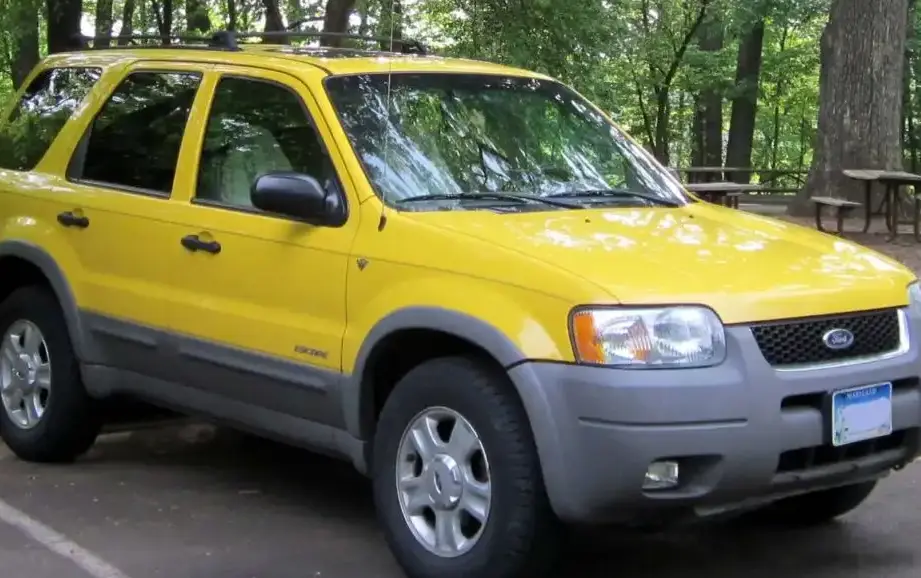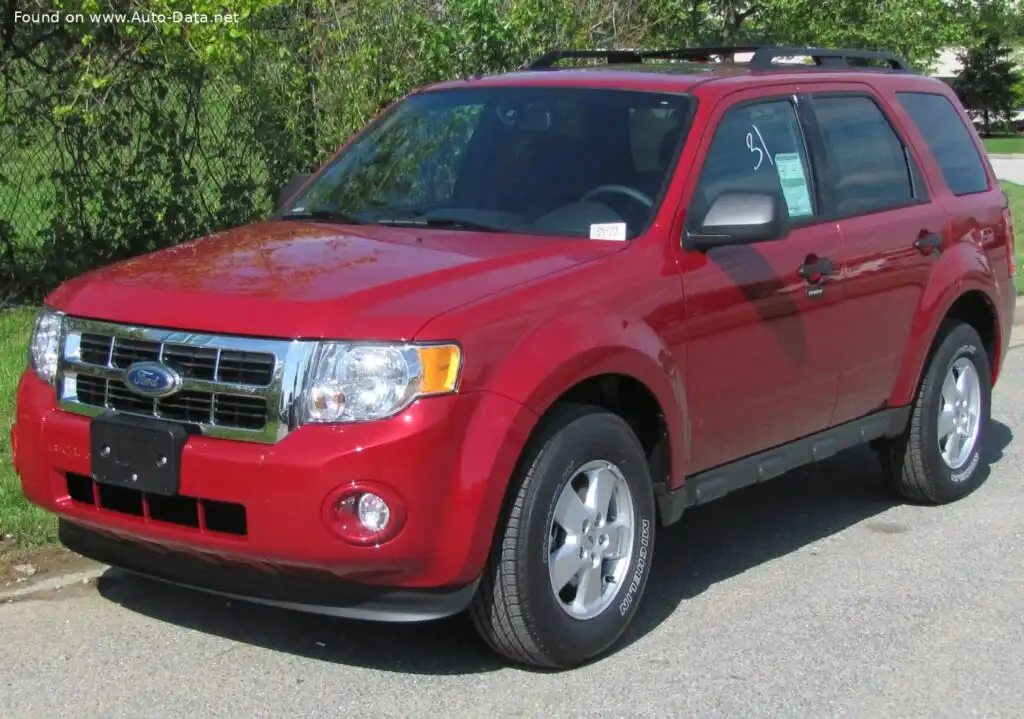
The Ford Escape II, produced from 2008 to 2012, represented a significant evolution in Ford’s compact SUV offerings. This generation, built on the CD2 platform shared with the Mazda Tribute and Mercury Mariner, aimed to provide a more refined and capable vehicle than its predecessor. Among the various engine and drivetrain configurations available, the 3.0-liter V6 engine paired with an automatic transmission and all-wheel drive (AWD) occupied a prominent position, offering a balance of power, practicality, and all-weather capability. This variant was positioned as a mid-to-upper trim level, appealing to buyers seeking enhanced performance without sacrificing the Escape’s inherent versatility.
Technical Specifications
| Brand | Ford |
| Model | Escape |
| Generation | Escape II |
| Type (Engine) | 3.0 L (240 Hp) AWD |
| Start of production | 2008 |
| End of production | 2012 |
| Powertrain Architecture | Internal Combustion engine |
| Body type | SUV |
| Seats | 5 |
| Doors | 5 |
| Fuel consumption (urban) | 13.8 l/100 km (17 US mpg, 20.5 UK mpg, 7.2 km/l) |
| Fuel consumption (combined) | 9.8 l/100 km (24 US mpg, 28.8 UK mpg, 10.2 km/l) |
| Fuel Type | Petrol (Gasoline) |
| Maximum speed | 160 km/h (99.42 mph) |
| Emission standard | Euro 4 |
| Weight-to-power ratio | 6.7 kg/Hp, 149.5 Hp/tonne |
| Weight-to-torque ratio | 7.2 kg/Nm, 138.9 Nm/tonne |
| Power | 240 Hp @ 6550 rpm |
| Power per litre | 80.9 Hp/l |
| Torque | 223 Nm @ 4300 rpm (164.48 lb.-ft. @ 4300 rpm) |
| Engine layout | Front, Transverse |
| Engine displacement | 2966 cm3 (181 cu. in.) |
| Number of cylinders | 6 |
| Engine configuration | V-engine |
| Cylinder Bore | 89 mm (3.5 in.) |
| Piston Stroke | 79.5 mm (3.13 in.) |
| Compression ratio | 10:1 |
| Number of valves per cylinder | 4 |
| Fuel injection system | Multi-port manifold injection |
| Engine aspiration | Naturally aspirated engine |
| Valvetrain | DOHC |
| Engine oil capacity | 5.7 l (6.02 US qt | 5.02 UK qt) |
| Coolant | 9 l (9.51 US qt | 7.92 UK qt) |
| Kerb Weight | 1605 kg (3538.42 lbs.) |
| Max. weight | 1986 kg (4378.38 lbs.) |
| Max load | 381 kg (839.96 lbs.) |
| Trunk (boot) space – minimum | 934 l (32.98 cu. ft.) |
| Trunk (boot) space – maximum | 1792 l (63.28 cu. ft.) |
| Fuel tank capacity | 61 l (16.11 US gal | 13.42 UK gal) |
| Length | 4480 mm (176.38 in.) |
| Width | 1845 mm (72.64 in.) |
| Height | 1730 mm (68.11 in.) |
| Wheelbase | 2620 mm (103.15 in.) |
| Front track | 1545 mm (60.83 in.) |
| Rear (Back) track | 1535 mm (60.43 in.) |
| Drive wheel | All wheel drive (4×4) |
| Number of gears and type of gearbox | 5 gears, automatic transmission |
| Front suspension | Independent, type McPherson with coil spring and anti-roll bar |
| Rear suspension | Double wishbone |
| Front brakes | Ventilated discs |
| Rear brakes | Disc |
| Steering type | Steering rack and pinion |
Powertrain & Engine Architecture
The heart of this Escape variant is the 3.0-liter Duratec 3000 V6 engine. This engine, part of Ford’s Duratec family, is a 60-degree V6 featuring a cast iron block and aluminum cylinder heads. It utilizes a dual overhead camshaft (DOHC) valvetrain with four valves per cylinder, contributing to its respectable power output. Fuel delivery is managed by a multi-port fuel injection system, providing precise fuel metering for optimal combustion. The engine’s 240 horsepower and 223 lb-ft of torque were considered ample for the Escape’s size and weight class. The engine was paired with a five-speed automatic transmission, designed to provide smooth and responsive shifting. This transmission was calibrated to balance fuel efficiency with the engine’s power characteristics. The all-wheel-drive system employed a viscous coupling, automatically distributing torque between the front and rear axles as needed to maintain traction.
Driving Characteristics
The 3.0L AWD Escape offered a noticeable step up in performance compared to the base 2.5L four-cylinder models. Acceleration was brisk, allowing for confident merging and passing maneuvers. While not a sports car, the V6 provided sufficient power for everyday driving and even light towing. The automatic transmission, while generally smooth, wasn’t particularly sporty, prioritizing comfort over aggressive shifting. The AWD system provided enhanced stability and traction, particularly in inclement weather conditions. Compared to the manual transmission versions, the automatic offered greater convenience, but at the expense of some driver engagement and potentially slightly lower fuel economy. The higher output trims, like the V6, felt more composed when fully loaded with passengers and cargo.
Equipment & Trim Levels
The 3.0L AWD Escape typically came equipped with a generous array of standard features. These included air conditioning, power windows and locks, a CD player with an auxiliary input, and keyless entry. Higher trim levels, such as the Limited, added features like leather upholstery, heated front seats, a sunroof, and a premium audio system. Optional extras included a navigation system, a rear entertainment system, and upgraded alloy wheels. Interior materials were generally of good quality for the segment, with a focus on durability and practicality. The dashboard layout was straightforward and user-friendly, with logically placed controls.
Chassis & Braking
The Escape II utilized an independent front suspension with McPherson struts and a multi-link rear suspension. This setup provided a comfortable ride quality while maintaining reasonable handling characteristics. Stabilizer bars were fitted to both the front and rear axles to reduce body roll during cornering. The braking system consisted of ventilated discs at the front and solid discs at the rear. Anti-lock brakes (ABS) were standard, enhancing safety and control during emergency braking situations. The steering was rack-and-pinion, providing precise and responsive steering feel.
Market Reception & Comparison
The 3.0L AWD Escape was generally well-received by automotive critics. It was praised for its comfortable ride, spacious interior, and capable powertrain. However, some reviewers noted that the fuel economy was not class-leading, and the interior design was somewhat dated compared to some competitors. Compared to the 2.5L four-cylinder models, the V6 offered a significant performance advantage, but at a higher price point. The V6 also offered a more refined driving experience than the available diesel options in European markets. Against competitors like the Honda CR-V and Toyota RAV4, the Escape offered a compelling combination of features, performance, and value.
Legacy
The 3.0L Duratec V6 engine, when properly maintained, proved to be a relatively reliable powertrain. Common issues included occasional oil leaks and sensor failures, but these were generally not major concerns. The automatic transmission also proved to be durable, although regular fluid changes were essential for long-term reliability. Today, the 2008-2012 Ford Escape II 3.0L AWD remains a popular choice in the used car market, particularly in regions where all-wheel drive is valued. Its combination of practicality, performance, and affordability makes it an attractive option for buyers seeking a capable and reliable compact SUV. While not a collector’s item, well-maintained examples continue to command reasonable prices and provide years of dependable service.