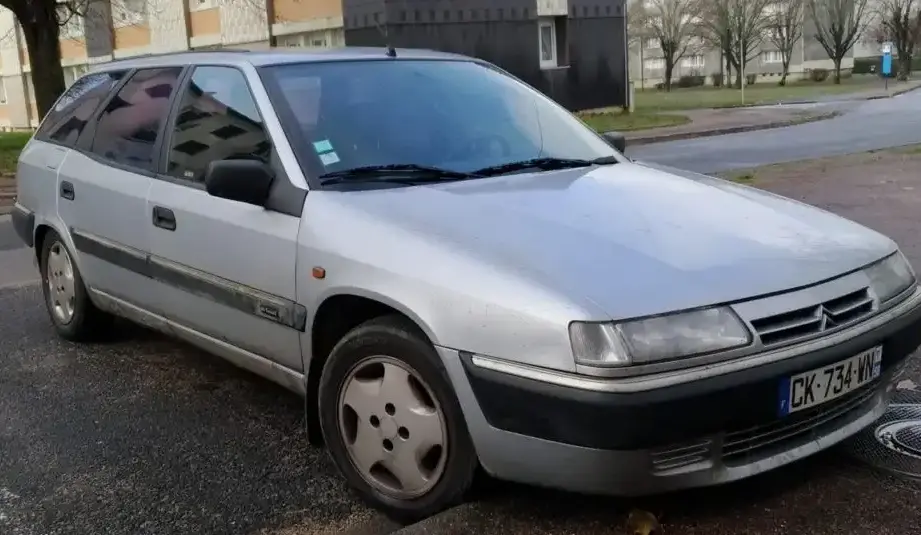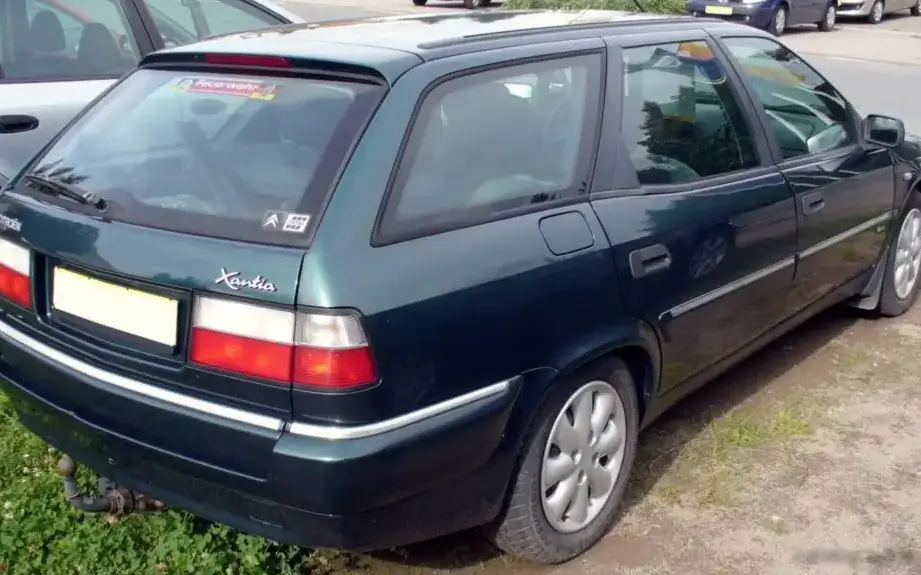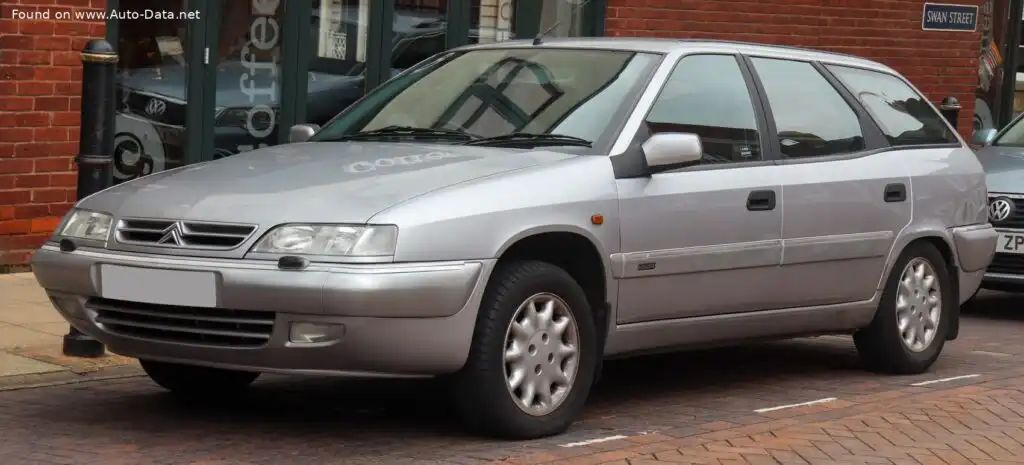
The Citroen Xantia Break 2.0i 16V Automatic, produced between 1998 and 2001, represents a refined iteration of Citroen’s large family car, the Xantia (X2). Positioned as a mid-range offering within the Break (estate) body style, this variant combined a potent 2.0-liter 16-valve engine with a four-speed automatic transmission. It aimed to provide a balance of performance, comfort, and practicality for buyers seeking a spacious and well-equipped vehicle. The Xantia, launched in 1993, was intended as a successor to the BX, continuing Citroen’s tradition of innovative engineering and distinctive styling. The Break version, with its extended rear cargo area, further enhanced the Xantia’s appeal to families and those requiring substantial load-carrying capacity.
Technical Specifications
| Brand | Citroen |
| Model | Xantia |
| Generation | Xantia Break (X2) |
| Type (Engine) | 2.0 i 16V (132 Hp) Automatic |
| Start of production | 1998 year |
| End of production | 2001 year |
| Powertrain Architecture | Internal Combustion engine |
| Body type | Station wagon (estate) |
| Seats | 5 |
| Doors | 5 |
| Fuel consumption (economy) – urban | 14 l/100 km (16.8 US mpg, 20.2 UK mpg, 7.1 km/l) |
| Fuel consumption (economy) – extra urban | 7.1 l/100 km (33.1 US mpg, 39.8 UK mpg, 14.1 km/l) |
| Fuel consumption (economy) – combined | 9.6 l/100 km (24.5 US mpg, 29.4 UK mpg, 10.4 km/l) |
| CO2 emissions | 234 g/km |
| Fuel Type | Petrol (Gasoline) |
| Acceleration 0 – 100 km/h | 13.3 sec |
| Acceleration 0 – 62 mph | 13.3 sec |
| Acceleration 0 – 60 mph | 12.6 sec |
| Maximum speed | 193 km/h (119.92 mph) |
| Weight-to-power ratio | 10.5 kg/Hp, 95.1 Hp/tonne |
| Weight-to-torque ratio | 7.7 kg/Nm, 129.7 Nm/tonne |
| Power | 132 Hp @ 5500 rpm |
| Power per litre | 66.1 Hp/l |
| Torque | 180 Nm @ 4200 rpm (132.76 lb.-ft. @ 4200 rpm) |
| Engine layout | Front, Transverse |
| Engine Model/Code | RFV XU10J4R |
| Engine displacement | 1998 cm3 (121.93 cu. in.) |
| Number of cylinders | 4 |
| Engine configuration | Inline |
| Cylinder Bore | 86 mm (3.39 in.) |
| Piston Stroke | 86 mm (3.39 in.) |
| Compression ratio | 10.4:1 |
| Number of valves per cylinder | 4 |
| Fuel injection system | Multi-port manifold injection |
| Engine aspiration | Naturally aspirated engine |
| Valvetrain | DOHC |
| Engine oil capacity | 4.25 l (4.49 US qt | 3.74 UK qt) |
| Coolant | 7.5 l (7.93 US qt | 6.6 UK qt) |
| Kerb Weight | 1388 kg (3060.02 lbs.) |
| Max. weight | 1910 kg (4210.83 lbs.) |
| Max load | 522 kg (1150.81 lbs.) |
| Trunk (boot) space – minimum | 512 l (18.08 cu. ft.) |
| Trunk (boot) space – maximum | 1690 l (59.68 cu. ft.) |
| Fuel tank capacity | 65 l (17.17 US gal | 14.3 UK gal) |
| Max. roof load | 75 kg (165.35 lbs.) |
| Permitted trailer load with brakes (12%) | 1300 kg (2866.01 lbs.) |
| Permitted trailer load without brakes | 730 kg (1609.37 lbs.) |
| Permitted towbar download | 85 kg (187.39 lbs.) |
| Length | 4712 mm (185.51 in.) |
| Width | 1760 mm (69.29 in.) |
| Width including mirrors | 1980 mm (77.95 in.) |
| Height | 1420 mm (55.91 in.) |
| Wheelbase | 2740 mm (107.87 in.) |
| Front track | 1502 mm (59.13 in.) |
| Rear (Back) track | 1478 mm (58.19 in.) |
| Front overhang | 983 mm (38.7 in.) |
| Rear overhang | 989 mm (38.94 in.) |
| Drivetrain Architecture | The Internal combustion engine (ICE) drives the front wheels of the vehicle. |
| Drive wheel | Front wheel drive |
| Number of gears and type of gearbox | 4 gears, automatic transmission |
| Front suspension | Independent type McPherson, Wishbone |
| Rear suspension | Hydro-pneumatic element, Trailing arm |
| Front brakes | Ventilated discs |
| Rear brakes | Disc |
| Assisting systems | ABS (Anti-lock braking system) |
| Steering type | Steering rack and pinion |
| Power steering | Hydraulic Steering |
| Tires size | 185/65 R15 |
| Wheel rims size | 15 |
Powertrain & Engine Architecture
The heart of the Xantia Break 2.0i 16V Automatic is the RFV engine, a member of the PSA Group’s XU10J4R family. This 1998cc inline-four cylinder engine features a double overhead camshaft (DOHC) valvetrain and multi-point fuel injection. The 16 valves (four per cylinder) contribute to improved breathing and higher power output compared to earlier XU series engines. The RFV engine produced 132 horsepower at 5500 rpm and 180 Nm (132.76 lb-ft) of torque at 4200 rpm. The automatic transmission is a four-speed unit, designed to provide smooth shifts and ease of driving. While not known for its sportiness, it was a reliable unit and well-suited to the engine’s characteristics. The engine’s design prioritized refinement and fuel efficiency, rather than outright performance.
Driving Characteristics
The Xantia Break 2.0i 16V Automatic offered a comfortable and composed driving experience. The automatic transmission, while providing convenience, did slightly diminish the engine’s responsiveness compared to the five-speed manual version. Acceleration from 0-60 mph took around 12.6 seconds, and top speed was approximately 119.92 mph. The four-speed automatic’s gear ratios were geared towards relaxed cruising rather than spirited acceleration. The Xantia’s renowned hydropneumatic suspension system, a Citroen hallmark, provided an exceptionally smooth ride, absorbing bumps and imperfections in the road surface with ease. This, combined with the comfortable seats and well-insulated cabin, made it an excellent long-distance cruiser. However, the automatic transmission did impact fuel economy, resulting in combined fuel consumption of around 24.5 US mpg.
Equipment & Trim Levels
The 2.0i 16V Automatic trim typically included features such as power windows, central locking, power steering, and an AM/FM radio. Higher-spec models could be equipped with options like leather upholstery, a sunroof, and climate control. The interior was generally well-appointed, with a functional and ergonomic dashboard layout. The Break’s spacious interior and large cargo area (512-1690 liters) made it a practical choice for families. Standard safety equipment included ABS anti-lock brakes.
Chassis & Braking
The Xantia Break featured independent front suspension with McPherson struts and wishbones, while the rear suspension utilized Citroen’s innovative hydropneumatic system with trailing arms. This combination provided a unique blend of comfort and handling. Braking was handled by ventilated discs at the front and solid discs at the rear. The ABS system helped to maintain stability during hard braking. The Xantia’s chassis was designed to prioritize ride comfort, but it still offered reasonably secure handling characteristics.
Market Reception & Comparison
The Xantia Break 2.0i 16V Automatic was generally well-received by automotive critics. It was praised for its comfortable ride, spacious interior, and practical estate car body style. However, the automatic transmission was sometimes criticized for being somewhat sluggish and impacting fuel economy. Compared to the manual version, the automatic offered less driver engagement. Against competitors like the Ford Mondeo Estate and Vauxhall/Opel Vectra Estate, the Xantia stood out due to its unique hydropneumatic suspension and distinctive styling. The 1.8L and diesel variants offered more economical options, while the V6 models provided significantly more performance.
Legacy
The Citroen Xantia Break 2.0i 16V Automatic, while not the most sought-after variant, remains a reasonably reliable and affordable used car. The RFV engine is generally considered durable, although regular maintenance is essential. The hydropneumatic suspension system requires specialized knowledge and can be expensive to repair if neglected. Today, the Xantia is appreciated by enthusiasts for its unique character, comfortable ride, and innovative engineering. Finding well-maintained examples is becoming increasingly difficult, but those that remain offer a distinctive and rewarding driving experience.