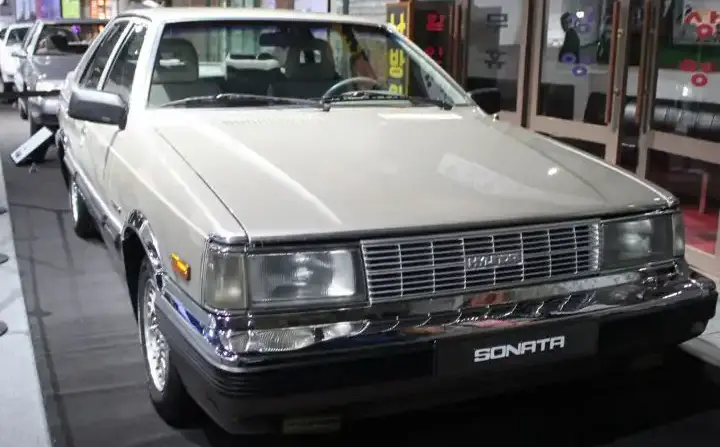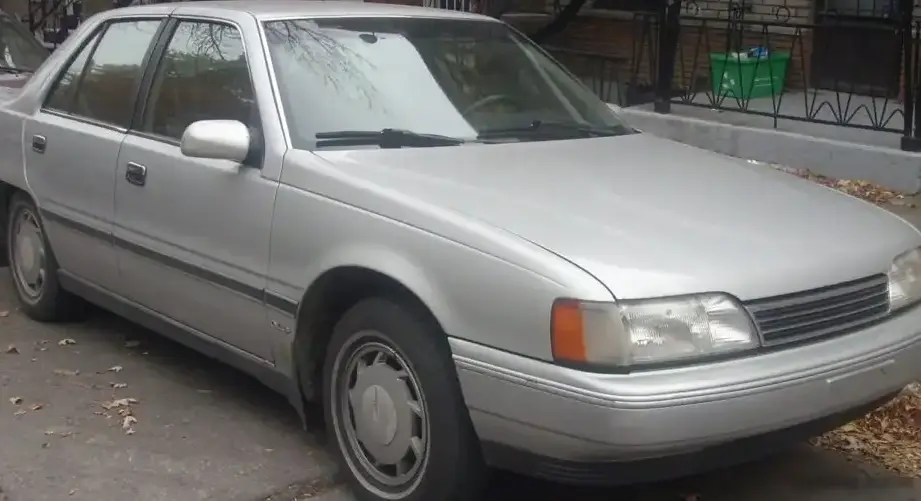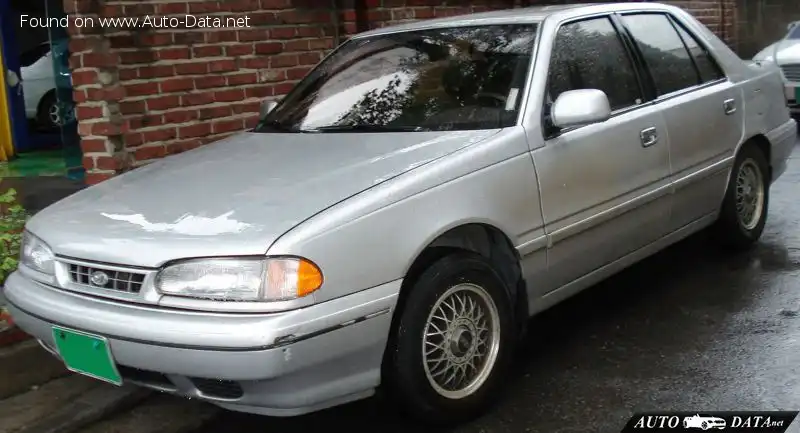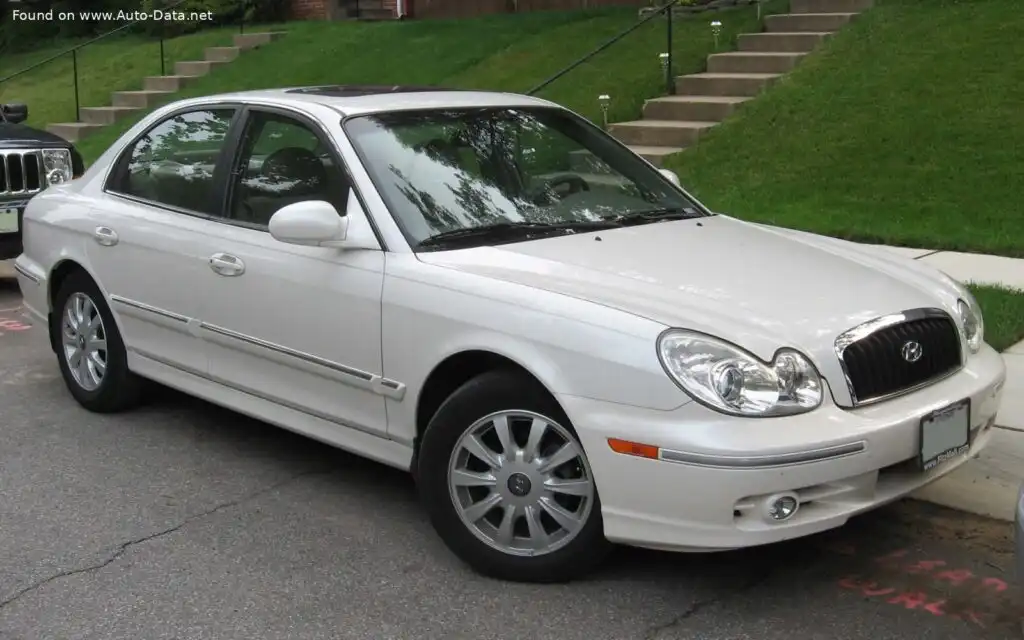
The Hyundai Sonata IV (EF series), particularly the facelifted version introduced in 2001, marked a pivotal moment for the South Korean automaker in the mid-size sedan segment. Produced from 2001 to 2004, the 2.0i variant, equipped with a 131 horsepower engine and an automatic transmission, proved to be a popular choice for buyers prioritizing a comfortable, reliable, and reasonably priced family vehicle. This configuration occupied a middle ground within the Sonata IV lineup, balancing performance and fuel economy, positioned below the more potent 2.4L engine options and above the base 1.8L models. The EF Sonata was instrumental in solidifying Hyundai’s reputation for value and quality in the North American market, directly competing with established Japanese and American brands.
Technical Specifications
| Brand | Hyundai |
| Model | Sonata |
| Generation | Sonata IV (EF, facelift 2001) |
| Type (Engine) | 2.0 i (131 Hp) Automatic |
| Start of production | 2001 |
| End of production | 2004 |
| Powertrain Architecture | Internal Combustion engine |
| Body type | Sedan |
| Seats | 5 |
| Doors | 4 |
| Fuel consumption (urban) | 13.4 l/100 km (17.6 US mpg, 21.1 UK mpg, 7.5 km/l) |
| Fuel consumption (extra urban) | 7.3 l/100 km (32.2 US mpg, 38.7 UK mpg, 13.7 km/l) |
| Fuel consumption (combined) | 9.5 l/100 km (24.8 US mpg, 29.7 UK mpg, 10.5 km/l) |
| Fuel Type | Petrol (Gasoline) |
| Acceleration 0 – 100 km/h | 13.2 sec |
| Acceleration 0 – 62 mph | 13.2 sec |
| Acceleration 0 – 60 mph | 12.5 sec |
| Maximum speed | 184 km/h (114.33 mph) |
| Weight-to-power ratio | 11.4 kg/Hp, 87.4 Hp/tonne |
| Weight-to-torque ratio | 8.4 kg/Nm, 118.8 Nm/tonne |
| Power | 131 Hp @ 6000 rpm |
| Power per litre | 65.6 Hp/l |
| Torque | 178 Nm @ 4500 rpm (131.29 lb.-ft. @ 4500 rpm) |
| Engine layout | Front, Transverse |
| Engine Model/Code | Sirius II / G4JP |
| Engine displacement | 1997 cm3 (121.86 cu. in.) |
| Number of cylinders | 4 |
| Engine configuration | Inline |
| Cylinder Bore | 85 mm (3.35 in.) |
| Piston Stroke | 88 mm (3.46 in.) |
| Compression ratio | 10:1 |
| Number of valves per cylinder | 4 |
| Fuel injection system | Multi-port manifold injection |
| Engine aspiration | Naturally aspirated engine |
| Valvetrain | DOHC |
| Engine oil capacity | 4.3 l (4.54 US qt | 3.78 UK qt) |
| Coolant capacity | 6 l (6.34 US qt | 5.28 UK qt) |
| Kerb Weight | 1498 kg (3302.52 lbs.) |
| Max. weight | 2020 kg (4453.34 lbs.) |
| Max load | 522 kg (1150.81 lbs.) |
| Trunk (boot) space – minimum | 430 l (15.19 cu. ft.) |
| Fuel tank capacity | 65 l (17.17 US gal | 14.3 UK gal) |
| Length | 4747 mm (186.89 in.) |
| Width | 1820 mm (71.65 in.) |
| Height | 1422 mm (55.98 in.) |
| Wheelbase | 2700 mm (106.3 in.) |
| Front track | 1540 mm (60.63 in.) |
| Rear (Back) track | 1530 mm (60.24 in.) |
| Drivetrain Architecture | The Internal combustion engine (ICE) drives the front wheels of the vehicle. |
| Drive wheel | Front wheel drive |
| Number of gears and type of gearbox | 4 gears, automatic transmission |
| Front suspension | Double wishbone |
| Rear suspension | Coil spring |
| Front brakes | Ventilated discs |
| Rear brakes | Disc |
| Assisting systems | ABS (Anti-lock braking system) |
| Steering type | Steering rack and pinion |
| Power steering | Hydraulic Steering |
| Tires size | 205/65 R15 |
| Wheel rims size | 15 |
Powertrain & Engine Architecture
The 2001-2004 Hyundai Sonata 2.0i Automatic is powered by the Hyundai Sirius II engine, internally designated G4JP. This 1.997-liter (121.86 cubic inches) inline-four cylinder engine features a cast iron engine block and an aluminum cylinder head. A double overhead camshaft (DOHC) valvetrain with four valves per cylinder enhances its breathing efficiency. Fuel delivery is managed by a multi-port fuel injection system, ensuring precise fuel metering for optimal combustion. The engine generates 131 horsepower at 6000 rpm and 178 Nm (131.29 lb-ft) of torque at 4500 rpm. The engine’s design prioritized dependability and straightforward maintenance over peak performance. The automatic transmission is a conventional four-speed unit, engineered to deliver smooth gear changes and a comfortable driving experience. While not particularly sophisticated, it was well-matched to the engine’s power characteristics and the vehicle’s intended purpose.
Driving Characteristics
The 2.0i Automatic Sonata provided a comfortable and predictable driving experience. Acceleration from a standstill to 60 mph took approximately 12.5 to 13.2 seconds, making it suitable for daily commutes but not particularly sporty. The four-speed automatic transmission, while smooth, lacked the responsiveness of more modern transmissions or manual gearboxes. Gear ratios were optimized for fuel efficiency and relaxed cruising, rather than rapid acceleration. Compared to the higher-output 2.4L models, the 2.0i felt noticeably less powerful, especially when carrying a full load or ascending inclines. However, the 2.0i offered improved fuel economy and a more forgiving driving experience for drivers prioritizing comfort and ease of operation. The steering was light and effortless, making it easy to maneuver in urban traffic, though it lacked the feedback preferred by more enthusiastic drivers.
Equipment & Trim Levels
The 2.0i Automatic trim typically included standard features such as air conditioning, power windows and door locks, a basic audio system, and cloth upholstery. Safety features included dual front airbags and ABS (Anti-lock Braking System). Optional extras frequently included a sunroof, an upgraded audio system, alloy wheels, and cruise control. The interior appointments were functional and durable, emphasizing practicality over luxury. The dashboard layout was straightforward and user-friendly, with clearly marked controls. The overall interior ambiance was typical of mid-size sedans of the era – comfortable and functional, but not exceptionally stylish.
Chassis & Braking
The Sonata IV employed a front-wheel-drive layout with a double wishbone suspension at the front and a coil spring suspension at the rear. This configuration delivered a comfortable ride, effectively absorbing bumps and road imperfections. The front brakes were ventilated discs, providing good stopping power, while the rear brakes were solid discs. The ABS system aided in maintaining steering control during hard braking. The chassis was designed for stability and comfort, rather than sporty handling. Stabilizer bars were incorporated to minimize body roll during cornering, but the overall handling characteristics were geared towards a relaxed and predictable driving experience.
Market Reception & Comparison
The 2.0i Automatic Sonata was generally well-received by automotive critics as a practical and affordable family car. It was lauded for its comfortable ride, spacious interior, and competitive pricing. However, it was often criticized for its modest performance and somewhat unremarkable styling. Compared to the 2.4L models, the 2.0i offered better fuel economy (around 24.8 US mpg combined) but significantly less power. It also tended to be more affordable to purchase and insure. In terms of reliability, the 2.0i powertrain proved to be remarkably durable, with many examples exceeding 200,000 miles with routine maintenance.
Legacy
The Hyundai Sonata IV 2.0i Automatic occupies a significant position in Hyundai’s history as a key model that helped establish the brand in the North American market. Its combination of affordability, reliability, and practicality made it a popular choice for budget-conscious buyers. Today, these vehicles are relatively common in the used car market and are often sought after for their low cost of ownership and simple mechanical design. While not a performance icon, the 2.0i Sonata remains a testament to Hyundai’s commitment to providing value and quality in the mid-size sedan segment. The Sirius II engine, while not known for groundbreaking technology, proved to be a robust and dependable powerplant, contributing to the long-term durability of these vehicles.