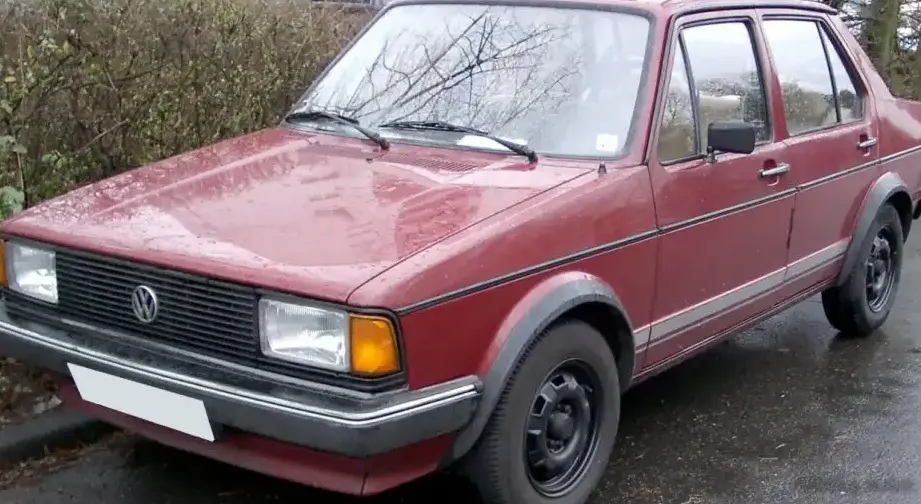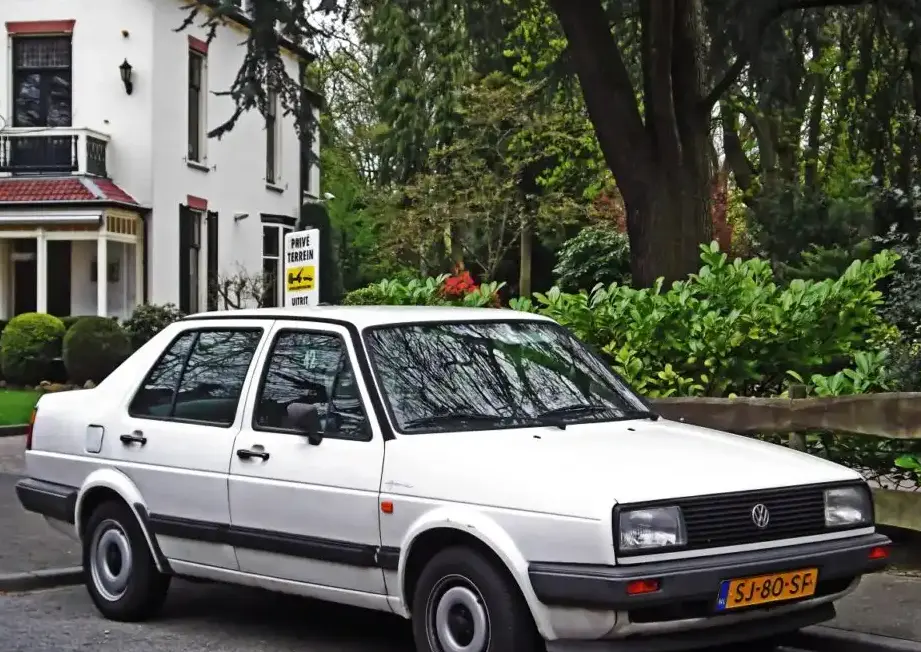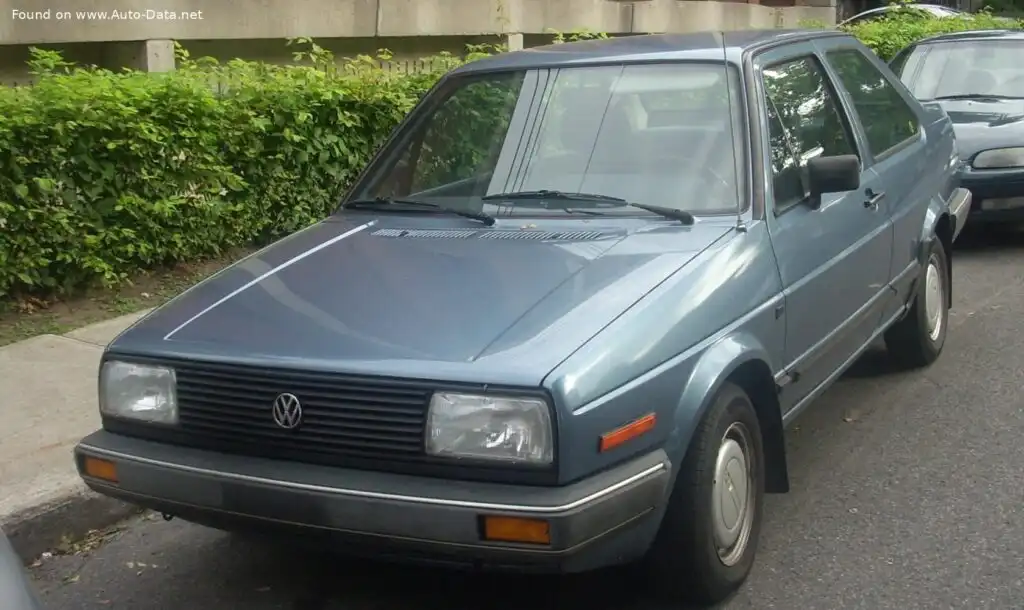
The Volkswagen Jetta II, specifically the two-door 1.6-liter (75 horsepower) variant, was produced between 1983 and 1987. This model occupied the entry-level position within the Jetta II lineup, serving as an affordable and economical option for buyers in Europe and North America. It was built upon the A2 platform, representing a significant evolution from the original Jetta (Vento in some markets) and offering a more refined driving experience and updated styling. The two-door configuration was particularly popular in Europe, where smaller cars were favored due to tighter urban spaces and differing tax structures.
Technical Specifications
| Brand | Volkswagen |
| Model | Jetta |
| Generation | Jetta II (2-doors) |
| Type (Engine) | 1.6 (75 Hp) |
| Start of production | 1983 |
| End of production | 1987 |
| Powertrain Architecture | Internal Combustion engine |
| Body type | Sedan |
| Seats | 5 |
| Doors | 2 |
| Fuel Type | Petrol (Gasoline) |
| Acceleration 0 – 100 km/h | 13.4 sec |
| Acceleration 0 – 62 mph | 13.4 sec |
| Acceleration 0 – 60 mph | 12.7 sec |
| Maximum speed | 165 km/h (102.53 mph) |
| Weight-to-power ratio | 12 kg/Hp, 83.3 Hp/tonne |
| Weight-to-torque ratio | 7.2 kg/Nm, 138.9 Nm/tonne |
| Power | 75 Hp @ 1595 rpm |
| Power per litre | 47 Hp/l |
| Torque | 125 Nm @ 2500 rpm (92.2 lb.-ft. @ 2500 rpm) |
| Engine layout | Front, Transverse |
| Engine Model/Code | EZ, ABN |
| Engine displacement | 1595 cm3 (97.33 cu. in.) |
| Number of cylinders | 4 |
| Engine configuration | Inline |
| Cylinder Bore | 81 mm (3.19 in.) |
| Piston Stroke | 77.1 mm (3.04 in.) |
| Compression ratio | 9:1 |
| Number of valves per cylinder | 2 |
| Fuel injection system | Carburettor |
| Engine aspiration | Naturally aspirated engine |
| Valvetrain | OHC |
| Engine oil capacity | 4 l (4.23 US qt | 3.52 UK qt) |
| Coolant | 6.5 l (6.87 US qt | 5.72 UK qt) |
| Kerb Weight | 900 kg (1984.16 lbs.) |
| Max. weight | 1440 kg (3174.66 lbs.) |
| Max load | 540 kg (1190.5 lbs.) |
| Trunk (boot) space – minimum | 575 l (20.31 cu. ft.) |
| Fuel tank capacity | 55 l (14.53 US gal | 12.1 UK gal) |
| Length | 4385 mm (172.64 in.) |
| Width | 1675 mm (65.94 in.) |
| Height | 1415 mm (55.71 in.) |
| Wheelbase | 2475 mm (97.44 in.) |
| Front track | 1427 mm (56.18 in.) |
| Rear (Back) track | 1422 mm (55.98 in.) |
| Drag coefficient (Cd) | 0.36 |
| Drivetrain Architecture | The Internal combustion engine (ICE) drives the front wheels of the vehicle. |
| Drive wheel | Front wheel drive |
| Number of gears and type of gearbox | 4 gears, manual transmission |
| Front suspension | Independent type McPherson |
| Rear suspension | Coil spring |
| Front brakes | Disc |
| Rear brakes | Drum |
| Steering type | Steering rack and pinion |
| Tires size | 175/70 R13 |
| Wheel rims size | 13 |
Powertrain & Engine Architecture
The heart of the Jetta II 1.6 was the EZ or ABN engine code, a 1.6-liter inline four-cylinder engine. This engine utilized a single overhead camshaft (OHC) valvetrain with two valves per cylinder. Fuel delivery was managed by a carburetor, a common feature for vehicles of this era, prioritizing simplicity and cost-effectiveness over the more advanced fuel injection systems. The engine produced 75 horsepower at 1595 rpm and 92.2 lb-ft of torque at 2500 rpm. The engine’s relatively low compression ratio of 9:1 allowed it to run on lower octane fuel, further contributing to its affordability. The engine was transversely mounted, a layout that maximized interior space and improved front-wheel-drive handling.
Driving Characteristics
The 1.6-liter engine, paired with a four-speed manual transmission, provided adequate, but not exhilarating, performance. Acceleration from 0 to 60 mph took approximately 12.7 seconds, and the top speed was around 102.53 mph. The engine’s torque curve was relatively flat, offering usable power across a reasonable rev range, but it lacked the punch of the larger 1.8-liter or the diesel options. The four-speed gearbox was well-matched to the engine’s characteristics, providing smooth shifts and acceptable gear ratios for everyday driving. Compared to the more powerful Jetta variants, the 1.6 felt noticeably slower, particularly when fully loaded or climbing hills. However, its lighter weight contributed to better fuel economy and a more nimble feel in city driving.
Equipment & Trim Levels
The 1.6-liter Jetta II was typically offered with a basic level of equipment. Standard features generally included cloth upholstery, a basic AM/FM radio, and manual windows and locks. Air conditioning and power steering were often optional extras. Interior trim was functional and durable, prioritizing practicality over luxury. The dashboard layout was straightforward, with clearly marked gauges and easy-to-use controls. Optional extras could include upgraded sound systems, sunroofs, and alloy wheels, allowing buyers to personalize their vehicles to some extent.
Chassis & Braking
The Jetta II featured an independent McPherson strut front suspension and a coil spring rear suspension. This setup provided a comfortable ride and reasonably good handling for a vehicle in its class. Front brakes were discs, offering better stopping power than the drum brakes used on the rear wheels. The steering was rack and pinion, providing precise and responsive steering feel. The relatively lightweight nature of the 1.6-liter model contributed to its agility and ease of handling. Tire size was typically 175/70 R13, mounted on 13-inch steel wheels.
Market Reception & Comparison
The Jetta II 1.6 was generally well-received as an affordable and reliable family car. Critics praised its fuel efficiency and comfortable ride, but noted its lack of outright performance. Compared to the more powerful 1.8-liter and diesel variants, the 1.6 was seen as a more economical choice, appealing to buyers who prioritized fuel costs and practicality over speed. The 1.8-liter offered a noticeable performance boost, while the diesel models provided even better fuel economy but with a trade-off in refinement. The 1.6’s simplicity also translated to lower maintenance costs, making it an attractive option for budget-conscious buyers.
Legacy
The Volkswagen Jetta II 1.6, while not the most powerful or technologically advanced version of the model, remains a popular choice among classic car enthusiasts and those seeking an affordable and reliable vintage vehicle. The EZ and ABN engines are known for their durability, and parts availability is generally good. Today, well-maintained examples of the Jetta II 1.6 can be found in the used car market, often at relatively low prices. Its simple design and robust construction have ensured its longevity, making it a testament to Volkswagen’s engineering prowess of the 1980s. The 1.6 engine, while basic by modern standards, represents a significant step in the evolution of automotive technology and continues to provide reliable transportation for those who appreciate its classic charm.