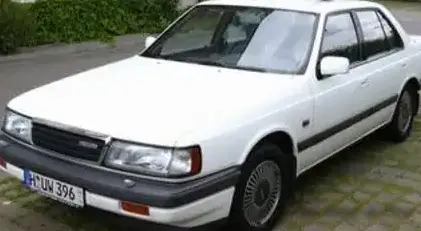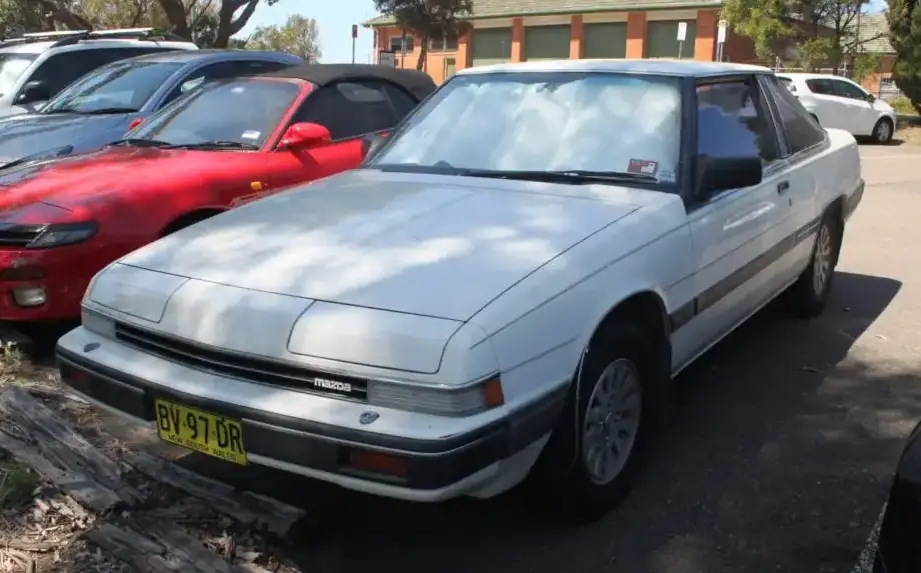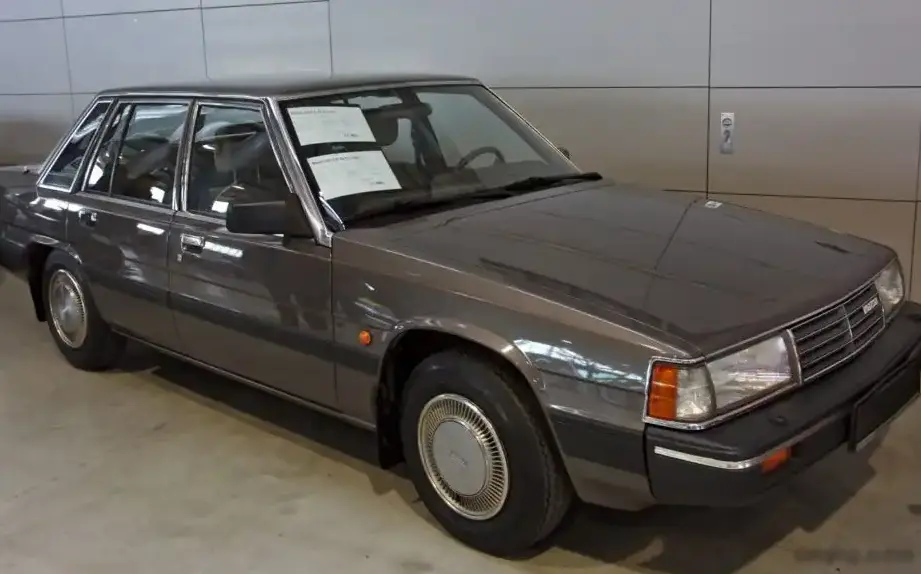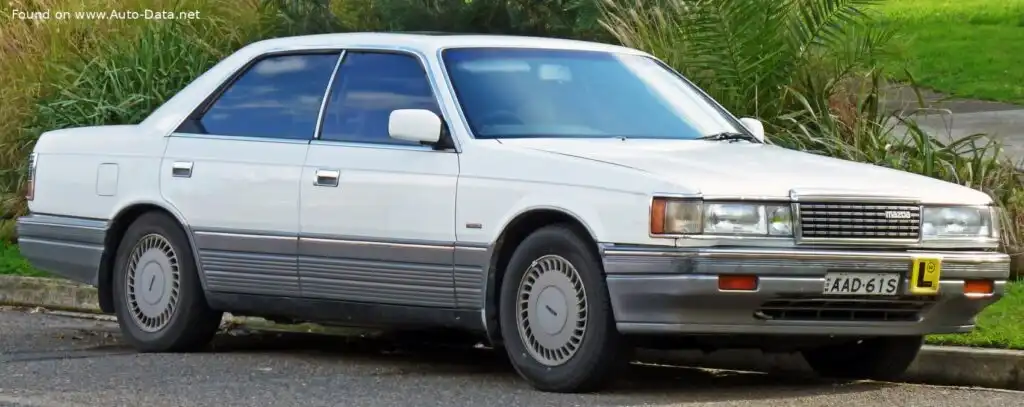
The Mazda 929 III (HC) 3.0i V6 24V, produced between 1990 and 1993, represented Mazda’s flagship luxury sedan during that period. Positioned as a competitor to established Japanese and European executive cars, the HC generation 929 aimed to offer a blend of sophisticated styling, robust engineering, and a comfortable driving experience. This variant, equipped with the 3.0-liter V6 engine and automatic transmission, was typically the higher-end offering within the 929 lineup, emphasizing refinement over outright sportiness. It was primarily sold in Japan, Europe, Australia, and limited quantities in North America.
Technical Specifications
| Brand | Mazda |
| Model | 929 |
| Generation | 929 III (HC) |
| Type (Engine) | 3.0 i V6 24V (200 Hp) |
| Start of production | 1990 |
| End of production | 1993 |
| Powertrain Architecture | Internal Combustion engine |
| Body type | Sedan |
| Seats | 5 |
| Doors | 4 |
| Fuel consumption (urban) | 18 l/100 km (13.1 US mpg, 15.7 UK mpg, 5.6 km/l) |
| Fuel consumption (extra urban) | 9 l/100 km (26.1 US mpg, 31.4 UK mpg, 11.1 km/l) |
| Fuel Type | Petrol (Gasoline) |
| Maximum speed | 220 km/h (136.7 mph) |
| Weight-to-power ratio | 7.5 kg/Hp, 134.2 Hp/tonne |
| Weight-to-torque ratio | 5.7 kg/Nm, 174.5 Nm/tonne |
| Power | 200 Hp @ 6000 rpm |
| Power per litre | 67.7 Hp/l |
| Torque | 260 Nm @ 4500 rpm (191.77 lb.-ft. @ 4500 rpm) |
| Engine layout | Front, Longitudinal |
| Engine displacement | 2954 cm3 (180.26 cu. in.) |
| Number of cylinders | 6 |
| Engine configuration | V-engine |
| Cylinder Bore | 90 mm (3.54 in.) |
| Piston Stroke | 77.4 mm (3.05 in.) |
| Compression ratio | 9.5:1 |
| Number of valves per cylinder | 4 |
| Fuel injection system | Multi-port manifold injection |
| Engine aspiration | Naturally aspirated engine |
| Valvetrain | DOHC |
| Kerb Weight | 1490 kg (3284.89 lbs.) |
| Trunk (boot) space (minimum) | 427 l (15.08 cu. ft.) |
| Fuel tank capacity | 70 l (18.49 US gal | 15.4 UK gal) |
| Length | 4690 mm (184.65 in.) |
| Width | 1695 mm (66.73 in.) |
| Height | 1425 mm (56.1 in.) |
| Wheelbase | 2710 mm (106.69 in.) |
| Front track | 1440 mm (56.69 in.) |
| Rear (Back) track | 1450 mm (57.09 in.) |
| Drivetrain Architecture | Rear wheel drive |
| Front suspension | Coil spring |
| Rear suspension | Coil spring |
| Front brakes | Ventilated discs |
| Rear brakes | Disc |
| Assisting systems | ABS (Anti-lock braking system), Hydraulic Steering |
| Tires size | 195/65 R15 91 H |
| Wheel rims size | 6J x 15 ET 50 |
Introduction
The Mazda 929 III (HC) represented a significant step forward for Mazda in terms of luxury and refinement. Introduced in 1990, it built upon the success of the previous generations, offering a more sophisticated design and a more powerful engine. The 3.0i V6 24V variant, with its 200 horsepower, was positioned as the top-of-the-line model, aimed at buyers who desired a smooth, powerful, and well-equipped sedan. The HC series was based on the Mazda H platform, shared with other Mazda models of the era, but distinguished itself through its larger size and more luxurious appointments.
Powertrain & Engine Architecture
The heart of the 929 3.0i was the JE series 3.0-liter V6 engine. This engine, designated as the JZ30, featured a 60-degree V-angle, a cast iron block, and an aluminum cylinder head. It employed a dual overhead camshaft (DOHC) valvetrain with four valves per cylinder, contributing to its strong power output. Fuel delivery was handled by a multi-port fuel injection system, ensuring precise fuel metering and efficient combustion. The engine’s 9.5:1 compression ratio was a balance between performance and fuel economy. The automatic transmission paired with this engine was a four-speed unit, designed for smooth and comfortable shifts. While not particularly sporty, it was well-suited to the car’s grand touring character.
Driving Characteristics
The 929 3.0i V6 with the automatic transmission offered a relaxed and refined driving experience. Acceleration was adequate for comfortable highway cruising and overtaking, but it wasn’t a particularly quick car by contemporary standards. The automatic transmission, while smooth, did detract somewhat from the engine’s potential, resulting in a slightly less responsive feel compared to the available manual transmission. The rear-wheel-drive configuration provided a balanced handling characteristic, although the car’s weight and focus on comfort meant it wasn’t designed for aggressive cornering. The suspension was tuned for ride comfort, absorbing bumps and imperfections in the road effectively.
Equipment & Trim Levels
The 3.0i V6 variant of the 929 was generously equipped, reflecting its position as the flagship model. Standard features typically included power windows, power locks, power seats, air conditioning, a high-quality audio system, and leather upholstery. Optional extras could include a sunroof, upgraded audio systems, and wood trim accents. The interior design emphasized spaciousness and comfort, with well-padded seats and a generally upscale ambiance. The dashboard layout was functional and easy to use, with clearly labeled controls.
Chassis & Braking
The 929 III (HC) featured a traditional body-on-frame construction, providing a robust and durable chassis. The suspension system consisted of coil springs and shock absorbers at all four corners. The front suspension utilized a MacPherson strut design, while the rear suspension employed a multi-link setup. Braking duties were handled by ventilated discs at the front and solid discs at the rear. An anti-lock braking system (ABS) was standard, enhancing safety and control during emergency braking situations. Power steering was also standard, making the car easy to maneuver at low speeds.
Market Reception & Comparison
The Mazda 929 III (HC) 3.0i V6 was generally well-received by automotive critics. It was praised for its comfortable ride, spacious interior, and refined engine. However, some critics noted that it lacked the sporting character of some of its European competitors. Compared to the lower-displacement 2.0-liter and 2.2-liter versions of the 929, the 3.0i V6 offered significantly more power and a more luxurious driving experience, but at a higher price point. Fuel economy was also lower with the larger engine, a common trade-off for increased performance. Reliability was generally good, although maintenance costs could be higher due to the complexity of the V6 engine.
Legacy
The Mazda 929 III (HC) 3.0i V6 represents a high point in Mazda’s history of luxury sedan production. While the 929 line was eventually discontinued, the HC generation remains a sought-after classic among enthusiasts. The JE V6 engine proved to be a durable and reliable powerplant, and well-maintained examples continue to provide years of service. In the used car market today, these cars are appreciated for their classic styling, comfortable ride, and relative rarity. Finding parts can sometimes be a challenge, but a dedicated community of owners and enthusiasts helps to keep these cars on the road.