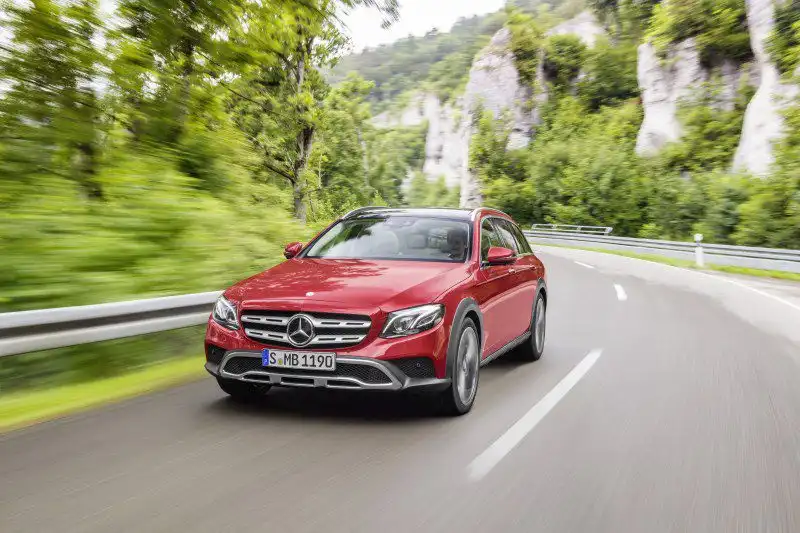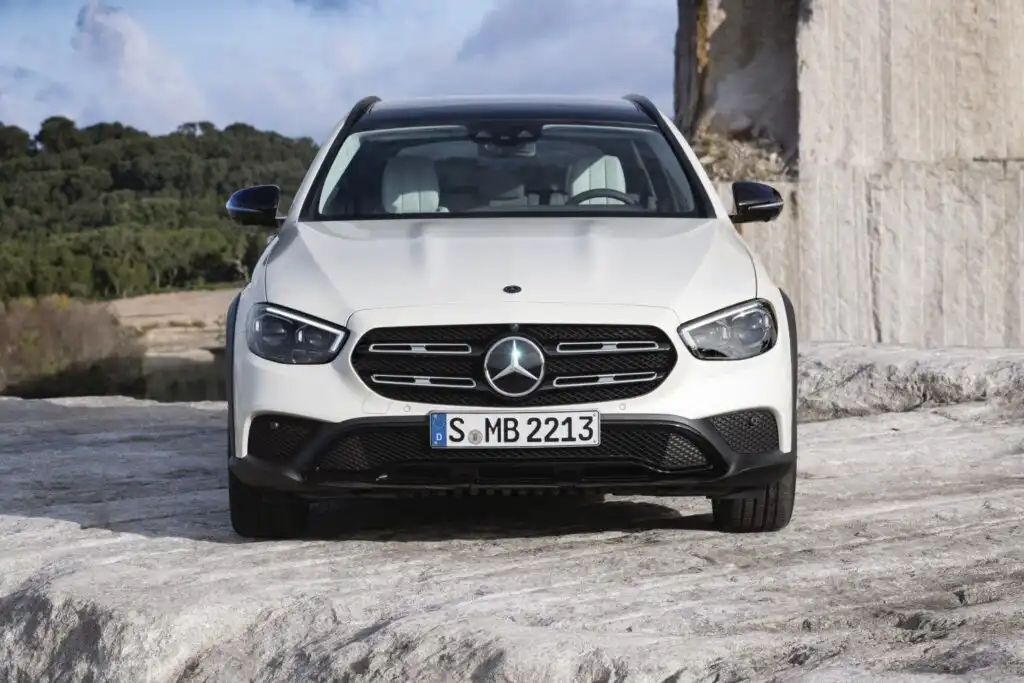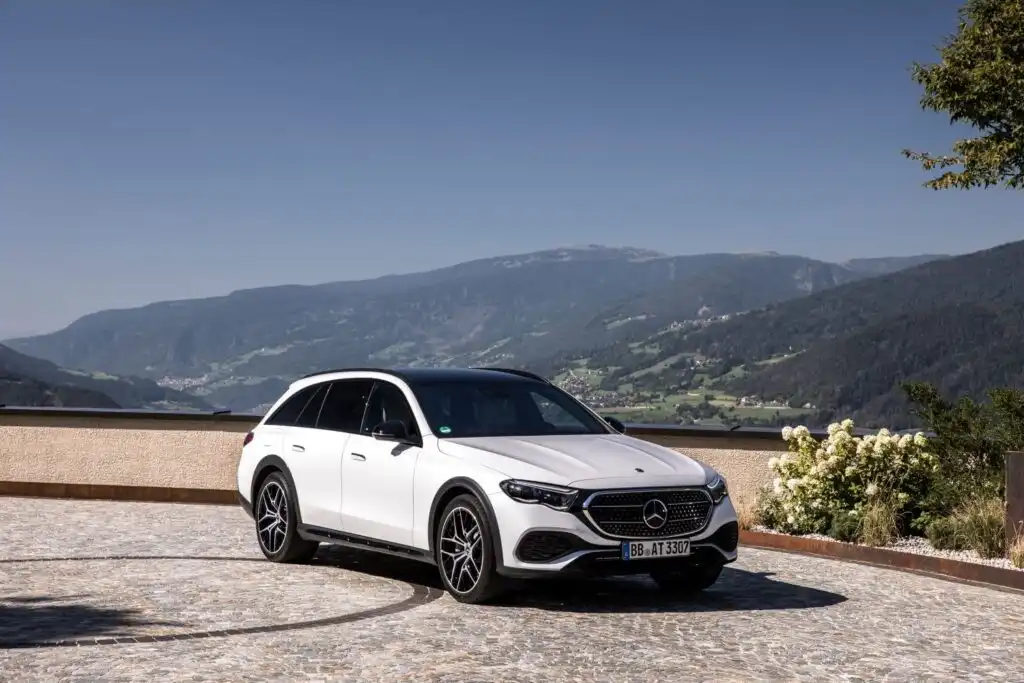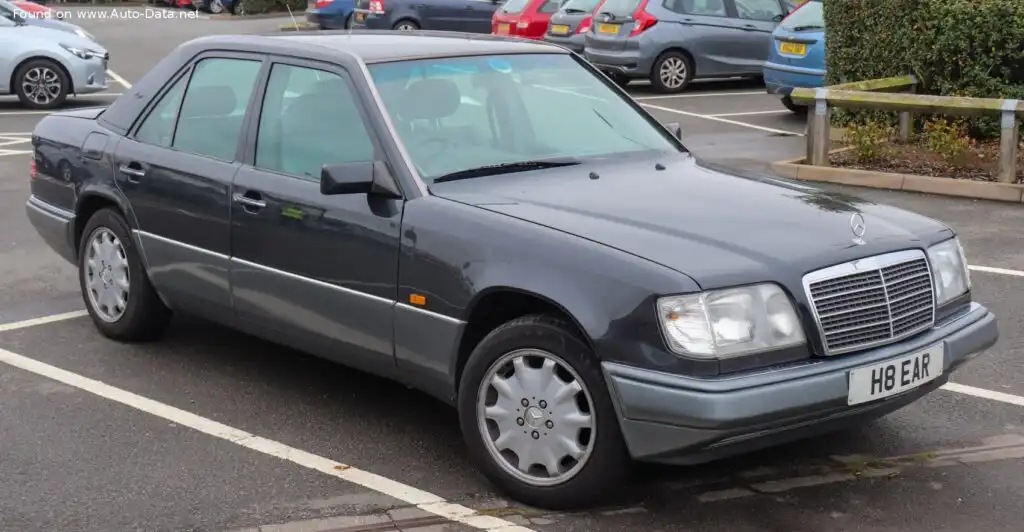
The Mercedes-Benz E 200 D Automatic, produced between July 1993 and August 1995, was a variant of the W124 series, representing a diesel-powered, entry-level offering within the E-Class range. Positioned as a fuel-efficient and comfortable option, it catered to buyers prioritizing economy and reliability over outright performance. This model utilized the OM601 D 20 engine paired with a four-speed automatic transmission, making it a popular choice in European markets where diesel sedans were highly favored. The W124 platform, known for its robust build quality, provided a solid foundation for this practical and durable vehicle.
Technical Specifications
| Brand | Mercedes-Benz |
| Model | E-class |
| Generation | E-class (W124) |
| Type (Engine) | E 200 D (75 Hp) Automatic |
| Start of production | July, 1993 |
| End of production | August, 1995 |
| Powertrain Architecture | Internal Combustion engine |
| Body type | Sedan |
| Seats | 5 |
| Doors | 4 |
| Fuel consumption (urban) | 8 l/100 km (29.4 US mpg) |
| Fuel consumption (extra urban) | 5.7 l/100 km (41.3 US mpg) |
| Fuel Type | Diesel |
| Acceleration 0 – 100 km/h | 20.4 sec |
| Acceleration 0 – 62 mph | 20.4 sec |
| Acceleration 0 – 60 mph | 19.4 sec |
| Maximum speed | 155 km/h (96.31 mph) |
| Weight-to-power ratio | 17.9 kg/Hp |
| Weight-to-torque ratio | 10.6 kg/Nm |
| Power | 75 Hp @ 4600 rpm |
| Power per litre | 37.6 Hp/l |
| Torque | 126 Nm @ 2700-3550 rpm (92.93 lb.-ft.) |
| Engine layout | Front, Longitudinal |
| Engine Model/Code | OM 601 D 20 / 601.912 |
| Engine displacement | 1997 cm3 (121.86 cu. in.) |
| Number of cylinders | 4 |
| Engine configuration | Inline |
| Cylinder Bore | 87 mm (3.43 in.) |
| Piston Stroke | 84 mm (3.31 in.) |
| Compression ratio | 22:1 |
| Number of valves per cylinder | 2 |
| Fuel injection system | Precombustion chamber injection |
| Engine aspiration | Naturally aspirated engine |
| Valvetrain | SOHC |
| Engine oil capacity | 6.5 l (6.87 US qt | 5.72 UK qt) |
| Coolant | 8.5 l (8.98 US qt | 7.48 UK qt) |
| Kerb Weight | 1340 kg (2954.19 lbs.) |
| Max. weight | 1910 kg (4210.83 lbs.) |
| Max load | 570 kg (1256.63 lbs.) |
| Fuel tank capacity | 70 l (18.49 US gal | 15.4 UK gal) |
| Length | 4740 mm (186.61 in.) |
| Width | 1740 mm (68.5 in.) |
| Height | 1425 mm (56.1 in.) |
| Wheelbase | 2800 mm (110.24 in.) |
| Front track | 1501 mm (59.09 in.) |
| Rear track | 1491 mm (58.7 in.) |
| Drivetrain Architecture | Rear wheel drive |
| Number of gears | 4 |
| Gearbox type | Automatic transmission |
| Front suspension | Wishbone |
| Rear suspension | Independent multi-link suspension |
| Front brakes | Disc |
| Rear brakes | Disc |
| Assisting systems | ABS (Anti-lock braking system) |
| Steering type | Cone worm with recirculation balls |
| Power steering | Hydraulic Steering |
| Tires size | 185/65 R15 |
| Wheel rims size | 6J x 15 |
Powertrain & Engine Architecture
The E 200 D Automatic was powered by the OM601 D 20 engine, a 2.0-liter inline-four diesel. This engine was a mainstay of Mercedes-Benz’s diesel offerings during the early to mid-1990s. It featured precombustion chamber injection, a system designed to improve combustion efficiency and reduce noise compared to direct injection diesels of the time. The OM601 utilized a single overhead camshaft (SOHC) valvetrain, operating two valves per cylinder. The engine’s relatively low compression ratio of 22:1 contributed to its durability and ability to run on lower-quality diesel fuel, a significant advantage in many markets. Paired with the engine was a four-speed automatic transmission, providing smooth, albeit not particularly quick, gear changes. This transmission was chosen for its comfort and ease of use, aligning with the E 200 D’s focus on relaxed cruising.
Driving Characteristics
The E 200 D Automatic’s driving experience was defined by its relaxed nature. With only 75 horsepower and 126 Nm (93 lb-ft) of torque, acceleration was modest. The 0-60 mph time of around 19.4 seconds reflects this. The automatic transmission, while comfortable, wasn’t optimized for performance, with relatively wide gear ratios prioritizing fuel economy over responsiveness. Compared to the more powerful E 280 or E 320 models, or even the manual transmission versions of the E 200 D, this variant felt significantly slower. However, the engine provided adequate power for everyday driving, and the automatic transmission made it a comfortable choice for city commuting and long highway journeys. The rear-wheel drive configuration offered predictable handling, typical of Mercedes-Benz sedans of the era.
Equipment & Trim Levels
The E 200 D Automatic typically came with a fairly standard level of equipment for a mid-range Mercedes-Benz. Standard features included power windows, central locking, and a basic audio system. Interior upholstery was usually cloth, although leather was available as an option. Dashboard configuration was typical of the W124, with a functional and understated design. Optional extras included a sunroof, upgraded audio systems, automatic climate control, and alloy wheels. The E 200 D Automatic didn’t typically receive the more luxurious appointments found on higher-trim models like the E 320, but it offered a comfortable and well-equipped interior for its price point.
Chassis & Braking
The W124 chassis provided a solid and stable platform for the E 200 D Automatic. Front suspension utilized a wishbone design, while the rear featured an independent multi-link suspension, contributing to a comfortable ride. Braking was handled by disc brakes on all four wheels, supplemented by an Anti-lock Braking System (ABS) for improved stopping power and stability. Given the car’s weight and power output, the braking system was generally considered adequate. Stabilizer bars were fitted front and rear to reduce body roll during cornering, enhancing handling.
Market Reception & Comparison
The E 200 D Automatic was generally well-received in markets where diesel sedans were popular, particularly in Europe. Critics praised its fuel efficiency, reliability, and comfortable ride. However, its lack of performance was often noted. Compared to the more powerful E-Class variants, the E 200 D Automatic offered a significantly lower price point, making it accessible to a wider range of buyers. Its fuel economy was superior to the gasoline-powered models, making it an attractive option for high-mileage drivers. Reliability was also a strong point, with the OM601 engine known for its durability.
Legacy
The E 200 D Automatic, and the OM601 engine in general, has proven to be remarkably durable over the long term. Many examples are still on the road today, a testament to Mercedes-Benz’s engineering and build quality. In the used car market, these vehicles are often sought after by enthusiasts and those looking for a reliable and affordable classic Mercedes-Benz. While maintenance can be required due to the car’s age, parts availability is generally good. The E 200 D Automatic represents a practical and well-built sedan from a golden era of Mercedes-Benz engineering, offering a comfortable and economical driving experience.