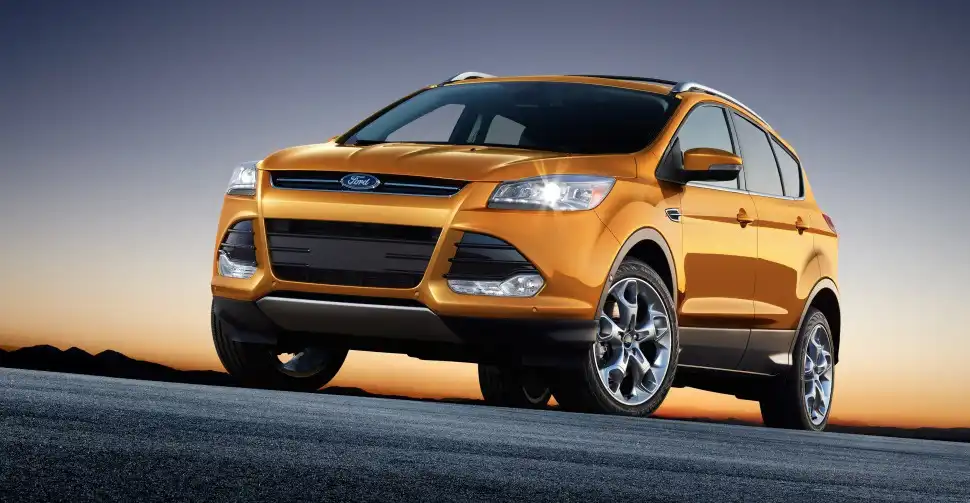
The Ford Escape III, produced from 2013 to 2016, represented a significant redesign for Ford’s popular compact SUV. Within the third generation, the 2.5-liter Duratec engine paired with a six-speed automatic transmission was a mainstay, offering a balance of affordability and practicality. This configuration served as the entry-level powertrain option for the North American market, positioned below the more powerful turbocharged EcoBoost engines. It aimed to provide a comfortable and efficient driving experience for families and commuters, prioritizing fuel economy over outright performance. The Escape III, built on the C1 platform, was a crucial model for Ford as it navigated evolving consumer preferences towards smaller, more fuel-efficient vehicles.
Technical Specifications
| Brand | Ford |
| Model | Escape |
| Generation | Escape III |
| Type (Engine) | 2.5 Duratec (168 Hp) Automatic |
| Start of production | 2013 |
| End of production | 2016 |
| Powertrain Architecture | Internal Combustion engine |
| Body type | SUV |
| Seats | 5 |
| Doors | 5 |
| Fuel consumption (urban) | 10.7 l/100 km (22 US mpg, 26.4 UK mpg, 9.3 km/l) |
| Fuel consumption (extra urban) | 7.6 l/100 km (30.9 US mpg, 37.2 UK mpg, 13.2 km/l) |
| Fuel consumption (combined) | 9.4 l/100 km (25 US mpg, 30.1 UK mpg, 10.6 km/l) |
| Fuel Type | Petrol (Gasoline) |
| Weight-to-power ratio | 9.5 kg/Hp, 105.4 Hp/tonne |
| Weight-to-torque ratio | 6.9 kg/Nm, 144.3 Nm/tonne |
| Power | 168 Hp @ 6000 rpm |
| Power per litre | 67.5 Hp/l |
| Torque | 230 Nm @ 4500 rpm (169.64 lb.-ft. @ 4500 rpm) |
| Engine layout | Front, Transverse |
| Engine displacement | 2488 cm3 (151.83 cu. in.) |
| Number of cylinders | 4 |
| Engine configuration | Inline |
| Cylinder Bore | 88.9 mm (3.5 in.) |
| Piston Stroke | 100 mm (3.94 in.) |
| Compression ratio | 9.7:1 |
| Number of valves per cylinder | 4 |
| Fuel injection system | Multi-port manifold injection |
| Engine aspiration | Naturally aspirated engine |
| Valvetrain | DOHC, i-VCT |
| Engine oil capacity | 5.4 l (5.71 US qt | 4.75 UK qt) |
| Coolant | 8.7 l (9.19 US qt | 7.65 UK qt) |
| Kerb Weight | 1594 kg (3514.17 lbs.) |
| Trunk (boot) space – minimum | 971 l (34.29 cu. ft.) |
| Trunk (boot) space – maximum | 1920 l (67.8 cu. ft.) |
| Fuel tank capacity | 58 l (15.32 US gal | 12.76 UK gal) |
| Permitted trailer load with brakes (12%) | 680 kg (1499.14 lbs.) |
| Length | 4524 mm (178.11 in.) |
| Width | 1839 mm (72.4 in.) |
| Width with mirrors folded | 1905 mm (75 in.) |
| Width including mirrors | 2078 mm (81.81 in.) |
| Height | 1684 mm (66.3 in.) |
| Wheelbase | 2690 mm (105.91 in.) |
| Front track | 1562 mm (61.5 in.) |
| Rear (Back) track | 1565 mm (61.61 in.) |
| Ride height (ground clearance) | 201 mm (7.91 in.) |
| Minimum turning circle (turning diameter) | 11.6 m (38.06 ft.) |
| Drivetrain Architecture | Front wheel drive |
| Number of gears and type of gearbox | 6 gears, automatic transmission |
| Front suspension | Independent, type McPherson with coil spring and anti-roll bar |
| Rear suspension | Independent coil spring |
| Front brakes | Ventilated discs |
| Rear brakes | Disc |
| Assisting systems | ABS (Anti-lock braking system) |
| Steering type | Steering rack and pinion |
| Power steering | Electric Steering |
| Tires size | 235/55 R17; 235/45 R19 |
| Wheel rims size | 17; 19 |
Powertrain & Engine Architecture
The heart of this Escape variant is the 2.5-liter Duratec inline-four cylinder engine. This engine, internally designated as the 2.5L Duratec, is a naturally aspirated powerplant utilizing multi-port fuel injection. The engine features a double overhead camshaft (DOHC) valvetrain with Ford’s intelligent Variable Camshaft Timing (i-VCT) system, which optimizes valve timing for improved performance and fuel efficiency. The 6F35 six-speed automatic transmission was the sole transmission offering with this engine. This transmission is known for its smooth shifting characteristics and contributes to the overall refinement of the driving experience. The transmission’s gear ratios are tuned for fuel economy and everyday drivability, rather than aggressive acceleration.
Driving Characteristics
The 2.5-liter Duratec with the six-speed automatic delivers a comfortable, if not particularly sporty, driving experience. With 168 horsepower and 230 Nm (169.64 lb-ft) of torque, acceleration is adequate for merging onto highways and navigating city streets, but it won’t provide the brisk performance of the EcoBoost models. The automatic transmission generally shifts smoothly, but can sometimes feel hesitant during quick acceleration maneuvers. The focus is clearly on fuel efficiency and ease of use. Compared to the manual transmission option (available on other Escape trims), the automatic prioritizes convenience over driver engagement. The higher-output EcoBoost engines offered significantly more power and a more responsive driving experience, but at the cost of fuel economy.
Equipment & Trim Levels
The 2.5-liter automatic Escape typically came standard with features like air conditioning, a basic audio system with a CD player and auxiliary input, power windows and locks, and steel wheels with wheel covers. Higher trim levels, such as the SE and SEL, added features like alloy wheels, upgraded audio systems with touchscreen displays, rear parking sensors, and a power driver’s seat. Optional extras included a panoramic sunroof, leather upholstery, and a navigation system. Interior upholstery was typically cloth, with higher trims offering leather options. The dashboard layout was functional and straightforward, prioritizing usability over stylistic flair.
Chassis & Braking
The Escape III utilized an independent front suspension with McPherson struts and a coil spring rear suspension. This setup provided a comfortable ride quality, absorbing bumps and irregularities in the road surface effectively. Front brakes were ventilated discs, while rear brakes were solid discs. Anti-lock Braking System (ABS) was standard. The suspension tuning was geared towards comfort and stability, rather than sporty handling. The front stabilizer bar helped to reduce body roll during cornering, but the overall handling characteristics were best described as predictable and safe.
Market Reception & Comparison
Critics generally viewed the 2.5-liter Escape as a practical and affordable option, but noted its lack of outright performance compared to competitors and even other Escape trims. Fuel economy was a strong point, with the combined fuel consumption of 9.4 l/100 km (25 US mpg) being competitive for its class. The EcoBoost engines were praised for their power and efficiency, but they came at a higher price point. The 2.5-liter engine was often seen as a good choice for buyers who prioritized value and fuel economy over performance. Reliability was generally good, with few major issues reported with the 2.5-liter Duratec engine and 6F35 transmission.
Legacy
The 2.5-liter Duratec engine and 6F35 transmission combination proved to be a reliable and durable powertrain. In the used car market, these Escapes are often sought after by buyers looking for an affordable and dependable SUV. While not the most exciting option in the Escape lineup, the 2.5-liter automatic offers a good balance of practicality, fuel efficiency, and affordability. Maintenance costs are generally reasonable, and parts availability is good. The powertrain’s longevity and relatively simple design contribute to its continued appeal in the used car market.