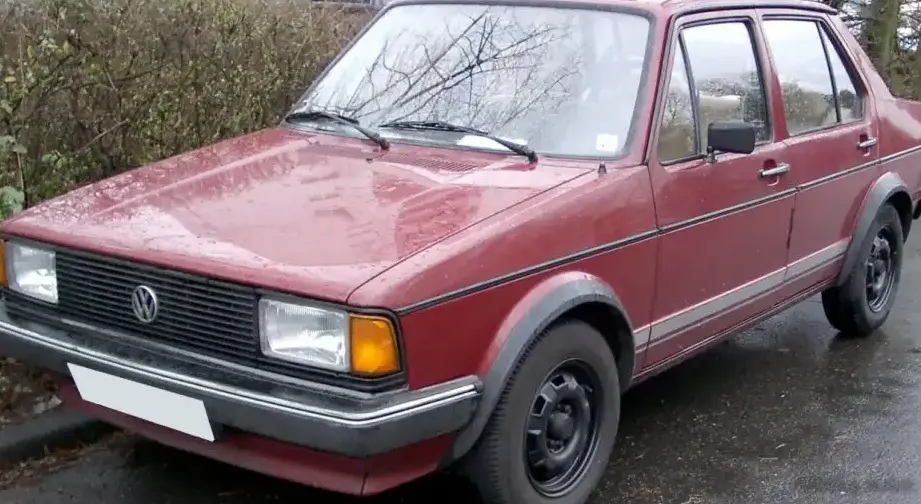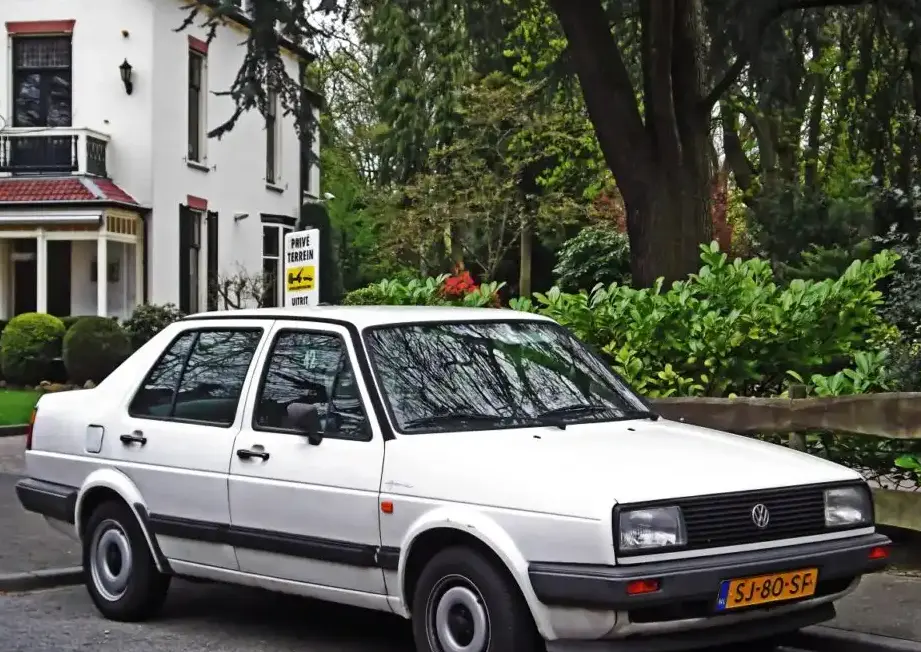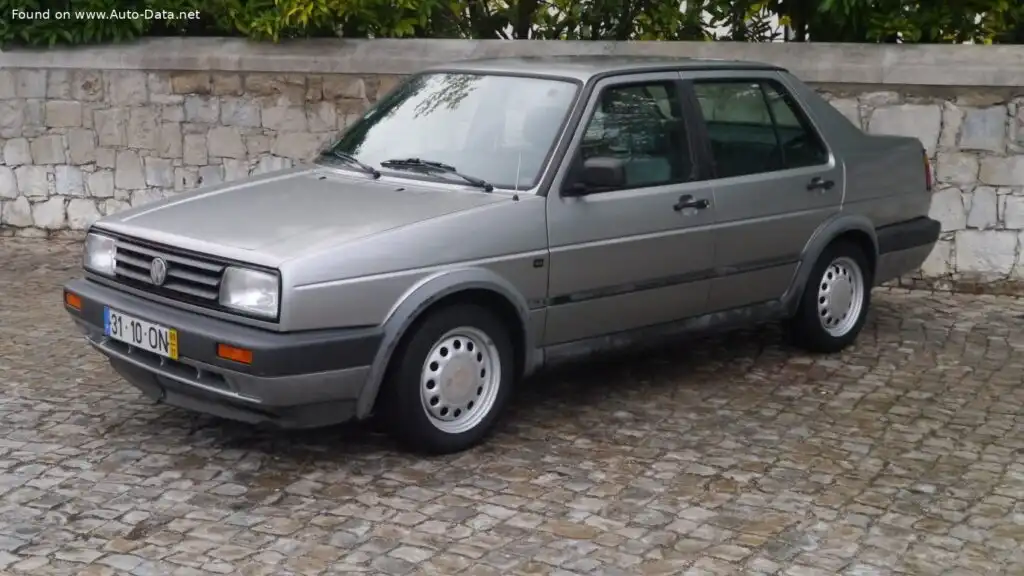
The Volkswagen Jetta II, specifically the 1.3 i variant produced from 1987 to 1991, represented an entry-level offering within the second generation of Volkswagen’s popular compact sedan. This facelifted version of the Jetta II (internally designated the 19E/1G) built upon the success of its predecessor, offering a practical and affordable transportation solution primarily aimed at the European market. While the Jetta II was sold in the United States, the 1.3 i engine was not typically offered there, with larger displacement engines being favored for the North American market. This model occupied the base trim level, providing a more economical alternative to the higher-spec Jetta models equipped with larger engines and more luxurious features.
Technical Specifications
| Brand | Volkswagen |
| Model | Jetta |
| Generation | Jetta II (facelift 1987) |
| Type (Engine) | 1.3 i (55 Hp) |
| Start of production | 1987 |
| End of production | 1991 |
| Powertrain Architecture | Internal Combustion engine |
| Body type | Sedan |
| Seats | 5 |
| Doors | 4 |
| Fuel consumption (urban) | 8.9 l/100 km (26.4 US mpg) |
| Fuel consumption (extra urban) | 5.7 l/100 km (41.3 US mpg) |
| Fuel consumption (combined) | 7.8 l/100 km (30.2 US mpg) |
| Fuel Type | Petrol (Gasoline) |
| Acceleration 0 – 100 km/h | 17 sec |
| Acceleration 0 – 62 mph | 17 sec |
| Acceleration 0 – 60 mph | 16.2 sec |
| Maximum speed | 149 km/h (92.58 mph) |
| Weight-to-power ratio | 17 kg/Hp |
| Weight-to-torque ratio | 9.6 kg/Nm |
| Power | 55 Hp @ 5200 rpm |
| Power per litre | 43.2 Hp/l |
| Torque | 97 Nm @ 3000 rpm (71.54 lb.-ft. @ 3000 rpm) |
| Engine layout | Front, Transverse |
| Engine Model/Code | NZ |
| Engine displacement | 1272 cm3 (77.62 cu. in.) |
| Number of cylinders | 4 |
| Engine configuration | Inline |
| Cylinder Bore | 75 mm (2.95 in.) |
| Piston Stroke | 72 mm (2.83 in.) |
| Compression ratio | 9.5:1 |
| Number of valves per cylinder | 2 |
| Fuel injection system | Multi-port manifold injection |
| Engine aspiration | Naturally aspirated |
| Engine oil capacity | 3.5 l (3.7 US qt | 3.08 UK qt) |
| Coolant capacity | 6.5 l (6.87 US qt | 5.72 UK qt) |
| Kerb Weight | 935 kg (2061.32 lbs.) |
| Max. weight | 1400 kg (3086.47 lbs.) |
| Max load | 465 kg (1025.15 lbs.) |
| Trunk (boot) space – minimum | 575 l (20.31 cu. ft.) |
| Fuel tank capacity | 55 l (14.53 US gal | 12.1 UK gal) |
| Length | 4385 mm (172.64 in.) |
| Width | 1675 mm (65.94 in.) |
| Height | 1415 mm (55.71 in.) |
| Wheelbase | 2475 mm (97.44 in.) |
| Front track | 1425 mm (56.1 in.) |
| Rear track | 1420 mm (55.91 in.) |
| Drag coefficient (Cd) | 0.36 |
| Drivetrain Architecture | Front wheel drive |
| Number of gears | 5 |
| Gearbox type | Manual transmission |
| Front suspension | Spring-loaded rack |
| Rear suspension | Spring-loaded rack |
| Front brakes | Disc |
| Rear brakes | Drum |
| Assisting systems | ABS (Anti-lock braking system) |
| Steering type | Steering rack and pinion |
| Power steering | Hydraulic |
| Tires size | 185/70 R14 |
| Wheel rims size | 14 |
Introduction
The 1.3 i Jetta II, produced between 1987 and 1991, was a key component of Volkswagen’s strategy to offer an affordable and fuel-efficient compact car. Positioned as the entry point to the Jetta range, it catered to buyers prioritizing economy and practicality over outright performance. The facelifted Jetta II, introduced in 1987, featured subtle styling revisions and improvements to the interior, enhancing its appeal. This model was a direct descendant of the original Jetta (A2 platform), which itself was based on the Golf Mk2, sharing many mechanical components and design elements. The 1.3 i engine was a popular choice in Europe, where fuel costs were higher and smaller displacement engines were more common.
Powertrain & Engine Architecture
The heart of the Jetta II 1.3 i was the NZ engine code, a 1272cc inline four-cylinder petrol engine. This engine featured a naturally aspirated configuration with two valves per cylinder and a compression ratio of 9.5:1. Fuel delivery was managed by a multi-port manifold injection system, a significant improvement over the carbureted engines found in earlier Jetta models. The NZ engine was known for its simplicity and reliability, although its power output was modest. The engine was transversely mounted, driving the front wheels. The standard transmission was a five-speed manual gearbox, designed to maximize fuel efficiency and provide adequate acceleration. The engine’s relatively low output meant it wasn’t stressed, contributing to its longevity.
Driving Characteristics
The 1.3 i Jetta II offered a comfortable, if uninspiring, driving experience. With only 55 horsepower, acceleration was leisurely, taking approximately 17 seconds to reach 62 mph. The five-speed manual transmission helped to keep the engine in its optimal power band, but overtaking maneuvers required careful planning. The gear ratios were geared towards fuel economy rather than performance. Compared to the more powerful 1.6 and 1.8 liter versions of the Jetta II, the 1.3 i felt noticeably slower. However, its lighter weight and efficient engine contributed to respectable fuel economy, making it a practical choice for daily commuting. The suspension provided a comfortable ride, absorbing bumps and imperfections in the road effectively.
Equipment & Trim Levels
The 1.3 i Jetta II was typically equipped with basic, but functional, features. Standard equipment included cloth upholstery, a simple dashboard layout, and manual windows and door locks. Power steering was often an optional extra, as were features like a radio and upgraded interior trim. The interior was designed with practicality in mind, offering ample space for passengers and luggage. The base trim level focused on providing essential transportation without unnecessary frills. Optional extras could include a sunroof, alloy wheels, and a more sophisticated audio system, allowing buyers to customize their Jetta to some extent.
Chassis & Braking
The Jetta II 1.3 i utilized a relatively simple chassis design. The front suspension consisted of spring-loaded rack and pinion steering, while the rear suspension employed a spring-loaded torsion beam. Brakes were disc brakes on the front wheels and drum brakes on the rear. ABS (Anti-lock Braking System) was available as an option, enhancing safety in emergency braking situations. The suspension setup prioritized ride comfort over sporty handling. The relatively light weight of the 1.3 i model helped to compensate for the less powerful braking system.
Market Reception & Comparison
The Jetta II 1.3 i was generally well-received as an affordable and reliable compact car. Critics praised its fuel efficiency and practicality, but noted its lack of performance. Compared to the higher-spec Jetta models, the 1.3 i offered a more economical alternative, but at the expense of driving excitement. The 1.6 liter and 1.8 liter versions of the Jetta II provided significantly more power and performance, but also came with a higher price tag. The 1.3 i was often compared to other entry-level compact cars of the time, such as the Ford Escort and Opel Kadett, and generally held its own in terms of value and reliability.
Legacy
The Volkswagen Jetta II 1.3 i, while not a performance icon, remains a fondly remembered car for its simplicity, reliability, and affordability. The NZ engine proved to be durable and relatively easy to maintain, making it a popular choice for first-time car owners and those seeking economical transportation. Today, well-maintained examples of the Jetta II 1.3 i are becoming increasingly sought after by classic car enthusiasts. The car’s enduring appeal lies in its timeless design and its reputation for being a dependable and practical vehicle. Parts availability remains relatively good, making it a viable option for those looking to restore or maintain a classic Volkswagen.