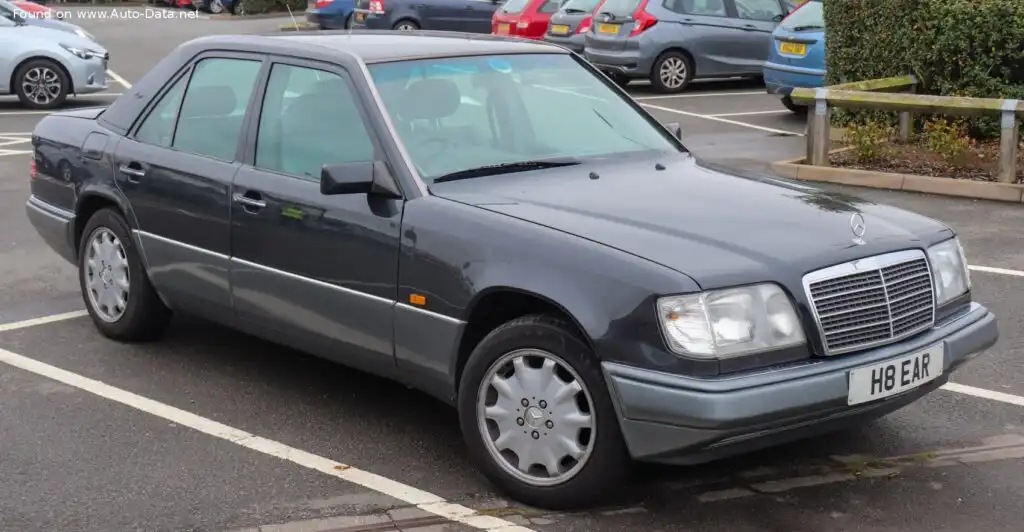
The Mercedes-Benz E-Class W124 E 250 D Lang, produced from 1993 to 1995, represents a significant iteration of the popular E-Class (formerly known as the 124-series) sedan. This variant, distinguished by its 2.5-liter diesel engine producing 113 horsepower, was primarily aimed at the European market where diesel-powered vehicles held a substantial share. The “Lang” designation indicates a long-wheelbase version, offering increased rear passenger space, making it a popular choice for executive transport and family use. It occupied a middle ground in the W124 diesel lineup, positioned above the E 220 D but below the more powerful E 300 D.
Technical Specifications
| Brand | Mercedes-Benz |
| Model | E-Class |
| Generation | E-Class (W124) |
| Type (Engine) | E 250 D Lang (113 Hp) |
| Start of production | 1993 |
| End of production | 1995 |
| Powertrain Architecture | Internal Combustion engine |
| Body type | Sedan |
| Seats | 5 |
| Doors | 4 |
| Fuel consumption (combined) | 8 l/100 km (29.4 US mpg, 35.3 UK mpg, 12.5 km/l) |
| Fuel Type | Diesel |
| Acceleration 0 – 100 km/h | 18.2 sec |
| Acceleration 0 – 62 mph | 18.2 sec |
| Acceleration 0 – 60 mph | 17.3 sec |
| Maximum speed | 180 km/h (111.85 mph) |
| Weight-to-power ratio | 15.2 kg/Hp (65.7 Hp/tonne) |
| Weight-to-torque ratio | 9.9 kg/Nm (100.6 Nm/tonne) |
| Power | 113 Hp @ 5000 rpm |
| Power per litre | 45.3 Hp/l |
| Torque | 173 Nm @ 2800 rpm (127.6 lb.-ft. @ 2800 rpm) |
| Engine layout | Front, Longitudinal |
| Engine Model/Code | OM 605 D 25 / 605.911 |
| Engine displacement | 2497 cm3 (152.38 cu. in.) |
| Number of cylinders | 5 |
| Engine configuration | Inline |
| Cylinder Bore | 87 mm (3.43 in.) |
| Piston Stroke | 84 mm (3.31 in.) |
| Compression ratio | 22:1 |
| Number of valves per cylinder | 4 |
| Fuel injection system | Precombustion chamber injection |
| Engine aspiration | Naturally aspirated engine |
| Valvetrain | DOHC |
| Engine oil capacity | 7 l (7.4 US qt | 6.16 UK qt) |
| Coolant | 9.5 l (10.04 US qt | 8.36 UK qt) |
| Kerb Weight | 1720 kg (3791.95 lbs.) |
| Max. weight | 2420 kg (5335.19 lbs.) |
| Max load | 700 kg (1543.24 lbs.) |
| Trunk (boot) space – minimum | 390 l (13.77 cu. ft.) |
| Fuel tank capacity | 72 l (19.02 US gal | 15.84 UK gal) |
| Length | 5540 mm (218.11 in.) |
| Width | 1740 mm (68.5 in.) |
| Height | 1482 mm (58.35 in.) |
| Wheelbase | 3600 mm (141.73 in.) |
| Front track | 1494 mm (58.82 in.) |
| Rear (Back) track | 1486 mm (58.5 in.) |
| Drivetrain Architecture | The Internal combustion engine (ICE) drives the rear wheels of the vehicle. |
| Drive wheel | Rear wheel drive |
| Number of gears and type of gearbox | 5 gears, manual transmission |
| Front suspension | Wishbone |
| Rear suspension | Coil spring |
| Front brakes | Ventilated discs |
| Rear brakes | Disc |
| Assisting systems | ABS (Anti-lock braking system) |
| Power steering | Hydraulic Steering |
| Tires size | 205/65 R15 |
Introduction
The W124 E 250 D Lang was introduced as part of the W124 series, a generation renowned for its build quality, durability, and engineering excellence. Production spanned from 1993 to 1995, and it was designed to appeal to buyers seeking a comfortable, reliable, and fuel-efficient luxury sedan. The long-wheelbase configuration added approximately 80mm to the standard W124 wheelbase, providing significantly more legroom for rear passengers. This made it a favored choice for chauffeur-driven applications and families prioritizing rear passenger comfort. The E 250 D Lang represented a balance between performance and economy within the W124 diesel range.
Powertrain & Engine Architecture
At the heart of the E 250 D Lang lies the OM 605 D 25 engine, a 2.5-liter inline five-cylinder diesel. This engine utilized a precombustion chamber injection system, a common feature in Mercedes-Benz diesels of the era. This system involved injecting fuel into a small precombustion chamber connected to the main cylinder, promoting more complete combustion and reducing engine noise. The OM 605 D 25 featured a double overhead camshaft (DOHC) valvetrain, contributing to improved breathing and efficiency. The engine produced 113 horsepower at 5000 rpm and 173 Nm (127.6 lb-ft) of torque at 2800 rpm. The standard transmission was a 5-speed manual, although an optional 4-speed automatic transmission was available. The automatic transmission was designed for smooth operation and comfort, prioritizing drivability over outright performance.
Driving Characteristics
The E 250 D Lang, with its 113 horsepower and manual transmission, offered respectable, though not exhilarating, performance. Acceleration from 0 to 60 mph took around 17.3 seconds, and top speed was limited to 180 km/h (112 mph). The engine’s torque characteristics meant that it felt stronger in the mid-range, making it suitable for highway cruising and overtaking. Compared to the E 220 D, the E 250 D offered noticeably more power, resulting in improved acceleration and overall responsiveness. However, it lacked the outright performance of the E 300 D, which featured a larger displacement engine. The long wheelbase contributed to a comfortable ride, absorbing bumps and imperfections in the road effectively. The manual transmission, while offering more driver engagement, required more effort than the optional automatic.
Equipment & Trim Levels
The E 250 D Lang came standard with a comprehensive list of features, reflecting its luxury sedan status. These included power windows, central locking, power steering, and an anti-lock braking system (ABS). Interior upholstery typically consisted of cloth or leather, with wood trim accents on the dashboard and door panels. Optional extras included a sunroof, automatic climate control, heated seats, and a premium sound system. The “Lang” version also featured upgraded rear seats with adjustable headrests and a folding center armrest, enhancing rear passenger comfort. Trim levels varied depending on the market, but generally offered a range of options to personalize the vehicle.
Chassis & Braking
The W124 E 250 D Lang utilized a robust chassis with independent suspension at all four wheels. The front suspension employed a wishbone design, while the rear featured a coil spring setup. This configuration provided a comfortable ride and good handling characteristics. Braking duties were handled by ventilated discs at the front and solid discs at the rear, providing adequate stopping power. The ABS system helped to prevent wheel lockup during hard braking, enhancing safety. The steering was hydraulic power-assisted, making it easy to maneuver at low speeds.
Market Reception & Comparison
The E 250 D Lang was well-received in the European market, particularly among buyers who valued fuel efficiency and reliability. Critics praised its comfortable ride, spacious interior, and build quality. Compared to its siblings, the E 250 D Lang offered a compelling balance between performance and economy. The E 220 D was more affordable but lacked the E 250 D’s extra power, while the E 300 D offered more performance but came at a higher price and with slightly lower fuel economy. The E 250 D Lang’s longer wheelbase also set it apart, appealing to those needing more rear passenger space.
Legacy
The W124 E 250 D Lang has earned a reputation for exceptional durability and reliability. The OM 605 engine is known for its longevity, and many examples are still on the road today with high mileage. While maintenance can be relatively expensive due to the vehicle’s age and complexity, the E 250 D Lang remains a popular choice among classic car enthusiasts and those seeking a well-built, comfortable, and reliable sedan. In the used car market, well-maintained examples command a premium, reflecting the W124’s enduring appeal and reputation for quality. The combination of a robust diesel engine, comfortable ride, and spacious interior ensures its continued relevance for years to come.