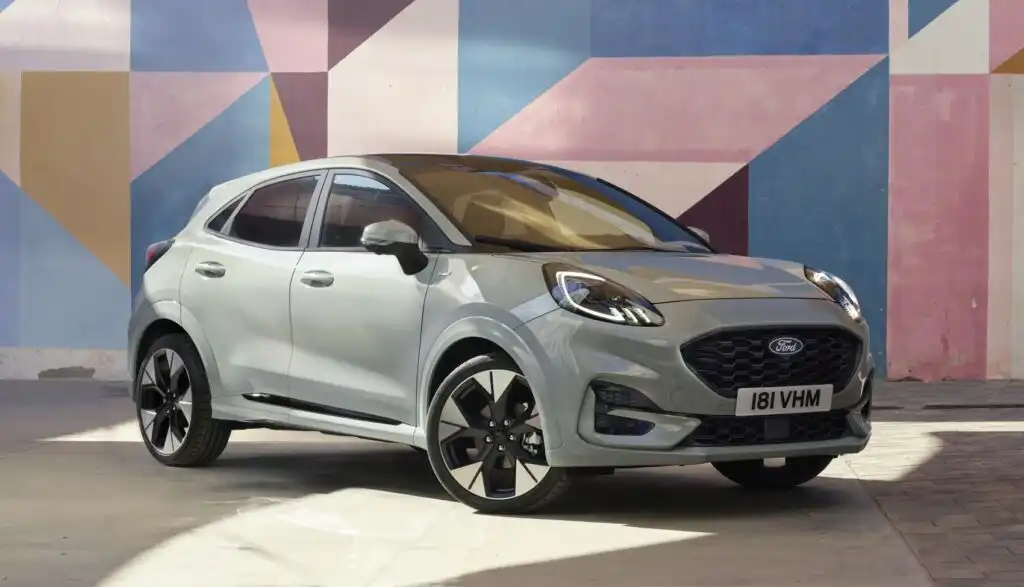
The Ford Puma 1.0 EcoBoost (125 hp) represents a key variant within the revived Puma lineup, launched in September 2019. Positioned as a mainstream offering within the range, it aimed to deliver a balance of fuel efficiency, practicality, and affordability for the European crossover market. This model, built on the Ford B-platform, sought to capitalize on the growing demand for compact SUVs, offering a more stylish and feature-rich alternative to traditional hatchback options. Production of this specific configuration continued through June 2020, before being superseded by minor revisions and powertrain updates.
Technical Specifications
| Brand | Ford |
| Model | Puma |
| Generation | Puma |
| Type (Engine) | 1.0 EcoBoost (125 Hp) |
| Start of production | September, 2019 |
| End of production | June, 2020 |
| Powertrain Architecture | Internal Combustion engine |
| Body type | SUV, Crossover |
| Seats | 5 |
| Doors | 5 |
| Fuel consumption (urban) | 5.4-5.5 l/100 km (43.6 – 42.8 US mpg) |
| Fuel consumption (extra urban) | 4.0-4.1 l/100 km (58.8 – 57.4 US mpg) |
| Fuel consumption (combined) | 4.5-4.6 l/100 km (52.3 – 51.1 US mpg) |
| CO2 emissions | 103-106 g/km |
| Fuel Type | Petrol (Gasoline) |
| Acceleration 0 – 100 km/h | 10 sec |
| Acceleration 0 – 62 mph | 10 sec |
| Acceleration 0 – 60 mph | 9.5 sec |
| Maximum speed | 191 km/h (118.68 mph) |
| Emission standard | Euro 6d-TEMP-EVAP-ISC |
| Weight-to-power ratio | 9.6 kg/Hp |
| Weight-to-torque ratio | 7.1 kg/Nm |
| Power | 125 Hp @ 6000 rpm |
| Torque | 170 Nm @ 1400 rpm (125.39 lb.-ft. @ 1400 rpm) |
| Engine layout | Front, Transverse |
| Engine Model/Code | B7JE |
| Number of cylinders | 3 |
| Engine configuration | Inline |
| Fuel injection system | Direct injection |
| Engine aspiration | Turbocharger, Intercooler |
| Engine oil capacity | 4.6 l (4.86 US qt | 4.05 UK qt) |
| Coolant capacity | 5.6 l (5.92 US qt | 4.93 UK qt) |
| Kerb Weight | 1205 kg (2656.57 lbs) |
| Max. weight | 1760-1765 kg (3880.14 – 3891.16 lbs) |
| Max load | 555-560 kg (1223.57 – 1234.59 lbs) |
| Trunk (boot) space – minimum | 523 l (18.47 cu. ft) |
| Trunk (boot) space – maximum | 1216 l (42.94 cu. ft) |
| Fuel tank capacity | 42 l (11.1 US gal | 9.24 UK gal) |
| Permitted trailer load with brakes (12%) | 1100 kg (2425.08 lbs) |
| Permitted trailer load without brakes | 640 kg (1410.96 lbs) |
| Permitted towbar download | 75 kg (165.35 lbs) |
| Length | 4186 mm (164.8 in) |
| Width | 1805 mm (71.06 in) |
| Width including mirrors | 1930 mm (75.98 in) |
| Height | 1536 mm (60.47 in) |
| Wheelbase | 2588 mm (101.89 in) |
| Minimum turning circle | 10.4 m (34.12 ft) |
| Drivetrain Architecture | Front wheel drive |
| Number of gears and type of gearbox | 6 gears, manual transmission |
| Front brakes | Disc |
| Rear brakes | Disc |
| Assisting systems | ABS (Anti-lock braking system) |
| Tires size | 215/55 R17; 215/50 R18 |
| Wheel rims size | 7J x 17; 7J x 18 |
Powertrain & Engine Architecture
The heart of the Puma 1.0 EcoBoost (125 hp) is the Ford B7JE engine, a 1.0-liter, three-cylinder turbocharged gasoline engine. This engine is part of Ford’s EcoBoost family, known for its combination of direct fuel injection, turbocharging, and variable valve timing. The B7JE utilizes a single-scroll turbocharger and an integrated exhaust manifold, contributing to its responsive performance. The engine’s direct injection system delivers fuel directly into the combustion chamber, improving efficiency and reducing emissions. The engine’s block is made of aluminum, helping to reduce weight. This particular variant produces 125 horsepower at 6000 rpm and 170 Nm (125 lb-ft) of torque at 1400 rpm. The engine is paired with a six-speed manual transmission, delivering power to the front wheels. The transmission’s gear ratios are tuned for a balance of acceleration and fuel economy.
Driving Characteristics
The Puma 1.0 EcoBoost (125 hp) offers a surprisingly engaging driving experience for a compact crossover. While not overtly powerful, the turbocharged engine provides adequate acceleration for everyday driving situations. The 0-60 mph sprint takes approximately 9.5 seconds, and the top speed is around 118.68 mph. The engine’s torque is readily available from low revs, making it easy to navigate city traffic and execute overtaking maneuvers. Compared to higher-output versions of the 1.0 EcoBoost (like the 155 hp variant), this version feels less stressed and potentially more durable. The six-speed manual transmission is precise and easy to use, enhancing driver involvement. However, it doesn’t offer the same level of performance as the more powerful engine options.
Equipment & Trim Levels
The 1.0 EcoBoost (125 hp) Puma typically came equipped with a respectable level of standard features. These included air conditioning, a 8-inch touchscreen infotainment system with Apple CarPlay and Android Auto compatibility, Ford’s SYNC 3 voice control system, and a suite of driver-assistance technologies such as lane-keeping assist and pre-collision assist. Interior upholstery was typically cloth, with options for upgraded materials available. Higher trim levels added features like automatic climate control, a larger touchscreen, a rearview camera, and parking sensors. Optional extras included a panoramic sunroof, premium audio system, and various styling packages.
Chassis & Braking
The Puma’s chassis is tuned for comfort and stability. It utilizes independent front suspension with MacPherson struts and a twist-beam rear suspension. The front brakes are discs, while the rear brakes are also discs, providing adequate stopping power for the vehicle’s weight and performance. ABS (Anti-lock Braking System) is standard, enhancing safety in emergency braking situations. The steering is light and precise, making it easy to maneuver in urban environments. The suspension setup provides a comfortable ride quality, absorbing bumps and imperfections in the road surface effectively.
Market Reception & Comparison
The Ford Puma 1.0 EcoBoost (125 hp) was generally well-received by automotive critics. It was praised for its stylish design, fuel efficiency, and enjoyable driving dynamics. However, some reviewers noted that the engine could feel strained when fully loaded or driving uphill. Compared to other trims in the Puma lineup, this variant offered a more affordable entry point, making it accessible to a wider range of buyers. Its fuel economy figures of 4.5-4.6 l/100 km (52.3 – 51.1 US mpg) were competitive within the crossover segment. Compared to diesel-powered alternatives, the 1.0 EcoBoost offered a smoother and quieter driving experience, albeit with slightly higher running costs.
Legacy
The Ford Puma 1.0 EcoBoost (125 hp) has proven to be a relatively reliable powertrain in the used car market. The 1.0 EcoBoost engine, while sometimes subject to minor issues like timing belt wear, is generally considered durable and long-lasting. Regular maintenance, including oil changes and timing belt replacements, is crucial for ensuring its longevity. The Puma’s overall build quality is also good, contributing to its continued popularity among used car buyers. Today, these models represent a practical and affordable option for those seeking a stylish and fuel-efficient compact crossover.