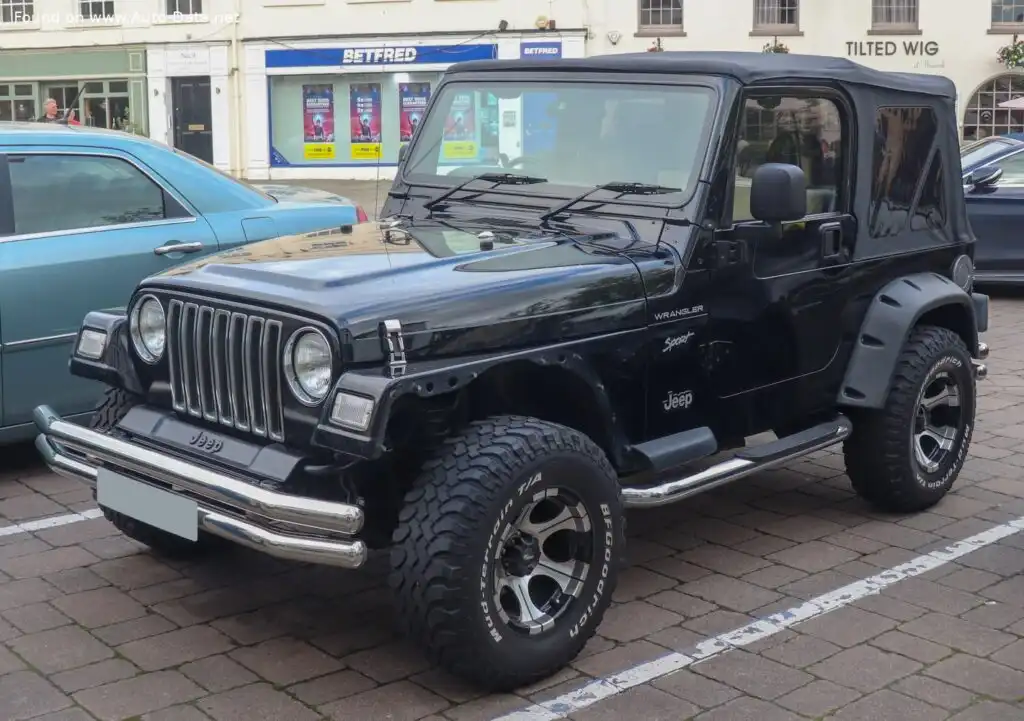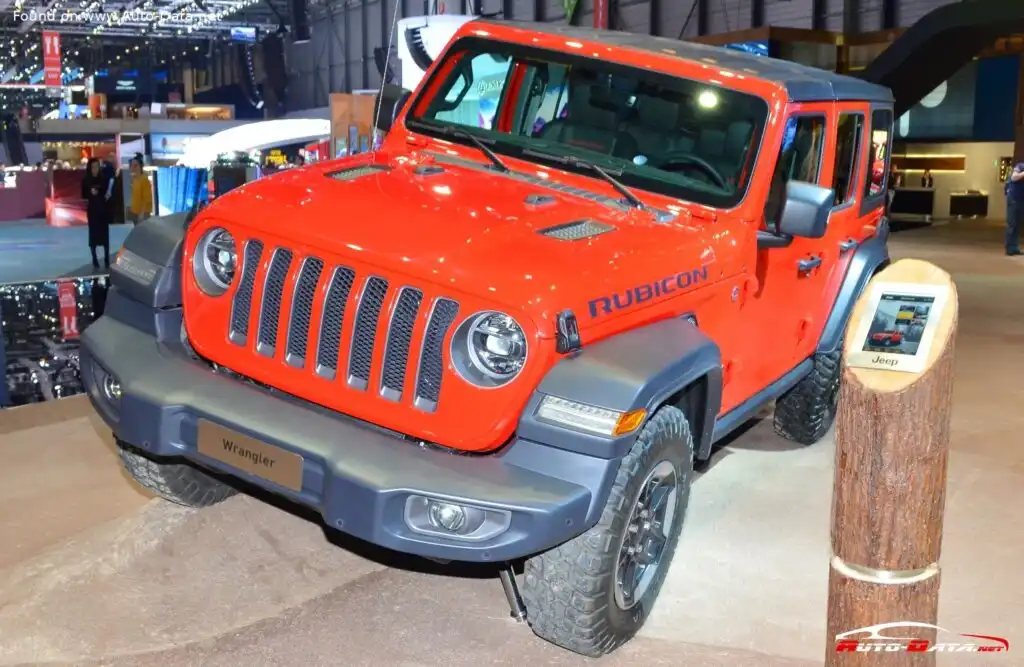
The Jeep Wrangler IV Unlimited (JL) Rubicon 2.0 Turbo 4xe, produced from January 2021 to April 2023, represents a significant step in the evolution of the iconic Wrangler, blending its renowned off-road capability with a plug-in hybrid electric vehicle (PHEV) powertrain. This variant, positioned as a premium offering within the JL range, aimed to broaden the Wrangler’s appeal to environmentally conscious buyers without compromising its core strengths. It utilizes the 1HX0/A3 platform shared with other Jeep and Stellantis vehicles, but distinguishes itself through its unique powertrain and associated technologies. The 4xe designation signifies Jeep’s commitment to electrification, offering a balance of gasoline power and electric drive for enhanced efficiency and reduced emissions.
Technical Specifications
| Brand | Jeep |
| Model | Wrangler |
| Generation | Wrangler IV Unlimited (JL) |
| Type | Rubicon 2.0 Turbo (375 Hp) 4xe eTorque Plug-in Hybrid Rock-Trac Automatic |
| Start of production | January, 2021 |
| End of production | April, 2023 |
| Powertrain Architecture | PHEV (Plug-in Hybrid Electric Vehicle) |
| Body type | Off-road vehicle |
| Seats | 5 |
| Doors | 4 |
| Combined fuel consumption (WLTP) | 4.1 l/100 km (57.4 US mpg, 68.9 UK mpg, 24.4 km/l) |
| CO2 emissions (WLTP) | 94 g/km |
| Fuel Type | Petrol / electricity |
| Acceleration 0 – 100 km/h | 6.4 sec |
| Acceleration 0 – 62 mph | 6.4 sec |
| Acceleration 0 – 60 mph | 6 sec |
| Maximum speed | 156 km/h (96.93 mph) |
| Emission standard | Euro 6d Final |
| Weight-to-power ratio | 6.2 kg/Hp, 160.7 Hp/tonne |
| Weight-to-torque ratio | 3.7 kg/Nm, 272.9 Nm/tonne |
| Gross battery capacity | 17.3 kWh |
| Battery voltage | 400 V |
| Battery technology | Lithium-ion (Li-Ion) |
| Battery location | Under the rear seats |
| All-electric range (WLTP) | 45 km (27.96 mi) / 40 km (24.85 mi) |
| Average Energy consumption (WLTP) | 23.9 kWh/100 km (38.46 kWh/100 mi, 88 MPGe, 4.2 km/kWh, 2.6 mi/kWh) |
| Max speed (electric) | 130 km/h (80.78 mph) |
| Electric motor power (1) | 134 Hp |
| Electric motor Torque (1) | 245 Nm (180.7 lb.-ft.) |
| Electric motor location (1) | Between the combustion engine and the transmission |
| Electric motor power (2) | 44 Hp |
| Electric motor Torque (2) | 53 Nm (39.09 lb.-ft.) |
| Electric motor location (2) | Front, Longitudinal |
| System power | 375 Hp @ 5250 rpm |
| System torque | 637 Nm @ 3000 rpm (469.83 lb.-ft. @ 3000 rpm) |
| Power | 270 Hp @ 5250 rpm |
| Power per litre | 135.3 Hp/l |
| Torque | 400 Nm @ 3000 rpm (295.02 lb.-ft. @ 3000 rpm) |
| Maximum engine speed | 5800 rpm |
| Engine displacement | 1995 cm3 (121.74 cu. in.) |
| Number of cylinders | 4 |
| Engine configuration | Inline |
| Cylinder Bore | 84 mm (3.31 in.) |
| Piston Stroke | 90 mm (3.54 in.) |
| Compression ratio | 10:1 |
| Number of valves per cylinder | 4 |
| Fuel injection system | Direct injection |
| Engine aspiration | Twin-scroll turbo, Intercooler |
| Valvetrain | DOHC |
| Engine oil capacity | 4.73 l (5 US qt | 4.16 UK qt) |
| Coolant | 11.5 l (12.15 US qt | 10.12 UK qt) |
| Kerb Weight | 2334 kg (5145.59 lbs.) |
| Max. weight | 2903 kg (6400.02 lbs.) |
| Max load | 569 kg (1254.43 lbs.) |
| Trunk (boot) space – minimum | 548 l (19.35 cu. ft.) |
| Trunk (boot) space – maximum | 1059 l (37.4 cu. ft.) |
| Fuel tank capacity | 65 l (17.17 US gal | 14.3 UK gal) |
| Permitted trailer load with brakes (12%) | 1587 kg (3498.74 lbs.) |
| Permitted trailer load without brakes | 750 kg (1653.47 lbs.) |
| Length | 4786 mm (188.43 in.) |
| Width | 1875 mm (73.82 in.) |
| Height | 1868 mm (73.54 in.) |
| Wheelbase | 3008 mm (118.43 in.) |
| Front track | 1636 mm (64.41 in.) |
| Rear (Back) track | 1636 mm (64.41 in.) |
| Front overhang | 750 mm (29.53 in.) |
| Rear overhang | 1023 mm (40.28 in.) |
| Ride height (ground clearance) | 274 mm (10.79 in.) |
| Minimum turning circle (turning diameter) | 12.3 m (40.35 ft.) |
| Approach angle | 43.8° |
| Departure angle | 35.6° |
| Ramp-over (brakeover) angle | 22.5° |
| Wading depth | 760 mm (29.92 in.) |
| Drivetrain Architecture | The Internal combustion engine (ICE) and Two electric motors drive permanently the rear wheels of the vehicle, with a capabllity of running in full electric or mixed mode, and if necessary through the electrically or mechanically controlled clutch, the front wheels are driven. |
| Drive wheel | All wheel drive (4×4) |
| Number of gears and type of gearbox | 8 gears, automatic transmission |
| Front suspension | Coil spring, Rigid axle suspension, Transverse stabilizer |
| Rear suspension | Rigid axle suspension, Transverse stabilizer, Coil spring |
| Front brakes | Ventilated discs, 330×28 mm |
| Rear brakes | Ventilated discs, 345×22 mm |
| Assisting systems | ABS (Anti-lock braking system) |
| Steering type | Cone worm with recirculation balls |
| Power steering | Electric Steering |
| Tires size | 285/70 R17 |
| Wheel rims size | 7.5J x 17 |
Powertrain & Engine Architecture
The heart of the Rubicon 4xe is a 2.0-liter turbocharged inline-four cylinder engine (code GME T4), producing 270 horsepower and 295 lb-ft of torque. This engine utilizes direct fuel injection and a twin-scroll turbocharger for improved responsiveness and efficiency. Crucially, it’s paired with two electric motors. One 134 hp motor is integrated between the engine and the eight-speed automatic transmission, providing regenerative braking and assisting with propulsion. A second, smaller 44 hp electric motor is mounted on the front axle, enabling electric four-wheel drive. The 17.3 kWh lithium-ion battery pack, located under the rear seats, provides an all-electric range of up to 21 miles (WLTP). The transmission is an 8-speed automatic, specifically tuned to work seamlessly with the hybrid powertrain. The eTorque system, a mild hybrid system, further enhances efficiency by providing motor assist during acceleration and smoothing out engine restarts.
Driving Characteristics
The 2.0L Turbo 4xe offers a unique driving experience. In hybrid mode, the combination of the gasoline engine and electric motors delivers a combined output of 375 horsepower and 470 lb-ft of torque, providing ample power for both on-road and off-road driving. The electric motors provide instant torque, resulting in quick acceleration. The eight-speed automatic transmission is well-matched to the engine, offering smooth and responsive shifts. Compared to the 3.6L V6 Wrangler, the 4xe feels more refined and offers better low-end torque. While not as outright powerful as the V6, the 4xe’s electric assist compensates for this, particularly in off-road situations where precise throttle control is crucial. The ability to operate in full electric mode provides a near-silent driving experience, ideal for navigating trails or urban environments.
Equipment & Trim Levels
The Rubicon 4xe trim level came standard with a comprehensive suite of features, building upon the already well-equipped Rubicon model. Standard equipment included heavy-duty Dana 44 axles, a Rock-Trac 4×4 system with a 4:1 low-range gear ratio, electronic sway bar disconnect, and 33-inch all-terrain tires. Inside, the Rubicon 4xe featured premium cloth upholstery, leather-wrapped steering wheel, an 8.4-inch touchscreen infotainment system with Apple CarPlay and Android Auto compatibility, and a premium sound system. Optional extras included leather seats, a hardtop roof, and various off-road accessories such as a winch and rock rails.
Chassis & Braking
The Rubicon 4xe retains the Wrangler’s robust chassis and suspension setup, designed for extreme off-road capability. It features a solid front and rear axle, coil spring suspension, and heavy-duty shocks. The front and rear axles are equipped with locking differentials for maximum traction in challenging terrain. The braking system consists of ventilated discs on all four wheels, providing ample stopping power. The Rubicon 4xe also benefits from an upgraded brake booster to accommodate the added weight of the battery pack.
Market Reception & Comparison
The Wrangler 4xe was generally well-received by critics, who praised its blend of off-road capability and fuel efficiency. It was seen as a significant step forward for the Wrangler, demonstrating Jeep’s commitment to electrification. Compared to the standard Wrangler models, the 4xe offered improved fuel economy and a more refined driving experience. However, the added weight of the battery pack did slightly impact its off-road performance in certain situations. Against competitors like the Ford Bronco, the 4xe offered a unique plug-in hybrid powertrain, setting it apart in the off-road SUV segment.
Legacy
The Jeep Wrangler 4xe represents a pivotal moment in the Wrangler’s history, marking its transition into the era of electrification. The powertrain, while relatively new, has proven to be reasonably reliable, with most reported issues relating to software glitches or minor electrical components. On the used car market, the 4xe commands a premium price compared to gasoline-only Wranglers, reflecting its advanced technology and fuel efficiency. As battery technology continues to improve and charging infrastructure expands, the Wrangler 4xe is poised to become an increasingly popular choice for environmentally conscious off-road enthusiasts.