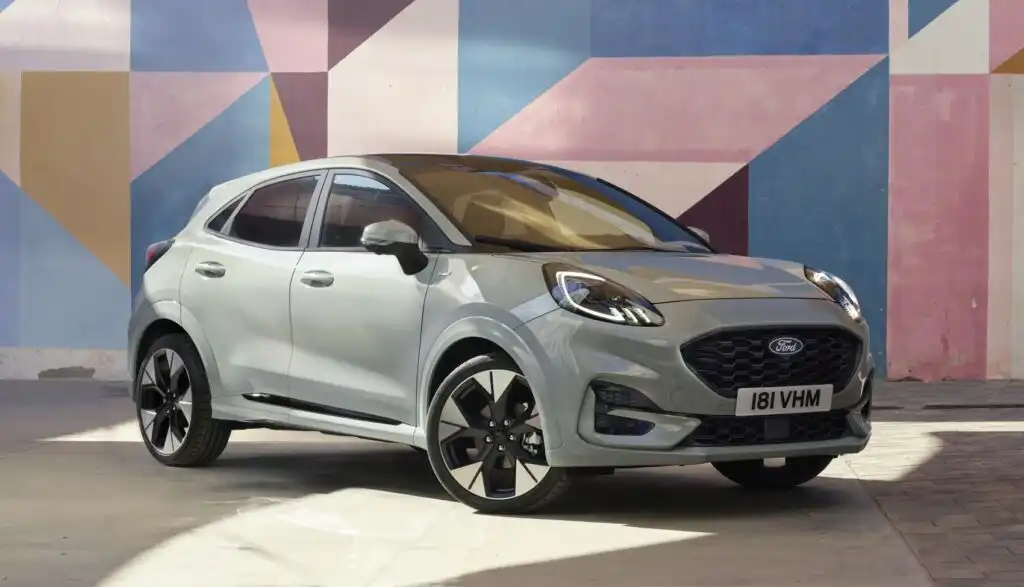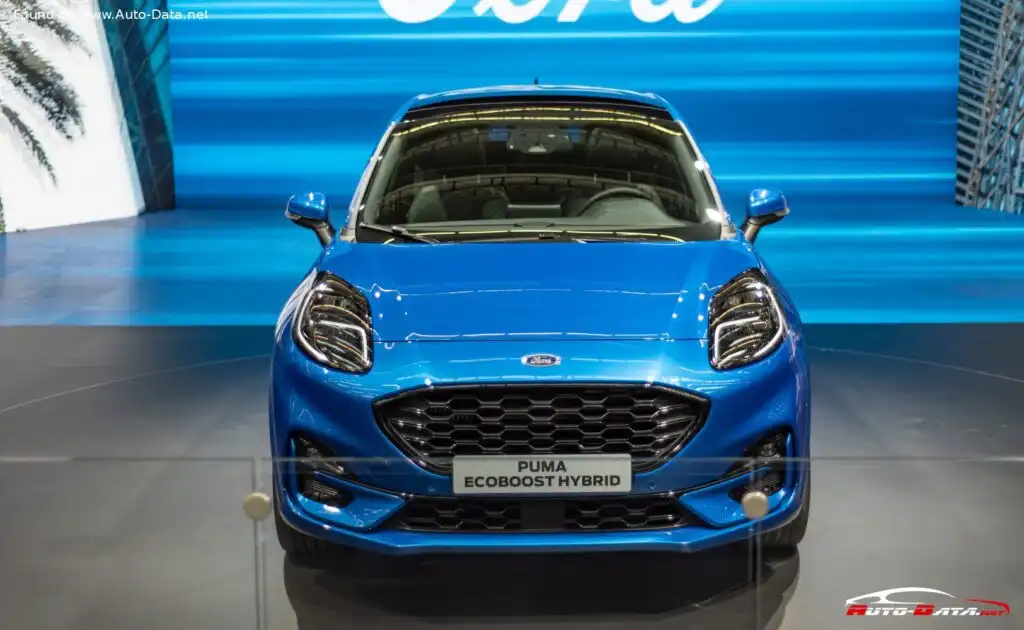
The Ford Puma 1.0 EcoBoost 125 hp Automatic, launched in June 2020 and produced through March 2021, represents a key variant within the reimagined Puma lineup. Revived as a subcompact crossover SUV, the Puma aimed to capture a younger demographic seeking a stylish and practical vehicle. This particular configuration, pairing the three-cylinder 1.0 EcoBoost engine with a seven-speed automatic transmission, was positioned as a mid-range offering, balancing affordability with convenience and reasonable performance. It was a significant model for Ford in Europe, designed to compete with vehicles like the Renault Captur, Peugeot 2008, and Volkswagen T-Cross, offering a compelling alternative in the increasingly popular B-segment crossover market.
Technical Specifications
| Brand | Ford |
| Model | Puma |
| Type (Engine) | 1.0 EcoBoost (125 Hp) Automatic |
| Start of production | June, 2020 |
| End of production | March, 2021 |
| Powertrain Architecture | Internal Combustion engine |
| Body type | SUV, Crossover |
| Seats | 5 |
| Doors | 5 |
| Fuel consumption (urban) | 5.8-6 l/100 km (40.6 – 39.2 US mpg, 48.7 – 47.1 UK mpg, 17.2 – 16.7 km/l) |
| Fuel consumption (extra urban) | 4.3-4.4 l/100 km (54.7 – 53.5 US mpg, 65.7 – 64.2 UK mpg, 23.3 – 22.7 km/l) |
| Fuel consumption (combined) | 4.9-5 l/100 km (48 – 47 US mpg, 57.6 – 56.5 UK mpg, 20.4 – 20 km/l) |
| CO2 emissions | 110-113 g/km |
| Fuel Type | Petrol (Gasoline) |
| Acceleration 0 – 100 km/h | 10.2 sec |
| Acceleration 0 – 62 mph | 10.2 sec |
| Acceleration 0 – 60 mph | 9.7 sec |
| Maximum speed | 187 km/h (116.2 mph) |
| Emission standard | Euro 6d-ISC-FCM |
| Weight-to-power ratio | 10.6 kg/Hp, 94.3 Hp/tonne |
| Weight-to-torque ratio | 6.6 kg/Nm, 150.8 Nm/tonne |
| Power | 125 Hp @ 6000 rpm |
| Power per litre | 125.1 Hp/l |
| Torque | 200 Nm @ 1400 rpm (147.51 lb.-ft. @ 1400 rpm) |
| Engine layout | Front, Transverse |
| Engine Model/Code | B7JE |
| Engine displacement | 999 cm3 (60.96 cu. in.) |
| Number of cylinders | 3 |
| Engine configuration | Inline |
| Number of valves per cylinder | 4 |
| Fuel injection system | Direct injection |
| Engine aspiration | Turbocharger, Intercooler |
| Valvetrain | DOHC |
| Engine oil capacity | 4.6 l (4.86 US qt | 4.05 UK qt) |
| Coolant capacity | 5.6 l (5.92 US qt | 4.93 UK qt) |
| Kerb Weight | 1326 kg (2923.33 lbs.) |
| Max. weight | 1815 kg (4001.39 lbs.) |
| Max load | 489 kg (1078.06 lbs.) |
| Trunk (boot) space – minimum | 456 l (16.1 cu. ft.) |
| Trunk (boot) space – maximum | 1216 l (42.94 cu. ft.) |
| Max. roof load | 50 kg (110.23 lbs.) |
| Permitted trailer load with brakes (8%) | 900 kg (1984.16 lbs.) |
| Permitted trailer load with brakes (12%) | 900 kg (1984.16 lbs.) |
| Permitted trailer load without brakes | 660 kg (1455.05 lbs.) |
| Permitted towbar download | 75 kg (165.35 lbs.) |
| Length | 4186-4207 mm (164.8 – 165.63 in.) |
| Width with mirrors folded | 1805 mm (71.06 in.) |
| Width including mirrors | 1930 mm (75.98 in.) |
| Height | 1534-1536 mm (60.39 – 60.47 in.) |
| Wheelbase | 2588 mm (101.89 in.) |
| Front overhang | 850-856 mm (33.46 – 33.7 in.) |
| Rear overhang | 748-763 mm (29.45 – 30.04 in.) |
| Ride height (ground clearance) | 164-166 mm (6.46 – 6.54 in.) |
| Minimum turning circle | 10.3-10.6 m (33.79 – 34.78 ft.) |
| Drivetrain | Front wheel drive |
| Number of gears | 7 |
| Gearbox type | automatic transmission |
| Front brakes | Disc |
| Rear brakes | Disc |
| Tires size | 215/55 R17; 215/50 R18 |
| Wheel rims size | 7J x 17; 7J x 18 |
Powertrain & Engine Architecture
The heart of this Puma variant is the Ford 1.0 EcoBoost engine, specifically the B7JE code. This engine is a highly advanced three-cylinder petrol unit featuring direct fuel injection and a single turbocharger with an intercooler. The direct injection system allows for precise fuel delivery, optimizing combustion efficiency and reducing emissions. The engine utilizes a double overhead camshaft (DOHC) valvetrain, contributing to its responsive nature. The seven-speed automatic transmission, a crucial component of this configuration, is a torque converter type designed for smooth shifting and optimized fuel economy. It’s programmed to prioritize efficiency, with gear changes often occurring at lower RPMs to maximize fuel savings. The engine also incorporates Ford’s Start & Stop system and cylinder deactivation technology, further enhancing fuel efficiency during city driving.
Driving Characteristics
The 125 hp EcoBoost engine paired with the seven-speed automatic delivers adequate, though not exhilarating, performance. Acceleration from 0-60 mph takes approximately 9.7 seconds, and the top speed is around 116 mph. The automatic transmission, while smooth, can sometimes feel hesitant during quick overtaking maneuvers. The gear ratios are tuned for fuel economy, meaning the engine can feel strained when pushed hard. Compared to the manual transmission version, the automatic offers less driver engagement but greater convenience, particularly in urban environments. It also differs significantly from higher-output EcoBoost variants (like the 155 hp version) which provide noticeably quicker acceleration and a more sporty driving experience. The torque delivery is relatively flat, with peak torque available from 1400 rpm, making it reasonably drivable in everyday situations.
Equipment & Trim Levels
The 1.0 EcoBoost 125 hp Automatic typically came equipped with a respectable level of standard features. These included air conditioning, a touchscreen infotainment system with Apple CarPlay and Android Auto compatibility, alloy wheels, and a suite of safety features such as lane-keeping assist and automatic emergency braking. Interior upholstery was generally cloth, with options for partial leather trim available at an extra cost. Higher trim levels, such as Titanium and ST-Line, added features like a larger touchscreen, upgraded sound system, rear parking sensors, and more distinctive styling elements. Optional extras included a panoramic sunroof, heated seats, and a premium audio system.
Chassis & Braking
The Puma’s chassis is designed to provide a comfortable and composed ride. The front suspension utilizes MacPherson struts, while the rear suspension employs a twist beam setup. This configuration strikes a balance between ride comfort and handling. Brakes are disc brakes on all four wheels, providing adequate stopping power for the vehicle’s weight and performance. Anti-lock Braking System (ABS) is standard. The suspension tuning is geared towards comfort rather than outright sportiness, resulting in a slightly softer ride compared to some of its competitors. Stabilizer bars are present on both axles to reduce body roll during cornering.
Market Reception & Comparison
The Ford Puma 1.0 EcoBoost Automatic received generally positive reviews from automotive critics. It was praised for its stylish design, practical interior, and fuel efficiency. However, some reviewers noted that the engine could feel underpowered, particularly when fully loaded or tackling steep hills. Compared to other trims in the Puma lineup, the 1.0 EcoBoost Automatic offered a compelling value proposition for buyers prioritizing convenience and fuel economy over outright performance. Its fuel economy figures of 48-47 US mpg combined were competitive within its segment. Reliability reports have been generally favorable, with the EcoBoost engine proving to be relatively robust, although some owners have reported issues with the turbocharger and fuel injectors.
Legacy
The Ford Puma 1.0 EcoBoost Automatic has established itself as a popular choice in the used car market. Its combination of affordability, fuel efficiency, and practicality makes it an attractive option for buyers seeking a small crossover SUV. The 1.0 EcoBoost engine, while not known for its blistering performance, has proven to be reasonably reliable, and parts availability is generally good. As a result, well-maintained examples of this variant continue to hold their value reasonably well. The Puma, in general, helped Ford regain a foothold in the European small SUV market, and this specific configuration played a significant role in its success.