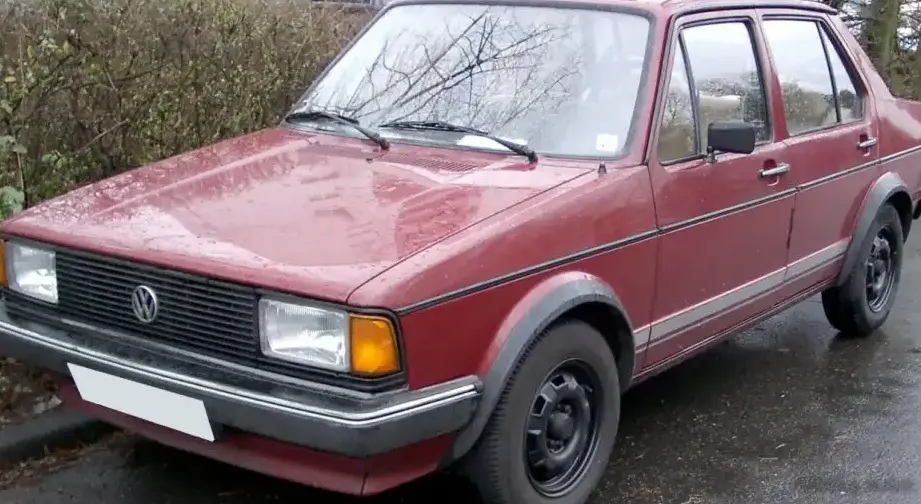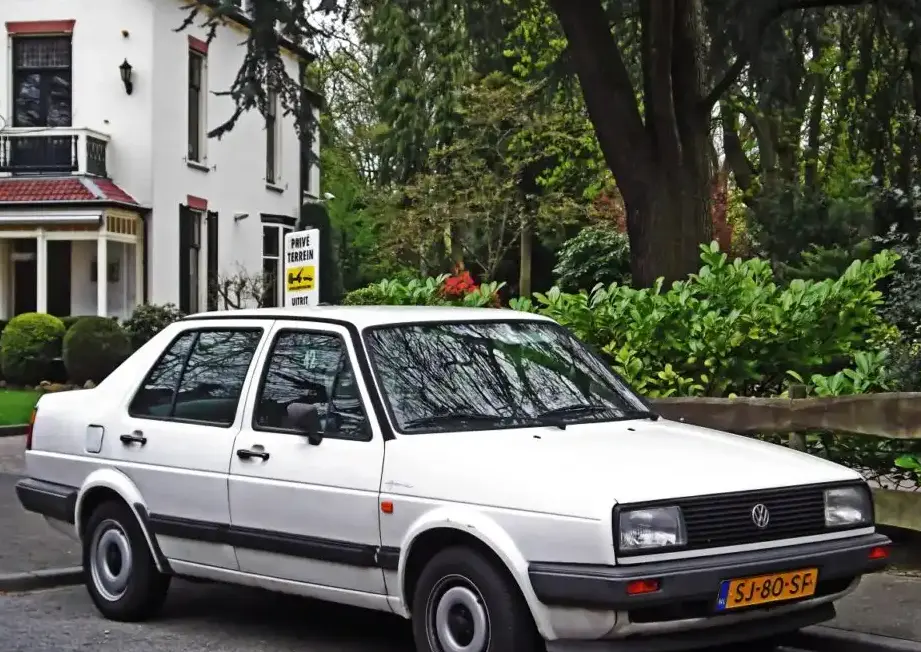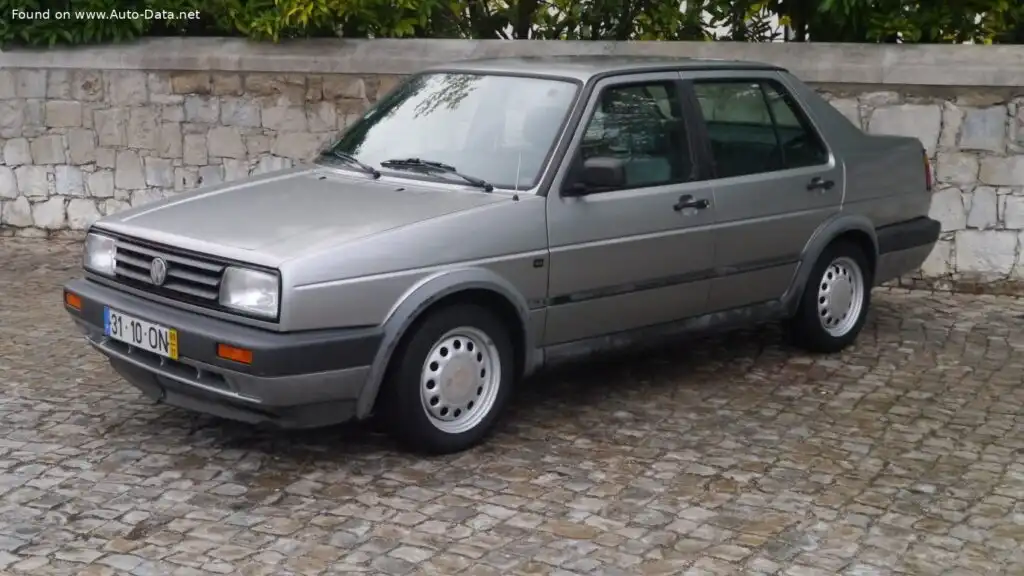
The Volkswagen Jetta II (facelift 1987) 1.8 i (98 hp) Syncro, produced between 1988 and 1991, represents a unique offering within the second-generation Jetta lineup. This variant combined the popular 1.8-liter inline-four engine with Volkswagen’s Syncro all-wheel-drive system and a five-speed manual transmission. Positioned as a more capable and versatile option, it catered to drivers needing enhanced traction in inclement weather or on varied terrain. The Jetta II, based on the A2 platform (also known as the 1HX0/A3 platform), was a significant evolution of the original Jetta, offering improved refinement, safety, and performance. The Syncro models, while a relatively small percentage of total Jetta II sales, were particularly valued for their all-weather capability.
Technical Specifications
| Brand | Volkswagen |
| Model | Jetta |
| Generation | Jetta II (facelift 1987) |
| Type (Engine) | 1.8 i (98 Hp) Syncro |
| Start of production | 1988 |
| End of production | 1991 |
| Powertrain Architecture | Internal Combustion engine |
| Body type | Sedan |
| Seats | 5 |
| Doors | 4 |
| Fuel consumption (urban) | 11.7 l/100 km (20.1 US mpg, 24.1 UK mpg, 8.5 km/l) |
| Fuel consumption (extra urban) | 6.9 l/100 km (34.1 US mpg, 40.9 UK mpg, 14.5 km/l) |
| Fuel consumption (combined) | 9.2 l/100 km (25.6 US mpg, 30.7 UK mpg, 10.9 km/l) |
| Fuel Type | Petrol (Gasoline) |
| Acceleration 0 – 100 km/h | 11.5 sec |
| Acceleration 0 – 62 mph | 11.5 sec |
| Acceleration 0 – 60 mph | 10.9 sec |
| Maximum speed | 178 km/h (110.6 mph) |
| Weight-to-power ratio | 11.6 kg/Hp, 86 Hp/tonne |
| Weight-to-torque ratio | 8 kg/Nm, 125.4 Nm/tonne |
| Power | 98 Hp @ 5400 rpm |
| Power per litre | 55 Hp/l |
| Torque | 143 Nm @ 3000 rpm (105.47 lb.-ft. @ 3000 rpm) |
| Engine layout | Front, Transverse |
| Engine Model/Code | 1P |
| Engine displacement | 1781 cm3 (108.68 cu. in.) |
| Number of cylinders | 4 |
| Engine configuration | Inline |
| Cylinder Bore | 81 mm (3.19 in.) |
| Piston Stroke | 86.4 mm (3.4 in.) |
| Compression ratio | 9:1 |
| Number of valves per cylinder | 2 |
| Fuel injection system | Multi-port manifold injection |
| Engine aspiration | Naturally aspirated engine |
| Valvetrain | SOHC |
| Engine oil capacity | 4 l (4.23 US qt | 3.52 UK qt) |
| Coolant capacity | 6.5 l (6.87 US qt | 5.72 UK qt) |
| Kerb Weight | 1140 kg (2513.27 lbs.) |
| Max. weight | 1620 kg (3571.49 lbs.) |
| Max load | 480 kg (1058.22 lbs.) |
| Trunk (boot) space – minimum | 575 l (20.31 cu. ft.) |
| Fuel tank capacity | 55 l (14.53 US gal | 12.1 UK gal) |
| Length | 4385 mm (172.64 in.) |
| Width | 1675 mm (65.94 in.) |
| Height | 1415 mm (55.71 in.) |
| Wheelbase | 2475 mm (97.44 in.) |
| Front track | 1427 mm (56.18 in.) |
| Rear (Back) track | 1422 mm (55.98 in.) |
| Drag coefficient (Cd) | 0.36 |
| Drive wheel | All wheel drive (4×4) |
| Number of gears and type of gearbox | 5 gears, manual transmission |
| Front suspension | Spring-loaded rack |
| Rear suspension | Spring-loaded rack |
| Front brakes | Disc |
| Rear brakes | Drum |
| Assisting systems | ABS (Anti-lock braking system) |
| Steering type | Steering rack and pinion |
| Power steering | Hydraulic Steering |
| Tires size | 185/70 R14 |
| Wheel rims size | 14 |
Powertrain & Engine Architecture
The heart of the Jetta II 1.8 i Syncro is the 1.8-liter (1781 cc) inline-four cylinder engine, typically identified by engine code 1P. This engine featured a single overhead camshaft (SOHC) valvetrain with two valves per cylinder. Fuel delivery was managed by a Bosch multi-port fuel injection system, providing a balance of efficiency and performance. The 98 horsepower output at 5400 rpm and 143 Nm (105.47 lb-ft) of torque at 3000 rpm were respectable for its time, though not the highest figures in the Jetta II range. The five-speed manual transmission was a crucial component, offering precise gear changes and allowing the driver to effectively utilize the engine’s power band. The Syncro all-wheel-drive system, utilizing a viscous coupling, automatically distributed power between the front and rear axles as needed, enhancing traction.
Driving Characteristics
The 1.8 i Syncro offered a comfortable and capable driving experience. While not a sports car, the engine provided adequate acceleration for everyday driving, with a 0-60 mph time of around 10.9 seconds. The Syncro system significantly improved handling and stability, particularly on slippery surfaces. The five-speed manual transmission allowed for good control over the engine’s power, and the gear ratios were well-suited for both city and highway driving. Compared to the base 1.6-liter Jetta, the 1.8 i offered noticeably more power and responsiveness. However, it lacked the outright performance of the more powerful 1.8L 16V or VR6 models. The added weight of the Syncro system did slightly impact fuel economy and agility compared to front-wheel-drive Jettas.
Equipment & Trim Levels
The Jetta II 1.8 i Syncro typically came with a reasonable level of standard equipment. This included power steering, a basic stereo system, and cloth upholstery. ABS anti-lock brakes were often included, enhancing safety. Optional extras included a sunroof, upgraded stereo systems, and alloy wheels. Interior trim levels varied, but generally featured a functional and durable design. The Syncro models often received slightly upgraded interior trim compared to base models, reflecting their higher price point and more sophisticated drivetrain.
Chassis & Braking
The Jetta II utilized a MacPherson strut front suspension and a torsion beam rear suspension. The Syncro models often featured slightly stiffer suspension components to handle the added weight and improved handling characteristics. The braking system consisted of front disc brakes and rear drum brakes. The inclusion of ABS was a significant safety feature, particularly given the all-wheel-drive system’s ability to maintain traction under braking. Stabilizer bars were fitted to both the front and rear axles, further enhancing stability.
Market Reception & Comparison
The Jetta II 1.8 i Syncro was generally well-received by automotive critics. It was praised for its all-weather capability, comfortable ride, and practical interior. However, some critics noted that the engine lacked the outright performance of some of its competitors. Compared to other Jetta II variants, the 1.8 i Syncro offered a compelling combination of performance, practicality, and all-wheel-drive capability. It was more expensive than the base 1.6-liter models but offered a significant upgrade in terms of performance and handling. Fuel economy was comparable to other 1.8-liter Jettas, but slightly lower than the 1.6-liter versions.
Legacy
The Jetta II 1.8 i Syncro remains a popular choice among enthusiasts and collectors today. The Syncro system is highly regarded for its reliability and effectiveness, and the 1.8-liter engine is known for its durability. While maintenance costs can be higher than for simpler Jetta models due to the all-wheel-drive system, the Syncro’s unique capabilities and classic styling continue to attract a dedicated following. Finding well-maintained examples can be challenging, but these cars offer a unique and rewarding driving experience, representing a significant piece of Volkswagen’s history.