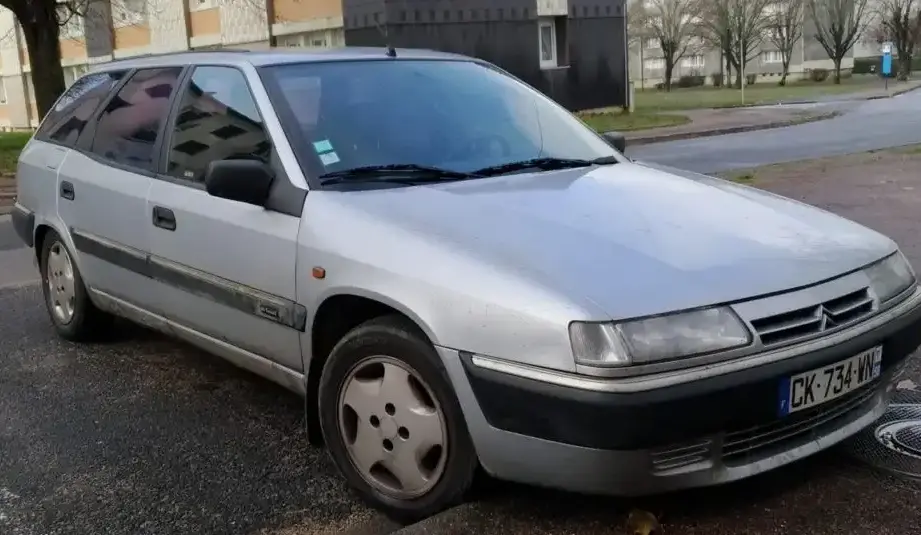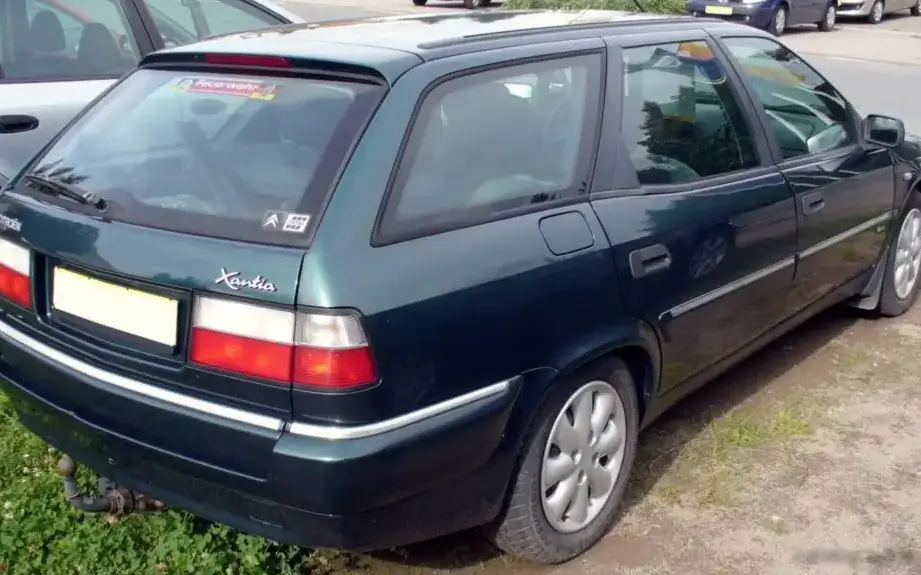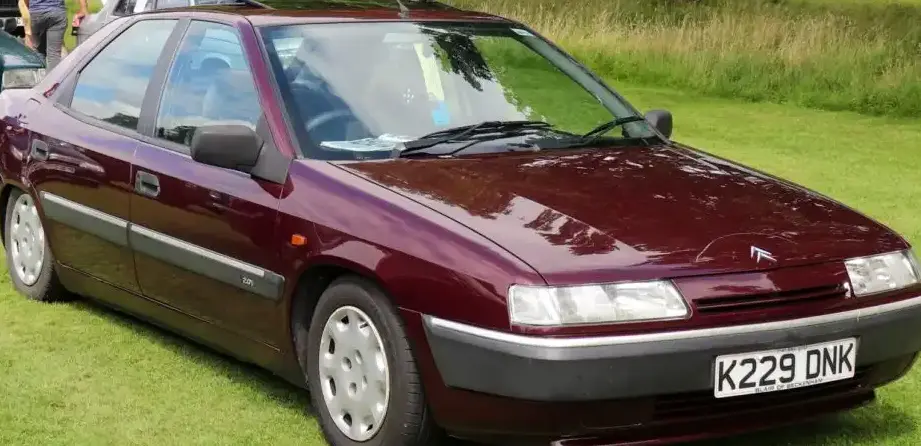
The Citroën Xantia 2.0 Turbo, produced between 1995 and 1997, represented a performance-oriented variant within the first generation (X1) Xantia lineup. Positioned as a step up from the base models, it offered a significant increase in power and a more engaging driving experience. The Xantia itself was Citroën’s replacement for the BX, continuing the company’s tradition of innovative engineering and comfortable ride quality within the mid-size family car segment. This particular 2.0 Turbo model aimed to attract buyers seeking a blend of practicality, refinement, and spirited performance, primarily targeting the European market.
Technical Specifications
| Brand | Citroen |
| Model | Xantia |
| Generation | Xantia (X1) |
| Type (Engine) | 2.0 Turbo (147 Hp) |
| Start of production | 1995 |
| End of production | 1997 |
| Powertrain Architecture | Internal Combustion engine |
| Body type | Hatchback |
| Seats | 5 |
| Doors | 5 |
| Fuel consumption (urban) | 12.5 l/100 km (18.8 US mpg, 22.6 UK mpg, 8 km/l) |
| Fuel consumption (extra urban) | 6.9 l/100 km (34.1 US mpg, 40.9 UK mpg, 14.5 km/l) |
| Fuel consumption (combined) | 9.3 l/100 km (25.3 US mpg, 30.4 UK mpg, 10.8 km/l) |
| Fuel Type | Petrol (Gasoline) |
| Acceleration 0 – 100 km/h | 9.5 sec |
| Acceleration 0 – 62 mph | 9.5 sec |
| Acceleration 0 – 60 mph | 9 sec |
| Maximum speed | 213 km/h (132.35 mph) |
| Weight-to-power ratio | 9.4 kg/Hp, 106.8 Hp/tonne |
| Weight-to-torque ratio | 5.7 kg/Nm, 174.4 Nm/tonne |
| Power | 147 Hp @ 5300 rpm |
| Power per litre | 73.6 Hp/l |
| Torque | 240 Nm @ 2500 rpm (177.01 lb.-ft. @ 2500 rpm) |
| Maximum engine speed | 6300 rpm |
| Engine layout | Front, Transverse |
| Engine Model/Code | RGX XU10J2TE |
| Engine displacement | 1998 cm3 (121.93 cu. in.) |
| Number of cylinders | 4 |
| Engine configuration | Inline |
| Cylinder Bore | 86 mm (3.39 in.) |
| Piston Stroke | 86 mm (3.39 in.) |
| Compression ratio | 8:1 |
| Number of valves per cylinder | 2 |
| Fuel injection system | Multi-port manifold injection |
| Engine aspiration | Turbocharger |
| Valvetrain | OHC |
| Engine oil capacity | 4.75 l (5.02 US qt | 4.18 UK qt) |
| Coolant | 10.8 l (11.41 US qt | 9.5 UK qt) |
| Kerb Weight | 1376 kg (3033.56 lbs.) |
| Max. weight | 1945 kg (4287.99 lbs.) |
| Max load | 569 kg (1254.43 lbs.) |
| Trunk (boot) space – minimum | 480 l (16.95 cu. ft.) |
| Trunk (boot) space – maximum | 878 l (31.01 cu. ft.) |
| Fuel tank capacity | 65 l (17.17 US gal | 14.3 UK gal) |
| Max. roof load | 75 kg (165.35 lbs.) |
| Permitted towbar download | 50 kg (110.23 lbs.) |
| Length | 4444 mm (174.96 in.) |
| Width | 1755 mm (69.09 in.) |
| Height | 1399 mm (55.08 in.) |
| Wheelbase | 2740 mm (107.87 in.) |
| Front track | 1502 mm (59.13 in.) |
| Rear (Back) track | 1454 mm (57.24 in.) |
| Front overhang | 931 mm (36.65 in.) |
| Rear overhang | 773 mm (30.43 in.) |
| Minimum turning circle | 11 m (36.09 ft.) |
| Drivetrain Architecture | The Internal combustion engine (ICE) drives the front wheels of the vehicle. |
| Drive wheel | Front wheel drive |
| Number of gears and type of gearbox | 5 gears, manual transmission |
| Front suspension | Independent type McPherson, Transverse stabilizer |
| Rear suspension | Hydro-pneumatic element, Trailing arm |
| Front brakes | Ventilated discs |
| Rear brakes | Disc |
| Assisting systems | ABS (Anti-lock braking system) |
| Steering type | Steering rack and pinion |
| Power steering | Hydraulic Steering |
| Tires size | 205/65 R15 |
Powertrain & Engine Architecture
The heart of the Xantia 2.0 Turbo was the XU10J2TE engine, a 1998cc inline-four cylinder unit. This engine was a product of Peugeot-Citroën’s collaboration and was well-regarded for its robustness and tunability. The ‘TE’ designation indicated a turbocharged, multi-point fuel-injected engine. The XU10J2TE featured a single overhead camshaft (OHC) design with two valves per cylinder. The turbocharger, a key component, significantly boosted power output compared to the naturally aspirated 2.0-liter engine found in other Xantia models. Fuel delivery was managed by a Bosch Motronic multi-port fuel injection system, optimizing air-fuel mixture for performance and efficiency. The engine produced 147 horsepower at 5300 rpm and 240 Nm (177 lb-ft) of torque at 2500 rpm. The engine was transversely mounted, driving the front wheels. The standard transmission for this variant was a five-speed manual gearbox, although a four-speed automatic transmission was also available, albeit less common.
Driving Characteristics
The Xantia 2.0 Turbo offered a noticeably more dynamic driving experience than its lower-powered siblings. The turbocharger provided a surge of power in the mid-range, making overtaking and highway cruising effortless. While not a sports car, the Xantia 2.0 Turbo could accelerate from 0 to 62 mph (0-100 km/h) in around 9.5 seconds and achieve a top speed of 132.35 mph (213 km/h). The five-speed manual gearbox allowed drivers to fully exploit the engine’s powerband. The automatic transmission, while offering convenience, did slightly diminish performance and responsiveness. The Xantia’s signature hydropneumatic suspension, a Citroën hallmark, provided a remarkably comfortable and composed ride, even on uneven surfaces. This suspension system also contributed to excellent handling and stability, minimizing body roll during cornering.
Equipment & Trim Levels
The 2.0 Turbo trim typically included a higher level of standard equipment compared to the base Xantia models. This often included features such as power windows, central locking, power steering, an upgraded audio system, and alloy wheels. Interior upholstery was typically cloth, but leather options were available. Air conditioning was a common feature, and some models were equipped with a sunroof. Optional extras could include features like a CD changer, upgraded sound systems, and metallic paint finishes. The dashboard layout was functional and ergonomically designed, with clear instrumentation and easy-to-use controls.
Chassis & Braking
The Xantia 2.0 Turbo utilized an independent McPherson strut suspension system at the front, coupled with a trailing arm and hydropneumatic suspension at the rear. This combination provided a comfortable ride and good handling characteristics. The braking system consisted of ventilated discs at the front and solid discs at the rear, providing adequate stopping power. Anti-lock Braking System (ABS) was standard, enhancing safety and control during emergency braking situations. The steering was a rack-and-pinion system with hydraulic power assistance, offering precise and responsive steering feel.
Market Reception & Comparison
The Xantia 2.0 Turbo was generally well-received by automotive critics. It was praised for its strong performance, comfortable ride, and innovative hydropneumatic suspension. However, some critics noted that the interior styling was somewhat dated compared to its rivals. Compared to other trims, the 2.0 Turbo offered a significant performance advantage over the 1.6 and 1.8-liter models. It was positioned as a more premium alternative to the diesel-powered Xantias, offering a more refined and engaging driving experience. Fuel economy was reasonable for a turbocharged engine of this era, averaging around 25.3 US mpg (30.4 UK mpg) in combined driving.
Legacy
The Xantia 2.0 Turbo, while not a high-volume seller, remains a fondly remembered model among Citroën enthusiasts. The XU10J2TE engine is known for its durability and reliability, provided it is properly maintained. Today, well-maintained examples of the Xantia 2.0 Turbo are becoming increasingly sought after by collectors and classic car enthusiasts. Common issues include wear and tear on the hydropneumatic suspension components and potential oil leaks from the engine. However, parts availability is generally good, and the Xantia’s relatively simple mechanical design makes it a relatively straightforward car to maintain and repair. The Xantia 2.0 Turbo represents a high point in Citroën’s engineering prowess, offering a unique blend of comfort, performance, and innovation.