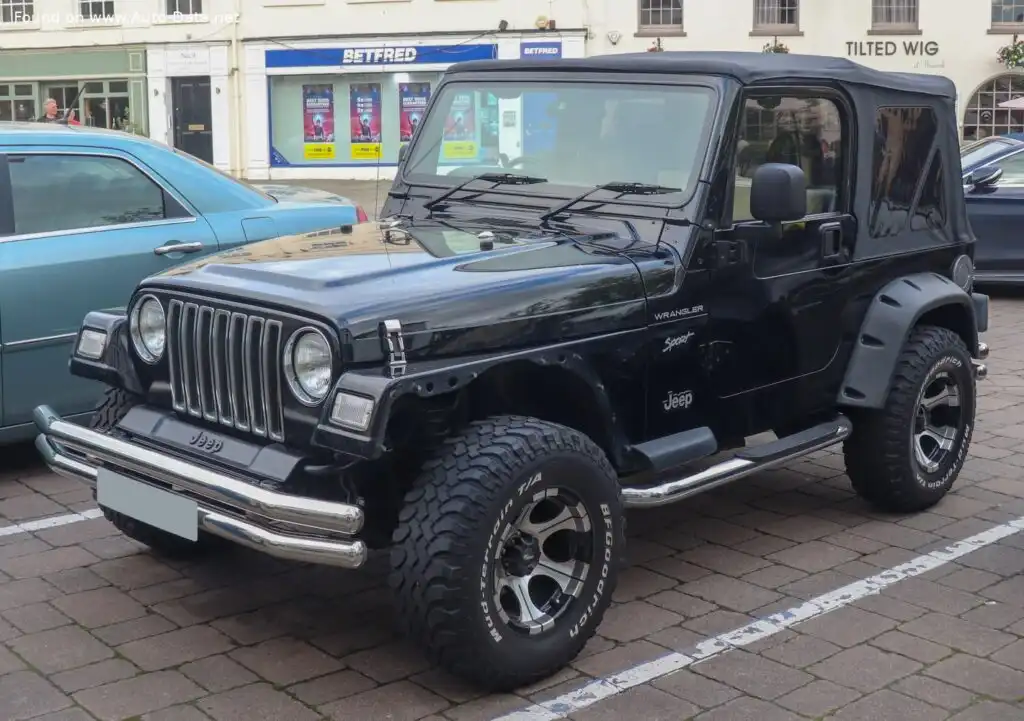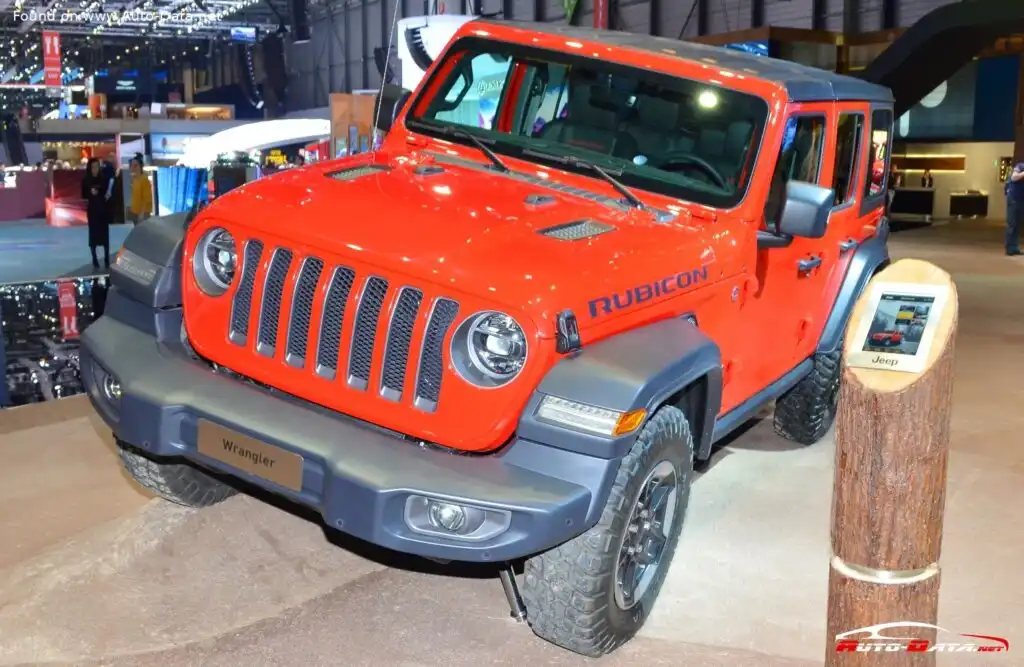
The Jeep Wrangler IV Unlimited (JL) Sahara 2.2 CRDi, produced from August 2018 to December 2020, represents a significant evolution of the iconic Wrangler lineage. Positioned as a mid-range offering within the JL generation, this variant combined a diesel engine with an automatic transmission, catering to buyers seeking a balance of off-road capability, fuel efficiency, and everyday usability. The JL series, succeeding the JK, introduced improvements in on-road refinement, technology, and safety while retaining the Wrangler’s core off-road DNA. This particular model was primarily sold in European and international markets, where diesel engines held a stronger presence than in the United States.
Technical Specifications
| Brand | Jeep |
| Model | Wrangler |
| Generation | Wrangler IV Unlimited (JL) |
| Type | Sahara 2.2 CRDi (200 Hp) 4×4 Automatic |
| Start of production | August, 2018 |
| End of production | December, 2020 |
| Powertrain Architecture | Internal Combustion engine |
| Body type | Off-road vehicle |
| Seats | 5 |
| Doors | 4 |
| Fuel consumption (economy) – urban (NEDC) | 10.3 l/100 km (22.8 US mpg, 27.4 UK mpg, 9.7 km/l) |
| Fuel consumption (economy) – extra urban (NEDC) | 6.5 l/100 km (36.2 US mpg, 43.5 UK mpg, 15.4 km/l) |
| Fuel consumption (economy) – combined (NEDC) | 7.9 l/100 km (29.8 US mpg, 35.8 UK mpg, 12.7 km/l) |
| CO2 emissions (NEDC) | 209 g/km |
| Fuel Type | Diesel |
| Acceleration 0 – 100 km/h | 9.6 sec |
| Acceleration 0 – 62 mph | 9.6 sec |
| Acceleration 0 – 60 mph | 9.1 sec |
| Maximum speed | 180 km/h (111.85 mph) |
| Emission standard | Euro 6d-TEMP |
| Weight-to-power ratio | 10.2 kg/Hp, 97.8 Hp/tonne |
| Weight-to-torque ratio | 4.5 kg/Nm, 220.2 Nm/tonne |
| Power | 200 Hp @ 3500 rpm |
| Power per litre | 93.3 Hp/l |
| Torque | 450 Nm @ 2000 rpm (331.9 lb.-ft. @ 2000 rpm) |
| Engine layout | Front, Longitudinal |
| Engine Model/Code | EBH |
| Engine displacement | 2143 cm3 (130.77 cu. in.) |
| Number of cylinders | 4 |
| Engine configuration | Inline |
| Cylinder Bore | 83 mm (3.27 in.) |
| Piston Stroke | 99 mm (3.9 in.) |
| Compression ratio | 15.5:1 |
| Number of valves per cylinder | 4 |
| Fuel injection system | Diesel Commonrail |
| Engine aspiration | Turbocharger, Intercooler |
| Valvetrain | DOHC |
| Engine oil capacity | 4.73 l (5 US qt | 4.16 UK qt) |
| Coolant | 9.54 l (10.08 US qt | 8.39 UK qt) |
| Kerb Weight | 2044 kg (4506.25 lbs.) |
| Max. weight | 2596 kg (5723.2 lbs.) |
| Max load | 552 kg (1216.95 lbs.) |
| Trunk (boot) space – minimum | 548 l (19.35 cu. ft.) |
| Trunk (boot) space – maximum | 1059 l (37.4 cu. ft.) |
| Fuel tank capacity | 82 l (21.66 US gal | 18.04 UK gal) |
| AdBlue tank | 19 l (5.02 US gal | 4.18 UK gal) |
| Permitted trailer load with brakes (12%) | 2495 kg (5500.53 lbs.) |
| Permitted trailer load without brakes | 750 kg (1653.47 lbs.) |
| Length | 4882 mm (192.2 in.) |
| Width | 1894 mm (74.57 in.) |
| Height | 1838 mm (72.36 in.) |
| Wheelbase | 3008 mm (118.43 in.) |
| Ride height (ground clearance) | 242 mm (9.53 in.) |
| Minimum turning circle | 12.3 m (40.35 ft.) |
| Approach angle | 35.4° |
| Departure angle | 30.7° |
| Ramp-over angle | 20° |
| Wading depth | 760 mm (29.92 in.) |
| Drivetrain Architecture | The Internal combustion engine (ICE) drives the rear wheels permanently, and the front wheels are driven through an electrically or mechanically operated clutch if necessary. |
| Drive wheel | All wheel drive (4×4) |
| Number of gears and type of gearbox | 8 gears, automatic transmission |
| Front suspension | Coil spring, Rigid axle suspension, Transverse stabilizer |
| Rear suspension | Rigid axle suspension, Transverse stabilizer, Coil spring |
| Front brakes | Ventilated discs |
| Rear brakes | Disc |
| Assisting systems | ABS (Anti-lock braking system) |
| Steering type | Cone worm with recirculation balls |
| Power steering | Electric Steering |
| Tires size | 255/70 R18 |
| Wheel rims size | 7.5J x 18 |
Powertrain & Engine Architecture
The heart of the Sahara 2.2 CRDi is the EBH engine, a 2.2-liter inline-four cylinder diesel. This engine utilizes a common-rail direct injection system, delivering fuel at extremely high pressure for optimized combustion. A turbocharger with an intercooler further enhances performance by forcing more air into the cylinders. The engine boasts a high compression ratio of 15.5:1, contributing to its efficiency and torque output. The dual overhead camshafts (DOHC) control four valves per cylinder, optimizing airflow and contributing to the engine’s power delivery. Paired with this engine is an eight-speed automatic transmission, providing smooth gear changes and a wide range of ratios to suit both on-road cruising and off-road crawling. This transmission was a significant upgrade from the five-speed automatic found in earlier Wrangler models.
Driving Characteristics
The 200 horsepower and 450 Nm (331.9 lb-ft) of torque produced by the 2.2 CRDi engine, combined with the eight-speed automatic, resulted in a capable and relatively refined driving experience. While not as quick as the gasoline-powered Wranglers, the diesel offered strong low-end torque, making it well-suited for tackling challenging terrain. The automatic transmission, while smooth, could sometimes feel hesitant during quick acceleration. The gear ratios were optimized for both fuel economy and off-road performance, providing ample power for climbing steep inclines and navigating obstacles. Compared to the six-speed manual transmission available on other Wrangler trims, the automatic prioritized ease of use over driver engagement.
Equipment & Trim Levels
The Sahara trim level, even in its diesel automatic configuration, came well-equipped. Standard features typically included air conditioning, power windows and locks, a touchscreen infotainment system with Apple CarPlay and Android Auto compatibility, and a rearview camera. Interior upholstery was typically cloth, though leather options were available. Optional extras included a premium sound system, navigation system, heated seats, and various off-road packages with features like a winch, rock rails, and upgraded suspension components. The Sahara trim aimed for a balance between comfort and capability, appealing to buyers who wanted a well-equipped Wrangler without the premium price tag of the Rubicon.
Chassis & Braking
The JL Wrangler utilizes a robust body-on-frame construction, providing excellent durability and off-road capability. The Sahara 2.2 CRDi featured coil spring suspension with rigid axles front and rear, along with transverse stabilizer bars to reduce body roll. Braking duties were handled by ventilated discs at the front and solid discs at the rear. The ABS (Anti-lock Braking System) provided enhanced stopping power and control in various conditions. The increased weight of the diesel engine and automatic transmission compared to gasoline-powered, manual transmission Wranglers necessitated a slightly stiffer suspension setup to maintain handling stability.
Market Reception & Comparison
The Jeep Wrangler IV Unlimited (JL) Sahara 2.2 CRDi was generally well-received by automotive critics, particularly in markets where diesel engines were popular. The combination of fuel efficiency, torque, and off-road capability was praised. However, some reviewers noted that the diesel engine was somewhat noisy compared to gasoline alternatives. Compared to the 3.6-liter V6 gasoline engine, the 2.2 CRDi offered better fuel economy but slightly less overall power. The 2.0-liter turbocharged gasoline engine provided a similar level of performance but with a different driving character. Reliability reports have been generally positive, with the 2.2 CRDi engine proving to be a durable and dependable unit.
Legacy
The 2.2 CRDi engine, while not as widely available in the US market, has established a reputation for reliability and longevity in Europe and other regions. The JL Wrangler, as a whole, represents a significant step forward in terms of refinement and technology while remaining true to the Wrangler’s core values. On the used car market, the Sahara 2.2 CRDi holds its value well, particularly among buyers seeking a capable and fuel-efficient off-road vehicle. The eight-speed automatic transmission has also proven to be a reliable unit, contributing to the overall durability of this particular Wrangler variant.