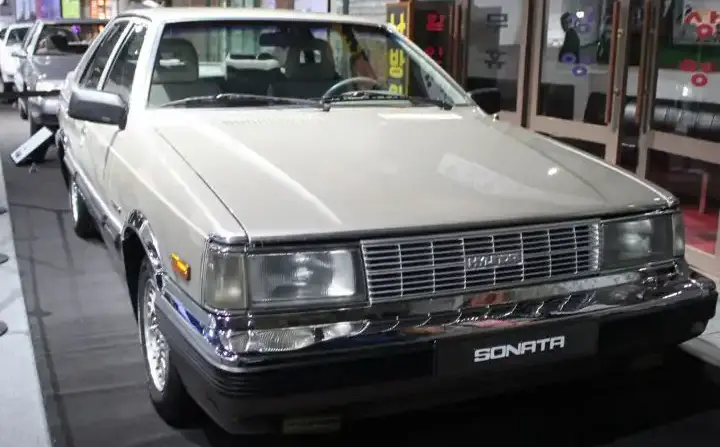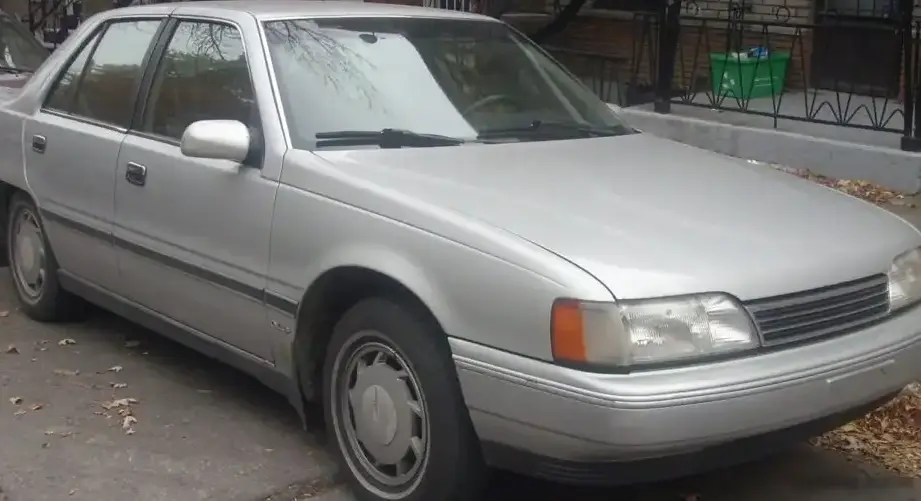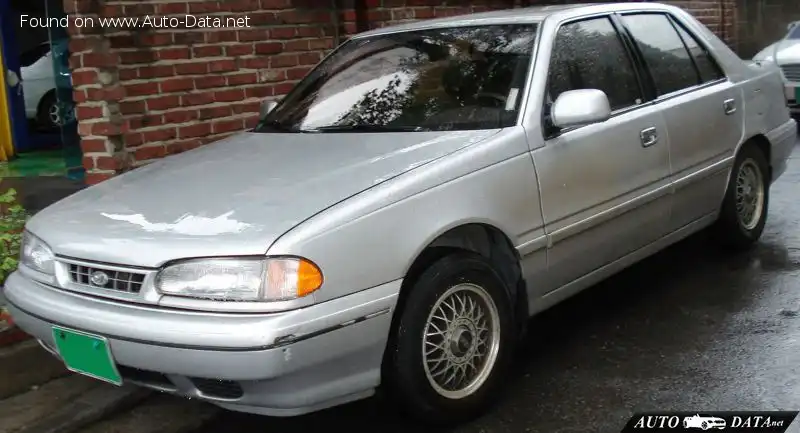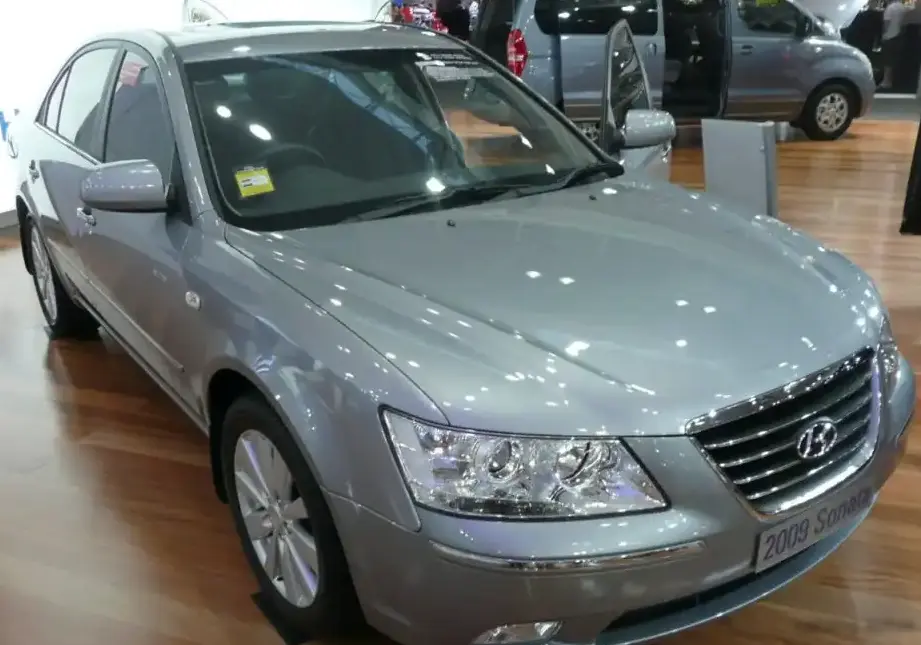
The Hyundai Sonata V (NF facelift), specifically the 2.0-liter (163 horsepower) variant paired with an automatic transmission, represented a significant step forward for Hyundai in the mid-size sedan segment. Produced from 2008 to 2009, this iteration of the NF Sonata aimed to offer a balance of affordability, comfort, and modern features to compete with established Japanese and American rivals in the North American and global markets. This trim level occupied a middle ground within the Sonata V lineup, positioned above the base models but below the more powerful 2.4-liter options.
Technical Specifications
| Brand | Hyundai |
| Model | Sonata |
| Generation | Sonata V (NF, facelift 2008) |
| Type (Engine) | 2.0 (163 Hp) Automatic |
| Start of production | 2008 |
| End of production | 2009 |
| Powertrain Architecture | Internal Combustion engine |
| Body type | Sedan |
| Seats | 5 |
| Doors | 4 |
| Fuel Type | Petrol (Gasoline) |
| Acceleration 0 – 100 km/h | 11.6 sec |
| Acceleration 0 – 62 mph | 11.6 sec |
| Acceleration 0 – 60 mph | 11 sec |
| Maximum speed | 190 km/h (118.06 mph) |
| Weight-to-power ratio | 9 kg/Hp, 110.5 Hp/tonne |
| Weight-to-torque ratio | 7.5 kg/Nm, 133.6 Nm/tonne |
| Power | 163 Hp @ 6200 rpm |
| Power per litre | 81.6 Hp/l |
| Torque | 197 Nm @ 4500 rpm (145.3 lb.-ft. @ 4500 rpm) |
| Engine layout | Front, Transverse |
| Engine Model/Code | Theta II / G4KD |
| Engine displacement | 1998 cm3 (121.93 cu. in.) |
| Number of cylinders | 4 |
| Engine configuration | Inline |
| Cylinder Bore | 86 mm (3.39 in.) |
| Piston Stroke | 86 mm (3.39 in.) |
| Compression ratio | 10.5:1 |
| Number of valves per cylinder | 4 |
| Fuel injection system | Multi-port manifold injection |
| Engine aspiration | Naturally aspirated engine |
| Valvetrain | DOHC, CVVT |
| Engine oil capacity | 3.9 l (4.12 US qt | 3.43 UK qt) |
| Coolant | 6 l (6.34 US qt | 5.28 UK qt) |
| Kerb Weight | 1475 kg (3251.82 lbs) |
| Trunk (boot) space – minimum | 523 l (18.47 cu. ft.) |
| Fuel tank capacity | 70 l (18.49 US gal | 15.4 UK gal) |
| Length | 4800 mm (188.98 in.) |
| Width | 1832 mm (72.13 in.) |
| Height | 1475 mm (58.07 in.) |
| Wheelbase | 2730 mm (107.48 in.) |
| Front track | 1565 mm (61.61 in.) |
| Rear (Back) track | 1550 mm (61.02 in.) |
| Drag coefficient (Cd) | 0.32 |
| Minimum turning circle | 12 m (39.37 ft.) |
| Drivetrain Architecture | The Internal combustion engine (ICE) drives the front wheels of the vehicle. |
| Drive wheel | Front wheel drive |
| Number of gears and type of gearbox | 6 gears, automatic transmission |
| Front suspension | Independent, type McPherson with coil spring and anti-roll bar |
| Rear suspension | Independent multi-link suspension |
| Front brakes | Ventilated discs |
| Rear brakes | Disc |
| Assisting systems | ABS (Anti-lock braking system) |
| Steering type | Steering rack and pinion |
| Tires size | 215/60 R16 |
| Wheel rims size | 16 |
INTRODUCTION
The NF Sonata facelift, launched in 2008, represented a mid-cycle refresh of the fifth-generation Sonata. Hyundai aimed to address criticisms of the original NF model, focusing on improved build quality, enhanced interior materials, and a more refined driving experience. The 2.0-liter automatic variant was a key offering, designed to appeal to buyers seeking a comfortable and economical daily driver. It was positioned as a more accessible entry point into the Sonata range, offering a balance between price and features. The NF platform was a significant departure for Hyundai, moving towards a more European-inspired design and engineering philosophy.
Powertrain & Engine Architecture
At the heart of this Sonata variant lies the Hyundai Theta II 2.0-liter inline-four cylinder engine, designated G4KD. This engine utilizes a cast iron block with an aluminum cylinder head, incorporating Hyundai’s Continuously Variable Valve Timing (CVVT) technology on both intake and exhaust camshafts. This system optimizes valve timing for improved fuel efficiency and power delivery across the rev range. Fuel delivery is managed by a multi-port fuel injection system. The engine produces 163 horsepower at 6200 rpm and 197 Nm (145.3 lb-ft) of torque at 4500 rpm. The engine is transversely mounted in the front of the vehicle. Paired with the engine is a six-speed automatic transmission. This transmission was a significant upgrade from the older four-speed units found in earlier Sonatas, offering smoother shifts and improved fuel economy. The transmission’s gear ratios were tuned for a balance of acceleration and highway cruising efficiency.
Driving Characteristics
The 2.0-liter Sonata automatic delivers a comfortable, if not particularly sporty, driving experience. Acceleration from 0-60 mph takes around 11 seconds, which is adequate for everyday driving but noticeably slower than the 2.4-liter models. The automatic transmission generally shifts smoothly, but can sometimes feel hesitant during quick acceleration maneuvers. The emphasis is on fuel efficiency and ease of use rather than outright performance. The steering is light and precise, making it easy to maneuver in urban environments. The suspension is tuned for comfort, absorbing bumps and imperfections in the road well, but it can exhibit some body roll during cornering. Compared to the manual transmission versions, the automatic sacrifices some responsiveness, but gains in convenience.
Equipment & Trim Levels
The 2.0-liter automatic Sonata typically came standard with features such as air conditioning, power windows and locks, a CD player with MP3 compatibility, and basic safety equipment like dual front airbags and ABS. Higher trim levels offered upgrades such as alloy wheels, a sunroof, upgraded audio systems, and leather upholstery. Optional extras included a navigation system, heated seats, and automatic climate control. Interior materials were generally of good quality for the price point, with a focus on durability and practicality. The dashboard layout was straightforward and user-friendly, with logically placed controls.
Chassis & Braking
The Sonata V utilizes a front-wheel-drive layout with an independent McPherson strut suspension in the front and an independent multi-link suspension in the rear. This suspension setup provides a comfortable ride and decent handling characteristics. The front brakes are ventilated discs, while the rear brakes are solid discs. ABS (Anti-lock Braking System) is standard, enhancing braking performance and stability. The chassis is designed to provide a balance between rigidity and weight reduction. The steering system employs a rack-and-pinion setup for precise steering control.
Market Reception & Comparison
The 2.0-liter Sonata automatic was generally well-received by critics as a practical and affordable mid-size sedan. It was praised for its comfortable ride, spacious interior, and good value for money. However, some reviewers noted its lack of sporty driving dynamics and its relatively slow acceleration compared to competitors. Compared to the 2.4-liter Sonata, the 2.0-liter model offered better fuel economy but less power. Against rivals like the Toyota Camry and Honda Accord, the Sonata offered a more aggressive price point and a longer warranty, but often lagged behind in terms of brand reputation and resale value. Fuel economy was a strong point, typically achieving around 22-23 mpg in city driving and 30-32 mpg on the highway.
Legacy
The Hyundai Sonata V (NF facelift) 2.0-liter automatic played a crucial role in establishing Hyundai as a credible competitor in the mid-size sedan market. While not known for exceptional performance, the powertrain proved to be relatively reliable, with few major issues reported. Today, these Sonatas are readily available on the used car market at very affordable prices. Common maintenance items include timing belt replacement (if applicable, depending on specific engine variations) and regular fluid changes. The Theta II engine, while generally robust, is known to exhibit some oil consumption issues in certain cases. Overall, the 2.0-liter automatic Sonata remains a practical and economical choice for budget-conscious buyers seeking a reliable and comfortable daily driver.