
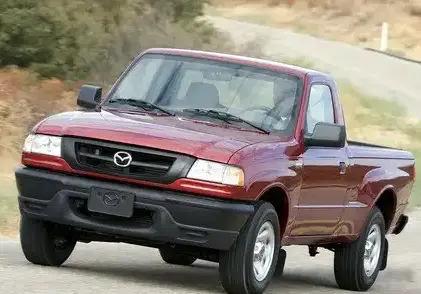
The Mazda B-Series VI, manufactured from 1997 to 2006, marked Mazda’s presence in the competitive mid-size pickup truck segment, primarily targeting North American consumers. This generation, a product of collaboration with Ford – sharing significant components with the Ford Ranger – offered a diverse range of engine and drivetrain configurations. The 4.0 V6 4WD variant, producing 207 horsepower, stood as the top-tier engine option, delivering a compelling blend of power and capability suitable for both demanding work tasks and recreational pursuits. It was positioned above the more economical 2.5L inline-four engine, providing a more robust solution for buyers requiring increased towing and hauling capacity.
Technical Specifications
| Brand | Mazda |
| Model | B-Series |
| Generation | B-Series VI |
| Type (Engine) | 4.0 V6 (207 Hp) 4WD |
| Start of production | 1997 |
| End of production | 2006 |
| Powertrain Architecture | Internal Combustion engine |
| Body type | Pick-up |
| Seats | 4 |
| Doors | 4 |
| Fuel Type | Petrol (Gasoline) |
| Maximum speed | 145 km/h (90.1 mph) |
| Power | 207 Hp @ 5250 rpm |
| Power per litre | 51.9 Hp/l |
| Torque | 322 Nm @ 3000 rpm (237.5 lb.-ft. @ 3000 rpm) |
| Engine layout | Front, Longitudinal |
| Engine displacement | 3992 cm3 (243.61 cu. in.) |
| Number of cylinders | 6 |
| Engine configuration | V-engine |
| Number of valves per cylinder | 2 |
| Fuel injection system | Multi-port manifold injection |
| Engine aspiration | Naturally aspirated engine |
| Fuel tank capacity | 63 l (16.64 US gal | 13.86 UK gal) |
| Length | 5154 mm (202.91 in.) |
| Width | 1763 mm (69.41 in.) |
| Height | 1646 mm (64.8 in.) |
| Wheelbase | 3198 mm (125.91 in.) |
| Front track | 1488 mm (58.58 in.) |
| Rear (Back) track | 1455 mm (57.28 in.) |
| Drivetrain Architecture | The Internal combustion engine (ICE) drives the rear wheels permanently, and the front wheels are driven through an electrically or mechanically operated clutch if necessary. |
| Drive wheel | All wheel drive (4×4) |
| Number of gears and type of gearbox | 5 gears, manual transmission |
| Front suspension | Wishbone |
| Rear suspension | Transverse stabilizer |
| Front brakes | Ventilated discs |
| Rear brakes | Drum |
| Tires size | 225/70 R15 |
| Wheel rims size | 15 |
Powertrain & Engine Architecture
The Mazda B-Series VI 4.0 V6 4WD was powered by the 4.0-liter (3992 cc) Ford Cologne V6 engine. This engine, a 90-degree V6, featured a robust cast iron engine block paired with lighter aluminum cylinder heads. It employed a multi-port fuel injection system, strategically delivering fuel directly to each intake port to optimize both efficiency and power output. The engine was equipped with two valves per cylinder – two intake and two exhaust – controlled by a single overhead camshaft. The engine generated 207 horsepower at 5250 rpm, with peak torque reaching 322 Nm (237.5 lb-ft) at 3000 rpm. The engine’s longitudinal mounting configuration facilitated a rear-wheel-drive bias, with the four-wheel-drive system engaging the front wheels as needed for enhanced traction. A 5-speed manual transmission was standard, providing drivers with precise control over the engine’s powerband. While an automatic transmission was available on other B-Series trims, it was not offered in conjunction with the 4.0L V6 engine.
Driving Characteristics
The 4.0L V6 4WD B-Series delivered a significant performance upgrade compared to the base 2.5L four-cylinder models. Acceleration was noticeably quicker, and the engine provided ample torque for hauling substantial loads or tackling challenging off-road terrain. The 5-speed manual transmission allowed drivers to maintain the engine within its optimal power range, resulting in responsive acceleration. The part-time 4WD system enhanced traction in adverse conditions, making it well-suited for off-road adventures and inclement weather. However, the B-Series wasn’t renowned for its refined handling characteristics; the suspension was tuned to prioritize ride comfort and load-carrying capacity over sporty dynamics. The truck exhibited a degree of body roll during cornering, and the steering felt somewhat less precise compared to more contemporary pickup trucks.
Equipment & Trim Levels
The 4.0 V6 4WD trim generally represented the highest level of standard equipment available on the B-Series. Typical standard features included air conditioning, a basic audio system, and durable cloth upholstery. Power windows and door locks were frequently included, although not always standard equipment. Optional extras could include a premium sound system, upgraded interior trim materials, and a convenient sliding rear window. The interior design was functional and utilitarian, emphasizing durability over luxurious appointments. The dashboard layout was straightforward and intuitive, with clearly labeled controls. The B-Series VI did not offer the same extensive range of customization options or luxury features found in some of its domestic competitors.
Chassis & Braking
The B-Series VI utilized a traditional body-on-frame construction, providing a robust and durable platform for hauling and towing. The front suspension featured an independent wishbone setup, while the rear suspension employed a leaf spring design. This configuration prioritized load-carrying capacity and overall durability. Braking was provided by ventilated discs at the front and drum brakes at the rear. While adequate for most driving scenarios, the braking system wasn’t particularly powerful or sophisticated. The truck was typically equipped with 15-inch wheels and 225/70 R15 tires, striking a balance between ride comfort and traction.
Market Reception & Comparison
The Mazda B-Series VI 4.0 V6 4WD was generally well-received by buyers seeking a capable and affordable mid-size pickup truck. Automotive critics praised the engine’s robust power and torque output, but also noted the truck’s somewhat basic interior and less-than-refined handling. Compared to the mechanically similar Ford Ranger, the B-Series often presented a slightly more attractive price point. The 4.0L V6 engine offered improved fuel economy compared to larger V8 engines found in some competing trucks, but it wasn’t as fuel-efficient as the base 2.5L four-cylinder engine. Overall reliability was generally considered good, although some owners reported occasional issues with the fuel injection system and the cooling system.
Legacy
The Mazda B-Series VI 4.0 V6 4WD has emerged as a popular choice among used truck buyers seeking a dependable and capable work vehicle. The 4.0L V6 engine is well-regarded for its durability and relatively straightforward maintenance requirements. Parts availability remains generally good, owing to the shared components with the Ford Ranger. While not considered a collectible vehicle, well-maintained examples of the 4.0 V6 4WD B-Series continue to command reasonable prices in the used car market. The truck represents a solid and reliable option for those in need of a mid-size pickup for work, recreational activities, or everyday transportation. Its inherent simplicity and robust construction contribute to its enduring appeal.

