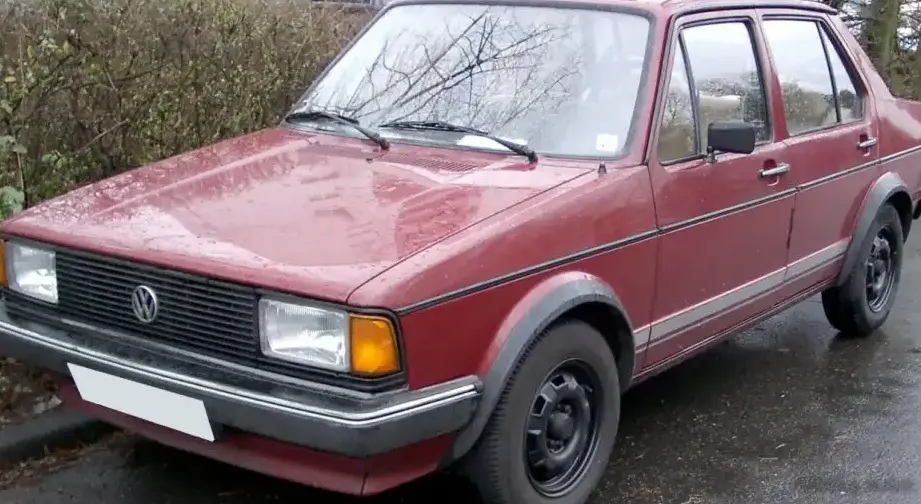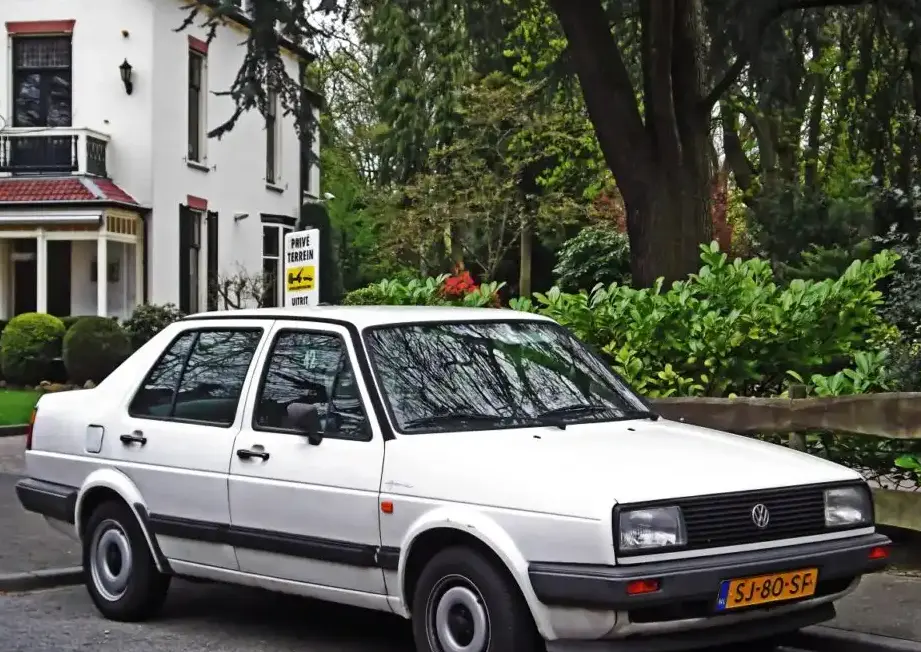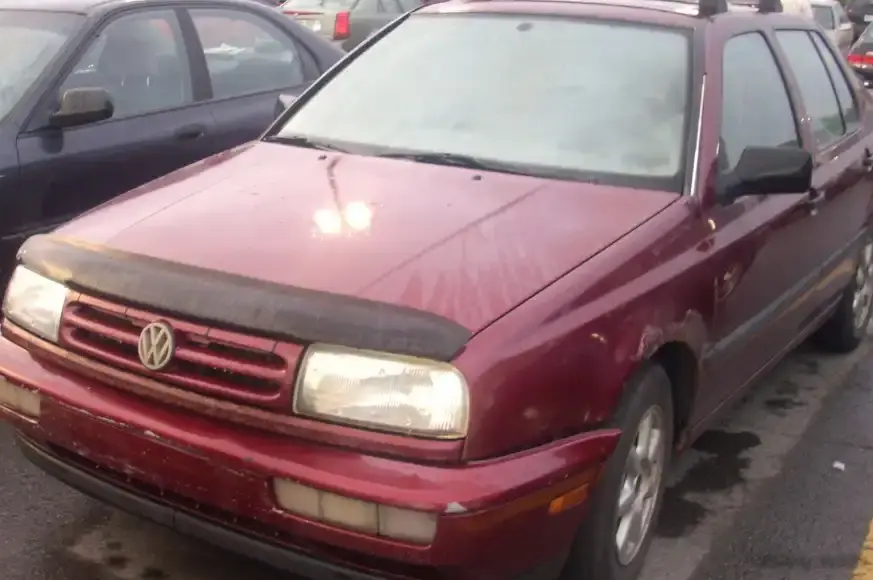
The Volkswagen Jetta III 1.9 SDI, produced between 1995 and 1998, represented an economy-focused variant within the broader Jetta III (Typ 162, 1HX) range. Positioned as the entry-level diesel offering, it catered to buyers prioritizing fuel efficiency and practicality over outright performance. This model occupied a significant niche in the European market, where diesel engines were – and continue to be – highly popular due to favorable taxation and fuel costs. In the United States, the Jetta III was offered with a variety of gasoline engines, but the SDI diesel was not a common sight, making it a relatively rare find today. The Jetta III itself was a significant evolution of the Jetta II, built on the Volkswagen A3 platform shared with the Golf III, Bora, and New Beetle.
Technical Specifications
| Brand | Volkswagen |
| Model | Jetta |
| Generation | Jetta III |
| Type (Engine) | 1.9 SDI (64 Hp) |
| Start of production | 1995 |
| End of production | 1998 |
| Powertrain Architecture | Internal Combustion engine |
| Body type | Sedan |
| Seats | 5 |
| Doors | 4 |
| Fuel consumption (combined) | 4.9 l/100 km (48 US mpg, 57.6 UK mpg, 20.4 km/l) |
| Fuel Type | Diesel |
| Acceleration 0 – 100 km/h | 18.3 sec |
| Acceleration 0 – 62 mph | 18.3 sec |
| Acceleration 0 – 60 mph | 17.4 sec |
| Maximum speed | 156 km/h (96.93 mph) |
| Weight-to-power ratio | 22.3 kg/Hp, 44.9 Hp/tonne |
| Weight-to-torque ratio | 11.4 kg/Nm, 87.7 Nm/tonne |
| Power | 64 Hp @ 4200 rpm |
| Power per litre | 33.8 Hp/l |
| Torque | 125 Nm @ 2200 rpm (92.2 lb.-ft. @ 2200 rpm) |
| Engine layout | Front, Transverse |
| Engine Model/Code | AEY |
| Engine displacement | 1896 cm3 (115.7 cu. in.) |
| Number of cylinders | 4 |
| Engine configuration | Inline |
| Cylinder Bore | 79.5 mm (3.13 in.) |
| Piston Stroke | 95.5 mm (3.76 in.) |
| Compression ratio | 19.5:1 |
| Number of valves per cylinder | 2 |
| Fuel injection system | Direct injection |
| Engine aspiration | Naturally aspirated engine |
| Valvetrain | OHC |
| Engine oil capacity | 4.3 l (4.54 US qt | 3.78 UK qt) |
| Kerb Weight | 1425 kg (3141.59 lbs.) |
| Max. weight | 1630 kg (3593.53 lbs.) |
| Max load | 205 kg (451.95 lbs.) |
| Trunk (boot) space – minimum | 425 l (15.01 cu. ft.) |
| Trunk (boot) space – maximum | 885 l (31.25 cu. ft.) |
| Fuel tank capacity | 55 l (14.53 US gal | 12.1 UK gal) |
| Length | 4980 mm (196.06 in.) |
| Width | 1695 mm (66.73 in.) |
| Height | 1695 mm (66.73 in.) |
| Wheelbase | 2475 mm (97.44 in.) |
| Front track | 1464 mm (57.64 in.) |
| Rear (Back) track | 1448 mm (57.01 in.) |
| Drivetrain Architecture | The Internal combustion engine (ICE) drives the front wheels of the vehicle. |
| Drive wheel | Front wheel drive |
| Number of gears and type of gearbox | 5 gears, manual transmission |
| Front suspension | Wishbone |
| Rear suspension | Suspension with traction connecting levers |
| Front brakes | Disc |
| Rear brakes | Drum |
| Assisting systems | ABS (Anti-lock braking system) |
| Steering type | Steering rack and pinion |
| Power steering | Hydraulic Steering |
| Tires size | 185/60 R14 |
| Wheel rims size | 6J x 14 |
Powertrain & Engine Architecture
The heart of the Jetta III 1.9 SDI was the AEY engine code, a 1.9-liter inline-four cylinder diesel. This engine utilized a direct injection (DI) system, a relatively advanced technology for its time, which injected fuel directly into the combustion chamber, improving efficiency and reducing emissions compared to indirect injection systems. The SDI (Silent Diesel Injection) system was designed to reduce the characteristic diesel clatter, though it wasn’t entirely successful in eliminating it. The engine featured a single overhead camshaft (OHC) operating two valves per cylinder. The 19.5:1 compression ratio was typical for a diesel engine, contributing to its thermal efficiency. The 5-speed manual transmission was the standard offering, providing a relatively long-legged gearing setup optimized for fuel economy. While an automatic transmission was available on other Jetta III models, it was not offered with the 1.9 SDI engine.
Driving Characteristics
The 1.9 SDI-powered Jetta III was not known for its blistering acceleration. With only 64 horsepower, the 0-60 mph time hovered around 17-18 seconds. However, the engine’s 125 Nm (92 lb-ft) of torque, available from a low 2200 rpm, provided adequate pulling power for everyday driving. The long gearing of the 5-speed manual transmission meant that the engine rarely felt strained at highway speeds, and fuel economy was excellent. Compared to the more powerful 1.8-liter gasoline engines or the later 1.9 TDI models, the SDI felt significantly slower, but it offered a noticeable advantage in fuel efficiency. The driving experience was characterized by a utilitarian focus – comfortable enough for daily commutes, but not particularly engaging or sporty.
Equipment & Trim Levels
The 1.9 SDI Jetta III typically represented a base trim level. Standard equipment generally included power steering, central locking, and basic cloth upholstery. Air conditioning, power windows, and alloy wheels were often optional extras. Interior appointments were functional and durable, prioritizing practicality over luxury. The dashboard layout was typical of VW’s designs of the era, with a clear instrument cluster and logically arranged controls. Trim levels varied slightly depending on the market, but the SDI model consistently offered a no-frills approach to motoring.
Chassis & Braking
The Jetta III utilized a front-wheel-drive layout with a relatively simple suspension setup. The front suspension featured independent wishbones, while the rear employed a torsion beam axle. This configuration provided a reasonable balance between ride comfort and handling. Braking duties were handled by front disc brakes and rear drum brakes. ABS (Anti-lock Braking System) was often included as standard equipment, enhancing safety. The chassis was designed to accommodate the relatively low weight of the SDI engine, resulting in predictable handling characteristics.
Market Reception & Comparison
The Jetta III 1.9 SDI was well-received in markets where diesel fuel was affordable and fuel economy was a primary concern. Critics praised its fuel efficiency and reliability, but often noted its lack of performance. Compared to the gasoline-powered Jettas, the SDI offered significantly better fuel economy but considerably slower acceleration. The later introduction of the 1.9 TDI engine, with its turbocharging and higher power output, quickly overshadowed the SDI in terms of desirability, despite the TDI being more complex and potentially more expensive to maintain. The SDI remained a popular choice for fleet operators and budget-conscious buyers.
Legacy
The 1.9 SDI engine, while superseded by the TDI, proved to be remarkably durable. Many examples continue to operate reliably today, a testament to its robust construction and relatively simple design. In the used car market, the Jetta III 1.9 SDI is often sought after by those looking for an affordable, fuel-efficient, and mechanically straightforward vehicle. Parts availability remains good, and the engine’s simplicity makes it relatively easy to maintain for those with basic mechanical skills. While not a performance icon, the Jetta III 1.9 SDI represents a practical and enduring example of 1990s Volkswagen engineering.