
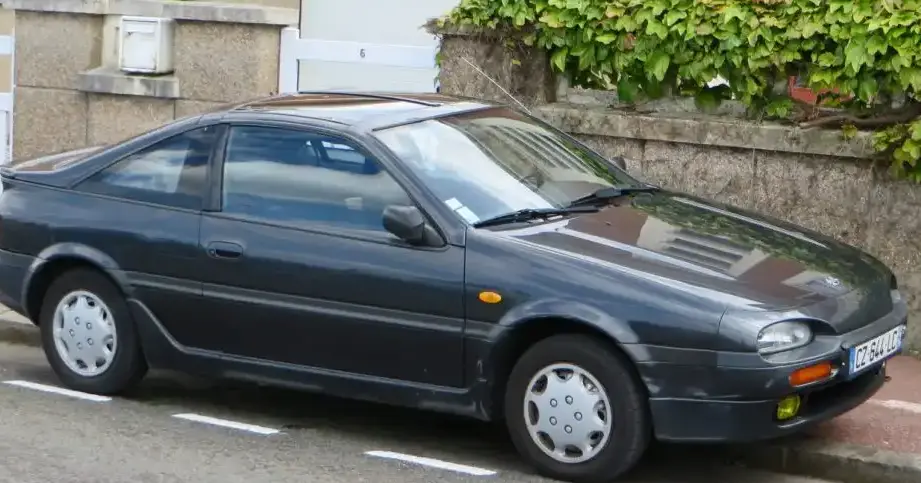
The Nissan 100 NX (B13) 1.6 SR, produced from 1993 to 1994, represented a key variant within the second generation of Nissan’s compact coupe. Positioned as a sporty, yet accessible option, the 1.6 SR offered a balance between performance and affordability within the 100 NX lineup. The B13 chassis, shared with the Nissan Sentra/Sunny, aimed to provide a fun-to-drive experience in a relatively small and lightweight package, primarily targeted towards younger buyers and those seeking a stylish, economical coupe. This model was primarily sold in European and Japanese markets, with limited availability in the United States.
Technical Specifications
| Brand | Nissan |
| Model | 100 NX |
| Generation | 100 NX (B13) |
| Type (Engine) | 1.6 SR (102 Hp) |
| Start of production | 1993 |
| End of production | 1994 |
| Powertrain Architecture | Internal Combustion engine |
| Body type | Coupe |
| Seats | 4 |
| Doors | 2 |
| Fuel consumption (combined) | 6.9 l/100 km |
| Fuel consumption (US mpg) | 34.1 US mpg |
| Fuel consumption (UK mpg) | 40.9 UK mpg |
| Fuel consumption (km/l) | 14.5 km/l |
| Fuel Type | Petrol (Gasoline) |
| Acceleration 0 – 100 km/h | 10.4 sec |
| Acceleration 0 – 62 mph | 10.4 sec |
| Acceleration 0 – 60 mph | 9.9 sec |
| Maximum speed | 190 km/h (118.06 mph) |
| Weight-to-power ratio | 10.5 kg/Hp |
| Weight-to-torque ratio | 7.8 kg/Nm |
| Power | 102 Hp @ 6000 rpm |
| Power per litre | 63.9 Hp/l |
| Torque | 136 Nm @ 4000 rpm (100.31 lb.-ft. @ 4000 rpm) |
| Engine layout | Front, Transverse |
| Engine Model/Code | GA16DE |
| Engine displacement | 1597 cm3 (97.45 cu. in.) |
| Number of cylinders | 4 |
| Engine configuration | Inline |
| Cylinder Bore | 76 mm (2.99 in.) |
| Piston Stroke | 88 mm (3.46 in.) |
| Compression ratio | 10:1 |
| Number of valves per cylinder | 4 |
| Fuel injection system | Multi-port manifold injection |
| Engine aspiration | Naturally aspirated engine |
| Valvetrain | DOHC |
| Engine oil capacity | 3.2 l (3.38 US qt | 2.82 UK qt) |
| Coolant capacity | 5.9 l (6.23 US qt | 5.19 UK qt) |
| Kerb Weight | 1067 kg (2352.33 lbs.) |
| Max. weight | 1495 kg (3295.91 lbs.) |
| Max load | 428 kg (943.58 lbs.) |
| Trunk (boot) space – minimum | 330 l (11.65 cu. ft.) |
| Fuel tank capacity | 50 l (13.21 US gal | 11 UK gal) |
| Length | 4135 mm (162.8 in.) |
| Width | 1680 mm (66.14 in.) |
| Height | 1315 mm (51.77 in.) |
| Wheelbase | 2430 mm (95.67 in.) |
| Front track | 1435 mm (56.5 in.) |
| Rear track | 1415 mm (55.71 in.) |
| Drivetrain Architecture | Front wheel drive |
| Number of gears | 5 |
| Gearbox type | Manual transmission |
| Front suspension | Wishbone |
| Rear suspension | Spring Strut |
| Front brakes | Ventilated discs |
| Rear brakes | Drum |
| Assisting systems | ABS (Anti-lock braking system) |
| Steering type | Steering rack and pinion |
| Power steering | Hydraulic Steering |
| Tires size | 175/65 R14 |
INTRODUCTION
The Nissan 100 NX 1.6 SR, launched in 1993, was a significant offering in Nissan’s European and Japanese lineup. Built on the B13 platform, it represented a move towards a more youthful and style-conscious market. The 100 NX aimed to blend sporty aesthetics with practical everyday usability. The “SR” designation indicated a mid-range trim level, offering a step up in performance and features compared to the base models, but remaining more accessible than the higher-spec variants. Its two-door coupe body style and relatively compact dimensions made it a popular choice for those seeking a distinctive and nimble vehicle.
Powertrain & Engine Architecture
At the heart of the 1.6 SR was the GA16DE engine, a 1.6-liter inline-four cylinder powerplant. This engine was a staple in Nissan’s offerings during the early 1990s, known for its reliability and reasonable performance. The GA16DE featured a double overhead camshaft (DOHC) valvetrain, operating 16 valves (four per cylinder). Fuel delivery was managed by a multi-port fuel injection system, contributing to improved efficiency and responsiveness. The engine produced 102 horsepower at 6000 rpm and 136 Nm (100.31 lb-ft) of torque at 4000 rpm. The engine’s transverse mounting and front-wheel-drive configuration were typical for vehicles in this class. The 1.6 SR was exclusively offered with a 5-speed manual transmission, providing drivers with direct control over the engine’s power. This transmission was chosen to enhance the sporty driving experience, complementing the engine’s capabilities.
Driving Characteristics
The 100 NX 1.6 SR offered a reasonably engaging driving experience, particularly for its class and price point. While not a high-performance machine, the 102 hp engine and 5-speed manual transmission provided adequate acceleration for everyday driving. The 0-60 mph sprint took approximately 9.9 seconds, and it could reach a top speed of around 118 mph. The relatively lightweight construction of the vehicle – around 2352 lbs – contributed to its nimble handling. The gear ratios were tuned to provide a balance between acceleration and fuel economy. Compared to the base models with smaller engines, the 1.6 SR offered noticeably improved responsiveness. However, it lacked the outright performance of potential higher-spec variants that were available in some markets. The manual transmission allowed for precise gear selection, enhancing driver involvement.
Equipment & Trim Levels
The 1.6 SR trim level offered a step up in features compared to the base 100 NX models. Standard equipment typically included power steering, central locking, electric windows, and an upgraded interior trim. The interior featured cloth upholstery, and the dashboard layout was functional and driver-focused. Optional extras available for the 1.6 SR included alloy wheels, a sunroof, and a more advanced audio system. The SR trim also often included body-colored bumpers and side moldings, enhancing its sporty appearance. The overall interior ambiance was geared towards practicality and affordability, rather than outright luxury.
Chassis & Braking
The 100 NX 1.6 SR utilized a front independent suspension with wishbone configuration, providing a comfortable ride and decent handling characteristics. The rear suspension employed a spring strut setup. Braking duties were handled by ventilated discs on the front wheels and drum brakes on the rear. Anti-lock Braking System (ABS) was included as standard, enhancing safety and control during emergency braking situations. The steering system was a rack and pinion type with hydraulic power assistance, providing precise and responsive steering feel. The tires were typically 175/65 R14, offering a good balance between grip and ride comfort.
Market Reception & Comparison
The Nissan 100 NX 1.6 SR was generally well-received by automotive critics as an affordable and stylish coupe. It was praised for its nimble handling, decent performance, and relatively low running costs. However, some critics noted that the interior was somewhat basic and lacked the refinement of some competitors. Compared to other trims in the 100 NX lineup, the 1.6 SR offered a sweet spot between price and performance. It was more engaging to drive than the base models, but more affordable than the higher-spec variants. Fuel economy was a strong point, averaging around 34.1 US mpg in combined driving conditions. Reliability was generally good, although routine maintenance was essential to ensure long-term durability.
Legacy
The Nissan 100 NX 1.6 SR has developed a modest following among enthusiasts, particularly in Europe and Japan. The GA16DE engine is known for its robustness and relatively simple maintenance requirements. While not a highly collectible vehicle, well-maintained examples are becoming increasingly sought after. The 100 NX 1.6 SR represents a snapshot of early 1990s automotive design and engineering, offering a blend of style, affordability, and driving enjoyment. In the used car market today, these vehicles are often found as affordable projects or as a nostalgic reminder of a bygone era of compact coupes.
