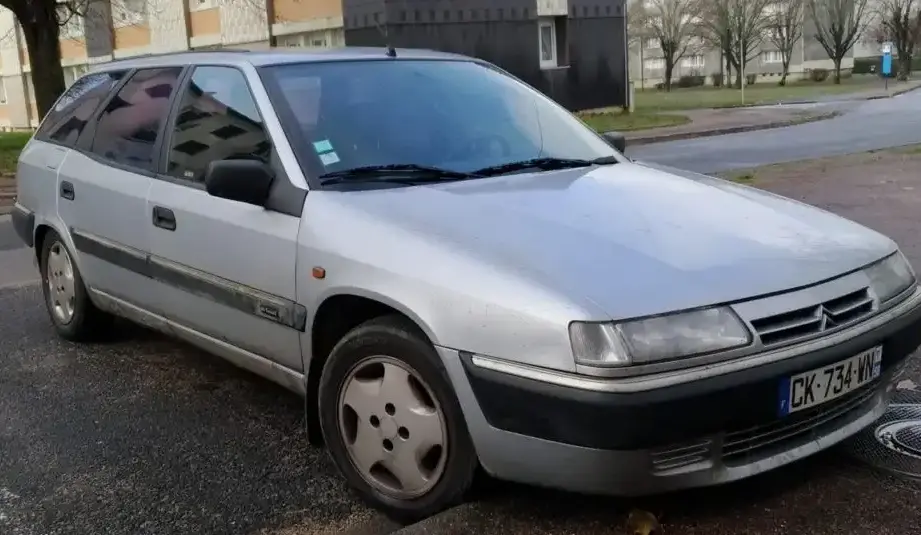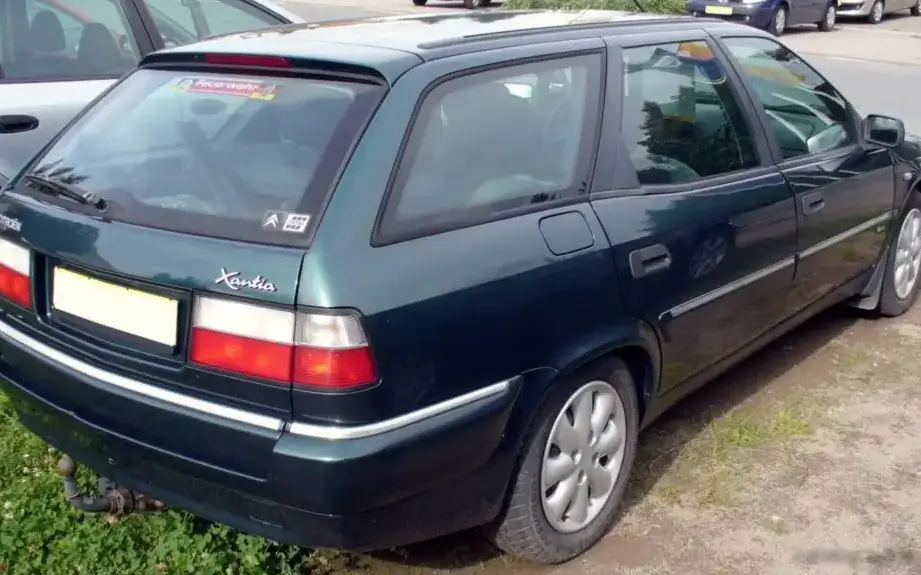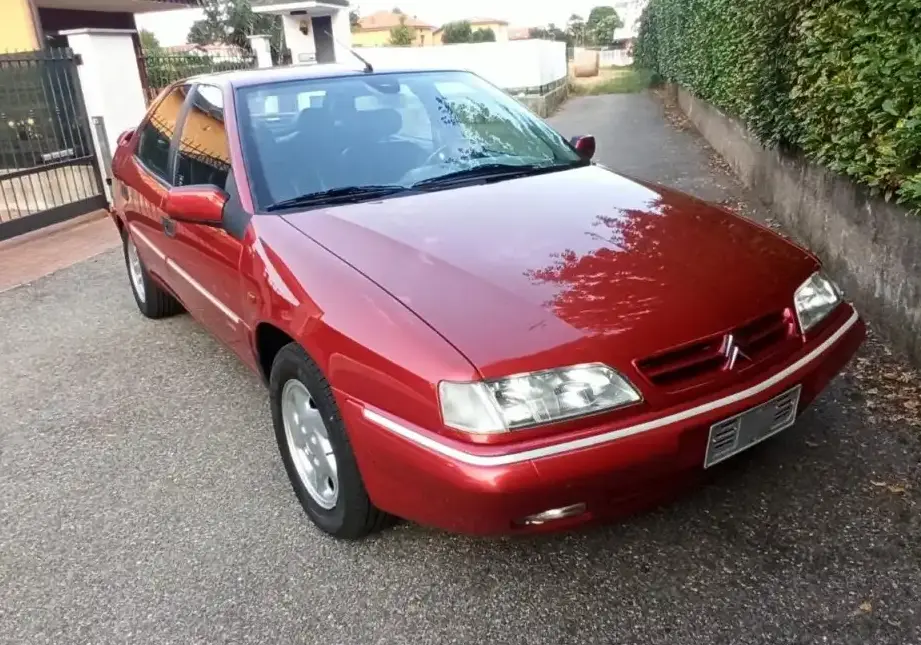
The Citroen Xantia (X2) 1.9 SD, produced between 1998 and 2001, represented an entry-level diesel offering within the second generation Xantia range. Positioned as a practical and economical family hatchback, it catered to buyers prioritizing fuel efficiency and affordability over outright performance. The Xantia (X2) itself was a significant evolution of the original Xantia, building upon the innovative hydropneumatic suspension system and distinctive styling that characterized the model. This 1.9 SD variant, with its 75 horsepower output, served as a workhorse for many European drivers, particularly in markets where diesel fuel was favored.
Technical Specifications
| Brand | Citroen |
| Model | Xantia |
| Generation | Xantia (X2) |
| Type (Engine) | 1.9 SD (75 Hp) |
| Start of production | 1998 |
| End of production | 2001 |
| Powertrain Architecture | Internal Combustion engine |
| Body type | Hatchback |
| Seats | 5 |
| Doors | 4 |
| Fuel consumption (urban) | 9.1 l/100 km (25.8 US mpg, 31 UK mpg, 11 km/l) |
| Fuel consumption (extra urban) | 5.6 l/100 km (42 US mpg, 50.4 UK mpg, 17.9 km/l) |
| Fuel consumption (combined) | 6.9 l/100 km (34.1 US mpg, 40.9 UK mpg, 14.5 km/l) |
| CO2 emissions | 179 g/km |
| Fuel Type | Diesel |
| Acceleration 0 – 100 km/h | 17.6 sec |
| Acceleration 0 – 62 mph | 17.6 sec |
| Acceleration 0 – 60 mph | 16.7 sec |
| Maximum speed | 165 km/h (102.53 mph) |
| Weight-to-power ratio | 17.3 kg/Hp, 57.6 Hp/tonne |
| Weight-to-torque ratio | 9.6 kg/Nm, 103.8 Nm/tonne |
| Power | 75 Hp @ 4600 rpm |
| Power per litre | 39.4 Hp/l |
| Torque | 135 Nm @ 2250 rpm (99.57 lb.-ft. @ 2250 rpm) |
| Engine layout | Front, Transverse |
| Engine Model/Code | DHW XUD9SD |
| Engine displacement | 1905 cm3 (116.25 cu. in.) |
| Number of cylinders | 4 |
| Engine configuration | Inline |
| Cylinder Bore | 83 mm (3.27 in.) |
| Piston Stroke | 88 mm (3.46 in.) |
| Compression ratio | 21.8:1 |
| Number of valves per cylinder | 2 |
| Fuel injection system | Precombustion chamber injection |
| Engine aspiration | Turbocharger |
| Valvetrain | OHC |
| Engine oil capacity | 5 l (5.28 US qt | 4.4 UK qt) |
| Coolant | 7.5 l (7.93 US qt | 6.6 UK qt) |
| Kerb Weight | 1301 kg (2868.21 lbs.) |
| Max. weight | 1820 kg (4012.41 lbs.) |
| Max load | 519 kg (1144.2 lbs.) |
| Trunk (boot) space – minimum | 480 l (16.95 cu. ft.) |
| Trunk (boot) space – maximum | 878 l (31.01 cu. ft.) |
| Fuel tank capacity | 65 l (17.17 US gal | 14.3 UK gal) |
| Max. roof load | 75 kg (165.35 lbs.) |
| Permitted trailer load with brakes (12%) | 1200 kg (2645.55 lbs.) |
| Permitted trailer load without brakes | 685 kg (1510.17 lbs.) |
| Permitted towbar download | 85 kg (187.39 lbs.) |
| Length | 4524 mm (178.11 in.) |
| Width | 1755 mm (69.09 in.) |
| Width including mirrors | 1980 mm (77.95 in.) |
| Height | 1410 mm (55.51 in.) |
| Wheelbase | 2740 mm (107.87 in.) |
| Front track | 1502 mm (59.13 in.) |
| Rear (Back) track | 1454 mm (57.24 in.) |
| Front overhang | 983 mm (38.7 in.) |
| Rear overhang | 801 mm (31.54 in.) |
| Minimum turning circle | 10.8 m (35.43 ft.) |
| Drivetrain | Front wheel drive |
| Number of gears and type of gearbox | 5 gears, manual transmission |
| Front suspension | Independent type McPherson, Wishbone |
| Rear suspension | Hydro-pneumatic element, Trailing arm |
| Front brakes | Ventilated discs |
| Rear brakes | Disc |
| Assisting systems | ABS (Anti-lock braking system) |
| Steering type | Steering rack and pinion |
| Power steering | Hydraulic Steering |
| Tires size | 185/65 R15 |
Powertrain & Engine Architecture
The heart of the Xantia 1.9 SD was the DHW XUD9SD engine, a 1.9-liter inline-four cylinder diesel. This engine belonged to the well-established XUD family of diesel engines developed by Peugeot-Citroen, known for their durability and fuel efficiency. The ‘SD’ designation indicated a turbocharged version, boosting power output to 75 horsepower. The engine utilized a precombustion chamber injection system, a common technology for diesel engines of that era, which involved injecting fuel into a small pre-chamber before the main combustion chamber to improve mixing and combustion efficiency. The single overhead camshaft (OHC) operated two valves per cylinder. The engine was transversely mounted in the front of the vehicle, driving the front wheels. The Xantia 1.9 SD was typically paired with a five-speed manual transmission, although an automatic transmission was also available, albeit less common.
Driving Characteristics
The 1.9 SD offered modest performance, with a 0-60 mph time of around 16.7 seconds and a top speed of 102.53 mph. The turbocharger helped to mitigate some of the inherent lag associated with diesel engines, providing a usable boost in power at higher engine speeds. However, compared to the more powerful petrol variants of the Xantia, such as the 2.0 16V or the V6 models, the 1.9 SD felt significantly slower. The five-speed manual transmission allowed drivers to keep the engine in its optimal power band, but the relatively long gearing emphasized fuel economy over acceleration. The hydropneumatic suspension, a Citroen hallmark, provided a remarkably comfortable ride, absorbing bumps and imperfections in the road surface with ease. This was a key characteristic of the Xantia, regardless of engine choice.
Equipment & Trim Levels
The Xantia 1.9 SD typically came with a reasonable level of standard equipment, including central locking, power steering, and an adjustable steering column. Interior upholstery was generally cloth, with a functional and durable design. Optional extras included air conditioning, electric windows, and a sunroof. Trim levels varied depending on the market, but generally, the 1.9 SD represented the entry-level diesel offering, positioned below the more powerful 2.0 HDi models. The dashboard layout was typical of Citroens of the period, with a focus on ergonomics and ease of use.
Chassis & Braking
The Xantia’s chassis featured independent front suspension with McPherson struts and wishbones, providing good handling and stability. The rear suspension utilized Citroen’s innovative hydropneumatic system, offering self-leveling and exceptional ride comfort. Brakes were ventilated discs at the front and discs at the rear, providing adequate stopping power for the vehicle’s weight and performance. Anti-lock braking system (ABS) was standard, enhancing safety in emergency braking situations.
Market Reception & Comparison
The Xantia 1.9 SD was well-received as a practical and economical family car. Critics praised its comfortable ride, spacious interior, and fuel efficiency. However, its relatively low power output was often noted as a drawback, particularly when compared to the more powerful petrol alternatives. Compared to the 2.0 HDi diesel, the 1.9 SD offered lower running costs but significantly less performance. The 1.9 SD appealed to buyers who prioritized fuel economy and reliability over outright speed and driving excitement.
Legacy
The Xantia 1.9 SD, while not the most exciting variant in the range, proved to be a durable and reliable workhorse. The XUD9SD engine is known for its longevity, and well-maintained examples can still be found on the road today. In the used car market, the 1.9 SD represents an affordable entry point into Citroen ownership, offering a unique blend of comfort, practicality, and fuel efficiency. Its hydropneumatic suspension remains a defining feature, providing a driving experience that is unlike anything else in its class. The Xantia, in general, is remembered as a stylish and innovative car that pushed the boundaries of automotive technology in the 1990s.