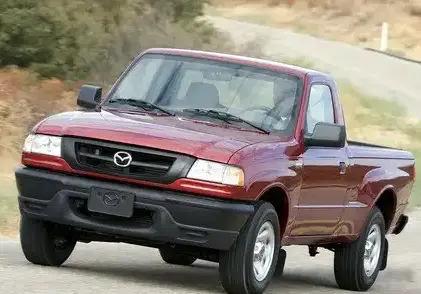
The Mazda B-Series VII, produced from 2006 onwards, represented Mazda’s continued partnership with Ford in the compact and mid-size pickup truck segment. This generation, largely a rebadging of the Ford Ranger, offered a range of engine and drivetrain options to cater to diverse needs. The 4.0 V6 4WD variant, generating 207 horsepower, occupied a position as the top-tier engine choice within the B-Series VII lineup, aimed at buyers requiring substantial towing capacity and all-weather capability. It was primarily sold in North America, where the demand for such trucks remained strong.
Technical Specifications
| Brand | Mazda |
| Model | B-Series |
| Generation | B-Series VII |
| Type (Engine) | 4.0 V6 4WD (207 Hp) |
| Start of production | 2006 |
| Powertrain Architecture | Internal Combustion engine |
| Body type | Pick-up |
| Seats | 4 |
| Doors | 4 |
| Fuel Type | Petrol (Gasoline) |
| Emission standard | Euro 4 |
| Power | 207 Hp @ 5250 rpm |
| Power per litre | 51.9 Hp/l |
| Torque | 322 Nm @ 3000 rpm |
| Torque (lb-ft) | 237.5 lb.-ft. @ 3000 rpm |
| Engine layout | Front, Longitudinal |
| Engine displacement | 3992 cm3 |
| Engine displacement (cu. in.) | 243.61 cu. in. |
| Number of cylinders | 6 |
| Engine configuration | V-engine |
| Number of valves per cylinder | 2 |
| Fuel injection system | Multi-port manifold injection |
| Engine aspiration | Naturally aspirated engine |
| Fuel tank capacity | 63 l |
| Fuel tank capacity (US gal) | 16.64 US gal |
| Fuel tank capacity (UK gal) | 13.86 UK gal |
| Length | 5154 mm |
| Length (in.) | 202.91 in. |
| Width | 1786 mm |
| Width (in.) | 70.31 in. |
| Height | 1715 mm |
| Height (in.) | 67.52 in. |
| Wheelbase | 3198 mm |
| Wheelbase (in.) | 125.91 in. |
| Front track | 1488 mm |
| Front track (in.) | 58.58 in. |
| Rear track | 1455 mm |
| Rear track (in.) | 57.28 in. |
| Drive wheel | All wheel drive (4×4) |
| Number of gears | 5 |
| Gearbox type | Manual transmission |
| Front brakes | Ventilated discs |
| Rear brakes | Drum |
| Tires size | 225/70 R16 |
| Wheel rims size | 16 |
Powertrain & Engine Architecture
The heart of the B-Series VII 4.0 V6 4WD was the 4.0-liter (3992 cc) Cologne V6 engine. This engine, a long-running design originating from Ford of Europe, was known for its robust construction and relatively simple maintenance requirements. The engine utilized a cast iron block and aluminum cylinder heads, featuring a single overhead camshaft (SOHC) design with two valves per cylinder. Fuel delivery was handled by a multi-port fuel injection system, providing adequate atomization for efficient combustion. The 4.0L V6 produced 207 horsepower at 5250 rpm and 237.5 lb-ft of torque at 3000 rpm. This torque output was particularly beneficial for towing and hauling. The engine was mounted longitudinally in the chassis, and power was transmitted to all four wheels through a five-speed manual transmission and a part-time four-wheel-drive system. The 4×4 system typically offered 2H (two-wheel drive high range), 4H (four-wheel drive high range), and 4L (four-wheel drive low range) settings, selectable via a rotary dial or electronic switch.
Driving Characteristics
The 4.0 V6 4WD B-Series VII offered a noticeable step up in performance compared to the lower-displacement engine options. While not a sports truck, the V6 provided sufficient power for everyday driving, highway cruising, and moderate towing. The five-speed manual transmission allowed for reasonable control over the engine’s powerband, although the gear ratios were geared more towards torque delivery than outright acceleration. The 4WD system provided enhanced traction in slippery conditions, making it a capable vehicle for off-road use and inclement weather. Compared to the automatic transmission equipped models, the manual offered a more engaging driving experience and slightly improved fuel economy. However, the automatic was favored by many buyers for its convenience, especially in urban environments.
Equipment & Trim Levels
The B-Series VII 4.0 V6 4WD was typically offered in a single, well-equipped trim level. Standard features generally included air conditioning, a basic audio system (often with a CD player), power windows and locks, and a tilt steering wheel. Depending on the year and regional market, options could include upgraded audio systems, alloy wheels, a sliding rear window, and a towing package. Interior upholstery was typically cloth, with vinyl or leather options available as upgrades. The dashboard layout was functional and straightforward, prioritizing practicality over luxury. The interior space was comparable to other mid-size pickups of the era, offering adequate room for passengers and cargo.
Chassis & Braking
The B-Series VII utilized a body-on-frame construction, providing a robust and durable platform. The front suspension consisted of independent double wishbones with coil springs and stabilizer bar, while the rear suspension employed leaf springs. This setup prioritized load-carrying capacity and durability over refined ride quality. Braking duties were handled by ventilated discs at the front and drum brakes at the rear. The braking system was adequate for typical use, but lacked the stopping power of more modern disc brake setups. The 16-inch wheels were typically fitted with 225/70 R16 tires, providing a balance of on-road comfort and off-road capability.
Market Reception & Comparison
The Mazda B-Series VII 4.0 V6 4WD was generally well-received by buyers seeking a capable and reliable pickup truck. Critics praised its robust engine, ample torque, and available four-wheel-drive system. However, some reviewers noted that the interior was somewhat basic compared to competitors, and the ride quality could be harsh on rough roads. Compared to the smaller-engined B-Series models, the 4.0 V6 offered a significant performance advantage, but at the cost of slightly reduced fuel economy. Against competitors like the Toyota Tacoma and Nissan Frontier, the B-Series VII offered a more affordable price point, but lacked some of the refinement and features of those models.
Legacy
The Mazda B-Series VII 4.0 V6 4WD has proven to be a relatively reliable vehicle, with many examples still on the road today. The 4.0-liter V6 engine is known for its durability, although regular maintenance is essential to prevent issues such as oil leaks and timing chain wear. The manual transmission is also generally considered to be robust. In the used car market, these trucks are often sought after by buyers looking for an affordable and capable work truck or off-road vehicle. While not a collector’s item, well-maintained examples command a reasonable price, reflecting their enduring practicality and reputation for reliability. The B-Series VII represents a final chapter in Mazda’s long history of producing pickup trucks, and the 4.0 V6 4WD variant stands out as a particularly capable and well-rounded offering.