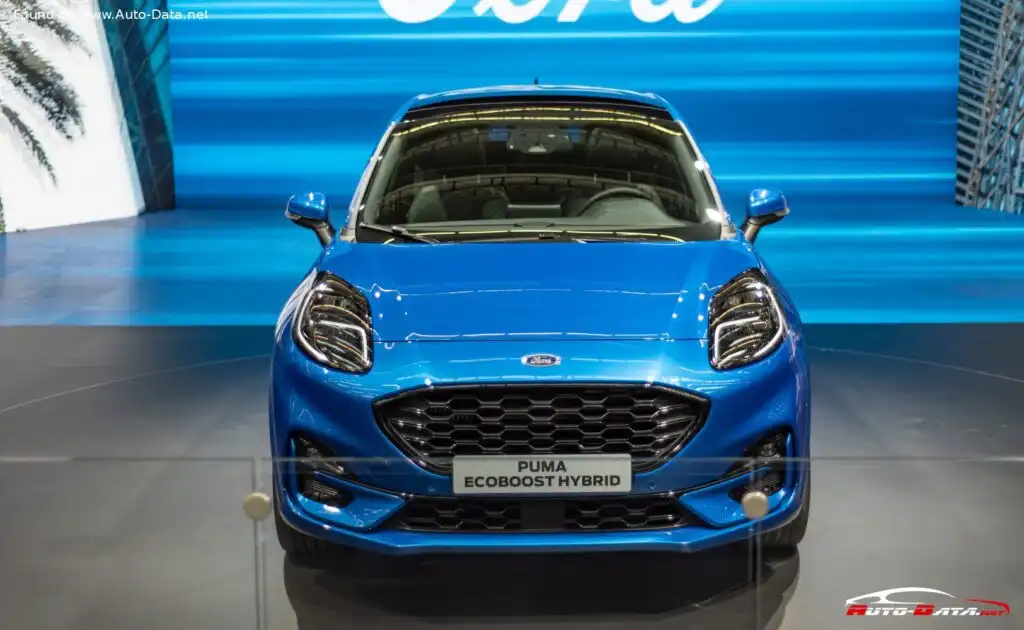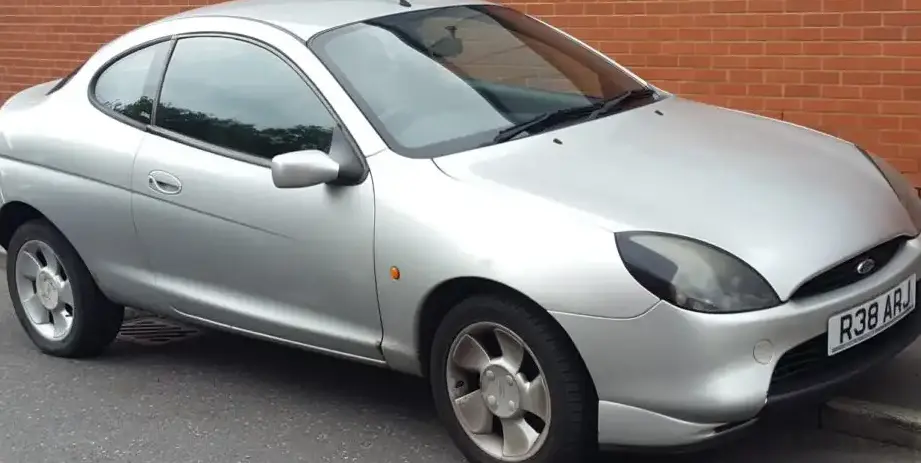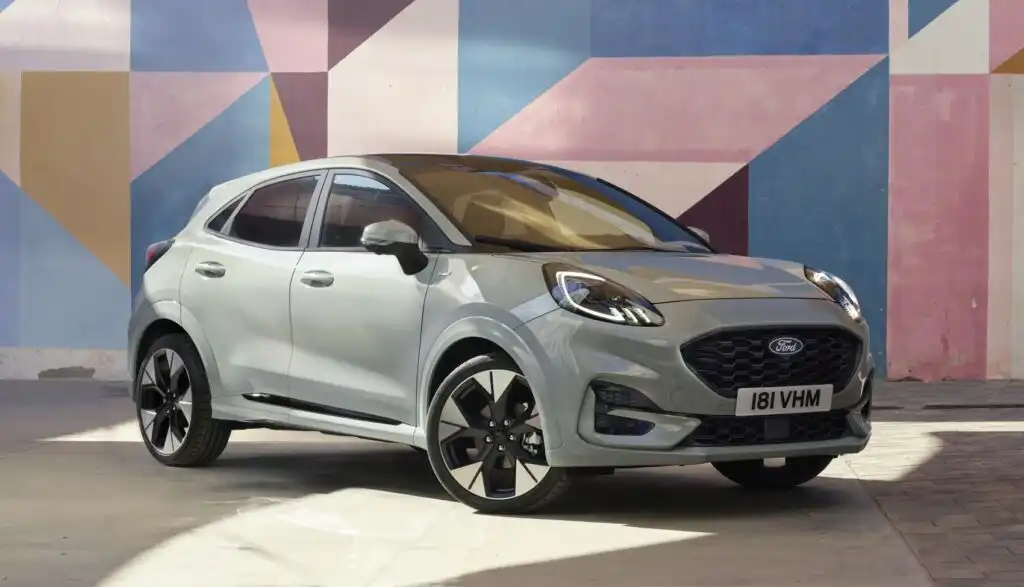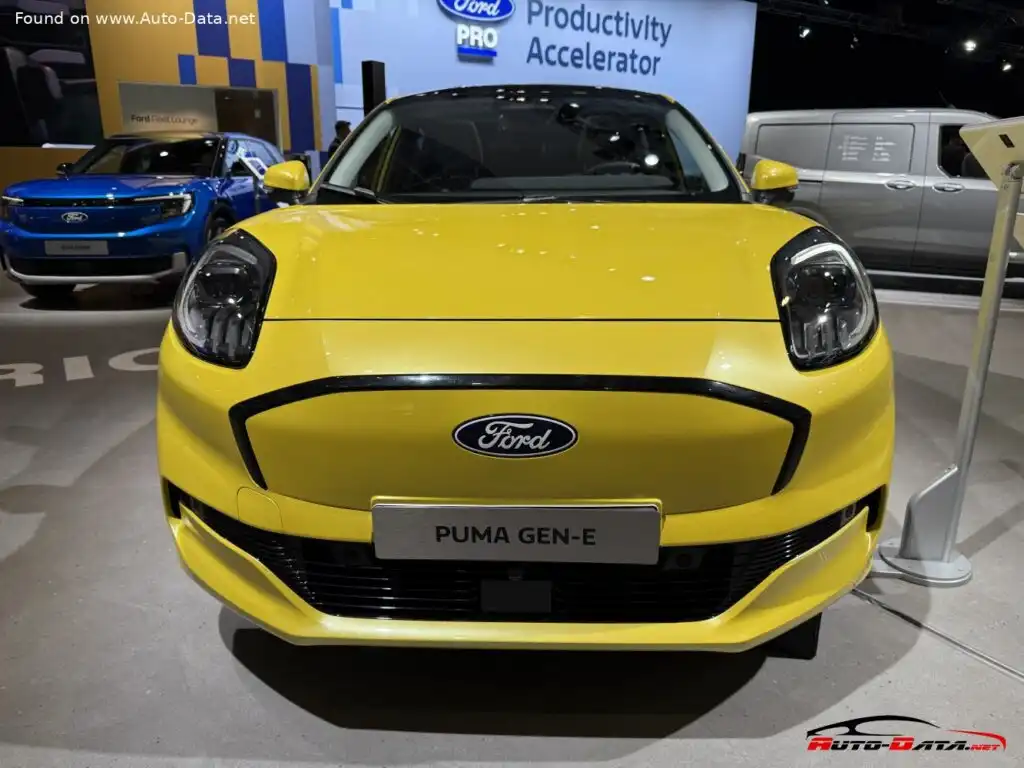
The Ford Puma Gen-E 43 kWh (168 Hp) Electric, introduced in December 2024, represents Ford’s entry into the subcompact electric SUV market. This facelifted version of the Puma builds upon the success of the conventionally powered model, offering a fully electric powertrain within the popular Puma body style. Positioned as a practical and accessible electric vehicle, the Gen-E 43 kWh targets urban and suburban drivers seeking a zero-emission option without compromising on space or versatility. It’s a key component of Ford’s broader electrification strategy for the European market, and increasingly, for North American consumers as well.
Technical Specifications
| Brand | Ford |
| Model | Puma |
| Generation | Puma (facelift 2024) |
| Type (Engine) | Gen-E 43 kWh (168 Hp) Electric |
| Start of production | December, 2024 |
| Powertrain Architecture | BEV (Electric Vehicle) |
| Body type | SUV, Crossover |
| Seats | 5 |
| Doors | 5 |
| Fuel Type | Electricity |
| Acceleration 0 – 100 km/h | 8 sec |
| Acceleration 0 – 62 mph | 8 sec |
| Acceleration 0 – 60 mph | 7.6 sec |
| Maximum speed | 160 km/h (99.42 mph) |
| Weight-to-power ratio | 8.9 kg/Hp, 112.9 Hp/tonne |
| Weight-to-torque ratio | 5.1 kg/Nm, 194.9 Nm/tonne |
| Gross battery capacity | 43 kWh |
| Battery technology | Lithium nickel manganese cobalt oxides (Li-NMC) |
| Battery location | Below the floor |
| All-electric range (WLTP) | 347-376 km (215.62 – 233.64 mi) |
| Average Energy consumption (WLTP) | 13.1-14.5 kWh/100 km (21.08 – 23.34 kWh/100 mi) |
| MPGe | 160 – 144 |
| km/kWh | 7.6 – 6.9 |
| mi/kWh | 4.7 – 4.3 |
| Electric motor power | 168 Hp |
| Electric motor Torque | 290 Nm (213.89 lb.-ft.) |
| Electric motor location | Front axle, Transverse |
| Electric motor type | Synchronous |
| System power | 168 Hp |
| System torque | 290 Nm (213.89 lb.-ft.) |
| Kerb Weight | 1488 kg (3280.48 lbs.) |
| Max. weight | 2015 kg (4442.31 lbs.) |
| Max load | 527 kg (1161.84 lbs.) |
| Trunk (boot) space – minimum | 574 l (20.27 cu. ft.) |
| Trunk (boot) space – maximum | 1283 l (45.31 cu. ft.) |
| Max. roof load | 75 kg (165.35 lbs.) |
| Permitted trailer load with brakes (12%) | 750 kg (1653.47 lbs.) |
| Permitted trailer load without brakes | 750 kg (1653.47 lbs.) |
| Permitted towbar download | 75 kg (165.35 lbs.) |
| Length | 4214 mm (165.91 in.) |
| Width | 1805 mm (71.06 in.) |
| Width with mirrors folded | 1805 mm (71.06 in.) |
| Width including mirrors | 1930 mm (75.98 in.) |
| Height | 1555 mm (61.22 in.) |
| Wheelbase | 2588 mm (101.89 in.) |
| Front track | 1567 mm (61.69 in.) |
| Rear (Back) track | 1540 mm (60.63 in.) |
| Front overhang | 863 mm (33.98 in.) |
| Rear overhang | 763 mm (30.04 in.) |
| Ride height (ground clearance) | 129 mm (5.08 in.) |
| Minimum turning circle (turning diameter) | 10.5 m (34.45 ft.) |
| Drivetrain Architecture | One electric motor drives the front wheels. |
| Drive wheel | Front wheel drive |
| Number of gears and type of gearbox | 1 gears, automatic transmission |
| Front suspension | Independent, type McPherson with coil spring and anti-roll bar |
| Rear suspension | Transverse stabilizer, Coil spring, Elastic beam |
| Front brakes | Ventilated discs |
| Rear brakes | Disc |
| Assisting systems | ABS (Anti-lock braking system) |
| Steering type | Steering rack and pinion |
| Power steering | Electric Steering |
| Tires size | 215/55 R17; 215/50 R18; 225/40 R19 |
| Wheel rims size | 7.0J x 17; 7.0J x 18; 7.5J x 19 |
Powertrain & Engine Architecture
The Puma Gen-E utilizes a single, front-mounted synchronous electric motor producing 168 horsepower and 290 Nm (213.89 lb.-ft.) of torque. Power is delivered through a single-speed automatic transmission, characteristic of most electric vehicles. The heart of the system is the 43 kWh lithium-nickel-manganese-cobalt oxide (Li-NMC) battery pack, strategically positioned under the vehicle floor to maintain a low center of gravity and optimize interior space. The battery supports fast charging capabilities, allowing for a significant range boost with relatively short charging times when connected to a compatible DC fast charger. The vehicle’s electronic control unit (ECU) manages energy flow, regenerative braking, and overall system efficiency.
Driving Characteristics
The 168 hp electric powertrain delivers brisk acceleration, achieving 0-60 mph in approximately 7.6 seconds. While not a performance-oriented vehicle, the instant torque characteristic of electric motors provides responsive acceleration in everyday driving situations. The single-speed transmission offers seamless power delivery, eliminating the need for gear changes. Compared to potential future higher-performance Puma Electric variants, this 43 kWh model prioritizes efficiency and affordability. The driving experience is generally smooth and quiet, typical of electric vehicles, with regenerative braking contributing to increased range and reduced brake wear.
Equipment & Trim Levels
The Puma Gen-E 43 kWh typically comes standard with features such as a digital instrument cluster, a touchscreen infotainment system with Apple CarPlay and Android Auto compatibility, and a suite of advanced driver-assistance systems (ADAS) including automatic emergency braking and lane-keeping assist. Higher trim levels offer upgrades like a larger touchscreen, premium upholstery, a panoramic sunroof, and adaptive cruise control. Interior materials are generally of good quality, reflecting Ford’s commitment to providing a comfortable and well-equipped cabin. Available options include various paint colors, wheel designs, and interior trim packages.
Chassis & Braking
The Puma Gen-E retains the McPherson strut front suspension and elastic beam rear suspension found in the conventional Puma, albeit with adjustments to accommodate the added weight of the battery pack. The front brakes are ventilated discs, while the rear brakes are solid discs. The electric power steering provides a light and responsive feel. The vehicle’s relatively low center of gravity, thanks to the underfloor battery placement, contributes to stable handling. The suspension is tuned to provide a comfortable ride without sacrificing too much handling agility.
Market Reception & Comparison
The Ford Puma Electric has been well-received in Europe, offering a compelling combination of practicality, affordability, and zero-emission driving. Critics have praised its range, comfortable ride, and well-equipped interior. Compared to other subcompact electric SUVs like the Peugeot e-2008 and the Hyundai Kona Electric, the Puma Electric offers a competitive range and price point. Its fuel economy, expressed as MPGe, is comparable to other EVs in its class. Reliability data is still emerging, but early reports suggest that the powertrain is generally reliable.
Legacy
The Ford Puma Gen-E 43 kWh Electric represents a significant step in Ford’s transition to an all-electric future. As battery technology continues to improve and charging infrastructure expands, the Puma Electric is poised to become an increasingly popular choice for consumers seeking a practical and sustainable transportation solution. The long-term reliability of the powertrain remains to be seen, but Ford’s commitment to electric vehicle technology suggests that the Puma Electric will be supported with ongoing software updates and maintenance programs. On the used car market, the Puma Electric is expected to hold its value well, particularly as demand for electric vehicles continues to grow.