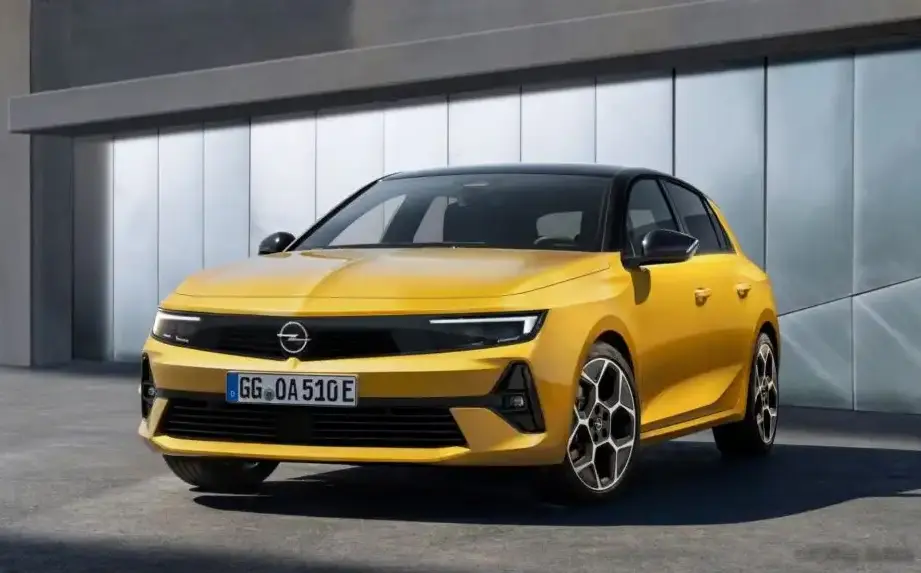
The Opel Astra L 1.2 Turbo (130 hp) Automatic, launched in October 2021, represents a key variant within the sixth generation (Astra L) of Opel’s globally recognized compact hatchback. Positioned as a mid-range offering, this model aimed to balance fuel efficiency with acceptable performance for everyday driving, appealing to a broad customer base. Production is expected to continue through 2026. The Astra L utilizes the Stellantis EMP2 platform, shared with other Peugeot and Citroën models, marking a significant shift in Opel’s engineering approach following its acquisition by the Stellantis group. This variant specifically caters to drivers prioritizing ease of use and lower running costs over outright sporty performance.
Technical Specifications
| Brand | Opel |
| Model | Astra |
| Generation | Astra L |
| Type (Engine) | 1.2 Turbo (130 Hp) Automatic |
| Start of production | October, 2021 |
| End of production | 2026 |
| Powertrain Architecture | Internal Combustion engine |
| Body type | Hatchback |
| Seats | 5 |
| Doors | 5 |
| Fuel consumption at Low speed (WLTP) | 7.1-7.4 l/100 km (33.1 – 31.8 US mpg, 39.8 – 38.2 UK mpg, 14.1 – 13.5 km/l) |
| Fuel consumption at Medium speed (WLTP) | 5.7-5.9 l/100 km (41.3 – 39.9 US mpg, 49.6 – 47.9 UK mpg, 17.5 – 16.9 km/l) |
| Fuel consumption at high speed (WLTP) | 4.8-5 l/100 km (49 – 47 US mpg, 58.9 – 56.5 UK mpg, 20.8 – 20 km/l) |
| Fuel consumption at very high speed (WLTP) | 5.6-5.9 l/100 km (42 – 39.9 US mpg, 50.4 – 47.9 UK mpg, 17.9 – 16.9 km/l) |
| Combined fuel consumption (WLTP) | 5.6-5.8 l/100 km (42 – 40.6 US mpg, 50.4 – 48.7 UK mpg, 17.9 – 17.2 km/l) |
| CO2 emissions (WLTP) | 126-131 g/km |
| Fuel Type | Petrol (Gasoline) |
| Acceleration 0 – 100 km/h | 9.7 sec |
| Acceleration 0 – 62 mph | 9.7 sec |
| Acceleration 0 – 60 mph | 9.2 sec |
| Maximum speed | 210 km/h (130.49 mph) |
| Emission standard | Euro 6d |
| Weight-to-power ratio | 10 kg/Hp, 100.3 Hp/tonne |
| Weight-to-torque ratio | 5.6 kg/Nm, 177.5 Nm/tonne |
| Power | 130 Hp @ 5500 rpm |
| Power per litre | 108.4 Hp/l |
| Torque | 230 Nm @ 1750 rpm (169.64 lb.-ft. @ 1750 rpm) |
| Engine layout | Front, Transverse |
| Engine Model/Code | F12XHT |
| Engine displacement | 1199 cm3 (73.17 cu. in.) |
| Number of cylinders | 3 |
| Engine configuration | Inline |
| Number of valves per cylinder | 4 |
| Fuel injection system | Direct injection |
| Engine aspiration | Turbocharger, Intercooler |
| Engine oil capacity | 3.5 l (3.7 US qt | 3.08 UK qt) |
| Kerb Weight | 1296 kg (2857.19 lbs.) |
| Max. weight | 1880 kg (4144.69 lbs.) |
| Max load | 584 kg (1287.5 lbs.) |
| Trunk (boot) space – minimum | 422 l (14.9 cu. ft.) |
| Trunk (boot) space – maximum | 1339 l (47.29 cu. ft.) |
| Fuel tank capacity | 52 l (13.74 US gal | 11.44 UK gal) |
| Max. roof load | 75 kg (165.35 lbs.) |
| Permitted trailer load with brakes (12%) | 1400 kg (3086.47 lbs.) |
| Permitted trailer load without brakes | 680 kg (1499.14 lbs.) |
| Permitted towbar download | 70 kg (154.32 lbs.) |
| Length | 4374 mm (172.2 in.) |
| Width with mirrors folded | 1860 mm (73.23 in.) |
| Width including mirrors | 2062 mm (81.18 in.) |
| Height | 1441-1470 mm (56.73 – 57.87 in.) |
| Wheelbase | 2675 mm (105.31 in.) |
| Front track | 1551-1559 mm (61.06 – 61.38 in.) |
| Rear (Back) track | 1546-1554 mm (60.87 – 61.18 in.) |
| Minimum turning circle | 10.51 m (34.48 ft.) |
| Drivetrain Architecture | The Internal combustion engine (ICE) drives the front wheels of the vehicle. |
| Drive wheel | Front wheel drive |
| Number of gears and type of gearbox | 8 gears, automatic transmission |
| Front brakes | Ventilated discs |
| Rear brakes | Disc |
| Tires size | 225/45 R17; 225/40 R18 |
| Wheel rims size | 7.5J x 17; 7.5J x 18 |
Powertrain & Engine Architecture
The Astra L 1.2 Turbo Automatic is powered by the F12XHT engine, a 1.2-liter turbocharged three-cylinder gasoline engine. This engine is part of Opel’s ‘Small Engine Family’ and utilizes direct fuel injection, optimizing combustion efficiency and reducing emissions. The turbocharger, coupled with an intercooler, provides a boost in power output despite the relatively small displacement. The engine produces 130 horsepower at 5500 rpm and 230 Nm (169.64 lb-ft) of torque at 1750 rpm. The engine incorporates a Start & Stop system and a particulate filter to further reduce its environmental impact. The engine is transversely mounted at the front of the vehicle. The transmission is an 8-speed automatic, providing smooth gear changes and contributing to improved fuel economy. This transmission is a crucial component in delivering a comfortable driving experience, particularly in urban environments.
Driving Characteristics
The 1.2 Turbo Automatic offers a comfortable and refined driving experience. While not exceptionally quick, with a 0-60 mph time of around 9.2 seconds, it provides sufficient power for everyday driving situations. The automatic transmission is well-tuned, offering smooth and responsive shifts. The gear ratios are optimized for fuel efficiency, but can sometimes feel slightly stretched when accelerating quickly. Compared to the more powerful Astra variants, such as those equipped with larger engines, this version prioritizes fuel economy and ease of use over outright performance. The three-cylinder engine is surprisingly refined, with minimal vibration noticeable in the cabin. The front-wheel-drive configuration provides predictable handling, although it lacks the dynamic capabilities of all-wheel-drive systems.
Equipment & Trim Levels
The Astra L 1.2 Turbo Automatic typically comes equipped with a respectable level of standard features. These include air conditioning, a touchscreen infotainment system with Apple CarPlay and Android Auto compatibility, and a suite of safety features such as automatic emergency braking, lane departure warning, and traffic sign recognition. Interior upholstery is typically cloth, with options for upgraded materials available. Higher trim levels offer additional features such as heated seats, a larger touchscreen display, and a premium sound system. Optional extras include a panoramic sunroof, adaptive cruise control, and a parking assist system.
Chassis & Braking
The Astra L utilizes a MacPherson strut front suspension and a torsion beam rear suspension. This setup provides a good balance between ride comfort and handling. The front brakes are ventilated discs, while the rear brakes are solid discs. The steering is electric power-assisted, providing light and precise control. The chassis is designed to minimize weight, contributing to improved fuel efficiency and handling. Stabilizer bars are fitted to both the front and rear axles to reduce body roll during cornering.
Market Reception & Comparison
The Astra L 1.2 Turbo Automatic was generally well-received by automotive critics. It was praised for its fuel efficiency, comfortable ride, and well-equipped interior. However, some critics noted that the engine could feel underpowered in certain situations, particularly when fully loaded or driving uphill. Compared to other trims in the Astra L lineup, this variant offers the best fuel economy but sacrifices some performance. It competes with other compact hatchbacks such as the Volkswagen Golf, Ford Focus, and Peugeot 308.
Legacy
The F12XHT engine has proven to be a relatively reliable unit, with few widespread issues reported. The 8-speed automatic transmission is also generally considered to be durable and dependable. In the used car market, the Astra L 1.2 Turbo Automatic represents a good value proposition, offering a blend of practicality, fuel efficiency, and comfort. Its relatively low running costs and proven reliability make it an attractive option for buyers seeking a dependable and economical compact hatchback.