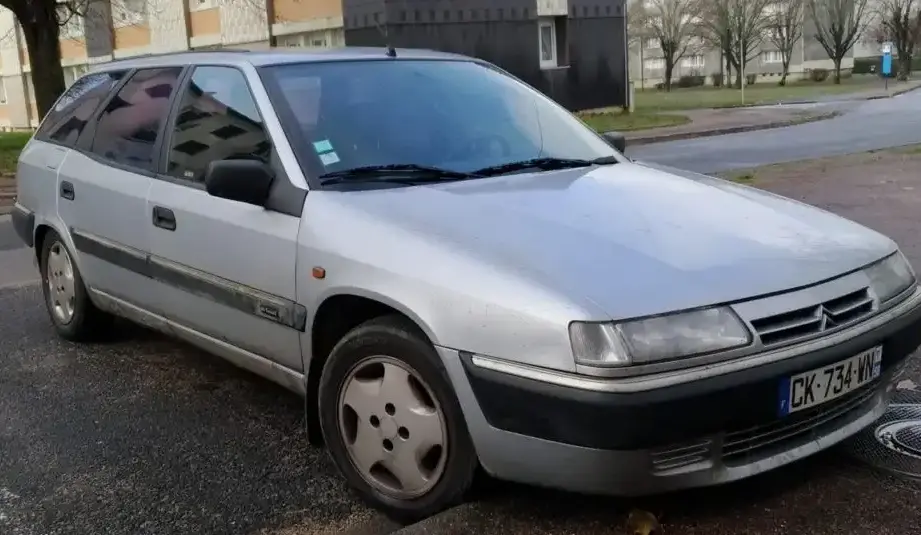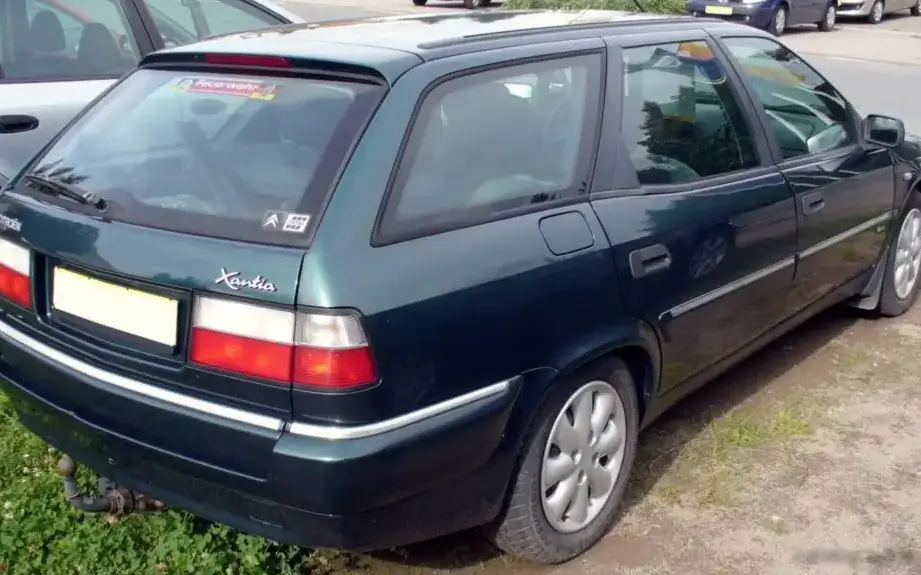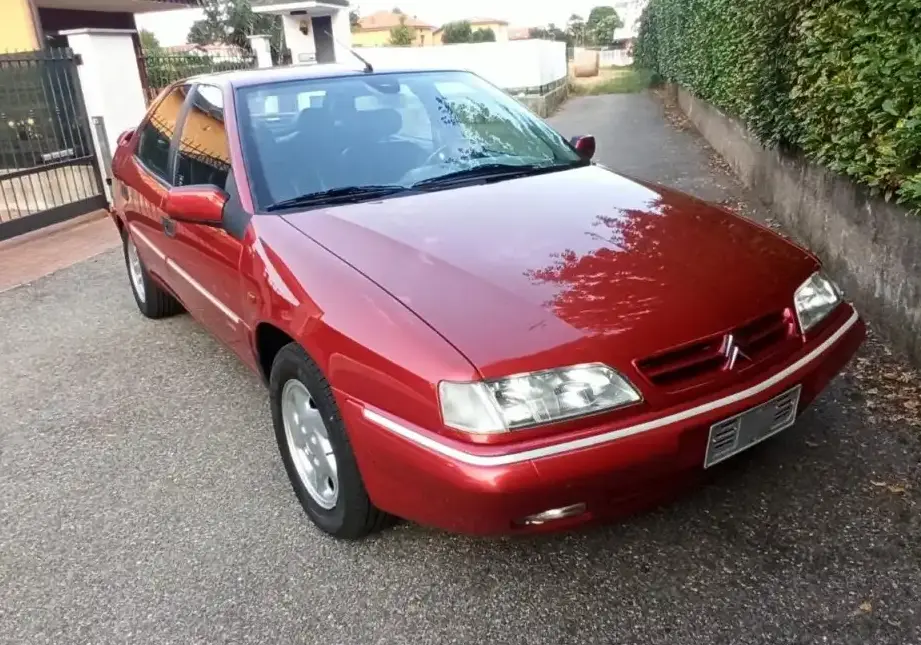
Technical Specifications
| Brand | Citroen |
| Model | Xantia |
| Generation | Xantia (X2) |
| Type (Engine) | 1.9 Turbo D (90 Hp) Automatic |
| Start of production | 1998 |
| End of production | 2001 |
| Powertrain Architecture | Internal Combustion engine |
| Body type | Hatchback |
| Seats | 5 |
| Doors | 4 |
| Fuel consumption (urban) | 11.5 l/100 km (20.5 US mpg, 24.6 UK mpg, 8.7 km/l) |
| Fuel consumption (extra urban) | 6 l/100 km (39.2 US mpg, 47.1 UK mpg, 16.7 km/l) |
| Fuel consumption (combined) | 8 l/100 km (29.4 US mpg, 35.3 UK mpg, 12.5 km/l) |
| CO2 emissions | 223 g/km |
| Fuel Type | Diesel |
| Acceleration 0 – 100 km/h | 15.8 sec |
| Acceleration 0 – 62 mph | 15.8 sec |
| Acceleration 0 – 60 mph | 15 sec |
| Maximum speed | 175 km/h (108.74 mph) |
| Weight-to-power ratio | 14.8 kg/Hp, 67.4 Hp/tonne |
| Weight-to-torque ratio | 6.8 kg/Nm, 146.7 Nm/tonne |
| Power | 90 Hp @ 4000 rpm |
| Power per litre | 47.2 Hp/l |
| Torque | 196 Nm @ 2250 rpm (144.56 lb.-ft. @ 2250 rpm) |
| Engine layout | Front, Transverse |
| Engine Model/Code | DHX XUD9TF |
| Engine displacement | 1905 cm3 (116.25 cu. in.) |
| Number of cylinders | 4 |
| Engine configuration | Inline |
| Cylinder Bore | 83 mm (3.27 in.) |
| Piston Stroke | 88 mm (3.46 in.) |
| Compression ratio | 21.8:1 |
| Number of valves per cylinder | 2 |
| Fuel injection system | Precombustion chamber injection |
| Engine aspiration | Turbocharger, Intercooler |
| Valvetrain | OHC |
| Engine oil capacity | 5 l (5.28 US qt | 4.4 UK qt) |
| Coolant | 9 l (9.51 US qt | 7.92 UK qt) |
| Kerb Weight | 1336 kg (2945.38 lbs.) |
| Max. weight | 1870 kg (4122.64 lbs.) |
| Max load | 534 kg (1177.27 lbs.) |
| Trunk (boot) space – minimum | 480 l (16.95 cu. ft.) |
| Trunk (boot) space – maximum | 878 l (31.01 cu. ft.) |
| Fuel tank capacity | 65 l (17.17 US gal | 14.3 UK gal) |
| Max. roof load | 75 kg (165.35 lbs.) |
| Permitted trailer load with brakes (12%) | 900 kg (1984.16 lbs.) |
| Permitted trailer load without brakes | 705 kg (1554.26 lbs.) |
| Permitted towbar download | 85 kg (187.39 lbs.) |
| Length | 4524 mm (178.11 in.) |
| Width | 1755 mm (69.09 in.) |
| Width including mirrors | 1980 mm (77.95 in.) |
| Height | 1410 mm (55.51 in.) |
| Wheelbase | 2740 mm (107.87 in.) |
| Front track | 1502 mm (59.13 in.) |
| Rear (Back) track | 1454 mm (57.24 in.) |
| Front overhang | 983 mm (38.7 in.) |
| Rear overhang | 801 mm (31.54 in.) |
| Minimum turning circle | 10.8 m (35.43 ft.) |
| Drivetrain Architecture | The Internal combustion engine (ICE) drives the front wheels of the vehicle. |
| Drive wheel | Front wheel drive |
| Number of gears and type of gearbox | 4 gears, automatic transmission |
| Front suspension | Independent type McPherson, Wishbone |
| Rear suspension | Hydro-pneumatic element, Trailing arm |
| Front brakes | Ventilated discs |
| Rear brakes | Disc |
| Assisting systems | ABS (Anti-lock braking system) |
| Steering type | Steering rack and pinion |
| Power steering | Hydraulic Steering |
| Tires size | 185/65R15 |
| Wheel rims size | 15 |
The Citroen Xantia X2 1.9 Turbo D Automatic, launched in 1998 and continuing through 2001, was a significant offering in Citroen’s lineup. It built upon the success of the original Xantia (X1), refining the design and incorporating updated technology. The X2 generation, sharing its platform with the Peugeot 406, aimed to provide a comfortable and technologically advanced driving experience. This particular variant, with its 90 horsepower turbocharged diesel engine and automatic transmission, was designed to appeal to buyers seeking fuel efficiency and ease of use, particularly those covering long distances or frequently driving in urban environments. It occupied a middle ground in the Xantia range, offering a step up in refinement from the base models while remaining more accessible than the more powerful petrol options.
Powertrain & Engine Architecture
At the heart of the Xantia 1.9 Turbo D Automatic lies the DHX XUD9TF engine, a 1905cc inline-four cylinder diesel. This engine is a descendant of the well-regarded XUD series of diesel engines, known for their durability and efficiency. The ‘TF’ designation indicates a turbocharged and intercooled version, boosting power output to 90 horsepower at 4000 rpm and 196 Nm (144.56 lb-ft) of torque at 2250 rpm. The engine utilizes a precombustion chamber injection system, a common technology for diesel engines of that era, which improves combustion efficiency and reduces noise. The turbocharger and intercooler work together to increase air density entering the engine, resulting in improved power and torque. Paired with this engine is a four-speed automatic transmission, providing smooth and convenient gear changes. While not known for its sportiness, this transmission was well-suited to the engine’s torque characteristics, offering relaxed cruising and effortless acceleration.
Driving Characteristics
The Xantia 1.9 Turbo D Automatic offered a distinctly comfortable and relaxed driving experience. The 90 horsepower engine, while not particularly powerful, provided adequate performance for everyday driving. Acceleration from 0-100 km/h (0-62 mph) took around 15.8 seconds, and top speed was limited to 175 km/h (108.74 mph). The automatic transmission, with its four gears, was geared for economy rather than outright performance. Gear changes were generally smooth, but could feel slightly hesitant at times. Compared to the manual transmission versions of the same engine, the automatic offered less driver involvement but greater convenience. Compared to the more powerful petrol variants (like the 2.0 16V), the diesel automatic was noticeably slower, but it more than compensated with significantly better fuel economy. The Xantia’s signature hydropneumatic suspension played a crucial role in the driving experience, providing a remarkably smooth and comfortable ride, even on uneven surfaces.
Equipment & Trim Levels
The Xantia 1.9 Turbo D Automatic typically came equipped with a reasonable level of standard features. These included central locking, power windows, power steering, and an AM/FM radio. Higher trim levels, such as the Exclusive, added features like alloy wheels, air conditioning, a sunroof, and upgraded interior upholstery. The interior typically featured cloth upholstery, with a functional and ergonomically designed dashboard. Optional extras included leather upholstery, a CD changer, and upgraded sound systems. Safety features included ABS (Anti-lock Braking System) and driver and passenger airbags.
Chassis & Braking
The Xantia’s chassis was designed to maximize comfort and handling. It featured an independent McPherson strut front suspension and a unique hydropneumatic rear suspension system. This system allowed for adjustable ride height and self-leveling, ensuring a consistently comfortable ride regardless of load. The braking system consisted of ventilated discs on the front wheels and solid discs on the rear. ABS was standard, providing enhanced braking performance and stability. The Xantia’s steering was a rack and pinion system with hydraulic power assistance, offering precise and responsive steering feel.
Market Reception & Comparison
The Citroen Xantia 1.9 Turbo D Automatic was generally well-received by critics and buyers alike. It was praised for its comfortable ride, fuel efficiency, and practical interior. However, some critics noted the engine’s lack of outright power and the automatic transmission’s occasional hesitancy. Compared to other diesel-powered family cars of the time, such as the Ford Mondeo TD and the Volkswagen Passat TDI, the Xantia offered a unique combination of comfort and affordability. Its hydropneumatic suspension set it apart from its competitors, providing a superior ride quality. Fuel economy was competitive, averaging around 8 liters per 100 kilometers (29.4 US mpg).
Legacy
The Citroen Xantia 1.9 Turbo D Automatic has proven to be a relatively reliable and durable vehicle. The XUD9TF engine is known for its longevity, and the automatic transmission, while not the most sophisticated, is generally dependable. Today, these cars are becoming increasingly rare, but well-maintained examples are sought after by enthusiasts who appreciate their unique character and comfortable ride. Common issues include wear and tear on the hydropneumatic suspension components, which can be expensive to repair. However, with proper maintenance, the Xantia 1.9 Turbo D Automatic remains a capable and comfortable classic car, offering a glimpse into Citroen’s innovative engineering of the late 1990s.